Kirjojen hintavertailu. Mukana 12 595 353 kirjaa ja 12 kauppaa.

Kirjailija

Albert Einstein

Kirjat ja teokset yhdessä paikassa: 241 kirjaa, julkaisuja vuosilta 1916-2026, suosituimpien joukossa New Evidence of the Militarization of America. Vertaile teosten hintoja ja tarkista saatavuus suomalaisista kirjakaupoista.

241 kirjaa

Kirjojen julkaisuhaarukka 1916-2026.

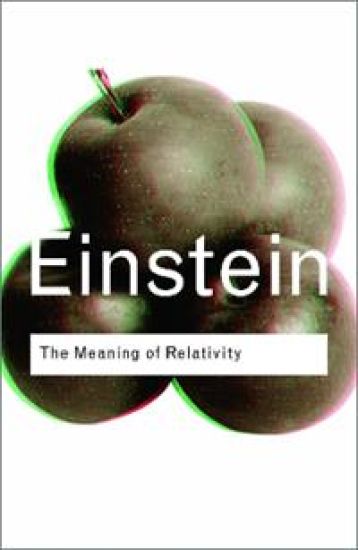
The Meaning of Relativity

The Meaning of Relativity

Albert Einstein

Routledge
2003
nidottu
The world would be a very different place if it were not for Albert Einstein. Like Newton and Galileo before him, this remarkable scientist changed forever mankind's understanding of the universe. In 1921, five years after proclaiming his general theory of relativity, Einstein was awarded the Nobel Prize for Physics in recognition of his remarkable achievements. In the same year he travelled to the United States to give four lectures that consolidated his theory and sought to explain its meaning to a new audience. These lectures were published the following year as The Meaning of Relativity, which he revised with each new edition until his death. It remains a key work for anyone wishing to discover at first hand the workings of one of the most inspiring minds of the twentieth century.
The Collected Papers of Albert Einstein, Volume 7 (English)

The Collected Papers of Albert Einstein, Volume 7 (English)

Albert Einstein

Princeton University Press
2002
pokkari
In the spring of 1919, two British solar eclipse expeditions confirmed the correctness of general relativity theory and propelled Albert Einstein to instant celebrity. Before this major turning point, the majority of Einstein's writings published in this volume dealt with the clarification of general relativistic problems, such as the status of the metric field, the character of gravitational waves, the problem of energy-momentum conservation, and questions of cosmology, such as the nature and size of the universe and the distribution of matter within it. After his rise to international fame, Einstein's publications changed markedly. He faced an increasing demand for popular articles and lectures on relativity, its development and meaning. He also felt compelled to respond to a host of commentators, ranging from skeptical physicists to philosophers trying to reconcile his revolutionary theory with their views. For the first time, he also responded in print to outspoken anti-relativists, some of them fueled by cultural conservatism and, frequently, anti-Semitism. Einstein used his newly won fame to lend prestige to political causes, especially to the reconciliation among European nations and to Zionism. In the early years of Weimar Germany, Einstein spoke out vigorously for the young republic, emphasizing the rights of the individual. He agonized over the misery of the Central Europeans in the grip of starvation and economic collapse, praised the support of individuals and groups such as the Quakers, and championed the cause of Eastern European Jews. His rejection of assimilation, combined with a fierce defense of the right of Jews to higher education, led Einstein to campaign for the establishment of a university in Palestine, the land which he conceived of as a cultural center for all Jews. Since this supplementary paperback includes only select portions of Volume 7, it is not recommended for purchase without the main volume.
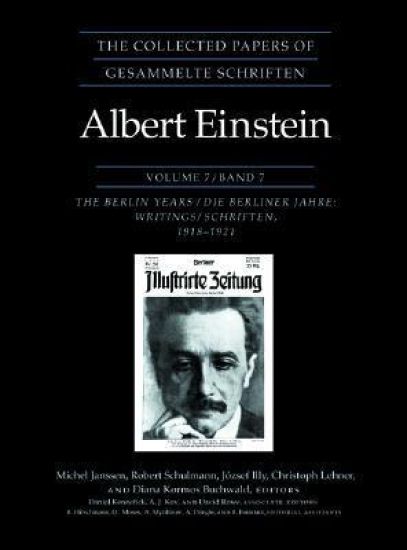
Collected Papers of Albert Einstein

Collected Papers of Albert Einstein

Albert Einstein

Princeton University Press
2002
sidottu
In the spring of 1919, two British solar eclipse expeditions confirmed the correctness of general relativity theory and propelled Albert Einstein to instant celebrity. Before this major turning point, the majority of Einstein's writings published in this volume dealt with the clarification of general relativistic problems, such as the status of the metric field, the character of gravitational waves, the problem of energy-momentum conservation, and questions of cosmology, such as the nature and size of the universe and the distribution of matter within it. After his rise to international fame, Einstein's publications changed markedly. He faced an increasing demand for popular articles and lectures on relativity, its development and meaning. He also felt compelled to respond to a host of commentators, ranging from skeptical physicists to philosophers trying to reconcile his revolutionary theory with their views. For the first time, he also responded in print to outspoken anti-relativists, some of them fueled by cultural conservatism and, frequently, anti-Semitism. Einstein used his newly won fame to lend prestige to political causes, especially to the reconciliation among European nations and to Zionism. In the early years of Weimar Germany, Einstein spoke out vigorously for the young republic, emphasizing the rights of the individual. He agonized over the misery of the Central Europeans in the grip of starvation and economic collapse, praised the support of individuals and groups such as the Quakers, and championed the cause of Eastern European Jews. His rejection of assimilation, combined with a fierce defense of the right of Jews to higher education, led Einstein to campaign for the establishment of a university in Palestine, the land which he conceived of as a cultural center for all Jews.
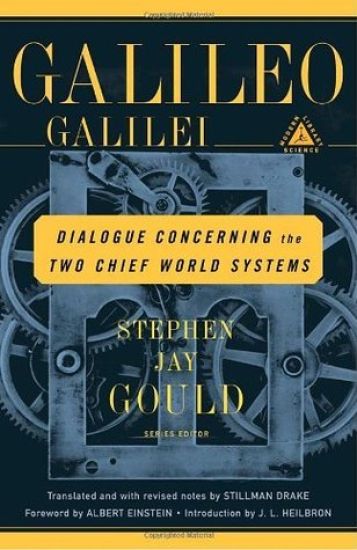
Dialogue Concerning the Two Chief World Systems

Dialogue Concerning the Two Chief World Systems

Galileo; Albert Einstein

Modern Library Inc
2001
pokkari
Galileo’s Dialogue Concerning the Two Chief World Systems, published in Florence in 1632, was the most proximate cause of his being brought to trial before the Inquisition. Using the dialogue form, a genre common in classical philosophical works, Galileo masterfully demonstrates the truth of the Copernican system over the Ptolemaic one, proving, for the first time, that the earth revolves around the sun. Its influence is incalculable. The Dialogue is not only one of the most important scientific treatises ever written, but a work of supreme clarity and accessibility, remaining as readable now as when it was first published. This edition uses the definitive text established by the University of California Press, in Stillman Drake’s translation, and includes a Foreword by Albert Einstein and a new Introduction by J. L. Heilbron.
Relativity

Relativity

Albert Einstein

Routledge
2001
sidottu
Time's 'Man of the Century', Albert Einstein is the unquestioned founder of modern physics. His theory of relativity is the most important scientific idea of the modern era. In this short book Einstein explains, using the minimum of mathematical terms, the basic ideas and principles of the theory which has shaped the world we live in today. Unsurpassed by any subsequent books on relativity, this remains the most popular and useful exposition of Einstein's immense contribution to human knowledge.
Relativity

Relativity

Albert Einstein

Routledge
2001
nidottu
Time's 'Man of the Century', Albert Einstein is the unquestioned founder of modern physics. His theory of relativity is the most important scientific idea of the modern era. In this short book Einstein explains, using the minimum of mathematical terms, the basic ideas and principles of the theory which has shaped the world we live in today. Unsurpassed by any subsequent books on relativity, this remains the most popular and useful exposition of Einstein's immense contribution to human knowledge.
Historiska spår del 1

Historiska spår del 1

Arthur Conan Doyle; Albert Einstein; Enrico Caruso; Churchi

Bakhåll
2001
cd
Cd i s k digifile med texthäfte. Vi får höra Thomas Alva Edison, den mångsidige amerikanske uppfinnaren som bland annat uppfann den första maskinen för inspelning och uppspelning av ljud, fonografen, vi får höra hans egen röst när han 1908 håller tal om elektriska uppfinningar. Vi får höra Albert Einstein i en inspelning från 1936 propagera för populärvetenskapliga studier. Vi får höra skaparen av alla tiders detektiv Sherlock Holmes, alltså Sir Arthur Conan Doyle, berätta om hur det gick till när han uppfann sin figur, i en inspelning som gjordes kort innan Doyle dog 1930. Vi får höra Winston Churchill hålla tal i radio under andra världskriget. Churchills radiotal kom att få stor betydelse för det engelska folkets uthållighet under kriget, han var en vältalare av unikt slag, med en fenomenal förmåga att formulera sig pampigt och medryckande. Vi får höra det legendariska radioreportaget från zeppelinaren Hindenburgs tragiska olycka 1937, när hela det väldiga luftskeppet fyllt med vätgas fattar eld och reportern inser att han bevittnar en katastrof, "Oh, humanity!" ropar han och kämpar med gråten men fortsätter ändå att rapportera utförligt. Vi får höra radioreportrar stå mitt i händelserna under landstigningen i Normandie 1944. Vi får höra Bertolt Brecht förhöras om oamerikansk verksamhet, den store författaren trevar efter ord, hårt pressad av förhörarnas ettriga frågor. Talspåren varvas med legendariska musikspår. Judy Garland sjunger Over the rainbow från filmen Trollkarlen från Oz, Bessie Smith sjunger, Enrico Caruso sjunger, Betty Boop sjunger, Dooley Wilson sjunger As time goes by från filmen Casablanca, Marlene Dietrich och Lale Andersen sjunger andra världskrigets soldatsång Lili Marleen. Total speltid 51 minuter. En cd som är fullmatad med idel högintressanta innehållstunga spår, varenda spelsekund är laddad med mening, historia, betydelser, minnen. Stadiga skoptag ur ljudhistoriens cistern.
Albert Einstein, Mileva Maric

Albert Einstein, Mileva Maric

Albert Einstein

Princeton University Press
2000
pokkari
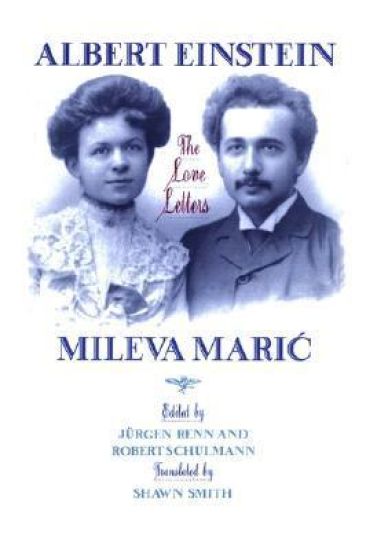
In 1903, despite the vehement objections of his parents, Albert Einstein married Mileva Maric, the companion, colleague, and confidante whose influence on his most creative years has given rise to much speculation. Beginning in 1897, after Einstein and Maric met as students at the Swiss Federal Polytechnic, and ending shortly after their marriage, these fifty-four love letters offer a rare glimpse into Einstein's relationship with his first wife while shedding light on his intellectual development in the period before the annus mirabilis of 1905. Unlike the picture of Einstein the lone, isolated thinker of Princeton, he appears here both as the burgeoning enfant terrible of science and as an amorous young man beset, along with his fiance, by financial and personal struggles--among them the illegitimate birth of their daughter, whose existence is known only by these letters. Describing his conflicts with professors and other scientists, his arguments with his mother over Maric, and his difficulty obtaining an academic position after graduation, the letters enable us to reconstruct the youthful Einstein with an unprecedented immediacy. His love for Maric, whom he describes as "a creature who is my equal, and who is as strong and independent as I am," brings forth his serious as well as playful, often theatrical nature. After their marriage, however, Maric becomes less his intellectual companion, and, failing to acquire a teaching certificate, she subordinates her professional goals to his. In the final letters Einstein has obtained a position at the Swiss Patent Office and mentions their daughter one last time to his wife in Hungary, where she is assumed to have placed the girl in the care of relatives. Informative, entertaining, and often very moving, this collection of letters captures for scientists and general readers alike a little known yet crucial period in Einstein's life.
The Principle of Relativity

The Principle of Relativity

Albert Einstein

Dover Publications Inc.
2000
nidottu
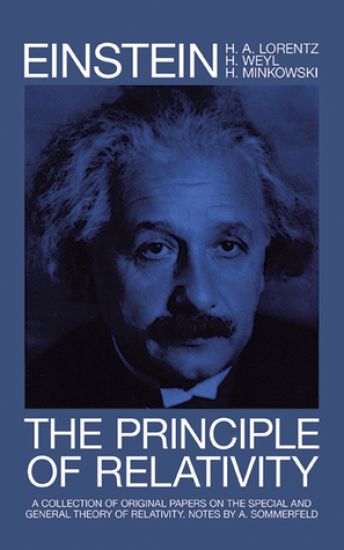
Here are the 11 papers that forged the general and special theories of relativity: seven papers by Einstein, plus two papers by Lorentz and one each by Minkowski and Weyl. "A thrill to read again the original papers by these giants." — School Science and Mathematics. 1923 edition.
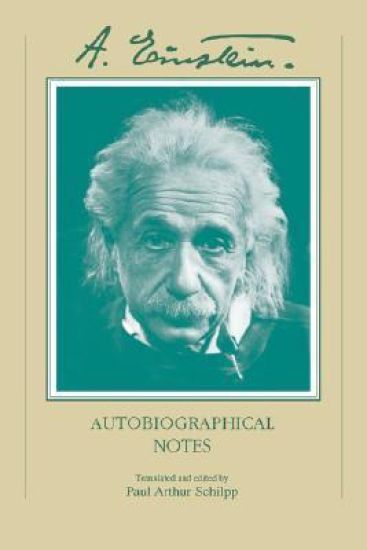
Autobiographical Notes

Autobiographical Notes

Albert Einstein

Open Court Publishing Co ,U.S.
1999
pokkari
This brief work is the closest Einstein ever came to writing an autobiography. Although a very personal account, it is purely concerned with the development of his ideas, saying little about his private life or about the world-shaking events through which he lived. Starting from little Albert's early disillusionment with religion and his intense fascination with geometry, the narrative presents Einstein's "epistemological credo", then moves through his dissatisfaction with the foundations of Newtonian physics to the development of his own special and general theories of relativity and his opposition to some of the assumptions of quantum theory.
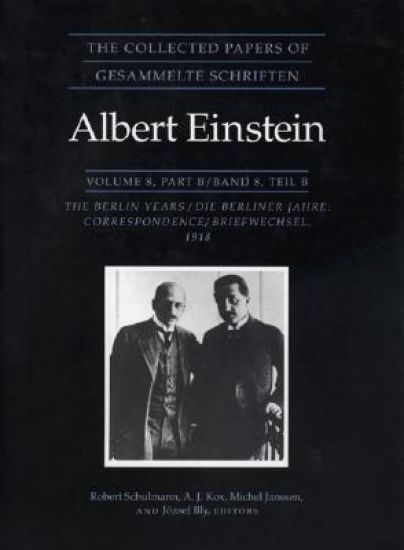
The Collected Papers of Albert Einstein, Volume 8

The Collected Papers of Albert Einstein, Volume 8

Albert Einstein

Princeton University Press
1998
sidottu
This volume opens in spring 1914 when Einstein takes up a research professorship at the Prussian Academy of Sciences in Berlin and closes with the collapse of the German Empire four and one-half years later. A good portion of the documentation, which comprises more than 675 letters, has only recently been discovered by the editors. The letters touch on all aspects of Einstein's activities and shed new light on his inner life, while enriching our understanding of his published papers, presented in volumes 6 and 7 of this series. The breakup of Einstein's first marriage and the divorce are presented here for the first time in all their complexity. New material shows Einstein maintaining a strong sense of moral urgency throughout the war. The scientific correspondence documents Einstein's struggle to find satisfactory field equations for his new gravitational theory--the general theory of relativity--and his continued discussion with leading physicists and mathematicians about the implications and further development of the theory.
The Collected Papers of Albert Einstein, Volume 8 (English)

The Collected Papers of Albert Einstein, Volume 8 (English)

Albert Einstein

Princeton University Press
1998
pokkari
This volume opens in spring 1914 when Einstein takes up a research professorship at the Prussian Academy of Sciences in Berlin and closes with the collapse of the German Empire four and one-half years later. A good portion of the documentation, which comprises more than 675 letters, has only recently been discovered by the editors. The letters touch on all aspects of Einstein's activities and shed new light on his inner life, while enriching our understanding of his published papers, presented in volumes 6 and 7 of this series. The breakup of Einstein's first marriage and the divorce are presented here for the first time in all their complexity. New material shows Einstein maintaining a strong sense of moral urgency throughout the war. The scientific correspondence documents Einstein's struggle to find satisfactory field equations for his new gravitational theory--the general theory of relativity--and his continued discussion with leading physicists and mathematicians about the implications and further development of the theory.
The Collected Papers of Albert Einstein, Volume 6 (English)

The Collected Papers of Albert Einstein, Volume 6 (English)

Albert Einstein

Princeton University Press
1997
pokkari
Every document in The Collected Papers of Albert Einstein appears in the language in which it was written, and this supplementary paperback volume presents the English translations of all non-English materials. This translation does not include notes or annotation of the documentary volume and is not intended for use without the original language documentary edition which provides the extensive editorial commentary necessary for a full historical and scientific understanding of the documents.
The Collected Papers of Albert Einstein, Volume 4 (English)

The Collected Papers of Albert Einstein, Volume 4 (English)

Albert Einstein

Princeton University Press
1996
pokkari
This volume presents Einstein's writings from the final period of his work in Switzerland. Most of the material in Volume 4 documents Einstein's search for a relativistic theory of gravitation, a search that ended in Berlin in the fall of 1915 with the completion of the general theory of relativity. Three scientific manuscripts, printed here for the first time, provide insight into Einstein's efforts to generalize his original relativity theory into a theory of gravitation. The first is a review article on the special theory of relativity. The second consists of notes that document Einstein's research on gravitation. The third manuscript contains calculations on the problem of the motion of the perihelion of Mercury. The explanation of the observed anomaly of this motion was to become one of the classical tests of general relativity. The existence of such a manuscript has not been known before now. All three of these manuscripts, along with other material in this volume, add significantly to our understanding of the creation of general relativity. This supplementary paperback volue presents only the English translations of non-English materials and is not intended for use without the original-language documentary edition.
The Collected Papers of Albert Einstein, Volume 6

The Collected Papers of Albert Einstein, Volume 6

Albert Einstein

Princeton University Press
1996
sidottu
Presented in this volume are Albert Einstein's writings from his arrival in Berlin in the spring of 1914 to take up his new position at the Prussian Academy of Sciences through the end of 1917. During these years he completed the general theory of relativity--the relativistic theory of gravitation--and this was surely the high point of his scientific life. His writings on relativity in this volume range from general treatments of the theory to detailed calculations of specific consequences and his first attempt at a relativistic account of cosmology. They also include his popular exposition of the special and general theories, first published in 1917 and still a valuable account for the general reader. As soon as the difficulties on the path to general relativity had been overcome, Einstein returned to the riddles of the quantum theory. His major clarification of the quantum theory of radiation appears here along with his lesser known contribution to the formulation of quantum conditions. This volume also contains the papers describing Einstein's only experimental investigation, a study of Ampere's molecular currents, which he carried out with the Dutch physicist W. J. de Haas. Before the beginning of World War I, Einstein had never expressed his views on nonscientific subjects. Yet one of his first reactions to this previously unthinkable general war was to sign an "Appeal to Europeans" urging an immediate end to hostilities. Every document in The Collected Papers of Albert Einstein appears in the language in which it was written.
The Collected Papers of Albert Einstein, Volume 4

The Collected Papers of Albert Einstein, Volume 4

Albert Einstein

Princeton University Press
1995
sidottu
This volume presents Einstein's writings from the final period of his work in Switzerland. Most of the material in Volume 4 documents Einstein's search for a relativistic theory of gravitation, a search that ended in Berlin in the fall of 1915 with the completion of the general theory of relativity. Three scientific manuscripts, printed here for the first time, provide insights into Einstein's efforts to generalize his original relativity theory into a theory of gravitation. The first is a review article on the special theory of relativity. The second consists of notes that document Einstein's research on gravitation. The third manuscript contains calculations on the problem of the motion of the perihelion of Mercury. The explanation of the observed anomaly of this motion was to become one of the classical tests of general relativity. The existence of such a manuscript has not been known before now. All three of these manuscripts, along with other material in this volume, add significantly to our understanding of the creation of general relativity.
Ideas And Opinions

Ideas And Opinions

ALBERT EINSTEIN

Crown Publications
1995
nidottu
A new edition of the most definitive collection of Albert Einstein's popular writings, gathered under the supervision of Einstein himself. The selections range from his earliest days as a theoretical physicist to his death in 1955; from such subjects as relativity, nuclear war or peace, and religion and science, to human rights, economics, and government.
Relativity: The Special and the General Theory

Relativity: The Special and the General Theory

Albert Einstein

Crown Publishing Group (NY)
1995
nidottu
An easy to understand collection of the ideas of one of the greatest scientists of the twentieth century including the idea he is most known for, the theory of relativity Redesigned inside and out to have a fresh, appealing look, this new edition of a classic Crown Trade Paperback is a collection of Einstein's own popular writings on his work and describes the meaning of his main theories in a way virtually everyone can understand.
The Collected Papers of Albert Einstein, Volume 5 (English)

The Collected Papers of Albert Einstein, Volume 5 (English)

Albert Einstein

Princeton University Press
1995
pokkari
Every document in The Collected Papers of Albert Einstein appears in the language in which it was written, and supplementary paperback volumes present the English translations if all non-English materials. For those desiring a supplement to Volume 5, for instance, this paperback includes translations of correspondence that give a much richer picture of Einstein in his twenties and thirties than we ever had. In addition to illuminating the personal aspects of his life, the letters document his scientific activity: his concentration for years on the unfathomable problems of quanta and radiation, his extensive knowledge of experimental physics, his many fruitful interactions with experimentalists, and finally his long struggle to generalize the 1905 theory of relativity to include gravitation and accelerated frames of reference. This paperback translation does not include notes or annotation of the documentary volume and is not intended for use without the original language documentary edition, which provides the extensive editorial commentary necessary for a full historical and scientific understanding of the documents.