Kirjailija
Amartya Sen
Kirjat ja teokset yhdessä paikassa: 70 kirjaa, julkaisuja vuosilta 1973-2023, suosituimpien joukossa Rationale Dummköpfe. Eine Kritik der Verhaltensgrundlagen der Ökonomischen Theorie. Vertaile teosten hintoja ja tarkista saatavuus suomalaisista kirjakaupoista.
70 kirjaa
Kirjojen julkaisuhaarukka 1973-2023.
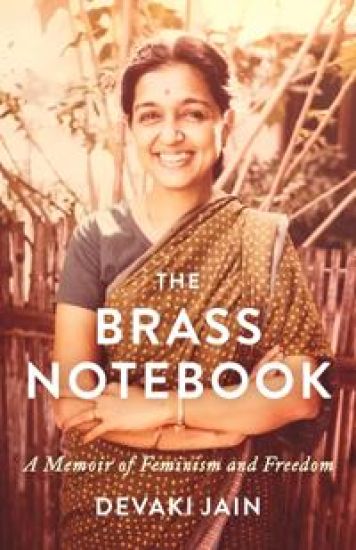
The lyrical and globe-spanning memoir by the influential feminist economist, with introductory pieces from two American icons “Your heart and world will be opened by reading The Brass Notebook, the intimate and political life of Devaki Jain, a young woman who dares to become independent.” —Gloria SteinemWhen she was barely thirty, the Indian feminist economist Devaki Jain befriended Doris Lessing, Nobel winner and author of The Golden Notebook, who encouraged Jain to write her story. Over half a century later, Jain has crafted what Desmond Tutu has called “a riveting account of the life story of a courageous woman who has all her life challenged what convention expects of her.”Across an extraordinary life intertwined with those of Iris Murdoch, Gloria Steinem, Julius Nyerere, Henry Kissinger, and Nelson Mandela, Jain navigated a world determined to contain her ambitions. While still a young woman, she traveled alone across the subcontinent to meet Gandhi’s disciple Vinoba Bhave, hitchhiked around Europe in a sari, and fell in love with a Yugoslav at a Quaker camp in Saarbrücken. She attended Oxford University, supporting herself by washing dishes in a local café. Later, over the course of an influential career as an economist, Jain seized on the cause of feminism, championing the poor women who labored in the informal economy long before mainstream economics attended to questions of inequality.With a foreword by Nobel Prize–winning economist Amartya Sen and an introduction by the well-known American feminist Gloria Steinem, whose own life and career were inspired by time spent with Jain, The Brass Notebook perfectly merges the political with the personal—a book full of life, ideas, politics, and history.
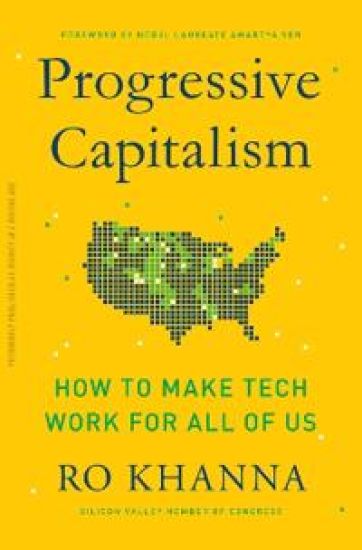
Congressman Ro Khanna offers a revolutionary, “progressive” (James J. Heckman, Nobel Prize winner and professor of economics at the University of Chicago) roadmap to facing America’s digital divide, offering greater economic prosperity to all. In Khanna’s vision, “just as people can move to technology, technology can move to people” (from the foreword by Amartya Sen, Nobel Laureate in Economics) where “Khanna envisions redistributing opportunities from coastal cities to rural middle-America…An exciting vision, brilliantly rendered.” (Arlie Russell Hochschild, author of Strangers in Their Own Land).Unequal access to technology and the revenue it creates is one of the most pressing issues in the United States. An economic gulf exists between those who have struck gold in the tech industry and those left behind by the digital revolution; a geographic divide between those in the coastal tech industry and those in the heartland whose jobs have been automated; and existing inequalities in the technological access—students without computers, rural workers with spotty WiFi, and many workers without the luxury to work remotely. Congressman Ro Khanna’s Progressive Capitalism tackles these challenges head-on and imagines how the digital economy can create opportunities for people across the country without uprooting them. Anchored by an approach Khanna calls “progressive capitalism,” he shows how democratizing access to tech can strengthen every sector of economy and culture. By expanding technological jobs nationwide through public and private partnerships, we can close the wealth gap in America and begin to repair the fractured, distrusting relationships that have plagued our country for fall too long. Inspired by his own story born into an immigrant family, Khanna understands how economic opportunity can change the course of a person’s life. Moving deftly between storytelling, policy, and some of the country’s greatest thinkers in political philosophy and economics, Khanna presents a vision we can’t afford to ignore. Progressive Capitalism is a “practical and aspirational” (Kimberlé Crenshaw, professor of law at UCLA and Columbia University) roadmap to how we can seek dignity for every American in an era in which technology shapes every aspect of our lives.
A towering figure in the field of economics, Amartya Sen is perhaps best known for his work on poverty and famine, as inspired by events in his boyhood home of West Bengal, India. But Sen has, in fact, called many places "home," from Dhaka in modern Bangladesh to Trinity College, Cambridge. In Home in the World, these "homes" collectively form an unparalleled and profoundly truthful vision of twentieth- and twenty-first century life. Interweaving scenes from his youth with candid reflections on wealth, welfare, and social justice, Sen shows how his life experiences--in Asia, Europe, and later America--vitally informed his work, culminating in the ultimate "portrait of a citizen of the world" (Philip Hensher, Spectator). - "Sen is more than an economist, moral philosopher or even an academic. He is a life-long campaigner . . . for a more noble idea of home." --Edward Luce, Financial Times (UK) - " Sen] is an unflinching man of science but also insistently humane." --Tunku Varadarajan, Wall Street Journal
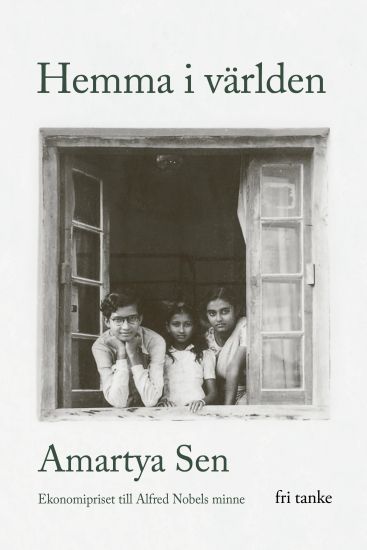
Kärnan i begreppet ekonomi är just hushållning av hemmet. Men vad är egentligen ett hem? Den indiske nationalekonomen och Nobelpristagaren Amartya Sen har haft många hem – Dhaka i dagens Bangladesh där han tillbringade sina första år, det lilla samhället Santiniketan där han blev uppfostrad av både föräldrar och morföräldrar, Calcutta där han började studera nationalekonomi och blev engagerad i studentföreningar och så Storbritannien och Trinity College, där han började studera nationalekonomi som nittonåring.I Hemma i världen berättar Amartya Sen lärt och personligt om sin uppväxt, om sin morfar som var en av Rabindranath Tagores närmaste vänner, om sina föräldrar, sina släktingar och alla vänner och studiekamrater. Men lika mycket är det en skildring av den inre utvecklingen och Sen visar hur omvärldens ideologiska och andliga förändringar kan inverka på en ung kille som är nyfiken. Den unge Sen präglas djupt av delningen av Brittiska Indien, mordet på Gandhi, svältkatastrofer i Bengalen och utvecklingen av den globala ekonomins framväxt. Denna bok förklarar varför nationalekonomi blir det givna förstahandsvalet att studera om man känner sig hemma i världen.
The Nobel laureate Amartya Sen is one of a handful of people who may truly be called "a global intellectual" (Financial Times). A towering figure in the field of economics, Sen is perhaps best known for his work on poverty and famine, as inspired by events in his boyhood home of West Bengal, India. But Sen has, in fact, called many places "home," including Dhaka, in modern Bangladesh; Kolkata, where he first studied economics; and Trinity College, Cambridge, where he engaged with the greatest minds of his generation.In Home in the World, these "homes" collectively form an unparalleled and profoundly truthful vision of twentieth- and twenty-first-century life. Here Sen, "one of the most distinguished minds of our time" (New York Review of Books), interweaves scenes from his remarkable life with candid philosophical reflections on economics, welfare, and social justice, demonstrating how his experiences--in Asia, Europe, and later America--vitally informed his work. In exquisite prose, Sen evokes his childhood travels on the rivers of Bengal, as well as the "quiet beauty" of Dhaka. The Mandalay of Orwell and Kipling is recast as a flourishing cultural center with pagodas, palaces, and bazaars, "always humming with intriguing activities."With characteristic moral clarity and compassion, Sen reflects on the cataclysmic events that soon tore his world asunder, from the Bengal famine of 1943 to the struggle for Indian independence against colonial tyranny--and the outbreak of political violence that accompanied the end of British rule. Witnessing these lacerating tragedies only amplified Sen's sense of social purpose. He went on to study famine and inequality, wholly reconstructing theories of social choice and development. In 1998, he was awarded the Nobel Prize for his contributions to welfare economics, which included a fuller understanding of poverty as the deprivation of human capability. Still Sen, a tireless champion of the dispossessed, remains an activist, working now as ever to empower vulnerable minorities and break down walls among warring ethnic groups.As much a book of penetrating ideas as of people and places, Home in the World is the ultimate "portrait of a citizen of the world" (Spectator), telling an extraordinary story of human empathy across distance and time, and above all, of being at home in the world.
Rationale Dummköpfe. Eine Kritik der Verhaltensgrundlagen der Ökonomischen Theorie
Amartya Sen
Reclam Philipp Jun.
2020
pokkari
This is an open access title available under the terms of a CC BY-NC-ND 3.0 IGO licence. It is free to read at Oxford Scholarship Online and offered as a free PDF download from OUP and selected open access locations. This volume is the last of three addressing a wide range of policy issues relating to the role of public action in combating hunger and deprivation in the modern world. It deals with the background nutritional, economic, social, and political aspects of the problem of world hunger. Volume 3 deals with the strategic options for the elimination of endemic hunger. The topics covered include: the comparative extent of hunger and deprivation in different parts of the world; the influence of food production; the interconnections between economic growth and public support; the role of economic diversification in reducing vulnerability; the potential impact of direct public provisioning on living standards; and the politics of public action. In addition to general analyses, the book examines the international relevance of a number of specific country experiences in Asia, Africa, and Latin America (including those ofBangladesh, Brazil, China, India, Kenya, Nigeria, and Sri Lanka). Taken together, these essays provide a comprehensive and authoritative analysis of the problem of hunger and deprivation, and an important guide for action.
Foreword by Amartya Sen (Nobel Prize for Economics, 1998) Afterword by Kailash Satyarthi (Nobel Peace Prize, 2014)In 2005, Nick Danziger began to create an archive of photographs documenting the lives of women and children in eight of the world's poorest countries. He returned five years later, and again in 2015. Had the United Nation’s millennium development goals made a difference to their lives?The stories he tells – in pictures and words – are unforgettable and have created a unique document, one that reveals the uncomfortable truths of a globalised planet. It is full of hope, sadness, pain, anger and beauty.Some of the women and children Nick followed died through sickness and poverty. One has become the most successful entrepreneur her African border town has ever known. Another – who once dreamed of becoming a banker – is now a gang member in the world’s murder capital. Yet another has confronted conformists and successfully changed his gender.The book will stand as a permanent record of their courage and humanity, but also as a reminder that much work still needs to be done if these goals are ever to be met. Too many people in India, Cambodia, Zambia, Uganda, Niger, Honduras, Bolivia and Armenia are still living in extreme poverty, without access to the health and education the goals were supposed to deliver.
UPDATED WITH A NEW INTRODUCTION'Magnificent ... a major work by two of the world's most perceptive and intelligent India-watchers writing today' William Dalrymple, New Statesman From two of India's leading economists, Jean Drèze and Nobel Prize-winner Amartya Sen, An Uncertain Glory is a passionate, considered argument for the need for a greater understanding of inequalities in India.When India regained independence from colonial rule in 1947, it immediately adopted a firmly democratic political system, with multiple parties, freedom of speech and extensive political rights. The famines of the British era disappeared, and steady economic growth replaced stagnation, accelerating further over the last three decades to make India's growth the second fastest among large economies. Despite a recent dip, it is still one of the highest in the world.Maintaining rapid yet environmentally sustainable growth remains an important and achieveable goal for India. Drèze and Sen argue that the country's main problems lie in the disregarding of the essential needs of the people. There have been major failures both to foster participatory growth and to make good use of the public resources generated by economic growth to enhance people's living conditions; social and physical services remain inadequate, from schooling and medical care to safe water, electricity, and sanitation. In the long run, even high economic growth is threatened by the underdevelopment of infrastructure and the neglect of human capabilities, in contrast with the holistic approach pioneered by Japan, South Korea and China.In a democracy, addressing these failures requires not only significant policy change, but also a clearer public understanding of the abysmal extent of deprivation in the country. Yet public discussion in India tends to be constricted to the lives and concerns of the relatively affluent. This book presents a powerful analysis not only of India's deprivations and inequalities, but also of the restraints on addressing them - and of the possibility of change through democratic practice.
"Teori om de moraliska känslorna", Adam Smiths första bok, publicerades 1759. Smith var vid denna tid en ung professor vid Glasgows universitet. Boken tilldrog sig stor uppmärksamhet men hamnade efter hand i skuggan av hans andra bok, som etablerade den moderna nationalekonomin: "Nationernas välstånd", publicerad 1776. På senare tid har detta emellertid förändrats. "Teori om de moraliska känslorna" har på nytt tilldragit sig uppmärksamhet och fått den plats i det etiska tänkandets historia som den förtjänar. Att Smith var banbrytande i sin analys av etisk opartiskhet och universalitet skymdes länge av de berömda formuleringarna i "Nationernas välstånd" om marknadens osynliga hand som omvandlar ekonomiska egenintressen till ett allmänna bästa. Själv höll Smith sin första bok högt och kort före sin död gav han 1790 ut en omarbetad sjätte utgåva. Denna finns nu i svensk översättning. Boken är försedd med en inledning av nobelpristagaren i ekonomi, Amartya Sen, som redogör för förhållandet mellan moralfilosofi och ekonomisk teori hos Smith, och pekar på vad dagens nationalekonomi har att lära av Smith.
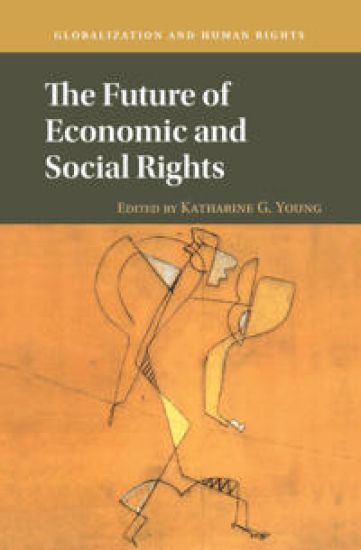
The future of economic and social rights is unlikely to resemble its past. Neglected within the human rights movement, avoided by courts, and subsumed within a single-minded conception of development as economic growth, economic and social rights enjoyed an uncertain status in international human rights law and in the public laws of most countries. However, today, under conditions of immense poverty, insecurity, and political instability, the rights to education, health care, housing, social security, food, water, and sanitation are central components of the human rights agenda. The Future of Economic and Social Rights captures the significant transformations occurring in the theory and practice of economic and social rights, in constitutional and human rights law. Professor Katharine G. Young brings together a group of distinguished scholars from diverse disciplines to examine and advance the broad research field of economic and social rights that incorporates legal, political science, economic, philosophy and anthropology scholars.
Secure Sensor Cloud
Vimal Kumar; Amartya Sen; Sanjay Madria
Springer International Publishing AG
2018
nidottu
The sensor cloud is a new model of computing paradigm for Wireless Sensor Networks (WSNs), which facilitates resource sharing and provides a platform to integrate different sensor networks where multiple users can build their own sensing applications at the same time. It enables a multi-user on-demand sensory system, where computing, sensing, and wireless network resources are shared among applications. Therefore, it has inherent challenges for providing security and privacy across the sensor cloud infrastructure. With the integration of WSNs with different ownerships, and users running a variety of applications including their own code, there is a need for a risk assessment mechanism to estimate the likelihood and impact of attacks on the life of the network. The data being generated by the wireless sensors in a sensor cloud need to be protected against adversaries, which may be outsiders as well as insiders. Similarly, the code disseminated to the sensors within the sensor cloud needs to be protected against inside and outside adversaries. Moreover, since the wireless sensors cannot support complex and energy-intensive measures, the lightweight schemes for integrity, security, and privacy of the data have to be redesigned. The book starts with the motivation and architecture discussion of a sensor cloud. Due to the integration of multiple WSNs running user-owned applications and code, the possibility of attacks is more likely. Thus, next, we discuss a risk assessment mechanism to estimate the likelihood and impact of attacks on these WSNs in a sensor cloud using a framework that allows the security administrator to better understand the threats present and take necessary actions. Then, we discuss integrity and privacy preserving data aggregation in a sensor cloud as it becomes harder to protect data in this environment. Integrity of data can be compromised as it becomes easier for an attacker to inject false data in a sensor cloud, and due to hop by hopnature, privacy of data could be leaked as well. Next, the book discusses a fine-grained access control scheme which works on the secure aggregated data in a sensor cloud. This scheme uses Attribute Based Encryption (ABE) to achieve the objective. Furthermore, to securely and efficiently disseminate application code in sensor cloud, we present a secure code dissemination algorithm which first reduces the amount of code to be transmitted from the base station to the sensor nodes. It then uses Symmetric Proxy Re-encryption along with Bloom filters and Hash-based Message Authentication Code (HMACs) to protect the code against eavesdropping and false code injection attacks.
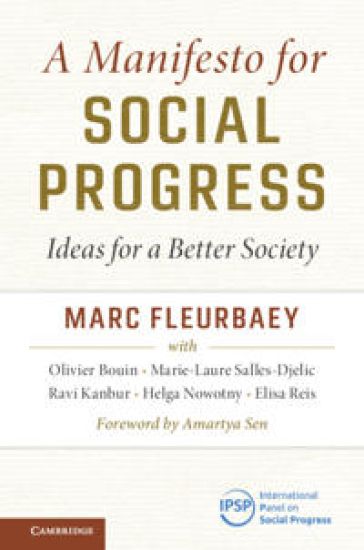
At this time when many have lost hope amidst conflicts, terrorism, environmental destruction, economic inequality and the breakdown of democracy, this beautifully written book outlines how to rethink and reform our key institutions - markets, corporations, welfare policies, democratic processes and transnational governance - to create better societies based on core principles of human dignity, sustainability, and justice. This new vision is based on the findings of over 300 social scientists involved in the collaborative, interdisciplinary International Panel on Social Progress. Relying on state-of-the-art scholarship, these social scientists reviewed the desirability and possibility of all relevant forms of long-term social change, explored current challenges, and synthesized their knowledge on the principles, possibilities, and methods for improving the main institutions of modern societies. Their common finding is that a better society is indeed possible, its contours can be broadly described, and all we need is to gather forces toward realizing this vision.