Kirjailija
Antonio Negri
Kirjat ja teokset yhdessä paikassa: 68 kirjaa, julkaisuja vuosilta 1992-2026, suosituimpien joukossa Spinoza for Our Time. Vertaile teosten hintoja ja tarkista saatavuus suomalaisista kirjakaupoista.
68 kirjaa
Kirjojen julkaisuhaarukka 1992-2026.
This second volume of a new three-part series of Antonio Negri's work is focussed on the consequences of the rapid process of deindustrialisation that has occurred across the West in recent years.In this volume Negri investigates exactly what happens when the class subjects of industrial capitalism are demobilised and the factories close. Evidently capital continues to make profit, but how and where? According to Negri, the creation of value extends beyond the factory walls to embrace the whole of society; the 'mass worker' of industrialism gives way to the 'socialised worker' (operaio sociale) and the terrain of exploitation now becomes the whole of human life. In postmodernity, the metropolis becomes the privileged arena of value extraction. We must therefore understand the global city, with its stratifications, its enclosures and its resistances. Old categories of the private and the public are inadequate to describe the new matrix of production, which is characterised rather by the 'common', the productive space of cognitive and immaterial labour. Today's metropolis can be defined as a space of antagonisms between forms of life produced, on the one hand, by finance capital (the capital that operates around rents), and on the other by the 'cognitive proletariat'. The central question is then how 'the common' of the latter can be mobilised for the destruction of capitalism.In an analysis that runs from the Italian workerism (operaismo) of the 1970s to the present day, From the Factory to the Metropolis offers readers valuable insight into the far-reaching impact of deindustrialisation, presenting both the challenges and opportunities. It will appeal to the many interested in the continuing development of Negri's project and to anyone interested in radical politics today.
Each year a new eruption of "leaderless" social movements -- from North Africa and the Middle East to Europe, the Americas, and East Asia -- leaves journalists, political analysts, police forces, and governments disoriented and perplexed. Activists too struggle to understand and evaluate the power and effectiveness of horizontal movements. Why have the movements, which address the needs and desires of so many, not been able to achieve lasting change and create a new, more democratic and just society? Some people assume that if only social movements could find new leaders they would return to their earlier glory. Where, they ask, are the new Martin Luther Kings, Rudi Dutschkes, and Steven Bikos? Although today's leaderless and spontaneous political organizations are not sufficient, a return to traditional, centralized forms of political leadership is neither desirable nor possible. Necessary, instead, as Michael Hardt and Antonio Negri argue, is an inversion of the roles of the multitude and leadership in political organizations. Leaders should be confined to short-term, tactical action, while the multitude drives strategy. In other words, the formulation of long-term goals and objectives must come from the collective, rather than designated figureheads. Drawing on the ideas developed through their well-known Empire trilogy, Hardt and Negri have produced, in Assembly, a timely proposal for how current large-scale, horizontal movements can develop collectively the capacities for political strategy and decision-making to effect lasting and democratic change.
This the first of a new three-part series in which Antonio Negri, a leading political thinker of our time, explores key ideas that have animated radical thought and examines some of the social and economic forces that are shaping our world today. In this first volume Negri shows how the thinking of Marx and Foucault were brought together to create an original theoretical synthesis - particularly in the context of Italy from May ’68 onwards. At around that time, the structures of industry and production began to change radically, with the emergence of new producer-subjects and new fields of capitalist value creation. New concepts and theories were developed by Foucault, Deleuze and Guattari and others to help make sense of these and related developments - concepts such as biopower and biopolitics, subjectivation and subsumption, public and common, power and potentiality. These concepts and theories are examined by Negri within the broader context of the development of European philosophical discourse in the twentieth century. Marx and Foucault provides a unique account of the development of radical thought in the late 20th and early 21st centuries and will be a key text for anyone interested in radical politics today.
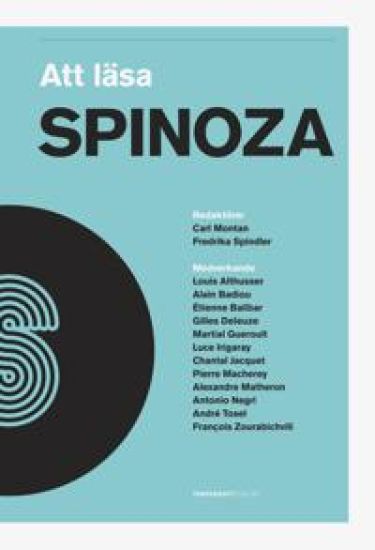
Att läsa Spinoza
Antonio Negri; Gilles Deleuze; Baruch Spinoza; Étienne Balibar; Luce Irigaray
Tankekraft Förlag
2016
nidottu
Baruch Spinoza har under de senaste decennierna tilldragit sig ett ökat filosofiskt intresse. Inte minst inom den politiska teorin har 1600-talsfilosofens formuleringar om demokratins villkor och förutsättningarna för grundandet av en politisk gemenskap blivit utgångspunkt för ett fruktbart nytänkande kring makt och motstånd i en samtida kontext. I denna antologi samlas ett brett urval av inflytelserika läsningar som ur skilda men besläktade perspektiv tar sig an hela rikedomen i Spinozas tänkande – från hans utläggningar om etik, politik och kunskap till den mer allmänna frågan om den filosofiska aktualiteten i klassiska filosofiska verk. Som helhet erbjuder boken ett rikhaltigt material för fördjupade studier i den spinozistiska traditionen. Innehållsförteckning: ”Spinozas filosofiska aktualitet: Heidegger, Adorno, Foucault” av Pierre Macherey, ”Definitionen av sanning hos Descartes och Spinoza” av Martial Gueroult, ”Vi och Spinoza” av Gilles Deleuze, ”Hegels idealistiske Spinoza” av Pierre Macherey, ”Om Spinoza” av Louis Althusser, ”Inneslutningen: En läsning av Spinoza” av Luce Irigaray, ”Spinozas stängda antologi” av Alain Badiou, ”Kropp och själ: Logiken om det ena eller det andra hos Spinoza” av Chantal Jacquet, ”’Politisk traktat’ eller grundandet av den moderna demokratin” av Antonio Negri, ”Den ’fria multitudens’ gåta” av François Zourabichvili, ”Spinoza Anti-Orwell: Massornas fruktan” av Étienne Balibar, ”Kvinnor och tjänare i Spinozas demokrati” av Alexandre Matheron, ”Spinozas historieteori eller filosofi om den historiska utvecklingen” av André Tosel, ”Den etiska världsbilden” av Gilles Deleuze, ”Spinoza och postmodernisterna” av Antonio Negri.
A profound meditation on Leopardi's art and thought as well as a reframing and reassertion of Negri's own philosophical and political project of liberation.Antonio Negri, one of Italy's most influential and controversial contemporary philosophers, offers in this book a radical new interpretation of the nineteenth-century Italian poet Giacomo Leopardi. For Negri, Leopardi is not the bitter, idealistic individualist of conventional literary history, but rather a profoundly materialist thinker who sees human solidarity as the only possible solution to the catastrophes of history and politics. Negri traces Leopardi's resistance to the transcendental idealism of Kant and Hegel, with its emphasis on reason's power to resolve real antagonisms into abstract syntheses, and his gradual development of a sophisticated poetic materialism focused on the constructive power of the imagination and its "true illusions." Like Nietzsche (who admired him), Leopardi provides an alternative to modernity within modernity, expressing a force of rupture and recomposition-a uniquely Italian one-that is as relevant now as it was in the nineteenth century, and which connects to the theory of Empire as the political constitution of the present that Negri has elaborated in collaboration with Michael Hardt.
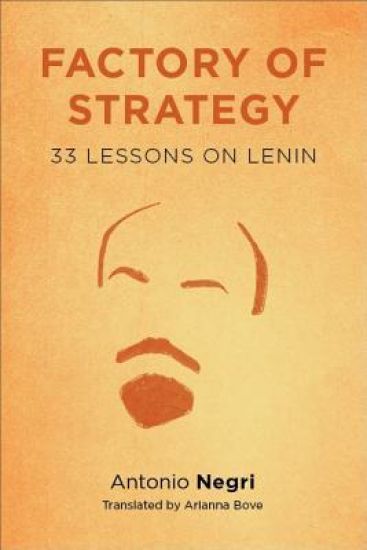
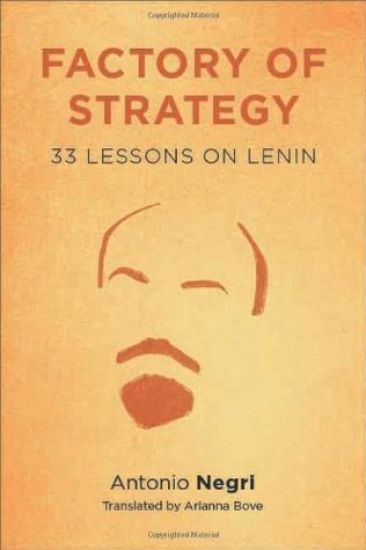
Factory of Strategy is the last of Antonio Negri's major political works to be translated into English. Rigorous and accessible, it is both a systematic inquiry into the development of Lenin's thought and an encapsulation of a critical shift in Negri's theoretical trajectory. Lenin is the only prominent politician of the modern era to seriously question the "withering away" and "extinction" of the state, and like Marx, he recognized the link between capitalism and modern sovereignty and the need to destroy capitalism and reconfigure the state. Negri refrains from portraying Lenin as a ferocious dictator enforcing the proletariat's reappropriation of wealth, nor does he depict him as a mere military tool of a vanguard opposed to the Ancien Regime. Negri instead champions Leninism's ability to adapt to different working-class configurations in Russia, China, Latin America, and elsewhere. He argues that Lenin developed a new political figuration in and beyond modernity and an effective organization capable of absorbing different historical conditions. He ultimately urges readers to recognize the universal application of Leninism today and its potential to institutionally-not anarchically-dismantle centralized power.
Four men in a cell in Rebibbia prison, Rome, awaiting trial on serious charges of subversion. One of them, the political thinker Antonio Negri, spends his days writing. Among his writings are twenty letters addressed to a young friend in France letters in which Negri reflects on his own personal development as a philosopher, theorist and political activist and analyses the events, activities and movements in which he has been involved. The letters recount an existential journey that links a rigorous philosophical education with a powerful political passion, set against the historical backdrop of postwar Italy. Crucially, Negri recalls the pivotal moment in 1978 when the former prime minister of Italy, Aldo Moro, was kidnapped and killed by the Red Brigades, and how the institutions then pinned that killing onto him and his associates. Published here for the first time, these letters offer a unique and invaluable insight into the factors that shaped the thinking of one of the most influential political theorists of our time and they document Negri’s role in the development of political movements like Autonomia. They are a vivid testimony to one man’s journey through the political upheavals and intellectual traditions of the late 20th century, in the course of which he produced a body of work that has had, and continues to have, a profound impact on radical thought and politics around the world.
Factory of Strategy is the last of Antonio Negri's major political works to be translated into English. Rigorous and accessible, it is both a systematic inquiry into the development of Lenin's thought and an encapsulation of a critical shift in Negri's theoretical trajectory. Lenin is the only prominent politician of the modern era to seriously question the "withering away" and "extinction" of the state, and like Marx, he recognized the link between capitalism and modern sovereignty and the need to destroy capitalism and reconfigure the state. Negri refrains from portraying Lenin as a ferocious dictator enforcing the proletariat's reappropriation of wealth, nor does he depict him as a mere military tool of a vanguard opposed to the Ancien Regime. Negri instead champions Leninism's ability to adapt to different working-class configurations in Russia, China, Latin America, and elsewhere. He argues that Lenin developed a new political figuration in and beyond modernity and an effective organization capable of absorbing different historical conditions. He ultimately urges readers to recognize the universal application of Leninism today and its potential to institutionally-not anarchically-dismantle centralized power.
Writings by Negri on the brief thaw in the cold winter of neoliberalism, Thatcherism, Reaganomics, and counterrevolution. Automation and information technology have transformed the organization of labor to such an extent that the processes of exploitation have moved beyond the labor class and now work upon society as a whole. If this displacement has destroyed the political primacy of the labor class, it has not, however, eliminated exploitation; rather, it has broadened it, implanting it within the given conditions of the most diverse spheres of society.-from The Winter Is OverIn late 1995, in opposition to the conservative agenda of Jacques Chirac and his prime minister Alain Juppe and their proposed widespread welfare cuts, French students rose up against their government; public sector workers, together with all the major trade unions, went on strike. When railway workers and Paris Metro personnel joined in the protests, France's public transportation system came to a halt. These extensive social upheavals, the likes of which had not been seen in France since 1968, found widespread public support and fuelled the creation of many political organizations. Chirac backed down from restructuring the public retirement system.Antonio Negri's The Winter is Over comes out of the glimmer of optimism created by the events of 1995, when the long, cold season of neoliberalism, Thatcherism, Reaganomics, reaction, and counterrevolution appeared to have run its course. Published in Italian in 1996, The Winter is Over brings together a series of articles, speeches, and other documents written by Negri between 1989 and 1995 at the threshold of this thaw. It offers a revealing and wide-reaching account of those years of change and brink-of-change, focusing on such topics as the networks of social production, the decline of "limp thought," the end of applied socialism, the Gulf War, and, finally, Italy's transition to its so-called "Second Republic," as seen by an exile.
Antonio Negri wrote the two essays that comprise Time for Revolution while serving a prison sentence for alleged involvement with radical left-wing groups. Although the essays were written two decades apart, their concerns are the same: is there a place for resistance in a society utterly subsumed by capitalism? In the wake of the global crisis of capitalism heralded by the 2008 crash, the question has never been more relevant and Negri remains an insightful and passionate guide to any attempt to answer it.
Factories of Knowledge, Industries of Creativity
Gerald Raunig; Antonio Negri
Semiotext (E)
2013
pokkari
With the economy deindustrialized and the working class decentralized, a call for alternative horizons for resistance: the university and the art world.What was once the factory is now the university. As deindustrialization spreads and the working class is decentralized, new means of social resistance and political activism need to be sought in what may be the last places where they are possible: the university and the art world. Gerald Raunig's new book analyzes the potential that cognitive and creative labor has in these two arenas to resist the new regimes of domination imposed by cognitive capitalism. Drawing on Gilles Deleuze's concept of "modulation" as the market-driven imperative for the constant transformation and reinvention of subjectivity, in Factories of Knowledge, Industries of Creativity, Raunig charts alternative horizons for resistance. Looking at recent social struggles including the university strikes in Europe, the Spanish !Democracia real YA! organization, the Arab revolts, and the Occupy movement, Raunig argues for a reassessment of the importance of cultural and knowledge production. The central role of the university, he asserts, is not as a factory of knowledge but as a place of creative disobedience.
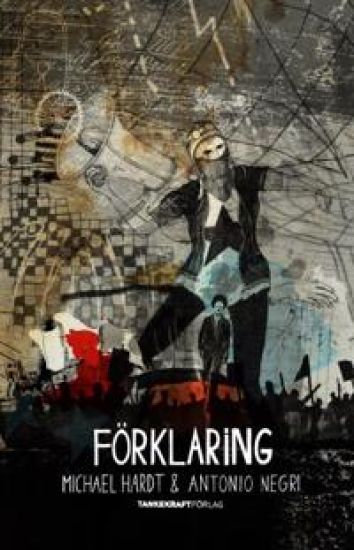
Detta är inte ett manifest. Manifest erbjuder en skymt av en värld som komma skall och åkallar det subjekt som för närvarande bara är ett spöke men som måste materialiseras för att bli förändringens aktör. Manifest fyller samma funktion som antikens profeter, vilka genom kraften i sina visioner skapade sitt eget folk. Dagens sociala rörelser har kastat om ordningen och gjort manifest och profeter överspelade. Förändringens aktörer har redan vällt ut på gatorna och ockuperat städernas torg, där de inte bara har hotat och störtat härskare utan också skapat visioner om en ny värld. Ännu viktigare är kanske att multituderna genom sina logiker och praktiker, genom sina slagord och begär, har uttalat en förklaring om en ny uppsättning principer och sanningar. Hur kan deras förklaring läggas till grund för uppbyggnaden av ett nytt och hållbart samhälle? Hur kan dessa principer och sanningar vägleda oss när vi försöker återuppfinna nya sätt att förhålla oss till varandra och vår omvärld? I sitt uppror måste multituderna upptäcka passagen från förklaring till konstitution.
When Empire appeared in 2000, it defined the political and economic challenges of the era of globalization and, thrillingly, found in them possibilities for new and more democratic forms of social organization. Now, with Commonwealth, Michael Hardt and Antonio Negri conclude the trilogy begun with Empire and continued in Multitude, proposing an ethics of freedom for living in our common world and articulating a possible constitution for our common wealth. Drawing on scenarios from around the globe and elucidating the themes that unite them, Hardt and Negri focus on the logic of institutions and the models of governance adequate to our understanding of a global commonwealth. They argue for the idea of the “common” to replace the opposition of private and public and the politics predicated on that opposition. Ultimately, they articulate the theoretical bases for what they call “governing the revolution.”Though this book functions as an extension and a completion of a sustained line of Hardt and Negri’s thought, it also stands alone and is entirely accessible to readers who are not familiar with the previous works. It is certain to appeal to, challenge, and enrich the thinking of anyone interested in questions of politics and globalization.
With Trilogy of Resistance, the political philosopher Antonio Negri extends his intervention in contemporary politics and culture into a new medium: drama. The three plays collected for the first time in this volume dramatize the central concepts of the innovative and influential thought he has articulated in his best-selling books Empire and Multitude, coauthored with Michael Hardt. In the tradition of Bertolt Brecht and Heiner Müller, Negri’s political dramas are designed to provoke debate around the fundamental questions they raise about resistance, violence, and tyranny. In Swarm, the protagonist searches for an effective mode of activism; with the help of a Greek-style chorus, she tries on different roles, from the suicide bomber and party apparatchik to the multitude. The Bent Man, set in fascist Italy, focuses on a woodcutter who resists fascism by bending himself in two and using his own now-twisted body as a weapon against war. In Cithaeron, perhaps the most audacious of the three plays, Negri reworks Euripides’s Bacchae to explore the circumstances that would compel a diverse and creative community to withdraw from both the despotic government that constrains it and the traditional family relationships that reinforce that despotism.First published in France in 2009 and featuring an introduction by Negri, Trilogy of Resistance provides a direct and passionate distillation of Negri’s concepts and offers insights into one of the most important projects in political philosophy currently under way, as well as a timely reminder of the power of theater to effectively dramatize complex and challenging ideas.
Kommunismens idé
Slavoj Zizek; Antonio Negri; Jacques Rancière; Alain Badiou
Tankekraft Förlag
2011
nidottu
Att göra åtskillnad mellan kommunismens löften och 1900-talets totalitära tragedier är ingen enkel uppgift. Men i en värld som hotas av miljömässiga katastrofer, nya former av apartheid och oöverstigliga klyftor mellan inkluderade och exkluderade finns det ett akut behov av nya idéer som kan vägleda strävan efter ett verkligt fritt och jämlikt samhälle. I denna volym ger femton av dagens viktigaste vänsterteoretiker sin syn på kommunismens begrepp. Utifrån olika infallsvinkar diskuterar de möjligheten av att gentemot kapitalismens kriser och privatiseringar återupprätta kommunismen som namnet på den radikala filosofin och politiken. I kontrast till den rådande uppdelningen i privat och offentligt pekar kommunismen fram mot det gemensamma i den mänskliga tillvaron, de delade resurser och förmågor som kan göra en annan värld möjlig. "Var inte rädda, anslut er till oss, kom tillbaka! Ni har haft era antikommunistiska eskapader, och vi förlåter er för dem men nu är det dags för allvar igen!" Slavoj Zizek