Kirjojen hintavertailu. Mukana 12 390 323 kirjaa ja 12 kauppaa.

Kirjailija

Antonio Negri

Kirjat ja teokset yhdessä paikassa: 68 kirjaa, julkaisuja vuosilta 1992-2026, suosituimpien joukossa Spinoza for Our Time. Vertaile teosten hintoja ja tarkista saatavuus suomalaisista kirjakaupoista.

68 kirjaa

Kirjojen julkaisuhaarukka 1992-2026.

Art and Multitude

Art and Multitude

Antonio Negri

Polity Press
2011
nidottu
Nine letters on art, written to friends from exile in France in the 1980s. Starting from earlier materialist approaches to art, Negri relates artistic production to the structures of social production characteristic of each historical era. This enables him to define the nature of both material and artistic production in the era of post-modernity and post-Fordism - the era Negri characterizes as that of immaterial labour. Negri then seeks to define artistic beauty in this new era, and this he does in terms of concepts that have become fundamental to his thinking - singularity, multitude, abstraction, collective work, event, the biopolitical, the common. Art is living labour, and therefore invention of singularity, of singular figures and objects. But this expressive act only achieves beauty when the signs and language through which it expresses itself turn themselves into community, when they are contained within a common project. The beautiful is not the act of imagining, but an imagination that has become action. Art, in this sense, is multitude.
Art and Multitude

Art and Multitude

Antonio Negri

Polity Press
2011
sidottu
Nine letters on art, written to friends from exile in France in the 1980s. Starting from earlier materialist approaches to art, Negri relates artistic production to the structures of social production characteristic of each historical era. This enables him to define the nature of both material and artistic production in the era of post-modernity and post-Fordism - the era Negri characterizes as that of immaterial labour. Negri then seeks to define artistic beauty in this new era, and this he does in terms of concepts that have become fundamental to his thinking - singularity, multitude, abstraction, collective work, event, the biopolitical, the common. Art is living labour, and therefore invention of singularity, of singular figures and objects. But this expressive act only achieves beauty when the signs and language through which it expresses itself turn themselves into community, when they are contained within a common project. The beautiful is not the act of imagining, but an imagination that has become action. Art, in this sense, is multitude.
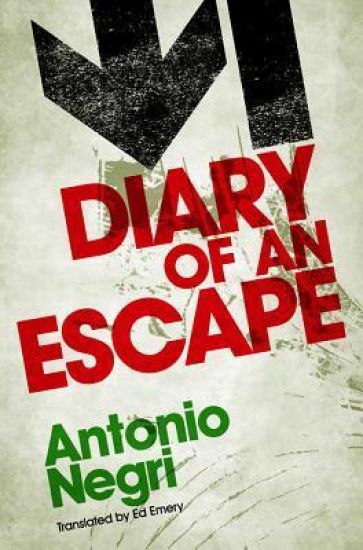
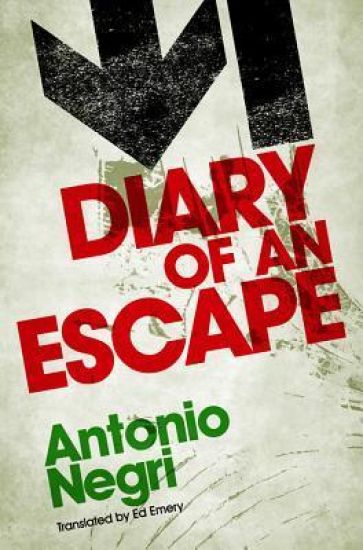
Diary of an Escape

Diary of an Escape

Antonio Negri

Polity Press
2010
sidottu
n Many people across the world know Antonio Negri as an internationally renowned political thinker whose book, Empire, co-authored with Michael Hardt, is an international bestseller. Much less well known is the fact that, up until 1979, Negri was a university professor teaching in Paris and Padova. On April 7th, 1979 he was arrested, charged with the murder of Italian politician Aldo Moro, accused of 17 other murders, of being the head of the Red Brigades and of fomenting insurrection against the state. He has since been absolved of all these accusations, but thanks to the emergency laws in Italy at the time, he was sentenced to 30 years in prison. Then, in July 1983, he was elected as a member of parliament, which meant that he was released from prison after four and a half years of preventive detention. After months of debate, the Lower House decided to strip him of his parliamentary immunity Ð by 300 votes in favour and 293 against. At that point he left Italy for exile in France where he remained until 1997 and continued to maintain his innocence of all the crimes of which he was accused. This book is Negri's diary in which he tells of his imprisonment, trial, the elections, and his escape to and exile in France. Both personal and political, it recounts a little known aspect of Negri's life and will be of great interest to anyone concerned with the work of this enormously influential political thinker.
Diary of an Escape

Diary of an Escape

Antonio Negri

Polity Press
2010
nidottu
n Many people across the world know Antonio Negri as an internationally renowned political thinker whose book, Empire, co-authored with Michael Hardt, is an international bestseller. Much less well known is the fact that, up until 1979, Negri was a university professor teaching in Paris and Padova. On April 7th, 1979 he was arrested, charged with the murder of Italian politician Aldo Moro, accused of 17 other murders, of being the head of the Red Brigades and of fomenting insurrection against the state. He has since been absolved of all these accusations, but thanks to the emergency laws in Italy at the time, he was sentenced to 30 years in prison. Then, in July 1983, he was elected as a member of parliament, which meant that he was released from prison after four and a half years of preventive detention. After months of debate, the Lower House decided to strip him of his parliamentary immunity Ð by 300 votes in favour and 293 against. At that point he left Italy for exile in France where he remained until 1997 and continued to maintain his innocence of all the crimes of which he was accused. This book is Negri's diary in which he tells of his imprisonment, trial, the elections, and his escape to and exile in France. Both personal and political, it recounts a little known aspect of Negri's life and will be of great interest to anyone concerned with the work of this enormously influential political thinker.
Crisis in the Global Economy

Crisis in the Global Economy

Antonio Negri

Semiotext (E)
2010
pokkari
Exit strategies from the current financial crisis that may lead us toward a new horizon of constructing the common.Crisis in the Global Economy is the latest and most innovative collective reflection on the state of global capitalism, developed in the mobile "multiversity" of the UniNomade network of international researchers and activists during the months immediately following the first signals of the current financial and economic crisis. It constitutes the first organic and interdisciplinary attempt to analyze a crisis that is not merely financial in nature but implicates globalization and neoliberal capitalism. Crisis in the Global Economy begins with the recognition that the current financial crisis is a systemic crisis of the entire capitalistic system as it has been developing since the 1890s. Taking as its premise that today's financial markets are the pulsing heart of cognitive capitalism, financing the activity of accumulation, Crisis in the Global Economy shows how the flow of capital rewards production that exploits knowledge and controls spaces beyond traditional business. The ineffectiveness of the extraordinary economic measures taken by single nation-states over the past few months demonstrates that this crisis is of a completely different order. A financial crisis that affects the "real economy" shows that financialization is one of the most recent and perverse articulations of capitalism. The contributions to Crisis in the Global Economy invite us to consider exit strategies from the current crisis-strategies that may lead us toward a new horizon of constructing the common.
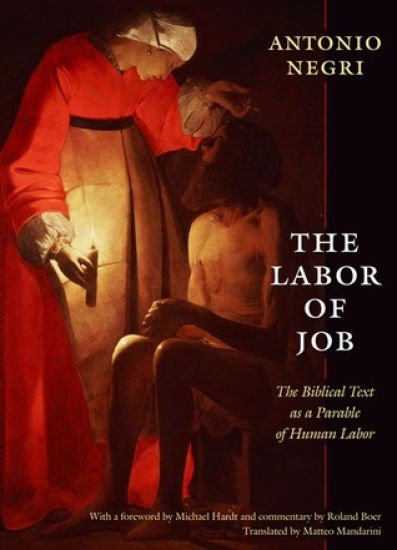
The Labor of Job

The Labor of Job

Antonio Negri

Duke University Press
2010
pokkari
In The Labor of Job, the renowned Marxist political philosopher Antonio Negri develops an unorthodox interpretation of the Old Testament book of Job, a canonical text of Judeo-Christian thought. In the biblical narrative, the pious Job is made to suffer for no apparent reason. The story revolves around his quest to understand why he must bear, and why God would allow, such misery. Conventional readings explain the tale as an affirmation of divine transcendence. When God finally speaks to Job, it is to assert his sovereignty and establish that it is not Job’s place to question what God allows. In Negri’s materialist reading, Job does not recognize God’s transcendence. He denies it, and in so doing becomes a co-creator of himself and the world.The Labor of Job was first published in Italy in 1990. Negri began writing it in the early 1980s, while he was a political prisoner in Italy, and it was the first book he completed during his exile in France (1983–97). As he writes in the preface, understanding suffering was for him in the early 1980s “an essential element of resistance. . . . It was the problem of liberation, in prison and in exile, from within the absoluteness of Power.” Negri presents a Marxist interpretation of Job’s story. He describes it as a parable of human labor, one that illustrates the impossibility of systems of measure, whether of divine justice (in Job’s case) or the value of labor (in the case of late-twentieth-century Marxism). In the foreword, Michael Hardt elaborates on this interpretation. In his commentary, Roland Boer considers Negri’s reading of the book of Job in relation to the Bible and biblical exegesis. The Labor of Job provides an intriguing and accessible entry into the thought of one of today’s most important political philosophers.
Insurgencies

Insurgencies

Antonio Negri

University of Minnesota Press
2009
nidottu
New EditionIn the ten years since the initial publication of Insurgencies, Antonio Negri's reputation as one of the world's foremost political philosophers has grown dramatically. An invigorating appraisal of revolutionary thought, Insurgencies is both the precursor to and the historical basis for Antonio Negri and Michael Hardt's masterwork, Empire.At the center of this book is the conflict between "constituent power," the democratic force of revolutionary innovation, and "constituted power," the fixed power of formal constitutions and central authority. This conflict, Negri argues, defines the drama of modern rebellions. Now with a foreword by Michael Hardt, Insurgencies leads to a new notion of how power and action must be understood if we are to achieve a democratic future.
The Labor of Job

The Labor of Job

Antonio Negri

Duke University Press
2009
sidottu
In The Labor of Job, the renowned Marxist political philosopher Antonio Negri develops an unorthodox interpretation of the Old Testament book of Job, a canonical text of Judeo-Christian thought. In the biblical narrative, the pious Job is made to suffer for no apparent reason. The story revolves around his quest to understand why he must bear, and why God would allow, such misery. Conventional readings explain the tale as an affirmation of divine transcendence. When God finally speaks to Job, it is to assert his sovereignty and establish that it is not Job’s place to question what God allows. In Negri’s materialist reading, Job does not recognize God’s transcendence. He denies it, and in so doing becomes a co-creator of himself and the world.The Labor of Job was first published in Italy in 1990. Negri began writing it in the early 1980s, while he was a political prisoner in Italy, and it was the first book he completed during his exile in France (1983–97). As he writes in the preface, understanding suffering was for him in the early 1980s “an essential element of resistance. . . . It was the problem of liberation, in prison and in exile, from within the absoluteness of Power.” Negri presents a Marxist interpretation of Job’s story. He describes it as a parable of human labor, one that illustrates the impossibility of systems of measure, whether of divine justice (in Job’s case) or the value of labor (in the case of late-twentieth-century Marxism). In the foreword, Michael Hardt elaborates on this interpretation. In his commentary, Roland Boer considers Negri’s reading of the book of Job in relation to the Bible and biblical exegesis. The Labor of Job provides an intriguing and accessible entry into the thought of one of today’s most important political philosophers.
Empire and Beyond

Empire and Beyond

Antonio Negri

Polity Press
2008
nidottu
Today, Empire no longer has an outside: it no longer tolerates realities external to itself. Hence every war cannot but be a civil war, an internal battle, a domestic strife. But if the enemy is always within, militarization is part and parcel of normalization and every war necessarily appears as a policing operation. And yet has the sun really set on the old materialist dream of transforming social conflict into the beginnings of liberation? In the cracks of Empire one can discern an emergent capacity to remould the world. The anti-Empire is represented by the multitude, the collection of impassioned and desiring individuals whose potential for action offers the best hope for a better world. In this book Antonio Negri explains the key concepts and methods which he and Michael Hardt have used to analyse Empire and the new forms of power and counter-power that are shaping and reshaping our world today. Through five introductory lectures and several supporting texts Negri constructs a democratic discourse on globalization, renews the premises of a materialist analysis of social and political life and offers some glimpses of the future.
In Praise of the Common

In Praise of the Common

Cesare Casarino; Antonio Negri

University of Minnesota Press
2008
nidottu
A publishing event-the history and evolution of Antonio Negri’s philosophical and political thoughtA leading Marxist political philosopher and intellectual firebrand, Antonio Negri has inspired anti-empire movements around the world through his writings and personal example. Born in 1933, he was imprisoned in Italy in 1979 and convicted, nearly five years later, on questionable charges of “association and insurrection against the state,” whereupon he left the country to teach in France. In 1997, he voluntarily returned to Italy to serve out his seventeen-year prison sentence. He was freed in 2003.In Praise of the Common, which began as a conversation between Negri and literary critic Cesare Casarino, is the most complete review of the philosopher’s work ever published. It includes five exchanges in which the two intellectuals discuss Negri’s evolution as a thinker from 1950 to the present, detailing for the first time the genealogy of his concepts. In Praise of the Common contains two essays by Casarino that expand Negri’s most recent work by relating it to the work of other prominent thinkers.This is at once a book by Negri and on Negri. It presents, for the first time in English, a major essay by Negri on the “monster” as a political figure in the history of Western thought, engaging with discourses of biopolitics, eugenics, and genetic engineering. More candid and self-critical than ever before, Negri provides his wide audience with a rich and revelatory assessment of his controversial, highly influential thought.
Porslinsfabriken

Porslinsfabriken

Antonio Negri

Tankekraft Förlag
2008
nidottu
Utgångspunkten för denna serie föreläsningar, som hölls vid Collège International de Philosophie i Paris år 2004-05, är att undersöka vilka konsekvenser som övergången från modernitet till postmodernitet får för det politiska tänkandet. I och med socialismens död är det inte bara den traditionella vänsterns idéer och begrepp som har blivit akterseglade av historien; tvärtom har hela den moderna politikens vokabulär med dess föreställningar om stat, nation, folk, rättigheter, suveränitet, gränser etc. nu hamnat i kris. Vad vår nuvarande situation fordrar är därför ingenting mindre än ett nytt politiskt lexikon, fritt från modernitetens nedärvda tankefigurer. Den italienske filosofen Antonio Negri har genom böckerna Imperiet och Multituden (skrivna tillsammans med Michael Hardt) gjort sig känd som en av vår tids mest kontroversiella politiska tänkare. I sin nya bok Porslinsfabriken riktar han uppmärksamheten mot själva de språkliga förutsättningarna för vår förmåga att tänka politiskt, och inbjuder oss att reflektera kring en rad nya begrepp som förmår fånga den radikala kraften i de dramatiska förändringar som präglar dagens värld.
Goodbye, Mr Socialism

Goodbye, Mr Socialism

Antonio Negri; Raf Scelsi

Seven Stories Press,U.S.
2008
nidottu
Goodbye Mr. Socialism offers a gripping encounter with one of today's leading leftists, presenting his most up-to-date analysis of global events and insight into the prospects for the Left in an age of neoliberalism. In his most accessible work yet, philosopher Antonio Negri discusses the state of the global Left since the end of the Cold War and suggests a new politics in a series of rousing conversations with Raf Valvola Scelsi. Scelsi prompts Negri to critique the episodes in the post-Cold War period that have afforded the Left opportunities to rethink its strategies and objectives. Addressing the twilight of social democracy, Negri offers a compelling defense of the prospects for social transformation.
The Porcelain Workshop

The Porcelain Workshop

Antonio Negri

Semiotext (E)
2008
pokkari
A philosopher and political thinker describes a new political grammar free of modernist assumptions.In 2004 and 2005, Antonio Negri held ten workshops at the College International de Philosophie in Paris to formulate a new political grammar of the postmodern. Biopolitics, biopowers, control, the multitude, people, war, borders, dependency and interdependency, state, nation, the common, difference, resistance, subjective rights, revolution, freedom, democracy: these are just a few of the themes Negri addressed in these experimental laboratories. Postmodernity, Negri suggests, can be described as a "porcelain factory": a delicate and fragile construction that could be destroyed through one clumsy act. Looking across twentieth century history, Negri warns that our inability to anticipate future developments has already placed coming generations in serious jeopardy. Describing the years 1917-1968 as the "short century," Negri suggests that by the end of it, all of the familiar markers of modernity (including that of socialism) had lost their relevance. Confronted with an intolerable reality, indignation and the revolutionary will to transform the world have both taken new forms and must be understood anew, free of modernist assumptions. In the impassioned debates recounted in this book, Antonio Negri attempts to describe the formation of an alternative political horizon and looks for a way to define the practices and modes of expression that democracy could take.Antonio Negri is a philosopher and essay writer. A political and social activist in the 1960s and 1970s in Italy, he taught political sciences for many years and has written numerous books on political philosophy including Marx beyond Marx (1979), The Savage Anomaly (1983), Insurgencies (1997); and in collaboration with Michael Hardt, Empire (2000) and Multitude (2004).
Reflections on Empire

Reflections on Empire

Antonio Negri

Polity Press
2008
nidottu
This new book from Antonio Negri, one of the most influential political thinkers writing today, provides a concise and accessible introduction to the key ideas of his recent work. Giving the reader a sense of the wider context in which Negri has developed the ideas that have become so central to current debates, the book is made up of five lectures which address a series of topics that are dealt with in his world-famous books empire, globalization, multitude, sovereignty, democracy. Reflections on Empire will appeal to anyone interested in current debates about the ways in which the world is changing today, to the many people who are followers of Negri's work and to students and scholars in sociology, politics and cultural studies.
Multituden : krig och demokrati i imperiets tidsålder

Multituden : krig och demokrati i imperiets tidsålder

Antonio Negri; Michael Hardt

Tankekraft förlag
2007
sidottu
Världen befinner sig sedan en tid tillbaka i ett permanent krigstillstånd. Konstitutionella garantier och skyddsmekanismer sätts ur spel, medborgerliga rättigheter suspenderas och det politiska styret underordnas de militära behoven. Undantagstillståndet har blivit ordningen för dagen. I en sådan situation kan det förefalla hopplöst att ens drömma om verklig demokrati. Ändå är det just i detta läge som möjligheten av en demokrati i global skala börjar framträda på allvar. I Multituden fortsätter Michael Hardt och Antonio Negri den brett upplagda analys av samtidens politiska villkor som inleddes i deras mycket uppmärksammade bok Imperiet. Där föregångaren var fokuserad på de nya suveränitetsformer och maktstrukturer som framträder i och med globaliseringen, riktar denna uppföljare i stället sökarljuset mot motståndets möjligheter. De senaste årens politiska, ekonomiska och sociala utveckling har inte bara skapat nya hierarkier och dominansförhållanden, utan också öppnat möjligheter för ett radikalt alternativ till imperiets globala maktordning. Under det rådande krigstillståndets våld och förtyck gror ett okuvligt begär efter en demokratisk och fredlig värld. Multituden är namnet på den gränslösa kraft som bär upp detta projekt.
Imperiet

Imperiet

Antonio Negri; Michael Hardt

Spartacus
2007
nidottu
Imperialismen er borte slik vi kjenner til den i dag. Men i følge forfatterne av boken består imperiet. Globaliseringen gjør at makten ikke lenger avgrenses til et bestemt sted eller territorium. Overnasjonale selskaper og postindustrielle arbeidsformer preger en ny imperialistisk verdensorden der selv ikke USA kan sies å inneha verdensherredømme. Disse kulturelle og økonomiske endringene gir nye former for identitet og nye nettverk for kommunikasjon og kontroll. Boken gir et overblikk over globaliseringens historie og filosofi, den gjennomgår viktige begreper i dagens politiske debatt, og skaper begeper for en ny verdensorden. Med navneregister.
Books for Burning

Books for Burning

Antonio Negri

Verso Books
2005
nidottu
Long before Antonio Negri became famous around the world for his groundbreaking volume Empire, he was infamous across Europe for the incendiary writings contained in this book. Books for Burning consists of five pamphlets that Negri wrote between 1971 and 1977, which attempt to identify and draw lessons from new conditions of class struggle that emerged in the course of the 1970s.Conceived as organizational hypotheses intended for debate among the members of the political movements Workers' Power (Potere operaio) and Organized Autonomy (Autonomia organizzata), these texts were later misread and misrepresented by the Italian state in its attempt to frame Negri as responsible for the assassination of former Italian president Aldo Moro, as the leader of the Red Brigades, and as the mastermind of an armed insurrection against the state. In the more than twenty-five years since their first publication, these texts have lost none of their originality, relevance or power to shock.In a new preface, Negri demonstrates how his controversial work on empire, biopolitics and immaterial labor developed out of concepts and strategies first outlined in this book, and an editorial introduction analyzes the role these texts played in Negri's trial and in the criminalization of the Italian radical workers' movement.
Multitude: War and Democracy in the Age of Empire

Multitude: War and Democracy in the Age of Empire

Michael Hardt; Antonio Negri

PENGUIN BOOKS
2005
nidottu
In their international bestseller Empire, Michael Hardt and Antonio Negri presented a grand unified vision of a world in which the old forms of imperialism are no longer effective. But what of Empire in an age of American empire ? Has fear become our permanent condition and democracy an impossible dream? Such pessimism is profoundly mistaken, the authors argue. Empire, by interconnecting more areas of life, is actually creating the possibility for a new kind of democracy, allowing different groups to form a multitude, with the power to forge a democratic alternative to the present world order.Exhilarating in its optimism and depth of insight, Multitude consolidates Hardt and Negri s stature as two of the most important political philosophers at work in the world today."