Kirjojen hintavertailu. Mukana 12 137 178 kirjaa ja 12 kauppaa.

Kirjailija

Christopher Norris

Kirjat ja teokset yhdessä paikassa: 55 kirjaa, julkaisuja vuosilta 1987-2026, suosituimpien joukossa Titian's Blue. Vertaile teosten hintoja ja tarkista saatavuus suomalaisista kirjakaupoista.

55 kirjaa

Kirjojen julkaisuhaarukka 1987-2026.

Philosophy Outside-In

Philosophy Outside-In

Christopher Norris

EDINBURGH UNIVERSITY PRESS
2026
nidottu
Christopher Norris raises some basic questions about the way that analytic philosophy has been conducted over the past 25 years. In doing so, he offers an alternative to what he sees as an over-specialisation of a lot of recent academic work. Arguing that analytic philosophy has led to a narrowing of sights to the point where other approaches that might be more productive are blocked from view, he goes against the grain to claim that Continental philosophy holds the resources for a creative renewal of analytic thought.
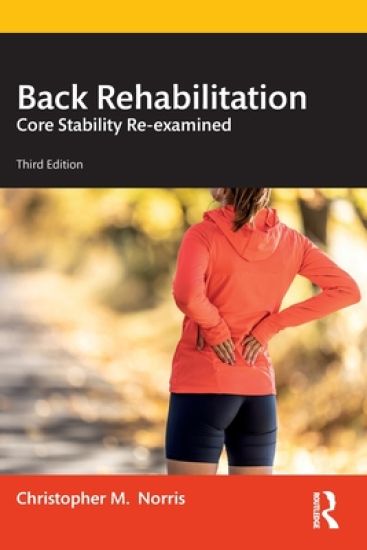
Back Rehabilitation

Back Rehabilitation

Christopher Norris

TAYLOR FRANCIS LTD
2023
sidottu
Low back pain affects most of us at some time, and exercise is key to both its prevention and treatment. Critically appraising work from several approaches to produce an integrated, practical approach suitable for day-to-day clinicians and personal trainers, this essential guide looks at the science and practice of designing and teaching the best exercise programmes for this common condition. Learn: Vital client assessment skills Which exercises to use and why The most effective teaching methods How to structure and progress a full back pain management programmeAimed at student therapists and clinical exercise teachers, as well as trainers planning exercise programmes for subjects recovering from low back pain, Back Rehabilitation is essential reading for therapists and exercise academics and professionals of all types.
Back Rehabilitation

Back Rehabilitation

Christopher Norris

TAYLOR FRANCIS LTD
2023
nidottu
Low back pain affects most of us at some time, and exercise is key to both its prevention and treatment. Critically appraising work from several approaches to produce an integrated, practical approach suitable for day-to-day clinicians and personal trainers, this essential guide looks at the science and practice of designing and teaching the best exercise programmes for this common condition. Learn: Vital client assessment skills Which exercises to use and why The most effective teaching methods How to structure and progress a full back pain management programmeAimed at student therapists and clinical exercise teachers, as well as trainers planning exercise programmes for subjects recovering from low back pain, Back Rehabilitation is essential reading for therapists and exercise academics and professionals of all types.
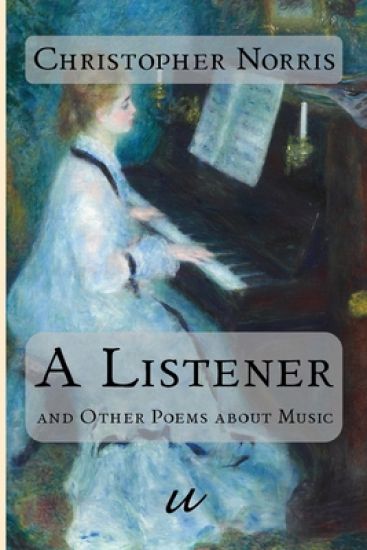
A Listener

A Listener

Christopher Norris

Tankebanen forlag dr Torgeir Fjeld
2023
pokkari
These poems are the result of a lifetime of highly active involvement with music on the part of a writer best known for his work in philosophy, literary theory (especially deconstruction), and the history of ideas. In this collection he has chosen a great range of verse forms, among them sonnet, terzanelle, quatrain, terza rima, ottava rima, and pantoum. The poems treat individual composers, Purcell to Shostakovich and Philip Glass, and themes such as the tritone, or 'devil in music'. Spanning ten years of intensive creativity these poems mark Norris's sustained attempt to assert a more expansive and challenging conception of poetry's present-day prospects.
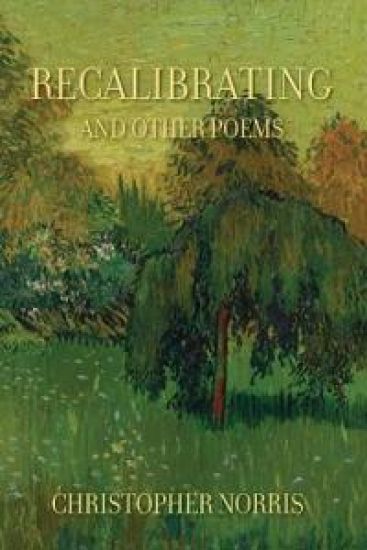
Recalibrating and Other Poems

Recalibrating and Other Poems

Christopher Norris

Parlor Press
2023
pokkari
These poems continue Christopher Norris's spirited exploration of the paths by which contemporary poetry might find its way out of the self-enclosed sphere of lyric subjectivity into the larger air of philosophical, ethical, political, scientific, and environmental debate. They do so through a range of formal resources, among them rhyme and meter, which Norris regards as portals of creative-intellectual discovery and not, as free-verse practitioners would have it, artificially cramping constraints. Norris also deploys a great range of stanza forms and verse structures to demonstrate the variety of ways in which technique and prosody can serve not only to emphasize, deepen or qualify a point but to express thoughts and feelings beyond the communicative reach of prose discourse. These aspects of his work are subject to commentary in a concluding essay where Norris talks about his passage from literary theory to philosophy and thence to poetry, although-as the reader will soon discover-without having left those earlier interests behind. Indeed, it is a main concern of this collection to make the case-against dominant post-Romantic or Modernist conceptions-that a poem can justifiably put forward certain ideas, propositions, or hypotheses that ask to be assessed in rational-critical as well as aesthetic or literary-critical terms. Norris is very clear that his kind of formalism is strictly a matter of verse-technique or structure and no part of any larger, doctrinally driven autonomist program, like that of the 'old' New Criticism, that treats poems as purely verbal artifacts self-sealed against any such alien intrusions as history, biography, or the meddlesome prose intellect. These poems are intended as mind-openers whose formal elements are always in the service of a deeper, more lucid, and creative engagement with their diverse topics and concerns.What People Are SayingExploring the relationship between poetry, literary criticism, theory, and philosophy, Norris has the earned authority of an expert in all four fields. Yet there's a disarming playfulness in his engagement with the reader, and he makes complex argument memorably musical by mining the resources of meter and rhyme. Deploying a dazzling array of poetic forms - from villanelle, terza rima and sonnet to ballad and acrostic-this collection is a tour de force of wit, intellect, political verve and musicality: in short, a major achievement. -Lucy Newlyn, author of Reading, Writing, and RomanticismEminent philosophers, or literary theorists, do not usually turn, all of sudden, into fully-formed, metrically-perfect and highly-formalized poets; but that is the trick or magic of Christopher Norris. And in this his latest volume of poetry the magic is all the more magical for often silently becoming the very subject of his poems. Witness talk of William Empson's "late-style change of hats," or James Joyce's Daedalus slipping "the scholar's leash." Here then, juggling his hats as he goes, Scholar Norris is well-and-truly on the run. And, as the Runaway himself writes, "just North of here the games begin."- John Schad, author of Paris Bride: A Modernist LifeAbout the AuthorChristopher Norris is Emeritus Professor of Philosophy at Cardiff University in Wales, where he taught for four decades. He is the author and editor of more than forty books on topics in philosophy, literary theory, politics, music, and the history of ideas. More recently, he has published ten volumes of poetry ranging from lyrics and reflective verse to philosophical verse-essays and political satires. Academically he is best known for his extensive writing on the poet and literary critic William Empson and for his many books and essays on Jacques Derrida and deconstruction.
Hedgehogs

Hedgehogs

Christopher Norris

Tankebanen Forlag/Utopos Publishing
2021
sidottu
Hedgehogs is an extended sequence of poems and verse-essays about Jacques Derrida by a well-known philosopher, literary theorist, and commentator on his writings. Their topics range widely across the full span of Derrida's work, treated here in formal (rhyming and metrical) verse of a variously witty, ironic, reflective, discursive, and narrative character. Norris's aim is partly to provide a way into that work for readers with a chief interest in poetry and partly to offer fresh points of engagement for philosophers and literary critics, including those who have so far been resistant to it. But his object is also to explore the possibility of playing off formal verse structures against Derrida's very different, broadly symbolist-modernist idea of what poetry can and should be in the wake of practitioners like Mallarm and Paul Celan. By so doing Norris makes a case - contra the advocates of free verse - for the exploratory-creative rather than restrictive or expression-cramping role of rhyme and meter. These serve at best as formal constraints that liberate thought into semantic, conceptual and imaginative regions beyond anything that might be envisaged by writers of straightforward expository prose, or indeed free verse. Thus they are highly suited to philosophical poetry, especially where it intersects with a mode of thought - like Derrida's - that lives very much in and through its singular resources of linguistic inventiveness. Altogether these poems make a notable contribution to the currently fast-growing field of creative criticism.
As Knowing Goes and Other Poems

As Knowing Goes and Other Poems

Christopher Norris

Parlor Press
2021
pokkari
This collection drops a boulder into the still waters of British poetry. It is wide-ranging, hard-hitting, and above all ambitious, both in vision and variety of poetic forms. Norris moves rhythmically through politics, philosophy, and science always with an eye for the particular, always in pursuit of the bigger picture. He has an extraordinary ability to blow the dust off our habitual perceptions, charge up our minds and make the language sing. He finds live connections between an anchorite and our own boxed existence, he quarrels with T. S. Eliot and jokes about endorphins. Each poem stands for what we are in danger of losing; our intelligence, our learning, our feeling, our connection with history, and with each other. The volume is one of those points of light that Auden said the just exchange with one another; so read and pass the word: here are poems to sustain in the dark times and give us hope for the future. -GARY DAY, author of Literary Criticism: A New HistoryThese poems eschew the confessional laxity and structural imprecision that typify so much contemporary verse. Christopher Norris takes seriously Ezra Pound's dictum that poetry should be at least as well written as good prose while exceeding that basic requirement through a range of expressive and formal-prosodic resources. His poems are unfailingly dynamic, the sense hard-won from rigorous forms which at times serve an almost dialogical function, nuancing assertions and scotching simple conclusions. These are the values that Norris here exemplifies in verse that is at once an eloquent present-day defense of poetry and, by implication, a searching critique of various turns in its development over the past half-century. -NIALL GILDEA, author of Jacques Derrida's Cambridge AffairCHRISTOPHER NORRIS is Emeritus Professor of Philosophy at the University of Cardiff in Wales. He has published more than thirty books on topics in philosophy, literary theory, the history of ideas, cultural politics, and musical criticism. Socrates at Verse and Other Philosophical Poems was published by Parlor Press in 2021.
Hedgehogs

Hedgehogs

Christopher Norris

Tankebanen Forlag/Utopos Publishing
2020
pokkari
Hedgehogs is an extended sequence of poems and verse-essays about Jacques Derrida by a well-known philosopher, literary theorist, and commentator on his writings. Their topics range widely across the full span of Derrida's work, treated here in formal (rhyming and metrical) verse of a variously witty, ironic, reflective, discursive, and narrative character. Norris's aim is partly to provide a way into that work for readers with a chief interest in poetry and partly to offer fresh points of engagement for philosophers and literary critics, including those who have so far been resistant to it. But his object is also to explore the possibility of playing off formal verse structures against Derrida's very different, broadly symbolist-modernist idea of what poetry can and should be in the wake of practitioners like Mallarm and Paul Celan. By so doing Norris makes a case - contra the advocates of free verse - for the exploratory-creative rather than restrictive or expression-cramping role of rhyme and meter. These serve at best as formal constraints that liberate thought into semantic, conceptual and imaginative regions beyond anything that might be envisaged by writers of straightforward expository prose, or indeed free verse. Thus they are highly suited to philosophical poetry, especially where it intersects with a mode of thought - like Derrida's - that lives very much in and through its singular resources of linguistic inventiveness. Altogether these poems make a notable contribution to the currently fast-growing field of creative criticism.
Socrates at Verse and Other Philosophical Poems
These poems by a well-known philosopher and literary theorist take a lead from Plato's intriguing account of how Socrates turned to composing verse during his last few days despite having famously denounced its corrupting moral, social and political effects. Writing as a convinced formalist, Christopher Norris deploys a range of meters, stanza-forms and rhyme-schemes by way of exploring how the discipline of verse might relate to that of philosophical enquiry as practiced across the ages. Some of his poems have to do with individual thinkers, such as Berkeley, Hume, Kant, Schopenhauer, Kierkegaard, Nietzsche, Wittgenstein, Adorno, and Derrida. Others are concerned with wider debates like those around the nature of time, the status of mathematical truths, the enduring puzzles of quantum mechanics, Kurt G del's Undecidability Theorem, the mind/body problem, the ontology of art, the nature of rules, and the role of luck in matters of moral judgment. Others again are philosophical in the non-specialist sense of confronting often-asked questions about love, memory, identity, character, social roles, choice, evolution, and animal sentience.What People Are Saying"I not only want to read it again. I want to emulate it. It's a liberating model of how, after a career in critical and philosophical prose, a writer can distill and animate the thoughts and thinkers with which and whom he has been long engaged." --DON BIALOSTOSKY"The poems in Socrates at Verse are not the mythic romantic odes of the nineteenth century, nor the very difficult lyrical sequences of the twentieth. Rather, these poems are more akin to eighteenth century British verse--a "poetry of ideas" that is wonderfully witty and fun. The poems are easy to grasp and understand--more deeply if one has a knowledge of or penchant for the particular philosophers, issues, or ideas treated in each. Reminiscent of the poetic genre dubbed "occasional verse" (constrained as it is by subject or situation), these poems skirt the dangers of stilted language, forced rhymes. They are freshly humorous (if not sarcastic), entertaining (and not at all self-absorbed)." --STEVE KATZAbout the AuthorCHRISTOPHER NORRIS is Emeritus Professor in Philosophy at the University of Cardiff. He has published more than thirty books on topics in philosophy, literary theory, the history of ideas, cultural politics, and musical criticism. Norris's books on deconstruction were among the first to introduce Derrida's thought to an Anglophone readership and to establish its jointly philosophical and literary bearings. More recently he has turned to writing poetry and verse-essays that often draw on those earlier interests to generate a new kind of creative writing focused on the various complex intersections of imaginative, fictive, scholarly, philosophical, and speculative thought.
The Winnowing Fan

The Winnowing Fan

Christopher Norris

Bloomsbury Academic
2019
nidottu
This path-breaking book explores different ways in which writing about poetry can deepen and extend our critical engagement by deploying creatively the manifold resources of poetic language and form. Through a series of verse-essays, reflective monologues, and inventive variations on topics in literary theory The Winnowing Fan makes a strong case for revising received ideas about the scope and limits of criticism.Norris’s poems traverse the full range of European poetic history from Homer’s Odyssey, through the work of French symbolists such as Mallarmé, to modern writers such as Yeats, Benjamin, Heaney, Larkin, and Barthes. There are also verse-essays and shorter pieces on philosophers from Hume and Leibniz to Heidegger, Althusser, Derrida, de Man, Rorty, Deleuze, Badiou, and Agamben. In each case Norris seeks to free criticism from conventional academic forms and return it to an active mutual engagement with the practice of literature itself.
Sports and Soft Tissue Injuries

Sports and Soft Tissue Injuries

Christopher Norris

Routledge
2018
sidottu
The fifth edition of the retitled Sports and Soft Tissue Injuries sharpens its focus on the treatment of sports injuries, providing the most complete evidence-based guide for physiotherapists, sports therapists and medical practitioners working with athletes.Opening with chapters that examine the underlying science of tissue healing and principles of rehabilitation, the book employs a systematic approach, with chapters covering each area of the body, from facial through to ankle and foot injuries. Every chapter includes in-depth discussion and guidance on the treatment of common sports injuries through physiotherapeutic modalities, drawing on the author’s wealth of personal experience and the latest peer-reviewed research.A complete pedagogical resource, Sports and Soft Tissue Injuries is highly illustrated in full colour, and is an important text for students of sports therapy, physiotherapy, sport medicine and athletic training, interesting further reading for sport and exercise science or kinesiology students with an interest in sports injury, and a crucial reference for practicing physiotherapists and athletic trainers and the related disciplines.
Sports and Soft Tissue Injuries

Sports and Soft Tissue Injuries

Christopher Norris

Routledge
2018
nidottu
The fifth edition of the retitled Sports and Soft Tissue Injuries sharpens its focus on the treatment of sports injuries, providing the most complete evidence-based guide for physiotherapists, sports therapists and medical practitioners working with athletes.Opening with chapters that examine the underlying science of tissue healing and principles of rehabilitation, the book employs a systematic approach, with chapters covering each area of the body, from facial through to ankle and foot injuries. Every chapter includes in-depth discussion and guidance on the treatment of common sports injuries through physiotherapeutic modalities, drawing on the author’s wealth of personal experience and the latest peer-reviewed research.A complete pedagogical resource, Sports and Soft Tissue Injuries is highly illustrated in full colour, and is an important text for students of sports therapy, physiotherapy, sport medicine and athletic training, interesting further reading for sport and exercise science or kinesiology students with an interest in sports injury, and a crucial reference for practicing physiotherapists and athletic trainers and the related disciplines.
The Matter of Rhyme

The Matter of Rhyme

Christopher Norris

Sussex Academic Press
2018
nidottu
The poetry of ideas, a long neglected genre, has now found a vigorous and resourceful champion in Christopher Norris. Hitherto best known as philosopher and literary theorist, he has treated that genre to a full-scale modern revival of singular scope and ambition. His poems combine intellectual agility with a verse-music both keen-eared and frequently haunting. This latest collection sees Norris at the top of his bent as lyric poet, poet-philosopher, verse-essayist, political satirist, social commentator, and skilful re-worker of traditional verse-forms to suit contemporary contexts and concerns. It exhibits all the wit and erudition that readers will have come to expect, along with a marked broadening of purview and heightened stylistic virtuosity. These poems engage with topics ranging from the personal (though never private-confessional) to the deeply enquiring (though never abstruse) and the forcefully political (though never excluding issues that transcend the narrowly partisan). Above all they make the case for viewing rhyme, meter, and prosodic structure as intrinsically a part of verse-practice and a source of everything that is most distinctive and valuable in poetry.
The Winnowing Fan

The Winnowing Fan

Christopher Norris

Bloomsbury Academic
2017
sidottu
This path-breaking book explores different ways in which writing about poetry can deepen and extend our critical engagement by deploying creatively the manifold resources of poetic language and form. Through a series of verse-essays, reflective monologues, and inventive variations on topics in literary theory The Winnowing Fan makes a strong case for revising received ideas about the scope and limits of criticism.Norris’s poems traverse the full range of European poetic history from Homer’s Odyssey, through the work of French symbolists such as Mallarmé, to modern writers such as Yeats, Benjamin, Heaney, Larkin, and Barthes. There are also verse-essays and shorter pieces on philosophers from Hume and Leibniz to Heidegger, Althusser, Derrida, de Man, Rorty, Deleuze, Badiou, and Agamben. In each case Norris seeks to free criticism from conventional academic forms and return it to an active mutual engagement with the practice of literature itself.
For the Tempus-Fugitives

For the Tempus-Fugitives

Christopher Norris

Sussex Academic Press
2017
nidottu
In this latest collection of poems and verse-essays, Christopher Norris revisits many of the topics for which he is best known as a philosopher, literary theorist, and writer on music. Among them are the many-worlds metaphysics of Leibniz, the nature of subjective time-experience, the issue of poetic truth, the function of rhyme in poetry, the theory wars in literary studies, the augmented-fourth interval (or tritone), also known as the devil in music, and musical minimalism approached from a critical or cultural-diagnostic standpoint. There are also some shorter, more occasional pieces including an epithalamion (wedding-poem) for the poet's daughter, a semi-fictive double sestina about police infiltration of activist groups, a savagely bawdy polemic imagined as addressed by the ancient Greek satirist Archilochus to his ex-fiancee Neobule, and a number of shrewdly angled political poems with reference to events from the 1980s to the present. These pieces have the hallmark qualities of intellectual range, perceptive wit, and formal inventiveness that characterise Norris's verse-essays. They make a strong case for poetry as a vehicle for argument, dialogue, and open debate.