Kirjojen hintavertailu. Mukana 12 246 422 kirjaa ja 12 kauppaa.

Kirjailija

David Doyle

Kirjat ja teokset yhdessä paikassa: 124 kirjaa, julkaisuja vuosilta 2015-2026, suosituimpien joukossa CH-47 Chinook. Vertaile teosten hintoja ja tarkista saatavuus suomalaisista kirjakaupoista.

124 kirjaa

Kirjojen julkaisuhaarukka 2015-2026.

USS Iowa (BB-61)

USS Iowa (BB-61)

David Doyle

Schiffer Publishing Ltd
2017
sidottu
The USS Iowa (BB-61) was the lead ship in the United States Navy's last, and most battle-worthy, battleship class, which also included the New Jersey, Wisconsin, and Missouri. This volume explores Iowa's design, construction, launching, and commissioning, as well as its extensive wartime activities in both World War II and Korea. Also covered are its post-Korea years in the reserve "mothball fleet," recommissioning in 1984, and coverage of the tragic 1989 turret explosion that killed forty-seven sailors. The carefully researched photos, many of which have never before been published, are reproduced in remarkable clarity, and coupled with descriptive and informative captions, this book puts the reader on the deck of this historic warship throughout her history.
M40 Gun Motor Carriage and M43 Howitzer Motor Carriage in WWII and Korea
The M40 Gun Motor Carriage and M43 Howitzer Motor Carriage are featured in over 200 photographs, providing a detailed study of the conception, development, testing, and combat use of these key vehicles. As the US entered WWII, the nation lacked heavy self-propelled artillery, instead relying heavily on towed artillery, much of it WWI-surplus. Only 100 examples of the nation’s first heavy self-propelled gun, the M12, were built. Finding favor once deployed, attention was turned to developing an improved model. Initially designated the T83, and later as the M40, the new 155mm Gun Motor Carriage was first fielded in the closing months of WWII. Already scheduled for mass production, the M40, and its companion 8-inch howitzer-armed M43, continued to see extensive use during the Korean War, providing crucial support to infantry and armor formations. Historic period images, as well as meticulously photographed surviving examples, provide a detailed look at this important piece of US military hardware.
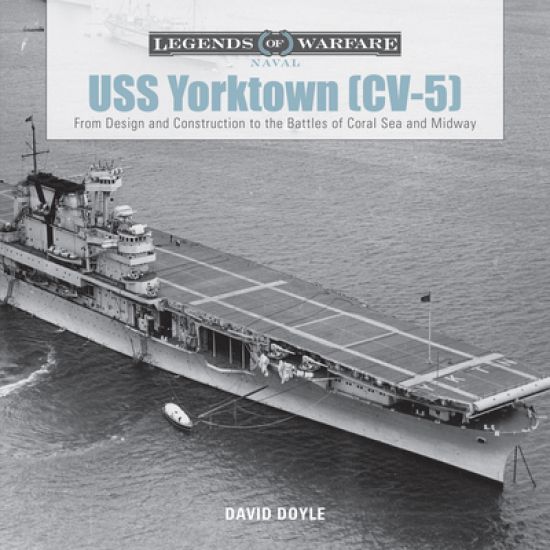
USS Yorktown (CV-5)

USS Yorktown (CV-5)

David Doyle

Schiffer Publishing Ltd
2017
sidottu
USS Yorktown (CV-5) was the US Navy's first battle-worthy, purpose-built aircraft carrier. Her crew, already accustomed to wartime conditions by maintaining Neutrality Patrols during 1941 in the Atlantic, quickly adapted to the Pacific Theater, having been dispatched there immediately after Pearl Harbor. First at Coral Sea, then at Midway, Yorktown's flyers blunted the sword of Japanese aggression. The men flying from her decks were instrumental in turning the tide of WWII in the Pacific. This volume explores Yorktown's construction, prewar and wartime activities through carefully researched photos, many of which have never before been published, which are reproduced in remarkable clarity. This clarity, and the large size of many of the photos, coupled with descriptive and informative captions, puts the reader on the deck of this historic warship throughout her history.
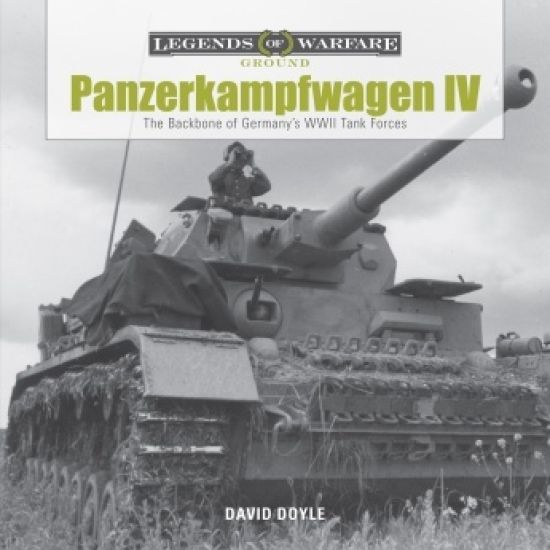
Panzerkampfwagen IV

Panzerkampfwagen IV

David Doyle

Schiffer Publishing Ltd
2017
sidottu
The Panzerkampfwagen IV, or Panzer IV as it is more popularly known, formed the backbone of Germany’s tank formations during WWII. With production totaling more than 8,500, the Panzer IV was the most plentiful German tank of the war, and the only German tank that remained in production for the duration of the conflict. Through more than 180 photos, this volume chronicles the design, development, and operational deployment of this ubiquitous German tank. This material is arranged in nine chapters, each focusing on a specific production model (Ausführung) of the tank. Comprehensive tables reveal the details of the performance and technical specifications of each variant. A concise, easy to read text, and detailed photographic captions expose the secrets of this iconic tank.
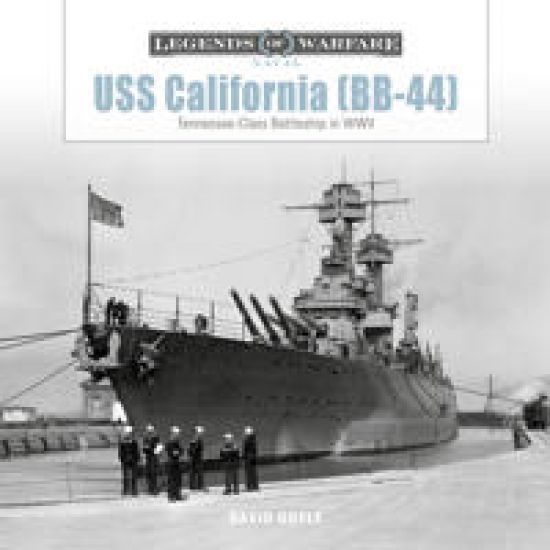
USS California (BB-44)

USS California (BB-44)

David Doyle

SCHIFFER PUBLISHING LTD
2026
sidottu
A pictorial history of USS California, a battleship that was sunk in Pearl Harbor, raised, repaired, and returned to duty during the Second World War. USS California (BB-44) was commissioned by the US Navy in 1921, a year after her sister ship, USS Tennessee. The ship was sunk during the surprise attack on the Pacific Fleet at Pearl Harbor in 1941. California was raised and subject to a drastic refit and modernization, finally returning to operational duty in early 1944. BB-44 saw combat in several of the later battles against Japan. The battleship was placed in reserve in 1946, decommissioned in 1947, and scrapped in 1959. This work provides a pictorial history of California, from the keel laying in 1916 onward. Several hundred images and detailed captions show the ship in action and in its various technical details, both before and after the extensive wartime refit.
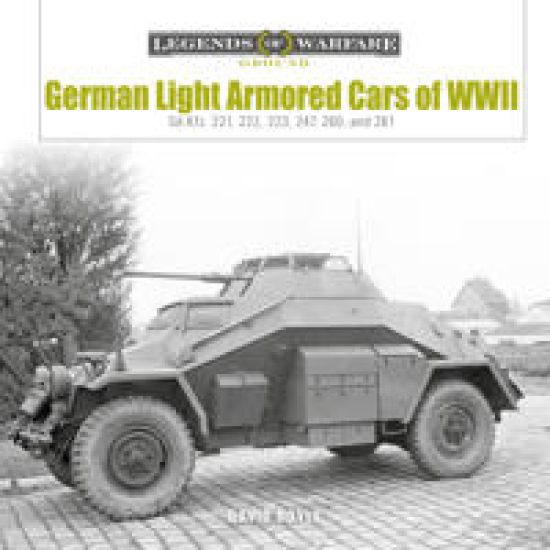
German Light Armored Cars of WWII

German Light Armored Cars of WWII

David Doyle

SCHIFFER PUBLISHING LTD
2026
sidottu
A pictorial guide to the light armored cars operated by the Wehrmacht during the Second World War The German military operated a variety of light armored cars during the Second World War. These vehicles were categorized under the umbrella of "Sonderkraftfahrzeug" (abbreviated as Sd.Kfz.), which translates roughly to special-use vehicle. The first of these purpose-built light armored cars was the Sd.Kfz. 221, which entered series production in 1935. The 221 served as the basis for the more heavily armed Sd.Kfz. 222. The 221 was once again repurposed into a mobile communications platform designated Sd.Kfz. 223. The Sd.Kfz. 260 and 261 were much like the Sd.Kfz. 223 but without armament. An entirely different chassis was implemented for the Sd.Kfz. 247 command vehicle, which was supplied in both six- and four-wheel variants. This work is inclusive of all the above designations of armored car. It includes more than 150 images with detailed captions. These contents are useful for identifying and differentiating German light armored cars and provide a clear technical description of both interior and exterior details.
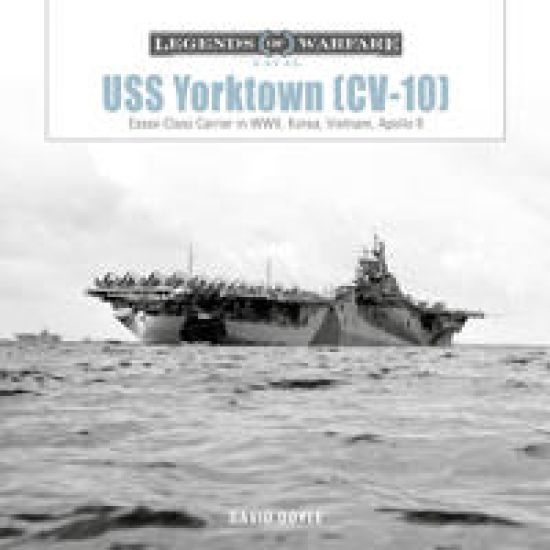
USS Yorktown (CV-10)

USS Yorktown (CV-10)

David Doyle

SCHIFFER PUBLISHING LTD
2026
sidottu
This expanded 176-page volume in the Legends of Warfare series includes 350 images, making it one of the most comprehensive entries in the series to date. USS Yorktown (CV-10) is an Essex-class aircraft carrier, which sailed on combat tours with the US Navy in WWII, Korea, and Vietnam. The ship currently is preserved and open to the public as part of the Patriots Point museum complex near Charleston, South Carolina. CV-10 replaced Yorktown CV-5, which was sunk at the Battle of Midway. This expanded 176-page entry in the Legends of Warfare series includes 350 images. The photographs, tables, and accompanying text reveal the ship in construction, on display at Patriots Point, and of course during its long naval service in the interim.
USS Nevada (BB-36)

USS Nevada (BB-36)

David Doyle

SCHIFFER PUBLISHING LTD
2026
sidottu
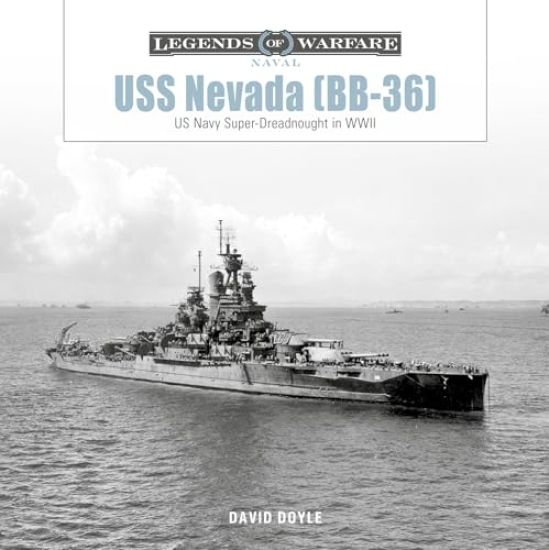
Battleship Nevada holds the unique distinction of having survived Pearl Harbor, D-Day, Iwo Jima, and Okinawa and being the target of atomic bomb testing during Operation Crossroads. Both USS Nevada (BB-36) and her sister ship USS Oklahoma were sunk in Pearl Harbor on December 7, 1941. Unlike Oklahoma, which was scrapped, Nevada was repaired, refit, and returned to service. BB-36 served with distinction during the invasion of France, and also in the Pacific, supporting the amphibious landings at Iwo Jima and Okinawa. Obsolete by the end of the war, Nevada survived the nuclear testing at Bikini Atoll during Operation Crossroads. She was finally sunk as a practice target in 1948. This expanded 176-page entry in the Legends of Warfare series includes 350 images. The photographs, tables, and accompanying text reveal the ship in construction and during her service in both world wars.
Riverine and Helicopter Warfare in the Vietnam War
The watery, heavily vegetated marshlands of the Mekong Delta served as a formidable natural defense for Viet Cong units in the region, and the waterways served as the transportation corridor for Communist forces.. The Mobile Riverine Force formed the bulk of what came to be known as the Brown Water Navy, and was key to American efforts in the region. Elsewhere in Vietnam, dense jungle growth also presented barriers for rapid movement of allied troops, resulting in helicopters taking increasingly important roles with the military, serving as troop transports, cargo carriers, medical evacuation units, and even aerial gunships.
U.S. Aviation and Naval Warfare in the Vietnam War
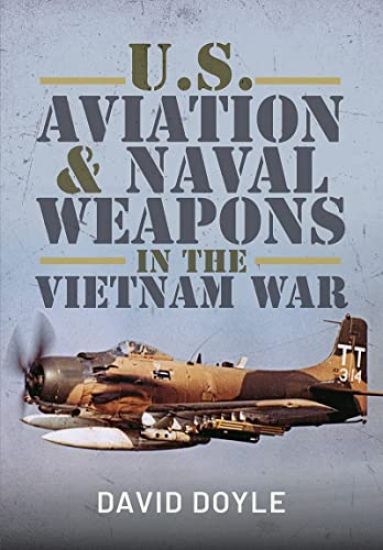
During the Vietnam war, the US Air Force, Navy, Marines and the Army flew a variety of fixed wing aircraft against innumerable targets in Vietnam, occasionally engaging North Vietnamese Migs, but more often facing the threat of Surface to Air Missiles (SAM) or antiaircraft fire. In over 5 million missions during the war, US forces lost over 2,000 aircraft. This photo essay looks at the men and aircraft that comprised American airpower during the war. Among the aircraft shown are the A-1 Skyraider, A-7 Corsair, B-52, C-130, C-141, F-105, F-4 Phantom, and OV-1 Mohawk. The US Navy controlled the waters off Vietnam, employing not only aircraft carriers to support the air war, but also surface vessels ranging from the battleship USS New Jersey down to destroyers, which supported ground forces with heavy naval gunfire.
US Coast Guard Cutter 37

US Coast Guard Cutter 37

David Doyle

SCHIFFER PUBLISHING LTD
2025
sidottu
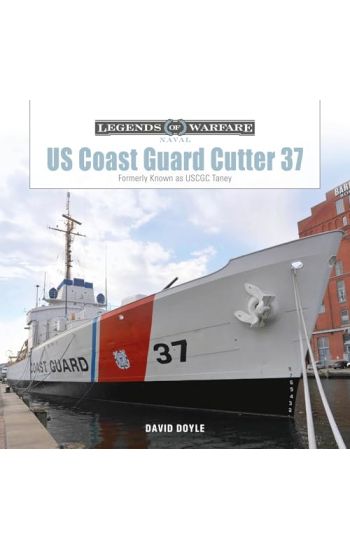
The pictorial history of a 327-foot, 20-knot, heavily armed Coast Guard cutter, which saw combat both in WWII and Vietnam. The ship currently referred to as US Coast Guard Cutter 37 (or WHEC-37) was christened Roger B. Taney in 1936. That was formally abbreviated to Taney in 1941, the name by which the vessel was most commonly known as throughout her 50-year service life. Taney engaged Japanese aircraft at Pearl Harbor on December 7, 1941. Today, she is the last warship afloat that was present for the attack, and one of two surviving ships from the Treasury class. The ship served with distinction both in WWII and Vietnam and today is on display in Baltimore's Inner Harbor as part of the Historic Ships in Baltimore collection. Readers will enjoy a detailed visual guide to this 327-foot, 20-knot, heavily armed Coast Guard cutter.
F-4 Phantom II

F-4 Phantom II

David Doyle

SCHIFFER PUBLISHING LTD
2025
sidottu
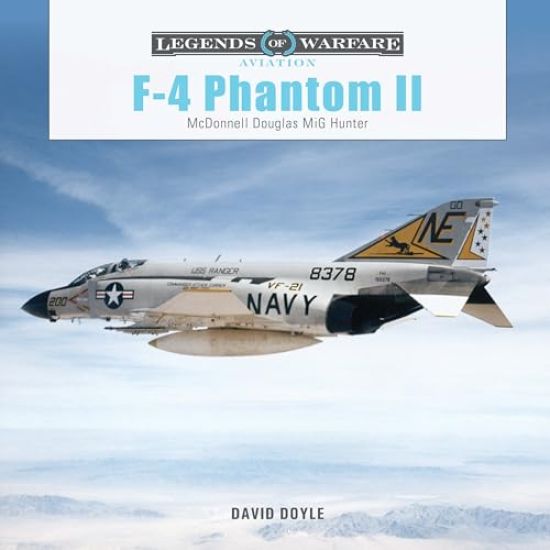
A concise pictorial guide to the F-4 Phantom, featuring over 200 images. The McDonnell Douglas F-4 Phantom II first flew in the 1950s, entered US military service in the 1960s, and remained on duty into the 1990s. The plane gained a reputation for tremendous lethality during the Vietnam War and remains one of the most celebrated American fighter designs of the jet age. This is a visual guide to the type. Chapters are dedicated to each model designation (C, D, E, etc.), including both US Navy and Air Force variants. There are more than 200 photographs, mostly in color, which show the F-4 both in combat and in the details of its interior and exterior design features, markings, and weaponry.
USS Arizona (BB-39)

USS Arizona (BB-39)

David Doyle

SCHIFFER PUBLISHING LTD
2025
sidottu
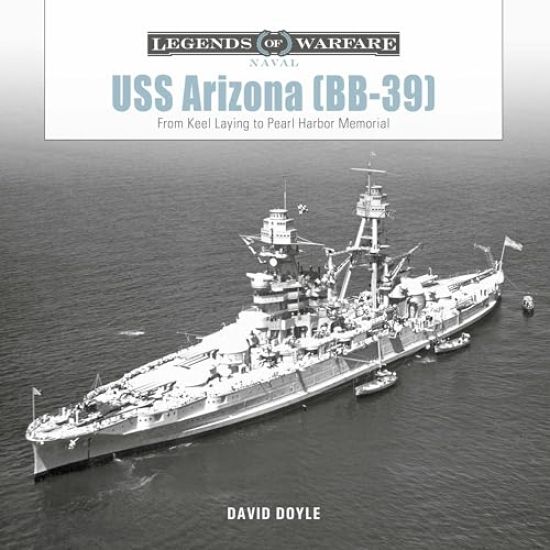
A photographic guide to the USS Arizona, which exploded and sank in Pearl Harbor on December 7, 1941. A battleship of the Pennsylvania class, USS Arizona is most famous for her disastrous loss, along with over 1,000 of her men, during the surprise attack at Pearl Harbor. Armed with 12 14-inch guns, and numerous smaller weapons, Arizona was one of the most powerful warships in the world when commissioned in 1917. This volume illustrates the modifications and improvements made to the ship during her service, and her subsequent loss and partial salvage. Today the battleship remains on the bottom of Pearl Harbor, spanned by a memorial to the sacrifice of her men. Through carefully researched archival documents and photographs, author David Doyle has constructed a pictorial history of this warship and the men who crewed her, featuring more than 300 photographs.
USS Massachusetts (BB-59)

USS Massachusetts (BB-59)

David Doyle

SCHIFFER PUBLISHING LTD
2025
sidottu
A pictorial guide to battleship Massachusetts, a WWII veteran and floating museum. USS Massachusetts (BB-59) is a South Dakota–class battleship. Launched just before US entry into the Second World War, Massachusetts saw action in the Mediterranean and Pacific theaters at Casablanca, the Philippines, and Okinawa. The ship survived the war and the scrapyard and is currently on display at Battleship Cove in Fall River, Massachusetts. This is a detailed pictorial history of the ship, including nearly 400 vintage and recent photographs.
Money Flows

Money Flows

Catherine De Vries; David Doyle; Hector Solaz; Katerina Tertytchnaya

Oxford University Press
2024
sidottu
Remittances, the repatriated earnings of emigrant workers, have risen spectacularly in recent decades. They are a crucial lifeline for the households that receive them and one of the largest sources of capital for developing economies, outstripping both aid and foreign direct investment. Money Flows studies how remittances shape the relationship between remittance recipients and the authorities in migrant-sending countries by providing a comprehensive study of the political effects of remittances on the attitudes of their recipients. It argues that far from being an exclusively economic risk-sharing mechanism between poorer, migrant-sending, and richer, migrant-receiving economies, remittances may compromise rudimentary accountability mechanisms in the developing world. The book leverages survey data from Central-Eastern Europe, the Caucasus, and Central Asia and original focus groups from Kyrgyzstan. It shows how remittances, and fluctuations in their volume, colour recipients' economic evaluations; shape the burden of corruption; and change how recipients interact with, and view their state, ultimately impacting the approval function of the authorities.
C-47 Skytrain

C-47 Skytrain

David Doyle

SCHIFFER PUBLISHING LTD
2024
sidottu
A concise illustrated guide to the famous "Gooney Bird," one of the most beloved American aircraft of the Second World War The Douglas C-47 Skytrain and its near twin, the C-53 Skytrooper, formed the backbone of American airborne transport during WWII. In addition to hauling cargo, these aircraft also delivered paratroopers to the front, including for the Normandy invasion. Derived from the Douglas DC-3, the C-47 saw service with US and Allied militaries in Korea and even Vietnam, including notably the heavily armed AC-47D gunship. This volume explores the development and use of the aircraft, as well as details of its construction. The Skytrain was indispensable to the American war effort; more than 10,000 were built and many are still flying today. The planes are also on display at museums on every continent aside from Antarctica, making the plan very relatable and accessible for readers all over the world. Readers will enjoy nearly 300 images of the C-47 and its variants, including the C-53 and AC-47D.
USMC Tracked Amphibious Vehicles

USMC Tracked Amphibious Vehicles

David Doyle

SCHIFFER PUBLISHING LTD
2023
sidottu
Due to the specific nature of the Marine Corps' mission, the Marines has a acute need for amphibious vehicles. From the Vietnam War through today, the USMC has relied on four primary types of tracked amphibians: the T46E1/M76 Otter, M116 Husky, LVTP5, and LVTP7/AAV7A1. This new book provides a useful photographic overview of all these vehicles. More than 300 black-and-white and color photos make this a valuable resource for modelers, artists, and restoration experts.
M48 Patton

M48 Patton

David Doyle

SCHIFFER PUBLISHING LTD
2023
sidottu
The M48 Patton entered production in 1952 and remains in service with several major militaries today, a great testament to the design and how it has evolved. The "Patton" is a fast tank with strong armor and a deadly 90 mm gun, and it is an all-rounder, generally accepted as America's first modern "main battle tank" or MBT. The tank was phased out of frontline service by the US military after the Vietnam War, resulting in large numbers of M48s being sold as surplus to foreign militaries, some of which still deploy the vehicle today. This is a pictorial guide to the type, featuring a balance of combat and detail photos. The book begins with the T48 prototype and then features chapters on the A1, A2, A3, A4, and A5 versions, respectively, along with a chapter on flamethrower variants.
M42 Duster

M42 Duster

David Doyle

SCHIFFER PUBLISHING LTD
2023
sidottu
The M42 Duster was a tracked antiaircraft vehicle developed by Cadillac for the US Army in the early 1950s. The vehicle adapted the Bofors 40 mm AA gun to a modified M41/T41 tank chassis. Although never particularly prolific in the intended air defense role, the Duster did find a niche during the Vietnam War. The M42 was relatively small and agile, and the high rate of fire and loud report from its guns were quite intimidating. These traits, along with simple availability, resulted in the type being pressed into ground combat against infantry and light vehicles, for which it received moderate acclaim. This volume includes over 300 photos of this quirky vehicle. Every nook and cranny of the interior and exterior is shown, along with many fascinating combat photos.
M60 Tank

M60 Tank

David Doyle

SCHIFFER PUBLISHING LTD
2023
sidottu
The M60 was deployed by the US military from 1960 until it was phased out and replaced with the M1 Abrams during/after Operation Desert Storm. More than 10,000 examples were produced, and many examples remain in service with foreign militaries to the present day. This is the most comprehensive photo reference on the type, featuring 340 black-and-white and color images. The photos illustrate both the design features and the combat history of the tank. Specific chapters are designated for the M60, A1, A2, and A3 models, along with various auxiliary vehicles based on the M60 hull.