Kirjojen hintavertailu. Mukana 12 266 616 kirjaa ja 12 kauppaa.

Kirjailija

David Doyle

Kirjat ja teokset yhdessä paikassa: 124 kirjaa, julkaisuja vuosilta 2015-2026, suosituimpien joukossa CH-47 Chinook. Vertaile teosten hintoja ja tarkista saatavuus suomalaisista kirjakaupoista.

124 kirjaa

Kirjojen julkaisuhaarukka 2015-2026.

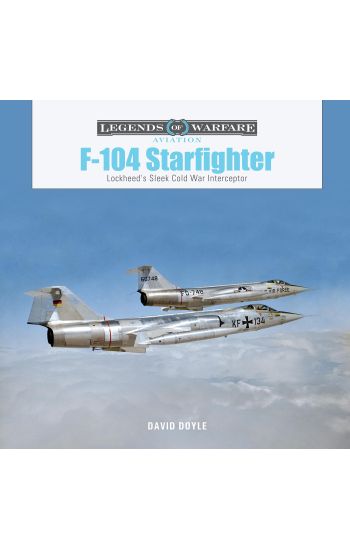
F-104 Starfighter

F-104 Starfighter

David Doyle

SCHIFFER PUBLISHING LTD
2023
sidottu
Lockheed developed the F-104 Starfighter in the late 1950s. The plane was designed to be an all-weather interceptor. Speed, climb, and altitude all were priorities, and the plane did turn out to be extraordinarily fast, but there were costs associated with that top speed: low-speed handling and landing characteristics were compromised. The plane had a relatively short service life with the US Air Force but remained on duty with several large NATO allies for decades. Particularly when deployed abroad, the Starfighter acquired a reputation for being difficult to fly and compiled an alarming accident rate. Today there are many examples of this pretty aircraft on display in museums, and they have proved unusually prolific as base "gate guards." This is a comprehensive photographic survey of the Starfighter, with dedicated chapters on prototype versions and the A, B, C/D, G, N, Canadian CF-104, Japanese F-104J, and F-104S models.
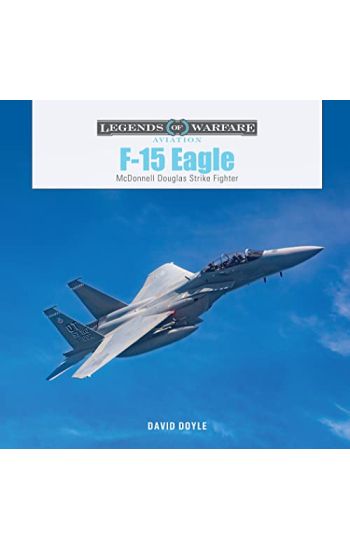
F-15 Eagle

F-15 Eagle

David Doyle

SCHIFFER PUBLISHING LTD
2023
sidottu
The McDonnell Douglas F-15 Eagle is one of the most successful fighter designs of the 20th century. The type first flew in 1972, transitioning directly from the drawing board to production with remarkably few hiccups. By late 1974, planes were already being delivered to operational units, and it remains on active duty with several major international militaries today, including the US Air Force. Along with an excellent record for safety and reliability, the F-15 has also compiled more than 100 victories without a loss in air-to-air combat. This book has been brought fully up to date with the latest variants, including the F-15EX Eagle II, which entered service just in 2021. Aviation enthusiasts will enjoy more than 300 images, with everything from detail shots on the ground to action-packed aerial photography.
P-39 Airacobra

P-39 Airacobra

David Doyle

SCHIFFER PUBLISHING LTD
2023
sidottu
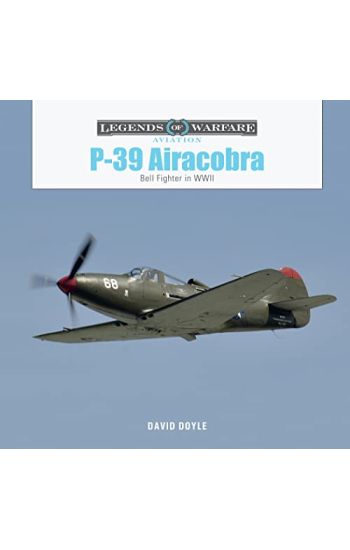
With a midengined configuration, sturdy tricycle landing gear, and nose-mounted 37 mm cannon, the Bell P-39 was a thoughtful and innovative design. However, the plane lacked the all-out performance of some other key fighters available to Allied flyers (e.g., Spitfire, Hellcat, Mustang), particularly at altitude. Largely rejected by British and American combat squadrons, the Airacobra was much better received in the Soviet Union, where the Red Air Force successfully deployed large quantities of the type against the Luftwaffe. This new entry in the Legends of Warfare series features detailed photographic coverage of all variants of the Airacobra, including prototypes, trainer versions, production models C through Q, and the P-400.
F8F Bearcat

F8F Bearcat

David Doyle

SCHIFFER PUBLISHING LTD
2023
sidottu
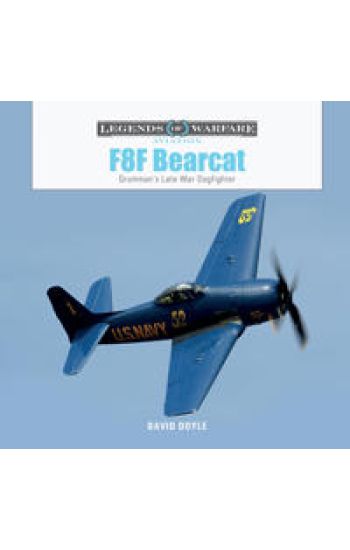
The Grumman F8F was a fast, agile, carrier-borne fighter aircraft developed as the ultimate dogfighter for the Pacific theater. Although the plane did make it into production, with some examples even being delivered before the Japanese surrender, there is no evidence to suggest that the Bearcat ever saw combat during the Second World War. With the jet age on the horizon, and the specific threat of Japanese fighters a thing of the past, the Navy canceled a large portion of its order, and the F8F had a short, low-profile career. The Bearcat did finally see combat with the French military in Indochina, in relatively small numbers and without particular acclaim. The type would have likely faded into total obscurity, but thanks to its incredible raw performance it became a popular air show performer and racer. This is the most complete collection of Bearcat photography in print. The 200 images show the Bearcat both in military service and in civilian use; close-ups and diagrams illustrate the various details of its construction.
German Heavy Armored Cars

German Heavy Armored Cars

David Doyle

SCHIFFER PUBLISHING LTD
2023
sidottu
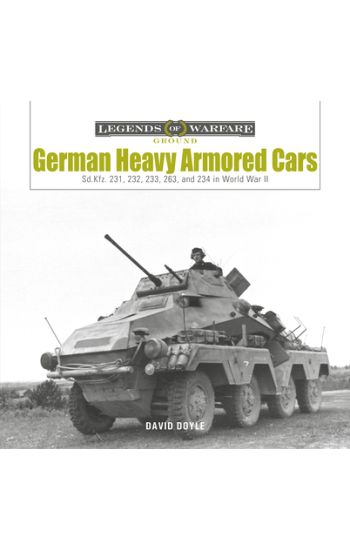
During WWII, Germany fielded a variety of six- and eight-wheeled armored cars, which were used in numerous ways, including reconnaissance, antitank, infantry support, and other roles. The earliest of these vehicles, the 6-Rad, or six-wheeled vehicles, were based on 6 × 4 truck chassis. Once the limitations of this design became evident, later models utilized specially designed all-wheel-drive power trains, with the final model, the 234 series, incorporating a unibody design. Similarly, armament evolved from 7.92 mm machine gun to 75 mm PaK 40 cannon and 7. 5 cm StuK40 howitzers. Based on the author’s earlier work, through over 250 photographs this volume explores 12 major types of these vehicles and delves into the subtle changes made during production.
Ferdinand/Elefant

Ferdinand/Elefant

David Doyle

SCHIFFER PUBLISHING LTD
2023
sidottu
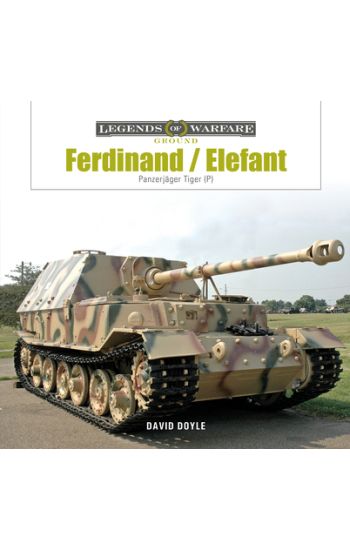
The Panzerjäger Tiger (P) was a powerful tank destroyer fielded in small numbers by the Wehrmacht. As indicated by the Panzerjäger Tiger (P) name, this series of 90 vehicles was based on an early design of the Panzer VI Tiger tank, specifically the unsuccessful tank design prototype by Ferdinand Porsche. In fact, as initially fielded, the series of giant tank killers was given the name Ferdinand. After disappointing performance at Kursk, the 48 surviving Ferdinands were returned to the factory for rebuilding and modification. Shortly thereafter, the name of the vehicles was changed from Ferdinand to Elefant. Through vintage photos, this new volume illustrates the combat history of both the Ferdinand and Elefant, additionally providing background information illuminating the development of the ill-fated Porsche Tiger design. The 100 vintage photos are augmented by over 110 full-color photos of the only two surviving examples, illustrating the nuances of the construction and wartime modification of these formidable tank destroyers.
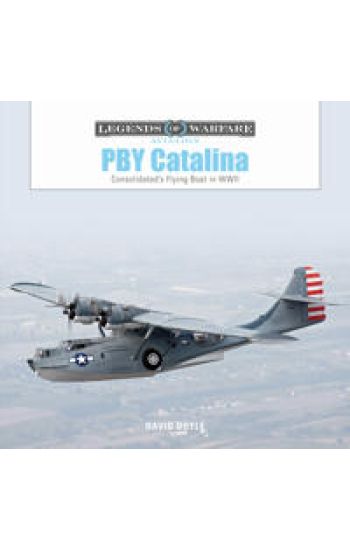
PBY Catalina

PBY Catalina

David Doyle

SCHIFFER PUBLISHING LTD
2023
sidottu
The PBY Catalina, designed and produced by Consolidated Aircraft, whose production was supplemented by that of Boeing Canada, Canadian Vickers, and the Naval Aircraft Factory, was the most widely used flying boat of all time. Developed in the 1930s, the famed patrol bomber was used around the world by the United States and its allies—the Soviets even produced hundreds of duplicates. The versatile aircraft sank U-boats, located the dreaded Bismarck, and rescued scores of downed airmen and crews of sunken ships. This volume explores the development and use of the aircraft, as well as details of its construction. This volume is profusely illustrated with almost 300 photos, many of which are in vintage color, augmented by line drawings.
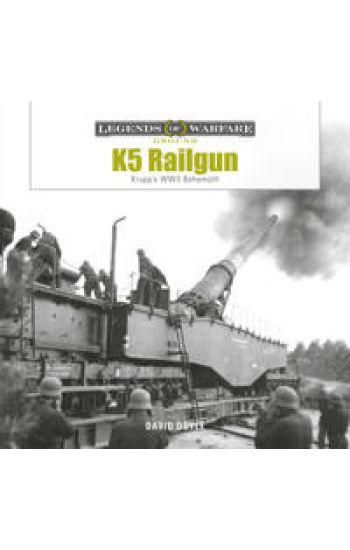
K5 Rail Gun

K5 Rail Gun

David Doyle

SCHIFFER PUBLISHING LTD
2023
sidottu
Anzio Annie, Anzio Express, "Leopold"; known by many names, the German 8 cm Kanone 5 Eisenbahngeschütz (railway gun), commonly abbreviated K5(E), was the most successful and widely used of Germany's railway gun designs. Twenty-four of the weapons, capable of shelling England from positions in France, were built and were used by Germany on most of their fronts, including France, Italy, Russia, and Holland. The operation and use of these these fearsome weapons are presented through 80 period black-and-white photos. The vintage photos are supplemented by over 150 full-color photos of the only surviving examples, illustrating the nuances of the construction of these massive weapons.
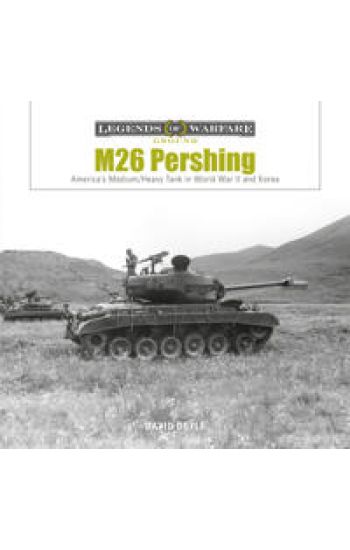
M26 Pershing

M26 Pershing

David Doyle

SCHIFFER PUBLISHING LTD
2023
sidottu
In many ways, the M26 Pershing was the most advanced and most powerful tank fielded by the US military during the Second World War. The prototype T26 "heavy" tank design was developed to answer the threat of the German Panther and Tiger tanks. Unfortunately for US Army tankers, the T26 tank wasn't ready for field use until 1945. The T26, specifically the E3 variant, was adopted and standardized as the M26 "Pershing" in March 1945. While seeing only limited combat during WWII, the M26 would be extensively used by the Army and Marines in Korea. This pictorial history of the Pershing includes the M26/T26E3, T26E1, T26E4, and T26E2/M45. The book includes almost 300 vintage and recent photographs, color profiles, and detailed line drawings.
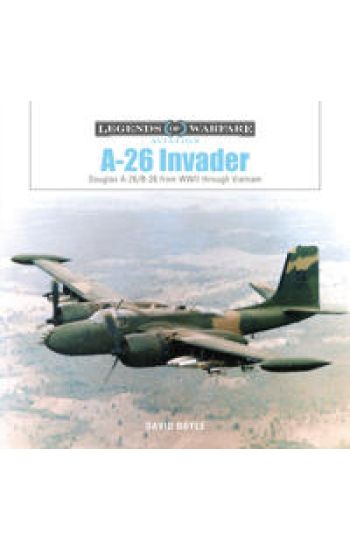
A-26 Invader

A-26 Invader

David Doyle

SCHIFFER PUBLISHING LTD
2023
sidottu
A Legends of Warfare guide to Douglas's high-powered attack bomber The Douglas Invader has the distinction of being used by the United States in a combat role in WWII, Korea, and Vietnam. Originally created as an attack aircraft, with the designation A-26, the Invader was intended to replace the Douglas A-20, North American B-25, and Martin B-26 in the US Army Air Forces. However, production delays prevented the aircraft from reaching the field until June 1944. With up to 14 forward-firing .50-caliber machine guns as well as bombs and rockets, the Invader was well suited for ground strikes when war broke out in Korea in 1951. The Invader returned to combat during that war, carrying the markings of the US Air Force and redesignated B-26. Used first by the French during their war in Indochina, Invaders later returned to the skies over Vietnam in the hands of American as well as South Vietnamese crews. In order to base the type in Thailand, which prohibited the USAF from basing bombers in the country, the Invader was once more classified as an attack aircraft, and the A-26 designation returned. This volume is profusely illustrated with over 250 photos, including vintage color, as well as profile illustrations and line drawings.
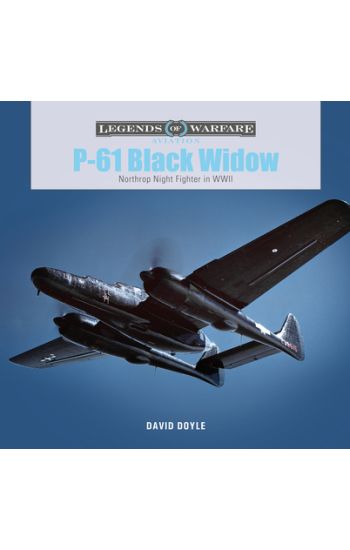
P-61 Black Widow

P-61 Black Widow

David Doyle

SCHIFFER PUBLISHING LTD
2022
sidottu
The complete history of the P-61 "Black Widow," one of the most advanced and most sinister-looking fighter aircraft of the Second World War. The striking P-61 Black Widow was the first purpose-built American night fighter. Designed by Jack Northrop and Vladimir Pavlecka, the P-61's menacing appearance was matched by the plane's advanced technology and fearsome weaponry. Interestingly, the Widow is credited with the final aerial kill of the war. Black-and-white photos and vintage color photosFour-color profilesDetailed line drawings. Part of the Legends of Warfare: Aviation series, this book—by prolific author David Doyle—tells the story of the Black Widow from the experimental XP-61 on through the final production variant, the F-15A.
M50/M50A1 Ontos

M50/M50A1 Ontos

David Doyle

SCHIFFER PUBLISHING LTD
2022
sidottu
Designed to counter the threat of a massed Soviet armored assault, the M50 Ontos showed its merit in the jungles and streets of Vietnam. Ontos grew out of Project Vista, the secret study of possible improvements to NATO defenses. Project Vista identified the need for an inexpensive, heavily armed “something” to thwart waves of Soviet armor. Armed with six powerful recoilless rifles, the diminutive M50 was given the name “Ontos,” an Army mistranslation of Greek for “the Thing.” Initially, the Army felt that the Allis-Chalmers T165E1 (later standardized as the M50) was the thing to fill the recommendation of Project Vista. Ultimately, and after some controversy, the Army lost interest in the vehicle, but the United States Marine Corps believed in the vehicle, and in 1955 the M50 entered production. While the Corps first used the Ontos in Santo Domingo in 1965, it would rise to fame in Vietnam, where the M50, as well as the modernized M50A1, saw considerable use as antipersonnel weapons and in perimeter defense. On the streets of Hue, Marines made considerable use of the Ontos, blasting open walls and using antipersonnel rounds to create faux smoke screens. Over 270 photos, many in color, chronicle the development, production, combat use, and details of this famed vehicle and the men who used them.
USS Lexington (CV-2)

USS Lexington (CV-2)

David Doyle

SCHIFFER PUBLISHING LTD
2022
sidottu
When commissioned on December 14, 1927, USS Lexington and her sister ship, USS Saratoga, were the world’s largest aircraft carriers. The Lexington-class carriers, as the ships were known, were the results of an effort akin to making lemonade from lemons. Both vessels were begun in 1920–21 as Lexington-class battle cruisers. Lexington, originally designated CC-1 (indicating battle cruiser), would have been a formidable warship armed with eight 16-inch guns in four turrets. The Washington Naval Treaty of 1922 banned the constructions of such ships but permitted the conversion of such hulls into aircraft carriers. Accordingly, the “Lady Lex,” as she became known to her crew, was finished as a massive 888-foot-long aircraft carrier and retained the originally planned revolutionary turboelectric drive. From the outset, Lexington, initially carrying fabric-covered biplanes, was assigned to the Pacific Fleet. In the years leading up to WWII, both the ship and her aircraft were modernized. This profusely illustrated book, an expanded and updated version of the author’s earlier work, puts the reader on the deck of Lexington through her construction, evolution, and ultimate May 8, 1942, sinking at the Battle of Coral Sea and finishes with the discovery of her wreck on March 4, 2018. Over 200 photos, numerous line drawings, and color renderings illustrate this new entry in the Legends of Warfare series.
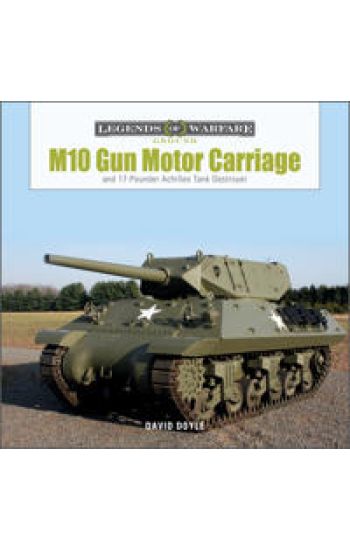
M10 Gun Motor Carriage

M10 Gun Motor Carriage

David Doyle

SCHIFFER PUBLISHING LTD
2022
sidottu
Based on the M4A2 and M4A3 Sherman tank chassis, and fitted with a 3-inch M7 gun, the M10 was numerically the most important US tank destroyer of WWII. The M10 was built in response to the stunning successes of the German armored Blitzkrieg at the outset of the war in Europe. Fitted with a turret—unlike most self-propelled artillery of the era—the vehicle was more heavily gunned but more lightly armored than a tank. M10 crews were expected to make the most of their vehicle’s speed and agility. The M10 received its baptism of fire in Tunisia in 1943, where it demonstrated its ability to destroy most German Panzers then in service. The British upgraded the design by rearming some of the 1,700 M10s that they received with the superb Ordnance Quick Firing 17-pounder antitank gun. These vehicles were designated by the British as 17-pounder SP M10 Mark IC/IIC, popularly known as the Achilles.
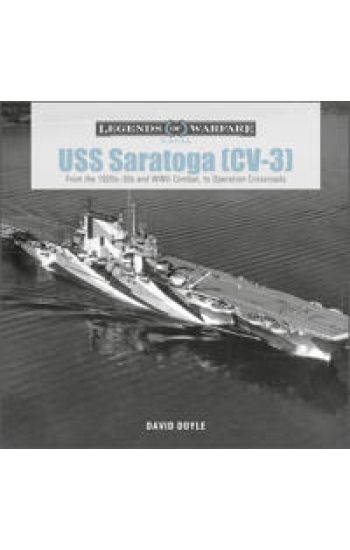
USS Saratoga (CV-3)

USS Saratoga (CV-3)

David Doyle

SCHIFFER PUBLISHING LTD
2022
sidottu
USS Saratoga and her sister ship USS Lexington were the two largest aircraft carriers in the world until 1944. The keel of the battle cruiser USS Saratoga (CC-3) was laid by New York Shipbuilding in Camden, New Jersey, on September 25, 1920. Work on the fast, formidably armed battle cruiser was suspended in February 1922, when the Washington Naval Conference negotiated limits on warship sizes and numbers. Once the accord was signed, the decision was made to covert the 28 percent complete Saratoga into an aircraft carrier (the same fate befell her sister ship, Lexington). Launched as an aircraft carrier on April 7, 1925, she became the largest ship of that type afloat. Saratoga’s revolutionary turboelectric drive and hull design allowed her to operate at 33 knots (either forward or backward), a trait believed to be useful in the event of combat damage to either end of her flight deck. And damaged she was. Though in port at San Diego, California, when the Japanese attacked Pearl Harbor, during the ensuing war the ship was damaged repeatedly, and sometimes severely. Despite this, she fought throughout the war, earning eight battle stars. Following the war, in view of her age, past damage, and the limitations of her design, Saratoga was deemed surplus and was expended as a target during the Bikini Atoll nuclear tests. She survived the first “Able” bomb test but was sunk by the “Baker” test on July 25, 1946. This 144-page volume, an expansion of the author’s earlier work, immerses the reader in the construction and operation of the ship at peace and war, as well as detailing the many refits and repairs she underwent, through over 350 photos and illustrations.
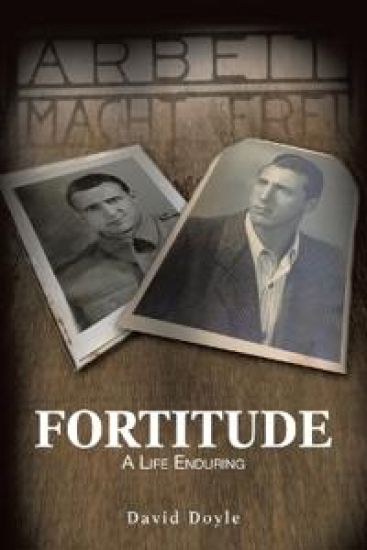
Fortitude

Fortitude

David Doyle

Xlibris Au
2022
pokkari
Fortitude is the real-life story of Boris Rus, a young native of Fiume, Italy (now Rijeka, Croatia). This chronicle recalls the experiences of his experiences of unorthodox & revolutionary warfare against German and Axis Powers. The story takes a dramatic U-turn from resistance and offence to one of survival in the concentration camp that fathered them all, Dachau. What comes next, nobody could have foresaw.
Fortitude

Fortitude

David Doyle

Xlibris Au
2022
sidottu
Fortitude is the real-life story of Boris Rus, a young native of Fiume, Italy (now Rijeka, Croatia). This chronicle recalls the experiences of his experiences of unorthodox & revolutionary warfare against German and Axis Powers. The story takes a dramatic U-turn from resistance and offence to one of survival in the concentration camp that fathered them all, Dachau. What comes next, nobody could have foresaw.
USS Kidd (DD-661)

USS Kidd (DD-661)

David Doyle

SCHIFFER PUBLISHING LTD
2022
sidottu
USS Kidd (DD-661) is the only Fletcher-class destroyer preserved in WWII configuration. With 175 total ships launched, the Fletchers were the most numerous and most impactful class of destroyers in the US Navy during the Second World War. DD-661 was named for RAdm. Isaac C. Kidd, who was killed onboard the Battleship Arizona at Pearl Harbor. USS Kidd saw action in both the Atlantic and in the Pacific. In April 1945, the ship was seriously damaged by a Kamikaze strike. Kidd was recommissioned during the Korean War, and finally decommissioned for the final time in 1964. The interior and exterior of the ship have been painstakingly restored and preserved in Baton Rouge by the Louisiana Naval War Memorial Commission. This work uses color photography to provide readers an illustrated tour of the ship, above and below deck.
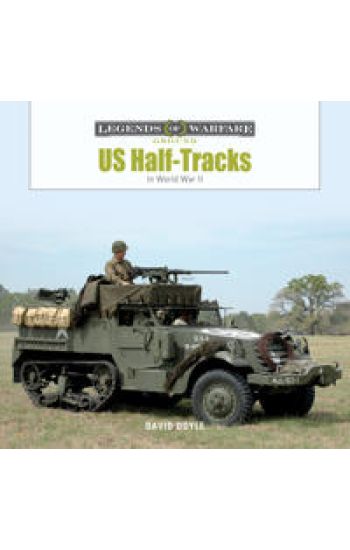
US Half-Tracks

US Half-Tracks

David Doyle

SCHIFFER PUBLISHING LTD
2022
sidottu
Based on an adaptation of the White Scout Car, the US half-track vehicles of WWII combined the cross-country ability of a fully tracked vehicle with the road performance of a medium truck. A myriad of variations of these vehicles were produced, including prime movers, armored personnel carriers, mortar carriers, and a wide range of heavily armed variants. Antiaircraft versions were often used against ground targets with devastating results. In fact, despite half-track production ending in March 1944, demand for half-track vehicles mounting quadruple .50-caliber machine guns was so great during the Korean War that additional examples were produced through the wholesale modification of personnel carriers. Although phased out of service by the US military in the late 1950s, the Israeli forces continued to use these remarkable vehicles through the 1980s. This volume includes coverage of the vehicles produced by Autocar, Diamond T, and White for use by US forces, as well as the similar International Harvester–built vehicles supplied to our allies through Lend-Lease. Illustrated with over 200 vintage photos, as well as line drawings and color profiles.
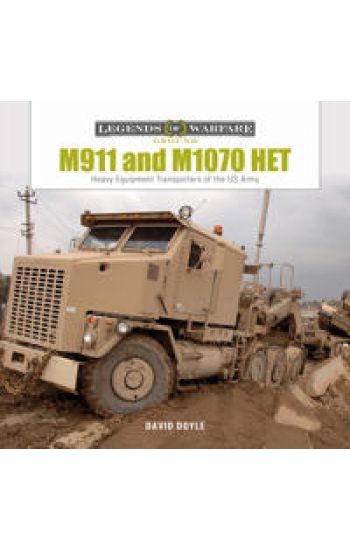
M911 and M1070 HET

M911 and M1070 HET

David Doyle

SCHIFFER PUBLISHING LTD
2022
sidottu
This book explores the mechanical details and military use of the M911 C-HET and M1070/M1070A1 HETS and their associated trailers. These vehicles are tasked with transporting the US Army’s heaviest weapons—the M1 Abrams tank and other armored vehicles. In a departure from previous generations of tank transporters, which were designed especially for this task and built at great expense, the vehicles in this volume utilize numerous components from the civil market in order to lower cost and ease maintenance. The Oshkosh M911 C-HET and the M747 trailer typically used with it are first examined, then the newer M1070, M1070 armored cab conversion, M1070A1, and M1070F and the M1000 trailer used with the M1070-series tractors are studied. These heavy haulers are revealed in outstanding detail in this volume, which features both combat and detail photos. Hundreds of color and black-and-white photos put the reader in, on, over, and under these massive machines.