Kirjojen hintavertailu. Mukana 12 595 353 kirjaa ja 12 kauppaa.

Kirjailija

David Doyle

Kirjat ja teokset yhdessä paikassa: 124 kirjaa, julkaisuja vuosilta 2015-2026, suosituimpien joukossa CH-47 Chinook. Vertaile teosten hintoja ja tarkista saatavuus suomalaisista kirjakaupoista.

124 kirjaa

Kirjojen julkaisuhaarukka 2015-2026.

155 mm Gun M1 “Long Tom”

155 mm Gun M1 “Long Tom”

David Doyle

SCHIFFER PUBLISHING LTD
2022
sidottu
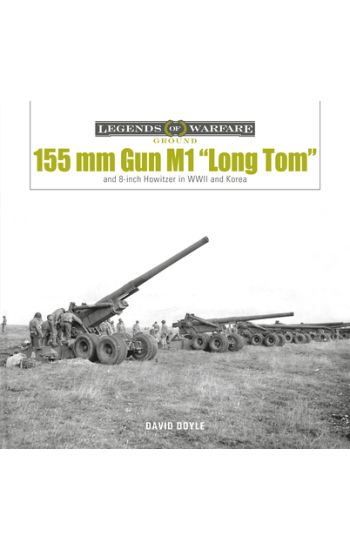
A pictorial history of the 155 mm M1 gun "Long Tom," the 8-inch howitzer M1, and the assorted prime movers and ammunition carriers utilized alongside them. Developed from the WWI-vintage French Canon de 155 mm Grande Puissance Filloux (GPF), the 155 mm gun M1A1, known as the “Long Tom,” along with its companion, the 8-inch howitzer M1, formed the backbone of the US Army's heavy field artillery during WWII and Korea. With ranges of just over 14 miles for the gun, and 10.5 miles for the howitzer, the cannons were notable for their long reach, heavy impact, and accuracy. These weapons were used on every front where GIs fought during WWII, and continued to be used by US forces, as well as those of allied nations, into the 1960s. Through vintage and modern photos, this volume follows the development of the 155 and the 8-inch, the details of their construction, and field use. Provides an overview of their associated prime movers and ammunition carriers, including the Mack NO and the Allis-Chalmers M4 high-speed tractor of the WWII era, and the Mack M125 10-ton 6×6 of the 1950s. Written by prolific military author David Doyle, this book is part of the very popular Legends of Warfare series.
USS Intrepid (CV-11/CVA-11/CVS-11)

USS Intrepid (CV-11/CVA-11/CVS-11)

David Doyle

SCHIFFER PUBLISHING LTD
2022
sidottu
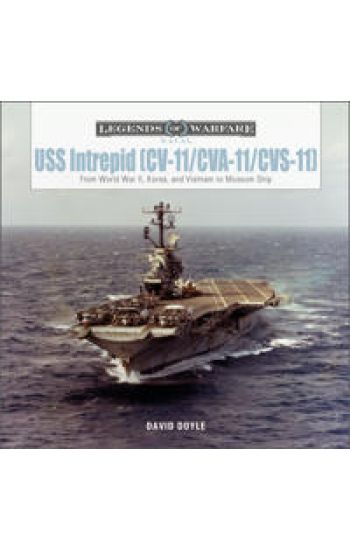
A visual history of USS Intrepid, one of the most visited museum ships in the world! USS Intrepid, the "Fighting I," was one of America's longest-serving aircraft carriers. Launched during WWII, Intrepid and her crews weathered kamikazes, torpedoes, and typhoons throughout three years of heavy combat. Decommissioned after WWII, Intrepid was recommissioned in 1955 and designated as an attack carrier (CVA), and in 1961 as an antisubmarine warfare carrier (CVS). In the early 1960s, Intrepid served to retrieve some of the nation's first astronauts during the pioneering Mercury and Gemini spaceflights. In 1966, Intrepid made the first of three deployments to the Tonkin Gulf for combat operations with Carrier Air Wing 10 during the Vietnam War. Intrepid cruised throughout the North Atlantic and Mediterranean in the early 1970s while patrolling for Soviet submarines in antisubmarine operations during the Cold War. With her days at sea over, Intrepid first hosted the Navy exhibits during the US bicentennial celebrations in 1976, before finding a new home as the Intrepid Sea, Air & Space Museum on the Hudson River waterfront in New York City.
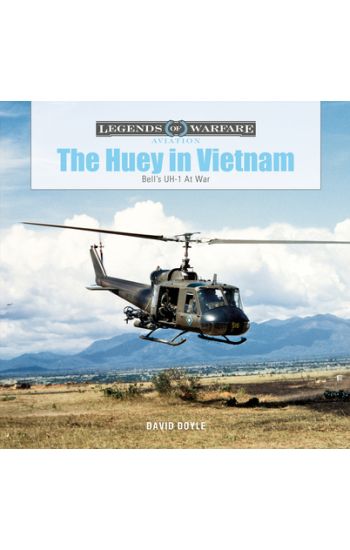
The Huey in Vietnam

The Huey in Vietnam

David Doyle

Schiffer Publishing Ltd
2022
sidottu
The design, development, and evolution of the Bell UH-1 Huey in combat during the Vietnam War. Few implements of war are as representative of the US presence in Vietnam as the Bell Huey UH-1-series helicopters. Whether serving in the role of troop transport for airborne assault, supply transports, aerial gunships, or medical evacuation, the Huey was seemingly everywhere. The versatile aircraft, officially the "Iroquois," was affectionately known to all as the "Huey," a name derived from its early model designation of HU-1A. The Huey, later redesignated UH-1, was a mainstay during America's presence in Vietnam, and 11 Huey crewmen earned the Medal of Honor. Carefully researched archival documents and More than 170 color and black-and-white photographs This comprehensive volume details the complete, colorful, and important history of this iconic helicopter and the men who flew it.
USS Indianapolis (CA-35)

USS Indianapolis (CA-35)

David Doyle

Schiffer Publishing Ltd
2021
sidottu
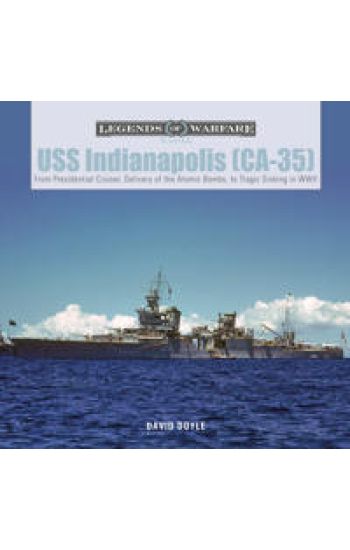
Despite the limitations of the Washington Naval Treaty, USS Indianapolis was an imposing warship. She was widely used by US dignitaries in the 1930s, including President Franklin D. Roosevelt, who sailed aboard the ship many times. After the outbreak of World War II, she saw service near Alaska before moving into waters nearer the Japanese home islands. There, she was struck by a kamikaze and forced to return to the US for repairs. Upon completion of the repairs, Indianapolis was selected to transport components of the "Little Boy" atomic bomb from mainland US to Tinian in the Marianas Islands. On the return journey, she was torpedoed and sunk by a Japanese submarine, becoming the last large warship lost by the US during World War II. Delay in the mission to recover surviving crew resulted in the largest loss of life aboard a single ship at sea in US Navy history. The sinking of Indianapolis remains surrounded in controversy, and the wreck was not located until 2017.
US Marine Corps in Vietnam

US Marine Corps in Vietnam

David Doyle

Schiffer Publishing Ltd
2021
sidottu
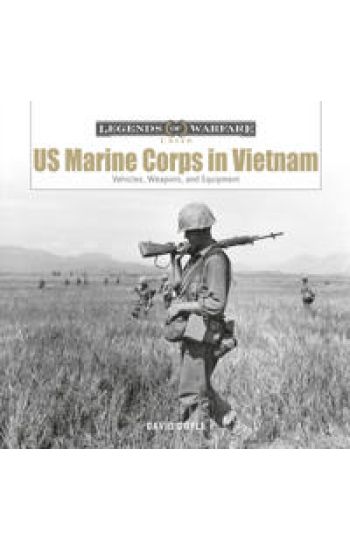
Documents the deployment of the US Marine Corps to Vietnam from 1965 to 1975. The March 1965 landing of the US Marine Corps at Da Nang, South Vietnam, marked the first large-scale deployment of US forces to the region. From then on, the Marine Corps fought continuously until May 1975, when two Marines became the last US servicemen killed in that war during the Mayaguez battle. Over 200 archival photos, many never before publishedDocuments the weapons, vehicles, and equipment of the MarinesSmall arms, mortars and artillery, tanks, amphibious, armored and soft-skinned vehicles, helicopters, uniforms, and personal and specialist equipment are featured.Superb-quality photos and detailed captions, including photos from such legendary Marine Corps battles as Hue and Khe Sanh. Written by prolific military author David Doyle, this comprehensive volume is part of the popular Legends of Warfare series.
Vehicles and Heavy Weapons of the Vietnam War
The ground war in Vietnam pitted a myriad of American tanks, artillery, APC and trucks against not only the weapons of Communist North Vietnam, but also the terrain. Through archival images, the arsenal of the US Army and USMC are revisited. From the iconic M113 APC to the M48A3 tank, M551 Armored Reconnaissance/Airborne Assault Vehicle, M151 and M54 trucks, M50 Ontos, M107 and M109 artillery, and M42 Duster, the complete array of vehicles fielded is shown. This book, the first in a series on the US military's weapons, vehicles, aircraft, and naval vessels of the Vietnam War, offers a highly illustrated reference for this wishing to delve deeper into this conflict.
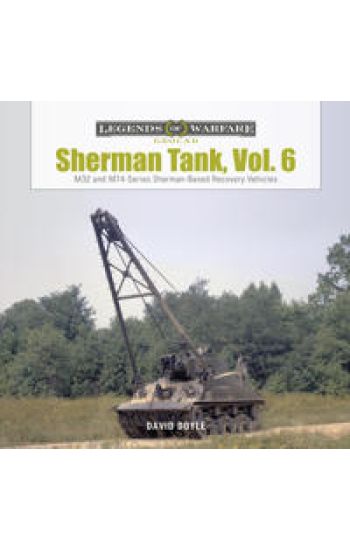
Sherman Tank, Vol. 6

Sherman Tank, Vol. 6

David Doyle

Schiffer Publishing Ltd
2021
sidottu
The United States, being at peace, had not foreseen the need for a specialized tank recovery vehicle, despite the ramping-up of tank production in 1940–41. However, observation of the new world war quickly pointed to the need for such a vehicle. Armored vehicles, immobilized for any reason, were easily destroyed by opposing troops, denying the possibility for recovery and repair or even the salvaging of parts after the battle. This book chronicles the development and use of the US and British military's Sherman tank–based armored recovery vehicles.
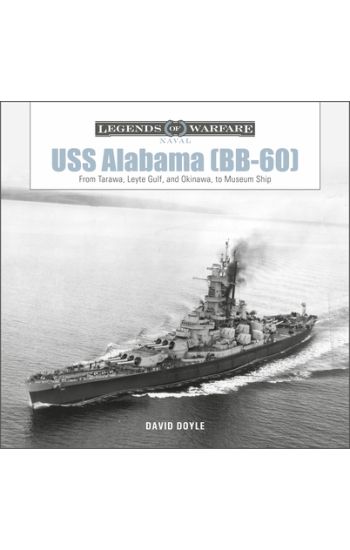
USS Alabama (BB-60)

USS Alabama (BB-60)

David Doyle

Schiffer Publishing Ltd
2021
sidottu
The history of the design, development, and deployment of the famed WWII battleship USS Alabama! The fourth and final battleship in the South Dakota class, the USS Alabama served in both the Atlantic and Pacific during World War II, participating in many of the most famous battles of the war. Armed with nine 16-inch guns, 20 5-inch guns, and a myriad of 40 mm and 20 mm weapons, Alabama was one of the most powerful warships afloat. Illustrates the modifications and improvements made to the ship during her service, and the battles fought by her men. The battleship today is a floating museum and veterans memorial moored in Mobile Bay in her namesake state of Alabama. Detailed photos capture the workings of this powerful, complex warship. Through carefully researched archival documents and photographs, the history of this iconic warship and the men who crewed it is presented in this profusely illustrated volume.
A-20 Havoc

A-20 Havoc

David Doyle

Schiffer Publishing Ltd
2021
sidottu
Chronicles the design, development, and wartime use of this famous American attack bomber. The A-20 Havoc, known to the British as the Boston, was built by Douglas and Boeing during WWII and arguably became the most famous of the attack aircraft fielded by the United States during that war. Traces the aircraft from the prewar Douglas 7B through the many versions of the aircraft used by the US, French, British, and Russian forces during the course of the war. The story of these iconic WWII aircraft is told through carefully researched photos, many of which have never before been published, which are reproduced in remarkable clarity. Large, clear photos, coupled with descriptive and informative captions, unlock the secrets of this aircraft. Written David Doyle, author of over 125 books, this comprehensive volume is part of the popular Legends of Warfare series.
Sherman Tank, Vol. 5

Sherman Tank, Vol. 5

David Doyle

Schiffer Publishing Ltd
2021
sidottu
The M4A4, also known as the Sherman V, with its unusual 30-cylinder Multibank engine, was the type of Sherman most widely used by Commonwealth forces during WWII. Additionally, many US tankers were trained using this type of tank. The tank went on to become the basis for the famed Firefly, Crab, and DD amphibious variants of the Sherman. This book chronicles the development and use of the vehicle from concept to combat. The book includes more than 200 photos, both from wartime and of preserved examples.
Ford M8 and M20

Ford M8 and M20

David Doyle

Schiffer Publishing Ltd
2021
sidottu
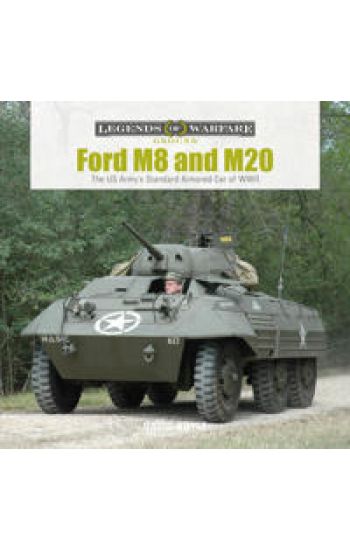
Developed to provide the US military with a fast-moving reconnaissance vehicle sufficiently armed to knock out WWII-era armored vehicles. The M8 Armored Car and its sibling, the M20 Armored Utility Vehicles, were the most widely used armored vehicles built by Ford. These vehicles saw use with the US Army as well as Allied nations during WWII and well into the 1960s. This book chronicles the development and use of the vehicle from concept to combat. Through dozens of archival photos, many never before published, as well as detailed photographs of some of the finest existent examples of these vehicles, this iconic tank is explored, and its history is explained.
M3 Medium Tank

M3 Medium Tank

David Doyle

Schiffer Publishing Ltd
2021
sidottu
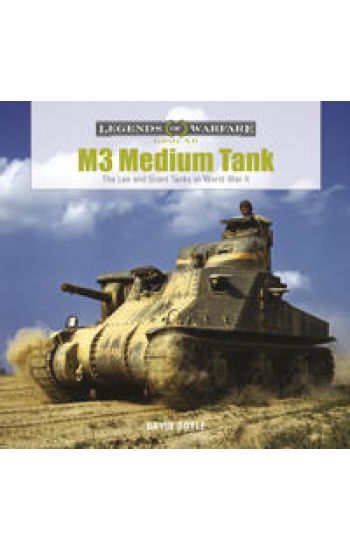
An illustrated look at the M3 Lee and M3 Grant medium tanks during WWII. The M3 Lee was America's first mass-produced combat tank. Its unusual configuration of hull-mounted 75 mm gun and turret-mounted 37 mm cannon was a result of the rush to get the vehicle in production following Nazi Germany's rapid advances in Europe. Following heavy British tank losses in France, the Commonwealth turned to the US to bolster their tank stocks, and the M3 was adapted, through the use of a different turret style, to fill this need. Later, as more-advanced tanks became available, notably the M4 Sherman, the M3s were adapted to fill other roles. This book chronicles the development and use of these vehicles from concept to combat. Through dozens of archival photos, many never before published, as well as detailed photographs of some of the finest existent examples of surviving vehicles, these iconic armored fighting vehicles are explored, and their history is explained.
Sherman Tank, Vol. 4

Sherman Tank, Vol. 4

David Doyle

Schiffer Publishing Ltd
2021
sidottu
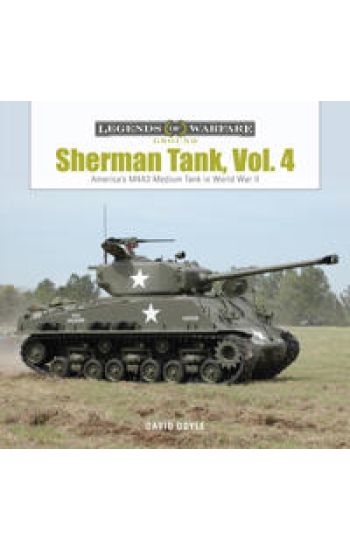
Powered by a massive Ford V-8 engine, the M4A3 Sherman was the standard tank of the US Army during the later stages of WWII, as well as the Korean War. The M4A3 was also supplied to the Marines during WWII, when the Corps faced a shortage of their preferred M4A2. The M4A3 was used by both services during the Korean War and was supplied in large numbers to Allied nations during the post-WWII rebuilding process. This book chronicles the development and use of these vehicles from concept to combat. This work contains several hundred first class images, many of which are in color.
B-58 Hustler

B-58 Hustler

David Doyle

Schiffer Publishing Ltd
2021
sidottu
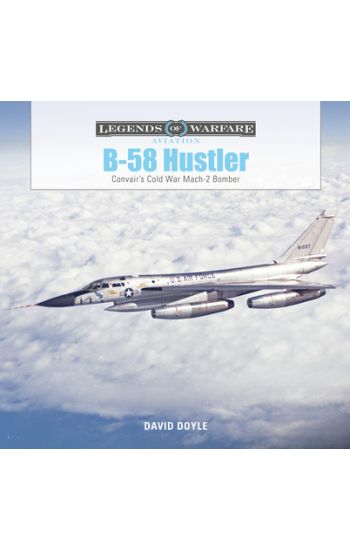
Chronicles the design, development, and wartime use of the iconic Mach 2 Convair B-58 Hustler. The Convair B-58 Hustler, with its distinctive delta wing shape, would become the world's first supersonic bomber, and the first aircraft to fly to Mach 2. With development beginning in 1949, the B-58, which could not carry conventional weapons, would become part of the US nuclear arsenal during the height of the Cold War. Although these bombers were initially considered difficult to operate, in time the hand-chosen crews who flew them came to love and respect the aircraft. Throughout the 1960s, crews flying the B-58 set numerous speed and distance records. These planes were tremendously expensive to operate, and it was budget issues that forced the early retirement of the bomber. Today there are only a handful of remaining examples, all of which are on display in the US.Illustrated with rare archival photographs, including previously unpublished images. Written by prolific military author David Doyle, this book is part of the very popular Legends of Warfare: Aviation series.
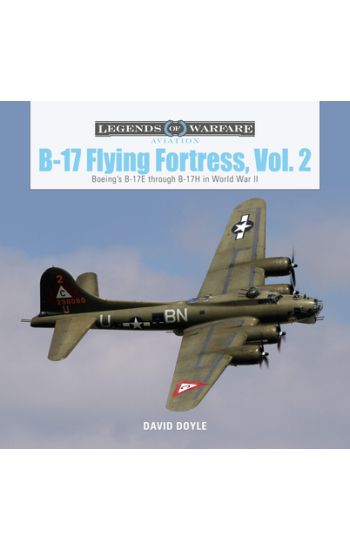
B-17 Flying Fortress, Vol. 2

B-17 Flying Fortress, Vol. 2

David Doyle

Schiffer Publishing Ltd
2021
sidottu
The Boeing B-17 Flying Fortress is one of the most iconic aircraft in aviation history. Through a broad range of photos gathered from around the world, this book—the second of two volumes—chronicles the design, development, and wartime use of the late models of the Flying Fortress, from the first truly combat-capable model, the B-17E, to the lifesaving B-17H. These B-17 versions featured the so-called "large" tail and were famously used in the devastating strategic-bombing campaign against Germany. As a special feature, detailed coverage of the famed "Memphis Belle" is included. Combine volumes 1 and 2 for the complete photographic reference on the Flying Fortress.
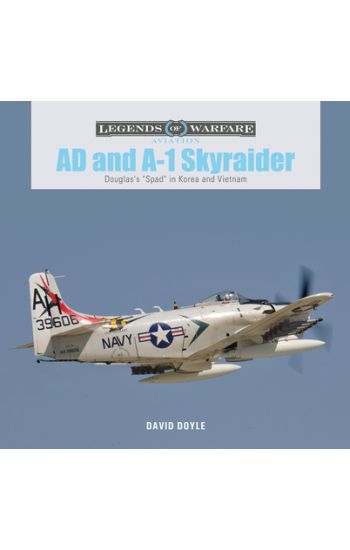
AD and A-1 Skyraider

AD and A-1 Skyraider

David Doyle

Schiffer Publishing Ltd
2021
sidottu
Design work on the Skyraider began at the behest of the US Navy late in WWII. Production began in 1946, and the type made its combat debut in the hands of naval aviators during the Korean War. In the following years, the rugged airframe and powerful engine meant that the type could be adapted into ever-expanding roles of attack, reconnaissance, weather, and electronic-countermeasure types. Though regarded by many as obsolete, in Vietnam the Skyraider again saw combat, now in the hands of not only US Navy and Marine pilots, but also USAF and Republic of Vietnam airmen. Capable of flying low and slow while armed with a massive array of ordnance, the Skyraider not only took on the role of attack aircraft but was also used as air cover for troops on the ground. Its impressive payload earned it the nickname of the "flying dump truck," while its reliance on a massive radial engine in an otherwise jet age caused others to refer to the Skyraider as the "Spad," in homage to the WWI fighter.
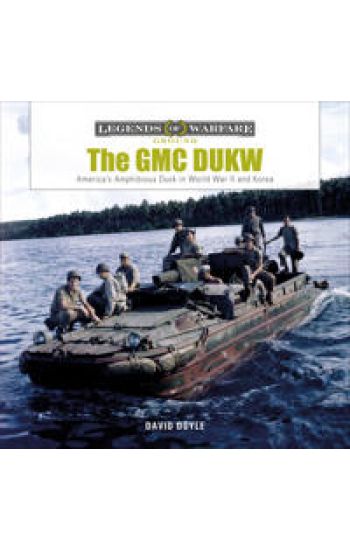
The GMC DUKW

The GMC DUKW

David Doyle

Schiffer Publishing Ltd
2021
sidottu
The General Motors Corporation DUKW was without a doubt the most successful amphibious military vehicle ever constructed. This is due in large part to the enormous amount of scientific and engineering talent that was devoted to the project. Included in the design team were America's Cup winner Rod Stephens, adventurer and environmentalist Dennis Puleston, and scientist and engineer Palmer C. Putnam. The DUKW was so successful and so widely used that Gen. Dwight Eisenhower described it as "one of the most valuable pieces of equipment produced by the United States during the war." This book chronicles the development and use of these vehicles from concept to combat in WWII and Korea. Through dozens of archival photos, many never before published, as well as detailed photographs of some of the finest existent examples of surviving vehicles, these iconic armored fighting vehicles are explored, and their history is explained.
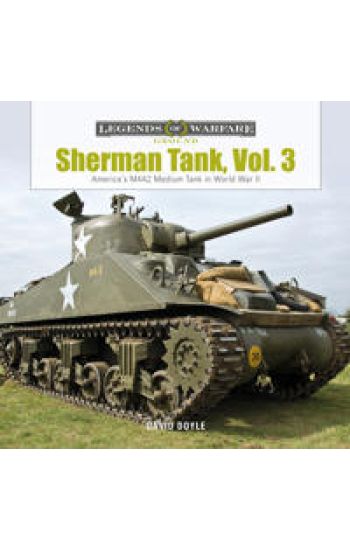
Sherman Tank, Vol. 3

Sherman Tank, Vol. 3

David Doyle

Schiffer Publishing Ltd
2021
sidottu
Powered by twin General Motors diesel engines, the M4A2 Sherman was the standard tank of the US Marine Corps during WWII. In such service, having a common fuel with many of the landing craft simplified logistics. The M4A2 was also supplied in large numbers to Russia as well as the British. The M4A2 was used in some of the most severe tank combat of the war, both on Pacific islands and on the Eastern Front. This book chronicles the development and use of these vehicles from concept to combat. Through dozens of archival photos, many never before published, as well as detailed photographs of some of the finest existent examples of surviving vehicles, these iconic armored fighting vehicles are explored, and their history is explained.