Kirjojen hintavertailu. Mukana 12 390 323 kirjaa ja 12 kauppaa.

Kirjailija

David Owen

Kirjat ja teokset yhdessä paikassa: 85 kirjaa, julkaisuja vuosilta 1964-2025, suosituimpien joukossa A Handbook for Authentic Learning in Higher Education. Vertaile teosten hintoja ja tarkista saatavuus suomalaisista kirjakaupoista.

85 kirjaa

Kirjojen julkaisuhaarukka 1964-2025.

Fire Pool

Fire Pool

David Owen

Lulu.com
2018
pokkari
The world of Mundo is about to descend into war. The Wicca, the witches who rule Mundo are about to lose their power, so they desperately search for someone to replace them - someone kind, intelligent and without corruption. Only one person fits all of their categories - and she is Nesta, a ten-year-old, orphaned when the forces of Lord Mool destroyed her home.
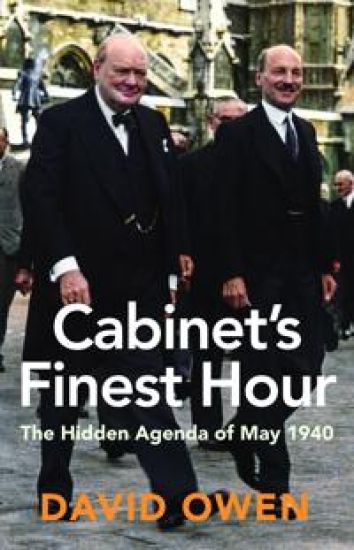
Cabinet's Finest Hour

Cabinet's Finest Hour

David Owen

Haus Publishing
2017
nidottu
Using the Cabinet papers from the National Archives, former Foreign Secretary David Owen has written a new history of the pivotal British War Cabinet meetings of May 1940. Eight months into the war defeat seemed to many a certainty. With the United States and Russia over a year away from entering the conflict, Britain found herself in a perilous and lonely position. The Foreign Secretary Lord Halifax was pushing Churchill, his Prime Minister, to explore the possibility of a negotiated peace with Hitler, using Mussolini as a conduit. Ignored in Churchill's later account of the con--flict, the question before the War Cabinet was straightforward: should Britain fight on in the face of overwhelming odds, sacrificing hundreds of thousands of lives, or seek a negotiated peace? The minutes of these meetings reveal just how close Halifax came to convincing the Cabinet that negotiations should be sought.
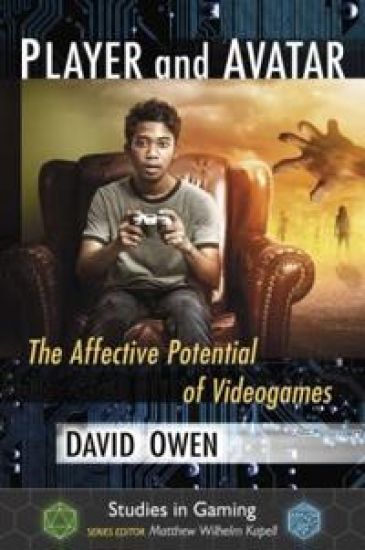
Player and Avatar

Player and Avatar

David Owen

McFarland Co Inc
2017
pokkari
Do you make small leaps in your chair while attempting challenging jumps in Tomb Raider? Do you say "Ouch!" when a giant hits you with a club in Skyrim? Have you had dreams of being inside the underwater city of Rapture? Videogames cast the player as protagonist in an unfolding narrative. Like actors in front of a camera, gamers' proprioception, or body awareness, can extend to onscreen characters, thus placing them "physically" within the virtual world. Players may even identify with characters' ideological motivations. The author explores concepts central to the design and enjoyment of videogames--affect, immersion, liveness, presence, agency, narrative, ideology and the player's virtual surrogate: the avatar. Gamer and avatar are analyzed as a cybernetic coupling that suggests fulfillment of Atonin Artaud's vision of the "body without organs."
Fallen Children

Fallen Children

David Owen

Little, Brown Book Group
2017
pokkari
Inspired by The Midwich Cuckoos, The Fallen Children is a gripping 'science fiction-meets-real world' story of the teenagers who, during one inexplicable 'Nightout', have their futures snatched away by circumstances beyond their control. It is a story of violation, of judgement, and of young people who must fight to defy what is expected of them.
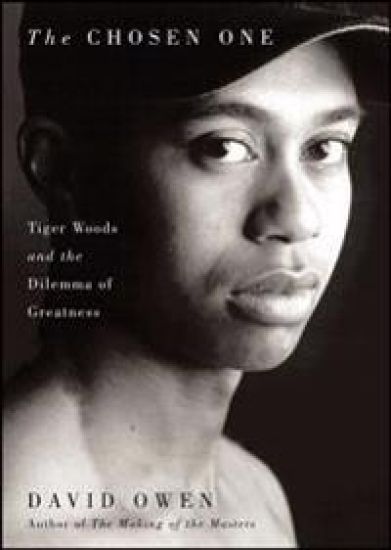
Chosen One

Chosen One

David Owen

SIMON SCHUSTER
2017
pokkari
Earl Woods, the father of young Eldrick Tiger Woods, was widely ridiculed in 1996 when, in an article anointing his son as Sports Illustrated's Sportsman of the Year, he likened Tiger's potential impact to that of a messiah. This unseemly proclamation appeared to embody all the worst elements of the dreaded sports-parent who seeks financial windfall and personal validation by pushing his child to excel on the diamond, the gridiron, the court, or the fairways. But in light of all we know now about Tiger Woods, David Owen asks in The Chosen One, who is to say that it wasn't Tiger's transcendent greatness all along that induced his father to guide him, rather than the father pushing the son? Not since the dawn of competitive tournament golf has anyone distanced himself from the rest of the world the way Tiger has. He is the best there is at nearly every aspect of the game: the longest driver, the strongest iron player, the most creative around the greens, and so sharp a clutch putter that when he putts well the tournament is over, and when he putts badly he often wins anyway. He is a breakthrough athlete in a sport remarkably resistant to them; in every tournament, Tiger has to beat a hundred-plus competitors, any of whom can take away a title with a four-day hot streak. When Michael Jordan won all his back-to-back championships, each night he only had to beat one team. Tiger is also a breakthrough athlete as one of the first true multicultural icons. There are African-American, Asian, Native American, and Caucasian elements to his roots; he carries with him parts of so many ethnicities that he not only shatters stereotypes but renders the whole notion of racial classification irrelevant. It is ironic that such an athlete would emerge in golf, America's most tradition-bound and racially insensitive sport. In The Chosen One, gifted essayist David Owen ponders the social, economic, and athletic implications of this amazing young man. We are only beginning to see all the ways that Tiger Woods might reshape the world. Owen's thoughtful, incisive, elegant, and provocative work examines this phenomenon unlike any the fields of play have ever seen, in a book that will stand alongside John McPhee's A Sense of Where You Are (about Princeton forward Bill Bradley) among the classic works of sports philosoph
Panther

Panther

David Owen

ATOM
2016
nidottu
Life isn’t going terribly well for Derrick; he’s become severely overweight, his only friend has turned on him, he’s hopelessly in love with a girl way out of his league, and it’s all because of his sister. Her depression, and its grip on his family, is tearing his life apart. When rumours start to circulate that a panther is roaming wild in his south London suburb, Derrick resolves to turn capture it. Surely if he can find a way to tame this beast, he’ll be able to stop everything at home from spiraling towards disaster? Panther is a bold and emotionally powerful novel that deals candidly with the effects of depression on those who suffer from it, and those who suffer alongside them.
Prospects for Citizenship

Prospects for Citizenship

Gerry Stoker; Andrew Mason; Anthony McGrew; Chris Armstrong; David Owen; Graham Smith; Momoh Banya; Derek McGhee; Clare Saunders

Bloomsbury Academic
2015
nidottu
This book is available as open access through the Bloomsbury Open Access programme and is available on www.bloomsburycollections.com.Is citizenship in decline due to globalisation and an erosion of civic participation and democratic representation? Or is it merely transformed and extended to new levels and larger scales? Should we assess these challenges and changes primarily from a perspective of global justice, or consider also membership in a democratic polity as itself a basic good? Prospects for Citizenship addresses these broad questions in a unique collaborative effort. The result is an impressive book that looks at the future of citizenship from multiple research perspectives while remaining coherent in its overall purpose.Rainer Bauböck, European University Institute, FlorenceThis book offers a perspicuous overview of the prospects for citizenship in our contemporary political context. The authorial team draw on a wide range of empirical and normative research in order to offer an incisive analysis of the problems and pressures of citizenship in the twenty-first century. The authors focus in particular on the apparent decline of traditional forms of civic engagement, the emergence of new forms of participation and the relationship between citizenship and globalization.
Principles and Practice of Homeopathy

Principles and Practice of Homeopathy

David Owen; Bob Leckridge; Peter Fisher

Singing Dragon
2015
sidottu
This comprehensive textbook provides a detailed, practical and thorough basis for the understanding and application of the homeopathic process. Drawing on the experience and knowledge of a wealth of contributors, the book offers the foundations for the safe and broadest practice of modern homeopathy.Divided into 6 sections, this book takes the understanding of homeopathy from basic principles to the treatment of acute and chronic illnesses, the first prescription, and difficult, confused and hidden cases. Each section progresses through five themes broadly divided into philosophy, material medica, case taking, case analyses and case management. Each theme is woven together through the text and, section by section, builds into an essential study guide for the homeopathic student. It provides opportunities for reflection, and invites all practitioners to engage in their own personal and professional development.
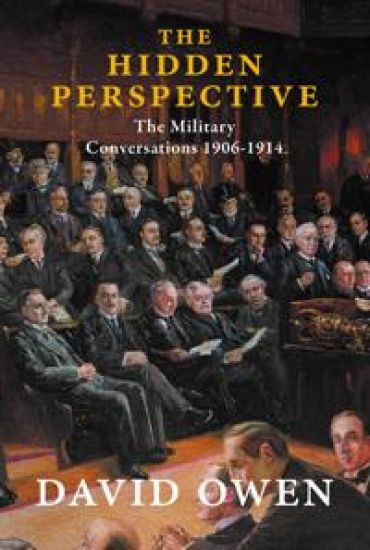
The Hidden Perspective

The Hidden Perspective

David Owen

Haus Publishing
2015
nidottu
December 1905: Foreign Minister Edward Grey enters into secret talks with the French about sending British forces to their aid in the event of a German attack. The details were only revealed to the Cabinet and Prime Minister in 1911, by which point the 'hidden perspective' was firmly entrenched, and Britain all but obliged to stand by France in the event of a war. Yet dissenting voices remained, and diplomatic missions to Germany were still underway as late as August 1914. In this scholarly and eloquent work, former Foreign Secretary David Owen argues that the outbreak of war in 1914 was far from inevitable, instead representing eight years of failed diplomacy. The importance of transparent government is particularly relevant in a year in which Sir John Chilcot's Iraq Inquiry is published.
The Health of the Nation

The Health of the Nation

David Owen

Methuen Publishing Ltd
2014
nidottu
The National Health Service is the most enduring of the institutions created by the first real Labour Government (1945-51). Before the NHS was created, treatment of ill health was provided by doctors in their surgeries and in hospitals, all of which had to be paid for by the patients. Many poorer families paid their GP's a monthly sum as they were usually in arrears with the fees. The Labour Government's vision was for a health service free for everybody and this was launched in 1948, with Aneurin Bevan as first Minister for Health. Now after nearly seventy years, with the costs of the NHS running at some GBP120 billions annually, and threatened by the 2012 Health and Social Care Act, the NHS is in danger of being classed as any other utility, gas, water, electricity and is imminent danger of marketization and commercialisation. In his book The Health of the Nation, David Owen has explained the consequences of the 2012 Act and the damage to the NHS that will result. Those most affected will be those who can least afford good health care. This book presents a powerful case for the repeal of the 2012 Act and for the restoration of the NHS to its traditional values.
Clinical Supervision in the Medical Profession: Structured Reflective Practice
"Doctors reading this book will not only be convinced of the need for medical supervison (for all doctors - even pathologists and coroners); they will also be given a handy smorgasbord of different types of medical supervision from which to choose ... There may not be many ways of rekindling the spark of compassion and loving kindness that made us want to become health professionals at the start of our careers, but Owen and Shohet have demonstrated that empathic supervision, whether this is from fellow professionals or from peers, is certainly one way of achieving this."Brian Kaplan, MDWith a foreword by Iona Heath, President of the Royal College of General Practitioners.This book helps trainee and practicing doctors to develop a broader understanding of supervision. Written by doctors and other medical specialists experienced in clinical supervision it gives the reader the means to enable, structure and develop their reflective practice. It provides practical tools to engage positively with regulatory challenges, increase satisfaction at work and improve quality of care. Clinical Supervision in the Medical Profession considers the reasons for clinical supervision and how it can support doctors and even transform how they engage with challenging issues. The authors outline a range of ways that they have put clinical supervision into practice and how it has benefitted their work. Contributors Christine Dunkley, Helen Halpern, Anita Houghton, Sue Morrison, David Owen, Patricia Ridsdale, Paul Sackin, John Salinsky, Robin Shohet, Maggie Stanton, Guy Undrill and Sonya Wallbank.
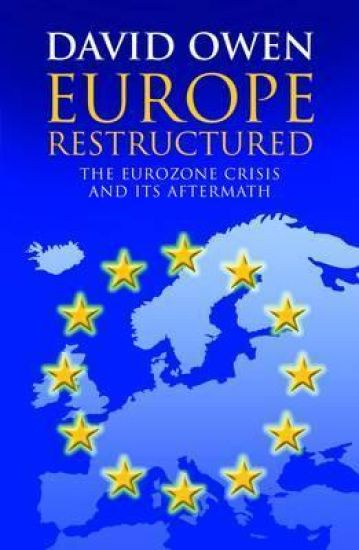
Europe Restructured?

Europe Restructured?

David Owen

Methuen Publishing Ltd
2012
nidottu
In "Europe Restructured," David Owen lays out a blueprint for a new structure where those countries that may wish to be part of a more integrated EU/eurozone are facilitated in doing so, while those who may only want a Single Market/European Community are free to do so. He suggests building on the Single Market European Economic Area of 30 states including Norway, Iceland, and Liechtenstein, and inviting Turkey to join. This, with Croatia joining the EU next year, would make 32 countries and some others later. "Europe Restructured" recounts the key historical events in Britain's equivocal relationship with the Common Market, European Community, and now Union, from 1962-2012, and considers how Britain's place in the EU affects her other global foreign and defense relationships, in particular with the United States. All this leads David Owen to the conclusion that urgently in 2013, or more likely in 2015-2016, a referendum will have to be held in the UK. He wants a clear referendum choice in the UK.
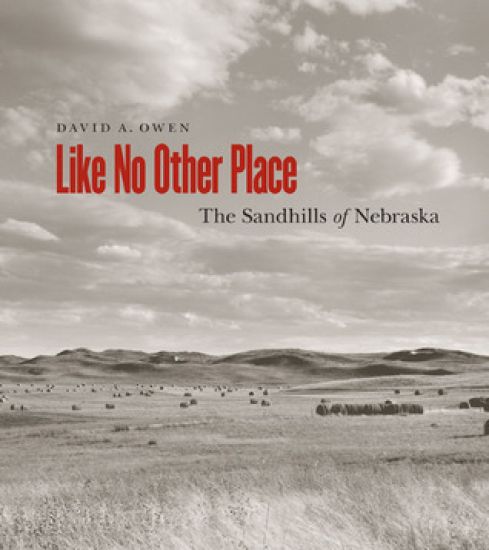
Like No Other Place

Like No Other Place

David Owen

Bison Books
2012
pokkari
Covering nearly twenty thousand square miles, the Sandhills of Nebraska is a rich and layered region that is home to one of the most productive ranching areas in the country. In 2008 and 2009, photographer and storyteller David A. Owen traveled through western Nebraska to capture the unconventional beauty of the geography and singular way of life of the residents there. Connecting the everyday activities of the ranchers and residents he encounters to the vast, isolated landscape, Owen provides a fascinating window into this dazzling area of America. Through Owen's fine ear and eye, Like No Other Place takes the reader on a memorable journey into an out-of-the-way destination that is part of a modern American West and yet still organically linked to its past. Owen's photographs and stories tell of a remarkable region where history, legend, memory, and reality are all intertwined.
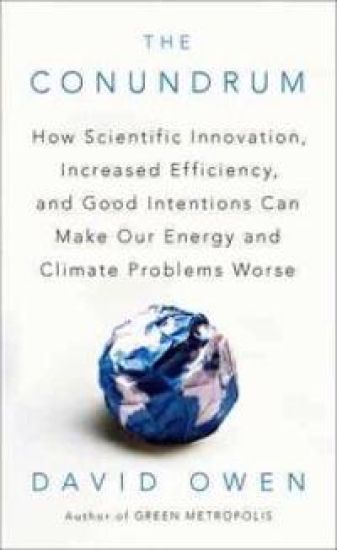
The Conundrum: How Scientific Innovation, Increased Efficiency, and Good Intentions Can Make Our Energy and Climate Problems Worse
Look out for David Owen's next book, Where the Water Goes. The Conundrum is a mind-changing manifesto about the environment, efficiency and the real path to sustainability. Hybrid cars, fast trains, compact florescent light bulbs, solar panels, carbon offsets: Everything you've been told about living green is wrong. The quest for a breakthrough battery or a 100 mpg car are dangerous fantasies. We are consumers, and we like to consume green and efficiently. But David Owen argues that our best intentions are still at cross purposes to our true goal - living sustainably and caring for our environment and the future of the planet. Efficiency, once considered the holy grail of our environmental problems, turns out to be part of the problem. Efforts to improve efficiency and increase sustainable development only exacerbate the problems they are meant to solve, more than negating the environmental gains. We have little trouble turning increases in efficiency into increases in consumption.David Owen's The Conundrum is an elegant nonfiction narrative filled with fascinating information and anecdotes takes you through the history of energy and the quest for efficiency. This is a book about the environment that will change how you look at the world. We should not be waiting for some geniuses to invent our way out of the energy and economic crisis we're in. We already have the technology and knowledge we need to live sustainably. But will we do it?That is the conundrum.
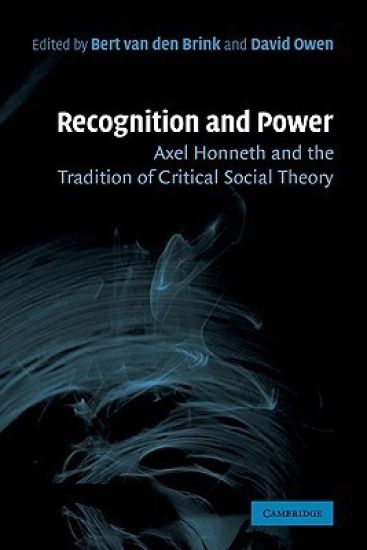
Recognition and Power

Recognition and Power

Bert van den Brink; David Owen

Cambridge University Press
2010
pokkari
The topic of recognition has come to occupy a central place in debates in social and political theory. Developed by George Herbert Mead and Charles Taylor, it has been given expression in the program for Critical Theory developed by Axel Honneth in his book The Struggle for Recognition. Honneth's research program offers an empirically insightful way of reflecting on emancipatory struggles for greater justice and a powerful theoretical tool for generating a conception of justice and the good that enables the normative evaluation of such struggles. This 2007 volume offers a critical clarification and evaluation of this research program, particularly its relationship to the other major development in critical social and political theory; namely, the focus on power as formative of practical identities (or forms of subjectivity) proposed by Michel Foucault and developed by theorists such as Judith Butler, James Tully, and Iris Marion Young.
Green Metropolis

Green Metropolis

David Owen

Riverhead Books,U.S.
2010
pokkari
In this remarkable challenge to conventional thinking about the environment, David Owen argues that the greenest community in the United States is not Portland, Oregon, or Snowmass, Colorado, but New York, New York. Most Americans think of crowded cities as ecological nightmares, as wastelands of concrete and garbage and diesel fumes and traffic jams. Yet residents of compact urban centers, Owen shows, individually consume less oil, electricity, and water than other Americans. They live in smaller spaces, discard less trash, and, most important of all, spend far less time in automobiles. Residents of Manhattan- the most densely populated place in North America -rank first in public-transit use and last in percapita greenhouse-gas production, and they consume gasoline at a rate that the country as a whole hasn't matched since the mid-1920s, when the most widely owned car in the United States was the Ford Model T. They are also among the only people in the United States for whom walking is still an important means of daily transportation. These achievements are not accidents. Spreading people thinly across the countryside may make them feel green, but it doesn't reduce the damage they do to the environment. In fact, it increases the damage, while also making the problems they cause harder to see and to address. Owen contends that the environmental problem we face, at the current stage of our assault on the world's nonrenewable resources, is not how to make teeming cities more like the pristine countryside. The problem is how to make other settled places more like Manhattan, whose residents presently come closer than any other Americans to meeting environmental goals that all of us, eventually, will have to come to terms with.
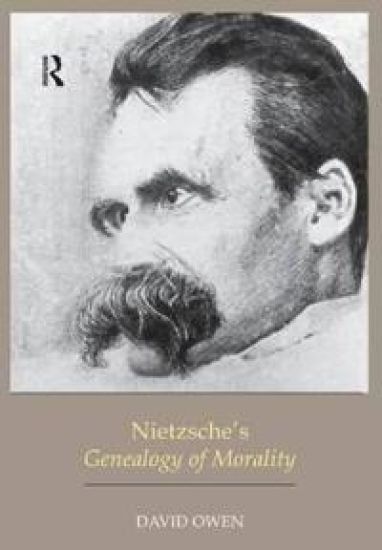
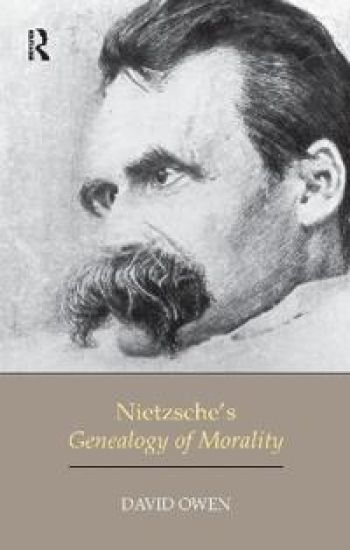
Nietzsche's Genealogy of Morality

Nietzsche's Genealogy of Morality

David Owen

Acumen Publishing Ltd
2007
sidottu
A landmark work of western philosophy, "On the Genealogy of Morality" is a dazzling and brilliantly incisive attack on European "morality". Combining philosophical acuity with psychological insight in prose of remarkable rhetorical power, Nietzsche takes up the task of offering us reasons to engage in a re-evaluation of our values. In this book, David Owen offers a reflective and insightful analysis of Nietzsche's text. He provides an account of how Nietzsche comes to the project of the re-evaluation of values; he shows how the development of Nietzsche's understanding of the requirements of this project lead him to acknowledge the need for the kind of investigation of "morality" that he terms "genealogy"; he elucidates the general structure and substantive arguments of Nietzsche's text, accounting for the rhetorical form of these arguments, and he debates the character of genealogy (as exemplified by Nietzsche's "Genealogy") as a form of critical enquiry. Owen argues that there is a specific development of Nietzsche's work from his earlier "Daybreak" (1881) and that in "Genealogy of Morality", Nietzsche is developing a critique of modes of agency and that this constitutes the most fundamental aspect of his demand for a revaluation of values. The book is a distinctive and significant contribution to our understanding of Nietzsche's great text.
Nietzsche's Genealogy of Morality

Nietzsche's Genealogy of Morality

David Owen

Acumen Publishing Ltd
2007
nidottu
A landmark work of western philosophy, "On the Genealogy of Morality" is a dazzling and brilliantly incisive attack on European "morality". Combining philosophical acuity with psychological insight in prose of remarkable rhetorical power, Nietzsche takes up the task of offering us reasons to engage in a re-evaluation of our values. In this book, David Owen offers a reflective and insightful analysis of Nietzsche's text. He provides an account of how Nietzsche comes to the project of the re-evaluation of values; he shows how the development of Nietzsche's understanding of the requirements of this project lead him to acknowledge the need for the kind of investigation of "morality" that he terms "genealogy"; he elucidates the general structure and substantive arguments of Nietzsche's text, accounting for the rhetorical form of these arguments, and he debates the character of genealogy (as exemplified by Nietzsche's "Genealogy") as a form of critical enquiry. Owen argues that there is a specific development of Nietzsche's work from his earlier "Daybreak" (1881) and that in "Genealogy of Morality", Nietzsche is developing a critique of modes of agency and that this constitutes the most fundamental aspect of his demand for a revaluation of values. The book is a distinctive and significant contribution to our understanding of Nietzsche's great text.