Kirjojen hintavertailu. Mukana 12 390 323 kirjaa ja 12 kauppaa.

Kirjailija

Douglas Robinson

Kirjat ja teokset yhdessä paikassa: 68 kirjaa, julkaisuja vuosilta 1992-2026, suosituimpien joukossa You-Gin One-Gin. Vertaile teosten hintoja ja tarkista saatavuus suomalaisista kirjakaupoista.

68 kirjaa

Kirjojen julkaisuhaarukka 1992-2026.

Translating the Nonhuman

Translating the Nonhuman

Douglas Robinson

BLOOMSBURY PUBLISHING PLC
2026
nidottu
Extends the field of translation studies and theory by examining three radical science-fiction treatments of translation. The so-called "fictional turn" in translation studies has staked out territory previously unclaimed by translation scholars – territory in which translators are portrayed as full human beings in their social environments – but so far no one has looked to science fiction for truly radical explorations of translation. Translating the Nonhuman fills that gap, exploring speculative attempts to cross the yawning chasm between human and nonhuman languages and cultures. The book consists of three essays, each bringing a different theoretical orientation to bear on a different science-fiction work. The first studies Samuel R. Delany’s 1966 novel, Babel-17, using Peircean semiotics; the second studies Suzette Haden Elgin’s 1984 novel, Native Tongue, using Austinian performativity and Eve Sedwick’s periperformative corrective; and the third studies Ted Chiang’s 1998 novella, “Story of Your Life,” and its 2016 screen adaptation, Arrival, using sustainability theory. Themes include the 1950s clash between Whorfian untranslatability and the possibility of unbounded (machine) translatability; the performative ability of a language to change reality and the reliance of that ability on the periperformativity of “witnesses”; and alienation from the familiar in space and time and its transformative effect on the biological and cultural sustainability of human life on earth. Through these close readings and varied theoretical approaches, Translating the Nonhuman provides a tentative mapping of science fiction's usefulness for the study of human-(non)human translation, with translators and interpreters acting as explorers of new ways to communicate.
Lessons Experimental Translators Can Learn from Finnegans Wake
Inspiring translators by making specific experimental writing strategies available to them, this book reimagines experimental translation through close readings of Finnegans Wake. Robinson’s engagement with translational aspects of Finnegans Wake provides rich and useful insights into experimental translation that encourage new approaches to translation theory and practice. The author analyses Joyce’s serial homophonic translations, portmanteau words, and heteronyms along translational lines (following Fritz Senn, Clive Hart, Patrick O’Neill, and others), and offers a showcase translation of Walter Benjamin’s “Task of the Translator” using all three experimental techniques borrowed from the Wake. The book will be a valuable addition to any postgraduate course in translation theory, literary theory, and Joycean literature. Translation scholars, students, and researchers will find this text a compelling read.
Western Translation Theory from Herodotus to Nietzsche
Western Translation Theory from Herodotus to Nietzsche offers the most comprehensive collection of translation theory readings available to date, from the Histories of Herodotus in the mid-fifth century to the end of the nineteenth century. This work provides a rich panoply of thinking about translation across the centuries, covering such topics as the best type of translator, problems of translating sacred texts, translation and language teaching, translation as rhetoric, translation and empire, and translation and gender. This pioneering anthology contains over 140 texts with 30 new ones included in this edition. 21 texts by 18 authors appear here for the first time in English translation. Every entry includes a bibliographical headnote and footnotes. Intended for classroom use in History of Translation Theory, History of Rhetoric or History of Western Thought courses, this anthology is also key reading for scholars of translation and those interested in the intellectual history of the West.
Translation (Theory) as an Assemblage

Translation (Theory) as an Assemblage

Douglas Robinson

TAYLOR FRANCIS LTD
2026
sidottu
This experimental book on translation borrows its title and methodology from the introduction to Deleuze and Guattari’s A Thousand Plateaus. As they theorize it, an assemblage (French agencement) works through a complex socio-material network characterized by fluidity, exchangeability, and connectivity. They contrast the assemblage with what they call the “root-tree,” which is rooted in stable ontological soil and issues forth into tidy binaries: one becomes two, two becomes four, and so on. An assemblage is not simply the kind of postmodern form of allegory or analogy where what points beyond itself to “reality” is not a fictional story or image but what Kenneth Burke called “perspectives by incongruity.” Rather, whatever “pointing” an assemblage does is radically local and shifting, or what Deleuze and Guattari call rhizomatic. A rhizomatic assemblage (dis)organizes people, events, and the planes on which they occur, and the speeds at which they occur, through a nonlinear network that is constantly in motion. Robinson reads Franz Kafka (and other authors) and their translations in kaleidoscopic snippets that work as temporary mappings rather than stable calques—tiny fleeting ways or moments of looking at or feeling one’s way into or otherwise experiencing translingual address. That orientation makes this book experimental, and the types of translation (theory) that Robinson explores in it experimental as well. It will be of interest to graduate students and professors of translation and comparative world literature, those interested in modernist, experimental or avant-garde fiction, and those who also do literary and scholarly translation.
A Zombie Theory of Translation

A Zombie Theory of Translation

Douglas Robinson

Cambridge University Press
2026
nidottu
In 'Des Tours de Babel' Jacques Derrida brilliantly deconstructs Benjamin's 1923 essay, but in 'What is a 'Relevant' Translation?' his wording suggestively hints at the possibility that Benjamin sees the source text dying and returning to life as the translation, in which only the body (not the mind, not the spirit, not the sense) of the source text survives. Smash these two brilliant theorists' ideas together and arguably what emerges is a zombie theory of translation: zombies, after all, are mindless embodied revenants. If we shift Derrida's titular question slightly, and ask “What is a 'Revenant' Translation?”, one radical answer would be that it is a zombie translation. To that end this Element not only theorizes the six million Holocaust Shylock-zombies but explores that theme narratively, in a 5,000-word short story interwoven with the 20,000-word article.
A Zombie Theory of Translation

A Zombie Theory of Translation

Douglas Robinson

Cambridge University Press
2026
sidottu
In 'Des Tours de Babel' Jacques Derrida brilliantly deconstructs Benjamin's 1923 essay, but in 'What is a 'Relevant' Translation?' his wording suggestively hints at the possibility that Benjamin sees the source text dying and returning to life as the translation, in which only the body (not the mind, not the spirit, not the sense) of the source text survives. Smash these two brilliant theorists' ideas together and arguably what emerges is a zombie theory of translation: zombies, after all, are mindless embodied revenants. If we shift Derrida's titular question slightly, and ask “What is a 'Revenant' Translation?”, one radical answer would be that it is a zombie translation. To that end this Element not only theorizes the six million Holocaust Shylock-zombies but explores that theme narratively, in a 5,000-word short story interwoven with the 20,000-word article.
Western Translation Theory from Herodotus to Nietzsche
Western Translation Theory from Herodotus to Nietzsche offers the most comprehensive collection of translation theory readings available to date, from the Histories of Herodotus in the mid-fifth century to the end of the nineteenth century. This work provides a rich panoply of thinking about translation across the centuries, covering such topics as the best type of translator, problems of translating sacred texts, translation and language teaching, translation as rhetoric, translation and empire, and translation and gender. This pioneering anthology contains over 140 texts with 30 new ones included in this edition. 21 texts by 18 authors appear here for the first time in English translation. Every entry includes a bibliographical headnote and footnotes. Intended for classroom use in History of Translation Theory, History of Rhetoric or History of Western Thought courses, this anthology is also key reading for scholars of translation and those interested in the intellectual history of the West.
Translation, Pornography, Performativity

Translation, Pornography, Performativity

Douglas Robinson; Xiaorui Sun

TAYLOR FRANCIS LTD
2025
sidottu
Robinson and Sun’s book goes in search of the neglected metaphorics of translation in pornography using poststructuralist rethinkings and reframings of porn (and masturbation) from Jacques Derrida to Judith Butler.In his 1684 “Essay on Translated Verse,” the Earl of Roscommon attacked “want of decency” in translation metaphorically by comparing it to picking up prostitutes in the park (“raking the park for stews”) instead of hanging out with “troops of faultless nymphs.” Sex work, and the graphic representation of sex work that Nathaniel Butler was the first to call “pornography” in print in 1638, is used as a metaphor for non-normative translation, which in Robinson and Sun’s hands becomes experimental translation.En route to that goal, the authors take us through Butler on performativity and resistance, Derrida on supplementarity and iterability, and Haun Saussy’s innovative application of Derridean citationality to the use of a target-cultural “sponsor” or “bondsman” for translation. They take detours through Charles Baudelaire’s “Une charogne” and J.G. Ballard’s “The Drowned Giant.”They deal with the performativity of pornography (and translatography) in Part I, the “unnatural” iterability of masturbation (and translation) in Part II, and experimental translation in Part III.The theory-littered path this book takes through the metaphorics of translation will be of interest to scholars and students of translation studies, especially experimental translation and translation theory, but also media scholars interested in the philosophical complexities of performativity.
Translating the Nonhuman

Translating the Nonhuman

Douglas Robinson

BLOOMSBURY PUBLISHING PLC
2024
sidottu
Extends the field of translation studies and theory by examining three radical science-fiction treatments of translation. The so-called "fictional turn" in translation studies has staked out territory previously unclaimed by translation scholars – territory in which translators are portrayed as full human beings in their social environments – but so far no one has looked to science fiction for truly radical explorations of translation. Translating the Nonhuman fills that gap, exploring speculative attempts to cross the yawning chasm between human and nonhuman languages and cultures. The book consists of three essays, each bringing a different theoretical orientation to bear on a different science-fiction work. The first studies Samuel R. Delany’s 1966 novel, Babel-17, using Peircean semiotics; the second studies Suzette Haden Elgin’s 1984 novel, Native Tongue, using Austinian performativity and Eve Sedwick’s periperformative corrective; and the third studies Ted Chiang’s 1998 novella, “Story of Your Life,” and its 2016 screen adaptation, Arrival, using sustainability theory. Themes include the 1950s clash between Whorfian untranslatability and the possibility of unbounded (machine) translatability; the performative ability of a language to change reality and the reliance of that ability on the periperformativity of “witnesses”; and alienation from the familiar in space and time and its transformative effect on the biological and cultural sustainability of human life on earth. Through these close readings and varied theoretical approaches, Translating the Nonhuman provides a tentative mapping of science fiction's usefulness for the study of human-(non)human translation, with translators and interpreters acting as explorers of new ways to communicate.

Lessons Experimental Translators Can Learn from Finnegans Wake
Inspiring translators by making specific experimental writing strategies available to them, this book reimagines experimental translation through close readings of Finnegans Wake.Robinson’s engagement with translational aspects of Finnegans Wake provides rich and useful insights into experimental translation that encourage new approaches to translation theory and practice. The author analyses Joyce’s serial homophonic translations, portmanteau words, and heteronyms along translational lines (following Fritz Senn, Clive Hart, Patrick O’Neill, and others), and offers a showcase translation of Walter Benjamin’s “Task of the Translator” using all three experimental techniques borrowed from the Wake.The book will be a valuable addition to any postgraduate course in translation theory, literary theory, and Joycean literature. Translation scholars, students, and researchers will find this text a compelling read.
Priming Translation

Priming Translation

Douglas Robinson

TAYLOR FRANCIS LTD
2024
nidottu
This innovative volume builds on Michael S. Gazzaniga’s Interpreter Theory toward radically expanding the theoretical and methodological scope of translational priming research.Gazzaniga’s Interpreter Theory, based on empirical studies carried out with split-brain patients, argues for the Left-Brain Interpreter (LBI), a module in the brain’s left hemisphere that seeks to make sense of their world based on available evidence—and, where no evidence is available, primed by past memories, confabulates coherence. The volume unpacks this idea in translation research to test whether translators are primed to confabulate by the LBI in their own work. Robinson investigates existing empirical research to test hypotheses on the translational links between the LBI and cognitive priming, the Right-Brain Interpreter and affective priming, and the Collective Full-Brain Interpreter and social priming. Taken together, the book seeks to open translational priming studies up to the full range of cognitive, affective, and social primes and to prime cognitive translation researchers to implement this broader dynamic in future research.This book will be of interest to scholars in translation and interpreting studies, especially those working in cognitive translation and interpreting studies.
The Behavioral Economics of Translation

The Behavioral Economics of Translation

Douglas Robinson

TAYLOR FRANCIS LTD
2024
nidottu
This book applies frameworks from behavioral economics to Western thinking about translation, mapping four approaches to eight keywords in translation studies to bring together divergent perspectives on the study of translation and interpreting.The volume takes its points of departure from the tensions between the concerns of behavioral and neoclassical economists. The book considers on one side behavioral economists’ interest in the predictable irrationality of “Humans” and its nuances as they unfold in terms of gender, here organized around Masculine Human, Feminine Human, and Queer perspectives, and on the other side neoclassical economists’ chief concerns with the unfailing rationality of the “Econs.” Robinson applies these four approaches across eight chapters, each representing a keyword in the study of translation—agency; difference; Eurocentrism; hermeneutics; language; norms; rhetoric; and world literature—with case studies that problematize the different categories.Taken together, the book offers a comprehensive treatment of the behavioral economics of translation and promotes new ways of thinking in the study of translation and interpreting, making it of interest to scholars in the discipline as well as those working along interdisciplinary lines in related fields such as philosophy, literature, and political science.
Crime Prevention in Today's America

Crime Prevention in Today's America

Deborah Robinson; Douglas Robinson

Cognella, Inc
2024
pokkari
Crime Prevention in Today's America explores various crime prevention strategies and initiatives, offering a comprehensive platform for understanding this crucial area in the context of contemporary criminal justice. The text examines historical crime prevention methods and the theoretical foundations of crime prevention, as well as physical, developmental, and situational approaches to prevention and the burgeoning role of technology in shaping preventative measures. The book gives thorough coverage of community and media crime prevention efforts, the concept of specific deterrence and rehabilitation, school-related crime prevention, and the impact of partnerships in crime prevention efforts. Technological advancements such as CCTV are discussed, as well as ways in which technology is being used to prevent crime by both the criminal justice system and citizens. Crime Prevention in Today's America is well-suited for courses in criminal justice, particularly those focused on community policing, crime prevention strategies, and criminal justice administration. The text's assimilation of historical perspectives with modern strategies and technologies provides a balanced foundation for students pursuing careers in crime prevention and community safety.
Translator, Touretter: Avant-Garde Translation and the Touretter Sublime
Experimental translation has been surging in popularity recently--with avant-garde translation at the combative forefront. But how to do it? How to read it? Translator, Touretter plays on the Italian dictum traduttore, traditore--"translator, traitor"--to mobilize the affective intensity of Tourettic tics as a practical guide to making and reading avant-garde translations. It smashes the theoretical literature on the sublime from Longinus to Kant into Motherless Brooklyn, both the 1999 novel by Jonathan Lethem and its 2019 screen adaptation by Edward Norton, in order to generate out of their collision a series of models--visual, aural/oral, and kinesthetic--for avant-garde literary translation.
Murder in Beach Haven

Murder in Beach Haven

Douglas Robinson

Lulu.com
2024
pokkari
The Jersey Shore is only fun until someone puts a bullet in you.... It was the middle of the day, in the middle of August when John Ballantine, celebrated author and pride of Beach Haven, was shot dead in his beachfront condo. The New Jersey State Police got the case by default and newly minted detective Fran Tortelli got the nod. This would be her first murder investigation. There were enough suspects but finding the motive was her biggest challenge. Can she slove the murder in time for Beach Haven to enjoy a worry-free Labor Day.
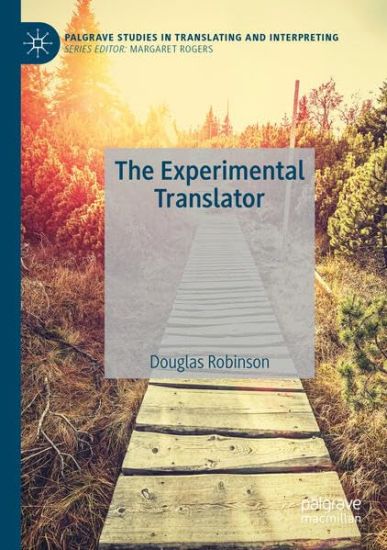
The Experimental Translator

The Experimental Translator

Douglas Robinson

Springer International Publishing AG
2024
nidottu
This book celebrates experimental translation, taking a series of exploratory looks at the hypercyborg translator, the collage translator, the smuggler translator, and the heteronymous translator. The idea isn’t to legislate traditional translations out of existence, or to “win” some kind of literary competition with the source text, but an exuberant participation in literary creativity. Turns out there are other things you can do with a great written work, and there is considerable pleasure to be had from both the doing and the reading of such things. This book will be of interest to literary translation studies researchers, as well as scholars and practitioners of experimental creative writing and avant-garde art, postgraduate translation students and professional (literary) translators.