Kirjailija
E. M. Forster
Kirjat ja teokset yhdessä paikassa: 328 kirjaa, julkaisuja vuosilta 1950-2026, suosituimpien joukossa A Passage to India. Vertaile teosten hintoja ja tarkista saatavuus suomalaisista kirjakaupoista.
Mukana myös kirjoitusasut: E M Forster, E.M. Forster, E. M Forster, E.M Forster
328 kirjaa
Kirjojen julkaisuhaarukka 1950-2026.

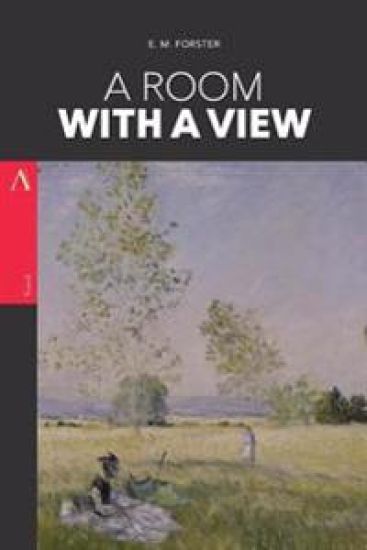
Full text. One of the best romantic novels ever written.A 1908 story by English writer E. M. Forster, about a young woman, Lucy Honeychurch, in the restrained culture of Edwardian era England. Lucy has her rigid, middle-class life mapped out for her until she visits Florence with her uptight cousin Charlotte, and finds her neatly ordered existence thrown off balance. Her eyes are opened by the unconventional characters she meets at the Pension Bertolini: flamboyant romantic novelist Eleanor Lavish, the Cockney Signora, curious Mr Emerson and, most of all, his passionate son George. Lucy finds herself torn between the intensity of life in Italy and the repressed morals of Edwardian England, personified in her terminally dull fianc Cecil Vyse. Will she ever learn to follow her own heart?
The Celestial Omnibus and Other Stories
E. M. Forster
Createspace Independent Publishing Platform
2017
nidottu


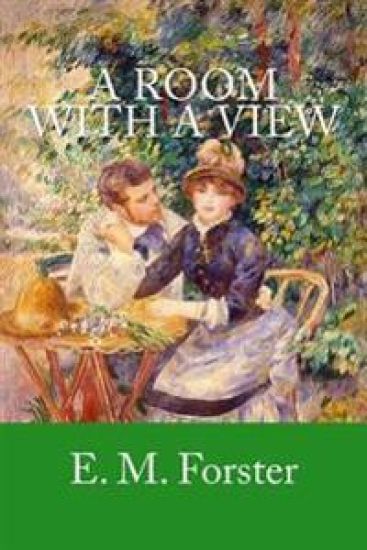
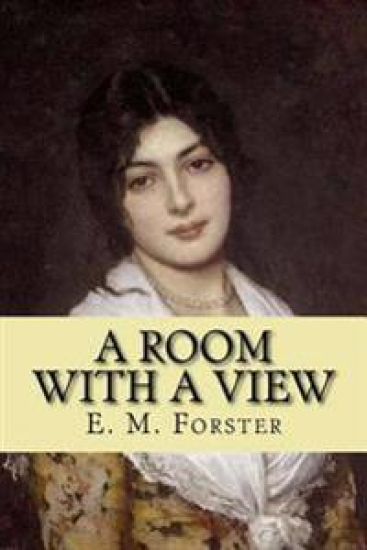
A Room with a View: classic literature
E. M. Forster
Createspace Independent Publishing Platform
2017
nidottu
In common with much of his other writing, this work by the eminent English novelist and essayist E. M. Forster (1879-1970) displays an unusually perceptive view of British society in the early 20th century. Written in 1908, A Room with a View is a social comedy set in Florence, Italy, and Surrey, England. Its heroine, Lucy Honeychurch, struggling against straitlaced Victorian attitudes of arrogance, narrow-mindedness and snobbery, falls in love-while on holiday in Italy-with the socially unsuitable George Emerson.Caught up in a claustrophobic world of pretentiousness and rigidity, Lucy ultimately rejects her fianc , Cecil Vyse, and chooses, instead, to wed her true love, the young man whose sense of freedom and lack of artificiality became apparent to her in the Italian pensione where they first met. This classic exploration of passion, human nature and social convention is reprinted here complete and unabridged.
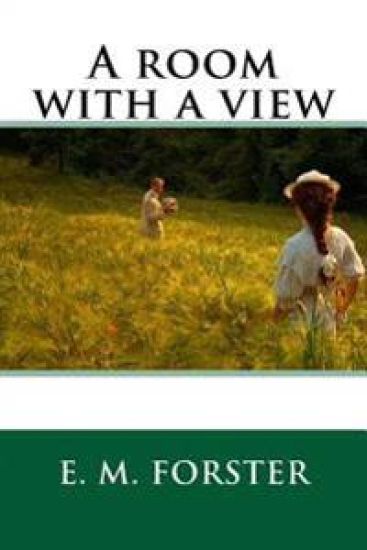
A Room with a View (English Edition)
E. M. Forster
Createspace Independent Publishing Platform
2016
nidottu


Edward Morgan Forster, generally published as E.M. Forster, was an novelist, essayist, and short story writer. He is known best for his ironic and well-plotted novels examining class difference and hypocrisy in early 20th-century British society. His humanistic impulse toward understanding and sympathy may be aptly summed up in the epigraph to his 1910 novel Howards End: "Only connect". He had five novels published in his lifetime, achieving his greatest success with A Passage to India (1924) which takes as its subject the relationship between East and West, seen through the lens of India in the later days of the British Raj. Forster's views as a secular humanist are at the heart of his work, which often depicts the pursuit of personal connections in spite of the restrictions of contemporary society. He is noted for his use of symbolism as a technique in his novels, and he has been criticised for his attachment to mysticism. His other works include Where Angels Fear to Tread (1905), The Longest Journey (1907), A Room with a View (1908) and Maurice (1971), his posthumously published novel which tells of the coming of age of an explicitly gay male character.
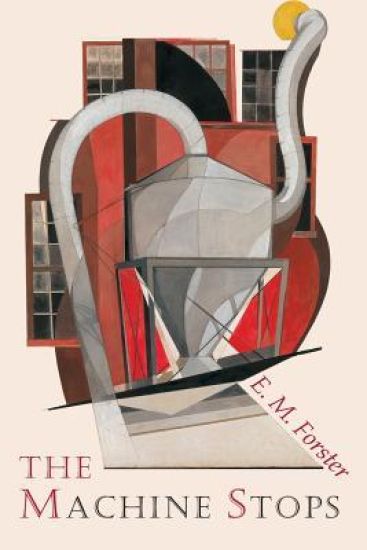
The Machine Stops is a short science fiction story. It describes a world in which almost all humans have lost the ability to live on the surface of the Earth. Each individual lives in isolation in a 'cell', with all bodily and spiritual needs met by the omnipotent, global Machine. Most humans welcome this development, as they are skeptical and fearful of first-hand experience. People forget that humans created the Machine, and treat it as a mystical entity whose needs supersede their own. Those who do not accept the deity of the Machine are viewed as 'unmechanical' and are threatened with "Homelessness". Eventually, the Machine apocalyptically collapses, and the civilization of the Machine comes to an end. --Wikipedia Notice: This Book is published by Historical Books Limited (www.publicdomain.org.uk) as a Public Domain Book, if you have any inquiries, requests or need any help you can just send an email to [email protected] This book is found as a public domain and free book based on various online catalogs, if you think there are any problems regard copyright issues please contact us immediately via [email protected]