Kirjojen hintavertailu. Mukana 12 657 676 kirjaa ja 12 kauppaa.
Kirjailija
Edwin Arnold
Kirjat ja teokset yhdessä paikassa: 253 kirjaa, julkaisuja vuosilta 1984-2026, suosituimpien joukossa Arnold, E: Leuchte Asiens. Vertaile teosten hintoja ja tarkista saatavuus suomalaisista kirjakaupoista.
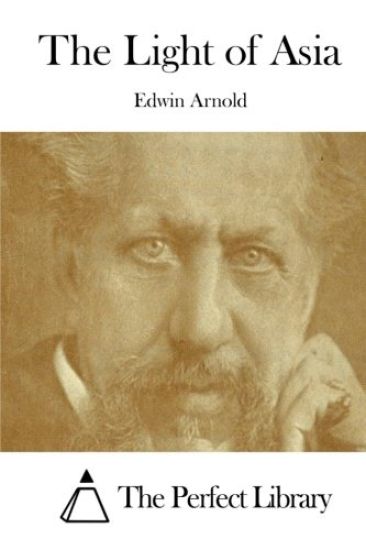
The Light of Asia is an unchanged, high-quality reprint of the original edition of 1890. Hansebooks is editor of the literature on different topic areas such as research and science, travel and expeditions, cooking and nutrition, medicine, and other genres. As a publisher we focus on the preservation of historical literature. Many works of historical writers and scientists are available today as antiques only. Hansebooks newly publishes these books and contributes to the preservation of literature which has become rare and historical knowledge for the future.
The Light of Asia - Or the great Renunciation is an unchanged, high-quality reprint of the original edition of 1885. Hansebooks is editor of the literature on different topic areas such as research and science, travel and expeditions, cooking and nutrition, medicine, and other genres. As a publisher we focus on the preservation of historical literature. Many works of historical writers and scientists are available today as antiques only. Hansebooks newly publishes these books and contributes to the preservation of literature which has become rare and historical knowledge for the future.
The Light of Asia or the Great Renunciation (Mah bhinishkramana) - Being the life and teaching of Gautama is an unchanged, high-quality reprint of the original edition of 1898. Hansebooks is editor of the literature on different topic areas such as research and science, travel and expeditions, cooking and nutrition, medicine, and other genres. As a publisher we focus on the preservation of historical literature. Many works of historical writers and scientists are available today as antiques only. Hansebooks newly publishes these books and contributes to the preservation of literature which has become rare and historical knowledge for the future.
Seas and Lands is an unchanged, high-quality reprint of the original edition of 1894. Hansebooks is editor of the literature on different topic areas such as research and science, travel and expeditions, cooking and nutrition, medicine, and other genres. As a publisher we focus on the preservation of historical literature. Many works of historical writers and scientists are available today as antiques only. Hansebooks newly publishes these books and contributes to the preservation of literature which has become rare and historical knowledge for the future.
The Light of the World is an unchanged, high-quality reprint of the original edition of 1891. Hansebooks is editor of the literature on different topic areas such as research and science, travel and expeditions, cooking and nutrition, medicine, and other genres. As a publisher we focus on the preservation of historical literature. Many works of historical writers and scientists are available today as antiques only. Hansebooks newly publishes these books and contributes to the preservation of literature which has become rare and historical knowledge for the future.
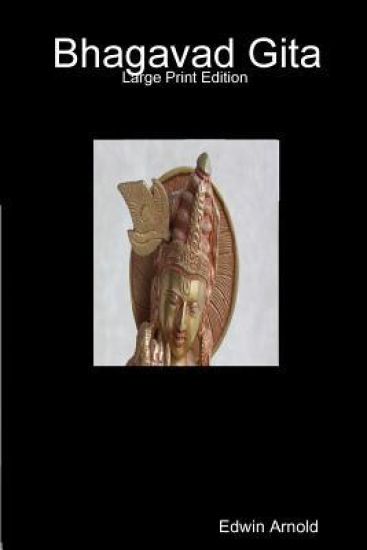
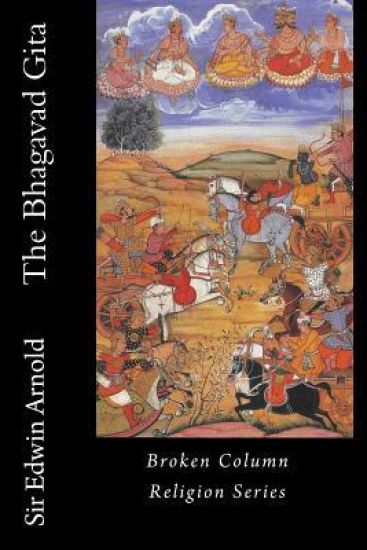
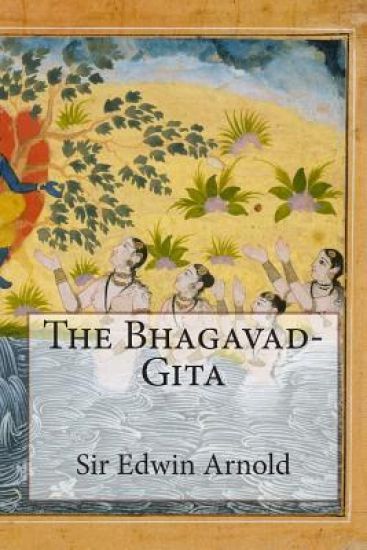
This five thousand year old book of ancient wisdom teachings tells the story of what happens on a battlefield when Arjuna, a man fighting for the sake of his land and birthright, meets Lord Krishna, God in human semblance. Krishna proceeds to give to Arjuna the spiritual and philosophic instruction that has made this book an all-time classic of Eastern religious thought. It answers such pressing questions as "What happens when we die?," and "Do we live again?"; as well as the correct pathway to enlightenment and moral service to God. This timeless treasure of spiritual wisdom will not fail to serve as a fount of inspiration for both the seeker and the committed spiritual devotee. LARGE PRINT FOR EASIER READING.
Lotus and Jewel is an unchanged, high-quality reprint of the original edition of 1887. Hansebooks is editor of the literature on different topic areas such as research and science, travel and expeditions, cooking and nutrition, medicine, and other genres. As a publisher we focus on the preservation of historical literature. Many works of historical writers and scientists are available today as antiques only. Hansebooks newly publishes these books and contributes to the preservation of literature which has become rare and historical knowledge for the future.
Potiphar's Wife - And Other Poems is an unchanged, high-quality reprint of the original edition of 1892. Hansebooks is editor of the literature on different topic areas such as research and science, travel and expeditions, cooking and nutrition, medicine, and other genres. As a publisher we focus on the preservation of historical literature. Many works of historical writers and scientists are available today as antiques only. Hansebooks newly publishes these books and contributes to the preservation of literature which has become rare and historical knowledge for the future.
First published in 1915, this book presents a dramatization of part ofthe author's The Light of Asia. The original text represents one of the first successful attempts to popularise Buddhism and its founder Gautama Buddha — presenting his life, teachings and philosophy in verse poetry. This adaptation dramatizes part of the The Light of Asia and includes staging instructions, properties required, illustrative drawings of suggested costumes, and incidental music composed specifically for the piece. This book will be of interest to students of Indian and Buddhist literature — and how this has interacted with the West — as well as students of drama.
First published in 1909, this book presents an English translation of chapters 25-42 of the Bhishma Parva from the epic Sanskrit poem Mahabharata — better known as the Bhagavad-Gita, reckoned as one of the "Five Jewels" of Devanagari literature. The plot consists of a dialogue between Prince Arjuna and Krishna, the Supreme Deity, in a war-chariot prior to a great battle. The conversation that takes place unfolds a philosophical system which remains the prevailing Brahmanic belief, blending the doctrines of Kapila, Patanjali, and the Vedas. Building on a number of preceding translations, this highly-regarded poetic interpretation provides a major work of literature in an accessible popular form.
This famous and marvellous Sanskrit poem occurs as an episode of the Mahabharata, in the sixth--or "Bhishma"--Parva of the great Hindu epic. It enjoys immense popularity and authority in India, where it is reckoned as one of the "Five Jewels,"--pancharatnani--of Devanagiri literature. In plain but noble language it unfolds a philosophical system which remains to this day the prevailing Brahmanic belief, blending as it does the doctrines of Kapila, Patanjali, and the Vedas.Its scene is the level country between the Jumna and the Sarsooti rivers-now Kurnul and Jheend. Its simple plot consists of a dialogue held by Prince Arjuna, the brother of King Yudhisthira, with Krishna, the Supreme Deity, wearing the disguise of a charioteer. A great battle is impending between the armies of the Kauravas and Pandavas, and this conversation is maintained in a war-chariot drawn up between the opposing hosts.
This study presents details about the life and philosophy of the founder of Buddhism, Prince Gautama of India or the Buddha, in the form of a poem as told from an imaginary Buddhist character. When originally published in 1926, little was known of Buddhism in Europe and Arnold aimed to inform the west of basic Buddhist concepts and the effects this had on India and Hinduism. This title will be of interest to students of Religion and Asian studies.
The Bhagavad Gita which is often referred to as simply the Gita, is a 700-verse Hindu scripture that is part of a Hindu epic. It is a sacred text of the Hindu religion. The Gita is set in a narrative framework of a dialogue between Pandava prince Arjuna and his guide and charioteer Lord Krishna. Facing the duty as a warrior to fight the Dharma Yudhha or righteous war between Pandavas and Kauravas, Arjuna is counselled by Lord Krishna to "fulfill his Kshatriya (warrior) duty as a warrior and establish Dharma." Inserted in this appeal to kshatriya dharma (chivalry) is "a dialogue ... between diverging attitudes concerning methods toward the attainment of liberation (moksha)". The Bhagavad Gita was exposed to the world through Sanjaya, who senses and cognises all the events of the battlefield. Sanjaya is Dhritarashtra's advisor and also his charioteer. The Gita is set in a narrative framework of a dialogue between Pandava prince Arjuna and his guide and charioteer Lord Krishna. Facing the duty as a warrior to fight the Dharma Yudhha or righteous war between Pandavas and Kauravas, Arjuna is counselled by Lord Krishna to "fulfill his Kshatriya (warrior) duty as a warrior and establish Dharma." Inserted in this appeal to kshatriya dharma (chivalry) is "a dialogue ... between diverging attitudes concerning methods toward the attainment of liberation (moksha)". The Bhagavad Gita presents a synthesis of the concept of Dharma, theistic bhakti, the yogic ideals of moksha through jnana, bhakti, karma, and Raja Yoga (spoken of in the 6th chapter) and Samkhya philosophy. It is a Bhagavata explanation of the Purusha Sukta and the Purushamedha Srauta yajna described in the Satapatha Brahmana. Numerous commentaries have been written on the Bhagavad Gita with widely differing views on the essentials. Vedanta commentators read varying relations between Self and Brahman in the text: Advaita Vedanta sees the non-dualism of Atman (soul) and Brahman as its essence, 12] whereas Bhedabheda and Vishishtadvaita see Atman and Brahman as both different and non-different, and Dvaita sees them as different. The setting of the Gita in a battlefield has been interpreted as an allegory for the ethical and moral struggles of the human life. The Bhagavad Gita's call for selfless action inspired many leaders of the Indian independence movement including Bal Gangadhar Tilak and Mahatma Gandhi. Gandhi referred to the Gita as his "spiritual dictionary". Theories on the date of composition of the Gita vary considerably. Scholars accept dates from the fifth century to the second century BCE as the probable range. Professor Jeaneane Fowler, in her commentary on the Gita, considers second century BCE to be the likely date of composition. 15] Kashi Nath Upadhyaya, a Gita scholar, on the basis of the estimated dates of Mahabharata, Brahma sutras, and other independent sources, concludes that the Bhagavad Gita was composed in the fifth or fourth century BCE. It is generally agreed that, "Unlike the Vedas, which have to be preserved letter-perfect, the Gita was a popular work whose reciters would inevitably conform to changes in language and style", so the earliest "surviving" components of this dynamic text are believed to be no older than the earliest "external" references we have to the Mahabharata epic, which may include an allusion in Panini's fourth century BCE grammar. It is estimated that the text probably reached something of a "final form" by the early Gupta period (about the 4th century CE). The actual dates of composition of the Gita remain unresolved.