

Kirjailija
Edwin Arnold
Kirjat ja teokset yhdessä paikassa: 249 kirjaa, julkaisuja vuosilta 1984-2025, suosituimpien joukossa Arnold, E: Leuchte Asiens. Vertaile teosten hintoja ja tarkista saatavuus suomalaisista kirjakaupoista.
249 kirjaa
Kirjojen julkaisuhaarukka 1984-2025.

The Book of Good Counsels: From the Sanskrit of the Hitopadesa
Edwin Arnold
Literary Licensing, LLC
2014
nidottu
The Song Celestial: Or Bhagavad-Gita and the Light of Asia
Edwin Arnold
Literary Licensing, LLC
2014
nidottu

The Song Celestial: Or Bhagavad-Gita is a translation and interpretation of the ancient Hindu scripture Bhagavad Gita by Edwin Arnold. The Bhagavad Gita is a part of the epic Mahabharata and is a dialogue between the warrior Arjuna and his charioteer Lord Krishna, who reveals to Arjuna the path of righteousness and the ultimate goal of life. Arnold's translation is written in poetic form and captures the essence of the original text. He also provides a detailed introduction and commentary on the text, explaining the historical and philosophical context of the Bhagavad Gita. The book explores various themes such as duty, karma, yoga, and the nature of the self. It is considered a significant work in the field of Indology and has been widely read and studied by scholars and spiritual seekers around the world. Overall, The Song Celestial: Or Bhagavad-Gita is a valuable resource for anyone interested in understanding the ancient wisdom of Hinduism and its relevance in contemporary times.This Is A New Release Of The Original 1885 Edition.This scarce antiquarian book is a facsimile reprint of the old original and may contain some imperfections such as library marks and notations. Because we believe this work is culturally important, we have made it available as part of our commitment for protecting, preserving, and promoting the world's literature in affordable, high quality, modern editions, that are true to their original work.
The Book of Religion by attaining the Supreme
Edwin Arnold
Createspace Independent Publishing Platform
2012
nidottu
This famous and marvellous Sanskrit poem occurs as an episode of the Mahabharata, in the sixth-or "Bhishma"-Parva of the great Hindoo epic. It enjoys immense popularity and authority in India, where it is reckoned as one of the Five Jewels,"-pancharatnani-of Devanagiri literature. In plain but noble language it unfolds a philosophical system which remains to this day the prevailing Brahmanic belief, blending as it does the doctrines of Kapila, Patanjali, and the Vedas. So lofty are many of its declarations, so sublime its aspirations, so pure and tender its piety, that Schlegel, after his study of the poem, breaks forth into this outburst of delight and praise towards its unknown author: "Magistrorum reverentia a Brachmanis inter sanctissima pietatis officia refertur. Ergo te primum, Vates sanctissime, Numinisque hypopheta quisquis tandem inter mortales dictus tu fueris, carminis bujus auctor, cujus oraculis mens ad excelsa quaeque, quaeque, aeterna atque divina, cum inenarraoih quddam delectatione rapitur-te primum, inquam, salvere jubeo, et vestigia tua semper adore." Lassen re-echoes this splendid tribute; and indeed, so striking are some of the moralities here inculcated, and so close the parallelism-ofttimes actually verbal- between its teachings and those of the New Testament, that a controversy has arisen between Pandits and Missionaries on the point whether the author borrowed from Christian sources, or the Evangelists and Apostles from him.
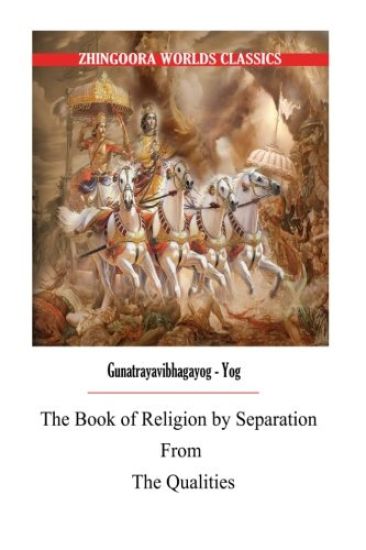
The Book of Religion by Separation from the Qualities
Edwin Arnold
Createspace Independent Publishing Platform
2012
nidottu
This famous and marvellous Sanskrit poem occurs as an episode of the Mahabharata, in the sixth-or "Bhishma"-Parva of the great Hindoo epic. It enjoys immense popularity and authority in India, where it is reckoned as one of the Five Jewels,"-pancharatnani-of Devanagiri literature. In plain but noble language it unfolds a philosophical system which remains to this day the prevailing Brahmanic belief, blending as it does the doctrines of Kapila, Patanjali, and the Vedas. So lofty are many of its declarations, so sublime its aspirations, so pure and tender its piety, that Schlegel, after his study of the poem, breaks forth into this outburst of delight and praise towards its unknown author: "Magistrorum reverentia a Brachmanis inter sanctissima pietatis officia refertur. Ergo te primum, Vates sanctissime, Numinisque hypopheta quisquis tandem inter mortales dictus tu fueris, carminis bujus auctor, cujus oraculis mens ad excelsa quaeque, quaeque, aeterna atque divina, cum inenarraoih quddam delectatione rapitur-te primum, inquam, salvere jubeo, et vestigia tua semper adore." Lassen re-echoes this splendid tribute; and indeed, so striking are some of the moralities here inculcated, and so close the parallelism-ofttimes actually verbal- between its teachings and those of the New Testament, that a controversy has arisen between Pandits and Missionaries on the point whether the author borrowed from Christian sources, or the Evangelists and Apostles from him.