Kirjojen hintavertailu. Mukana 12 595 353 kirjaa ja 12 kauppaa.

Kirjailija

Edwin Arnold

Kirjat ja teokset yhdessä paikassa: 249 kirjaa, julkaisuja vuosilta 1984-2025, suosituimpien joukossa Arnold, E: Leuchte Asiens. Vertaile teosten hintoja ja tarkista saatavuus suomalaisista kirjakaupoista.

249 kirjaa

Kirjojen julkaisuhaarukka 1984-2025.

The Book of the Manifesting of the One and Manifold

The Book of the Manifesting of the One and Manifold

Edwin Arnold

Createspace Independent Publishing Platform
2012
nidottu
This famous and marvellous Sanskrit poem occurs as an episode of the Mahabharata, in the sixth-or "Bhishma"-Parva of the great Hindoo epic. It enjoys immense popularity and authority in India, where it is reckoned as one of the Five Jewels,"-pancharatnani-of Devanagiri literature. In plain but noble language it unfolds a philosophical system which remains to this day the prevailing Brahmanic belief, blending as it does the doctrines of Kapila, Patanjali, and the Vedas. So lofty are many of its declarations, so sublime its aspirations, so pure and tender its piety, that Schlegel, after his study of the poem, breaks forth into this outburst of delight and praise towards its unknown author: "Magistrorum reverentia a Brachmanis inter sanctissima pietatis officia refertur. Ergo te primum, Vates sanctissime, Numinisque hypopheta quisquis tandem inter mortales dictus tu fueris, carminis bujus auctor, cujus oraculis mens ad excelsa quaeque, quaeque, aeterna atque divina, cum inenarraoih quddam delectatione rapitur-te primum, inquam, salvere jubeo, et vestigia tua semper adore." Lassen re-echoes this splendid tribute; and indeed, so striking are some of the moralities here inculcated, and so close the parallelism-ofttimes actually verbal- between its teachings and those of the New Testament, that a controversy has arisen between Pandits and Missionaries on the point whether the author borrowed from Christian sources, or the Evangelists and Apostles from him.
The Book of Religion by Discernment

The Book of Religion by Discernment

Edwin Arnold

Createspace Independent Publishing Platform
2012
nidottu
This famous and marvellous Sanskrit poem occurs as an episode of the Mahabharata, in the sixth-or "Bhishma"-Parva of the great Hindoo epic. It enjoys immense popularity and authority in India, where it is reckoned as one of the Five Jewels,"-pancharatnani-of Devanagiri literature. In plain but noble language it unfolds a philosophical system which remains to this day the prevailing Brahmanic belief, blending as it does the doctrines of Kapila, Patanjali, and the Vedas. So lofty are many of its declarations, so sublime its aspirations, so pure and tender its piety, that Schlegel, after his study of the poem, breaks forth into this outburst of delight and praise towards its unknown author: "Magistrorum reverentia a Brachmanis inter sanctissima pietatis officia refertur. Ergo te primum, Vates sanctissime, Numinisque hypopheta quisquis tandem inter mortales dictus tu fueris, carminis bujus auctor, cujus oraculis mens ad excelsa quaeque, quaeque, aeterna atque divina, cum inenarraoih quddam delectatione rapitur-te primum, inquam, salvere jubeo, et vestigia tua semper adore." Lassen re-echoes this splendid tribute; and indeed, so striking are some of the moralities here inculcated, and so close the parallelism-ofttimes actually verbal- between its teachings and those of the New Testament, that a controversy has arisen between Pandits and Missionaries on the point whether the author borrowed from Christian sources, or the Evangelists and Apostles from him.
Atmasanyama Yog The Book of Religion by Self-Restraint

Atmasanyama Yog The Book of Religion by Self-Restraint

Edwin Arnold

Createspace Independent Publishing Platform
2012
nidottu
This famous and marvellous Sanskrit poem occurs as an episode of the Mahabharata, in the sixth-or "Bhishma"-Parva of the great Hindoo epic. It enjoys immense popularity and authority in India, where it is reckoned as one of the Five Jewels,"-pancharatnani-of Devanagiri literature. In plain but noble language it unfolds a philosophical system which remains to this day the prevailing Brahmanic belief, blending as it does the doctrines of Kapila, Patanjali, and the Vedas. So lofty are many of its declarations, so sublime its aspirations, so pure and tender its piety, that Schlegel, after his study of the poem, breaks forth into this outburst of delight and praise towards its unknown author: "Magistrorum reverentia a Brachmanis inter sanctissima pietatis officia refertur. Ergo te primum, Vates sanctissime, Numinisque hypopheta quisquis tandem inter mortales dictus tu fueris, carminis bujus auctor, cujus oraculis mens ad excelsa quaeque, quaeque, aeterna atque divina, cum inenarraoih quddam delectatione rapitur-te primum, inquam, salvere jubeo, et vestigia tua semper adore." Lassen re-echoes this splendid tribute; and indeed, so striking are some of the moralities here inculcated, and so close the parallelism-ofttimes actually verbal- between its teachings and those of the New Testament, that a controversy has arisen between Pandits and Missionaries on the point whether the author borrowed from Christian sources, or the Evangelists and Apostles from him.
The Book of Doctrines

The Book of Doctrines

Edwin Arnold

Createspace Independent Publishing Platform
2012
nidottu
This famous and marvellous Sanskrit poem occurs as an episode of the Mahabharata, in the sixth-or "Bhishma"-Parva of the great Hindoo epic. It enjoys immense popularity and authority in India, where it is reckoned as one of the Five Jewels,"-pancharatnani-of Devanagiri literature. In plain but noble language it unfolds a philosophical system which remains to this day the prevailing Brahmanic belief, blending as it does the doctrines of Kapila, Patanjali, and the Vedas. So lofty are many of its declarations, so sublime its aspirations, so pure and tender its piety, that Schlegel, after his study of the poem, breaks forth into this outburst of delight and praise towards its unknown author: "Magistrorum reverentia a Brachmanis inter sanctissima pietatis officia refertur. Ergo te primum, Vates sanctissime, Numinisque hypopheta quisquis tandem inter mortales dictus tu fueris, carminis bujus auctor, cujus oraculis mens ad excelsa quaeque, quaeque, aeterna atque divina, cum inenarraoih quddam delectatione rapitur-te primum, inquam, salvere jubeo, et vestigia tua semper adore." Lassen re-echoes this splendid tribute; and indeed, so striking are some of the moralities here inculcated, and so close the parallelism-ofttimes actually verbal- between its teachings and those of the New Testament, that a controversy has arisen between Pandits and Missionaries on the point whether the author borrowed from Christian sources, or the Evangelists and Apostles from him.
The Book Of The Distress Of Arjuna

The Book Of The Distress Of Arjuna

Edwin Arnold

Createspace Independent Publishing Platform
2012
nidottu
This famous and marvellous Sanskrit poem occurs as an episode of the Mahabharata, in the sixth-or "Bhishma"-Parva of the great Hindoo epic. It enjoys immense popularity and authority in India, where it is reckoned as one of the Five Jewels,"-pancharatnani-of Devanagiri literature. In plain but noble language it unfolds a philosophical system which remains to this day the prevailing Brahmanic belief, blending as it does the doctrines of Kapila, Patanjali, and the Vedas. So lofty are many of its declarations, so sublime its aspirations, so pure and tender its piety, that Schlegel, after his study of the poem, breaks forth into this outburst of delight and praise towards its unknown author: "Magistrorum reverentia a Brachmanis inter sanctissima pietatis officia refertur. Ergo te primum, Vates sanctissime, Numinisque hypopheta quisquis tandem inter mortales dictus tu fueris, carminis bujus auctor, cujus oraculis mens ad excelsa quaeque, quaeque, aeterna atque divina, cum inenarraoih quddam delectatione rapitur-te primum, inquam, salvere jubeo, et vestigia tua semper adore." Lassen re-echoes this splendid tribute; and indeed, so striking are some of the moralities here inculcated, and so close the parallelism-ofttimes actually verbal- between its teachings and those of the New Testament, that a controversy has arisen between Pandits and Missionaries on the point whether the author borrowed from Christian sources, or the Evangelists and Apostles from him.
Karma-Yog The Book of Virtue In Work

Karma-Yog The Book of Virtue In Work

Edwin Arnold

Createspace Independent Publishing Platform
2012
nidottu
This famous and marvellous Sanskrit poem occurs as an episode of the Mahabharata, in the sixth-or "Bhishma"-Parva of the great Hindoo epic. It enjoys immense popularity and authority in India, where it is reckoned as one of the Five Jewels,"-pancharatnani-of Devanagiri literature. In plain but noble language it unfolds a philosophical system which remains to this day the prevailing Brahmanic belief, blending as it does the doctrines of Kapila, Patanjali, and the Vedas. So lofty are many of its declarations, so sublime its aspirations, so pure and tender its piety, that Schlegel, after his study of the poem, breaks forth into this outburst of delight and praise towards its unknown author: "Magistrorum reverentia a Brachmanis inter sanctissima pietatis officia refertur. Ergo te primum, Vates sanctissime, Numinisque hypopheta quisquis tandem inter mortales dictus tu fueris, carminis bujus auctor, cujus oraculis mens ad excelsa quaeque, quaeque, aeterna atque divina, cum inenarraoih quddam delectatione rapitur-te primum, inquam, salvere jubeo, et vestigia tua semper adore." Lassen re-echoes this splendid tribute; and indeed, so striking are some of the moralities here inculcated, and so close the parallelism-ofttimes actually verbal- between its teachings and those of the New Testament, that a controversy has arisen between Pandits and Missionaries on the point whether the author borrowed from Christian sources, or the Evangelists and Apostles from him.
The Book of the Religion Of Knowledge

The Book of the Religion Of Knowledge

Edwin Arnold

Createspace Independent Publishing Platform
2012
nidottu
This famous and marvellous Sanskrit poem occurs as an episode of the Mahabharata, in the sixth-or "Bhishma"-Parva of the great Hindoo epic. It enjoys immense popularity and authority in India, where it is reckoned as one of the Five Jewels,"-pancharatnani-of Devanagiri literature. In plain but noble language it unfolds a philosophical system which remains to this day the prevailing Brahmanic belief, blending as it does the doctrines of Kapila, Patanjali, and the Vedas. So lofty are many of its declarations, so sublime its aspirations, so pure and tender its piety, that Schlegel, after his study of the poem, breaks forth into this outburst of delight and praise towards its unknown author: "Magistrorum reverentia a Brachmanis inter sanctissima pietatis officia refertur. Ergo te primum, Vates sanctissime, Numinisque hypopheta quisquis tandem inter mortales dictus tu fueris, carminis bujus auctor, cujus oraculis mens ad excelsa quaeque, quaeque, aeterna atque divina, cum inenarraoih quddam delectatione rapitur-te primum, inquam, salvere jubeo, et vestigia tua semper adore." Lassen re-echoes this splendid tribute; and indeed, so striking are some of the moralities here inculcated, and so close the parallelism-ofttimes actually verbal- between its teachings and those of the New Testament, that a controversy has arisen between Pandits and Missionaries on the point whether the author borrowed from Christian sources, or the Evangelists and Apostles from him.
The Book of Religion by Renouncing Fruit of Works

The Book of Religion by Renouncing Fruit of Works

Edwin Arnold

Createspace Independent Publishing Platform
2012
nidottu
This famous and marvellous Sanskrit poem occurs as an episode of the Mahabharata, in the sixth-or "Bhishma"-Parva of the great Hindoo epic. It enjoys immense popularity and authority in India, where it is reckoned as one of the Five Jewels,"-pancharatnani-of Devanagiri literature. In plain but noble language it unfolds a philosophical system which remains to this day the prevailing Brahmanic belief, blending as it does the doctrines of Kapila, Patanjali, and the Vedas. So lofty are many of its declarations, so sublime its aspirations, so pure and tender its piety, that Schlegel, after his study of the poem, breaks forth into this outburst of delight and praise towards its unknown author: "Magistrorum reverentia a Brachmanis inter sanctissima pietatis officia refertur. Ergo te primum, Vates sanctissime, Numinisque hypopheta quisquis tandem inter mortales dictus tu fueris, carminis bujus auctor, cujus oraculis mens ad excelsa quaeque, quaeque, aeterna atque divina, cum inenarraoih quddam delectatione rapitur-te primum, inquam, salvere jubeo, et vestigia tua semper adore." Lassen re-echoes this splendid tribute; and indeed, so striking are some of the moralities here inculcated, and so close the parallelism-ofttimes actually verbal- between its teachings and those of the New Testament, that a controversy has arisen between Pandits and Missionaries on the point whether the author borrowed from Christian sources, or the Evangelists and Apostles from him.
Aksharaparabrahma - Yog The Book of Religion by Devotion to the One Supreme God

Aksharaparabrahma - Yog The Book of Religion by Devotion to the One Supreme God

Edwin Arnold

Createspace Independent Publishing Platform
2012
nidottu
This famous and marvellous Sanskrit poem occurs as an episode of the Mahabharata, in the sixth-or "Bhishma"-Parva of the great Hindoo epic. It enjoys immense popularity and authority in India, where it is reckoned as one of the Five Jewels,"-pancharatnani-of Devanagiri literature. In plain but noble language it unfolds a philosophical system which remains to this day the prevailing Brahmanic belief, blending as it does the doctrines of Kapila, Patanjali, and the Vedas. So lofty are many of its declarations, so sublime its aspirations, so pure and tender its piety, that Schlegel, after his study of the poem, breaks forth into this outburst of delight and praise towards its unknown author: "Magistrorum reverentia a Brachmanis inter sanctissima pietatis officia refertur. Ergo te primum, Vates sanctissime, Numinisque hypopheta quisquis tandem inter mortales dictus tu fueris, carminis bujus auctor, cujus oraculis mens ad excelsa quaeque, quaeque, aeterna atque divina, cum inenarraoih quddam delectatione rapitur-te primum, inquam, salvere jubeo, et vestigia tua semper adore." Lassen re-echoes this splendid tribute; and indeed, so striking are some of the moralities here inculcated, and so close the parallelism-ofttimes actually verbal- between its teachings and those of the New Testament, that a controversy has arisen between Pandits and Missionaries on the point whether the author borrowed from Christian sources, or the Evangelists and Apostles from him.
The Book of Religion by the Heavenly Perfections

The Book of Religion by the Heavenly Perfections

Edwin Arnold

Createspace Independent Publishing Platform
2012
nidottu
This famous and marvellous Sanskrit poem occurs as an episode of the Mahabharata, in the sixth-or "Bhishma"-Parva of the great Hindoo epic. It enjoys immense popularity and authority in India, where it is reckoned as one of the Five Jewels,"-pancharatnani-of Devanagiri literature. In plain but noble language it unfolds a philosophical system which remains to this day the prevailing Brahmanic belief, blending as it does the doctrines of Kapila, Patanjali, and the Vedas. So lofty are many of its declarations, so sublime its aspirations, so pure and tender its piety, that Schlegel, after his study of the poem, breaks forth into this outburst of delight and praise towards its unknown author: "Magistrorum reverentia a Brachmanis inter sanctissima pietatis officia refertur. Ergo te primum, Vates sanctissime, Numinisque hypopheta quisquis tandem inter mortales dictus tu fueris, carminis bujus auctor, cujus oraculis mens ad excelsa quaeque, quaeque, aeterna atque divina, cum inenarraoih quddam delectatione rapitur-te primum, inquam, salvere jubeo, et vestigia tua semper adore." Lassen re-echoes this splendid tribute; and indeed, so striking are some of the moralities here inculcated, and so close the parallelism-ofttimes actually verbal- between its teachings and those of the New Testament, that a controversy has arisen between Pandits and Missionaries on the point whether the author borrowed from Christian sources, or the Evangelists and Apostles from him.
The Book of Religion by the Kingly Knowledge and the Kingly Mystery

The Book of Religion by the Kingly Knowledge and the Kingly Mystery

Edwin Arnold

Createspace Independent Publishing Platform
2012
nidottu
This famous and marvellous Sanskrit poem occurs as an episode of the Mahabharata, in the sixth-or "Bhishma"-Parva of the great Hindoo epic. It enjoys immense popularity and authority in India, where it is reckoned as one of the Five Jewels,"-pancharatnani-of Devanagiri literature. In plain but noble language it unfolds a philosophical system which remains to this day the prevailing Brahmanic belief, blending as it does the doctrines of Kapila, Patanjali, and the Vedas. So lofty are many of its declarations, so sublime its aspirations, so pure and tender its piety, that Schlegel, after his study of the poem, breaks forth into this outburst of delight and praise towards its unknown author: "Magistrorum reverentia a Brachmanis inter sanctissima pietatis officia refertur. Ergo te primum, Vates sanctissime, Numinisque hypopheta quisquis tandem inter mortales dictus tu fueris, carminis bujus auctor, cujus oraculis mens ad excelsa quaeque, quaeque, aeterna atque divina, cum inenarraoih quddam delectatione rapitur-te primum, inquam, salvere jubeo, et vestigia tua semper adore." Lassen re-echoes this splendid tribute; and indeed, so striking are some of the moralities here inculcated, and so close the parallelism-ofttimes actually verbal- between its teachings and those of the New Testament, that a controversy has arisen between Pandits and Missionaries on the point whether the author borrowed from Christian sources, or the Evangelists and Apostles from him.
The Book of Religion by Separation of Matter and Spirit

The Book of Religion by Separation of Matter and Spirit

Edwin Arnold

Createspace Independent Publishing Platform
2012
nidottu
This famous and marvellous Sanskrit poem occurs as an episode of the Mahabharata, in the sixth-or "Bhishma"-Parva of the great Hindoo epic. It enjoys immense popularity and authority in India, where it is reckoned as one of the Five Jewels,"-pancharatnani-of Devanagiri literature. In plain but noble language it unfolds a philosophical system which remains to this day the prevailing Brahmanic belief, blending as it does the doctrines of Kapila, Patanjali, and the Vedas. So lofty are many of its declarations, so sublime its aspirations, so pure and tender its piety, that Schlegel, after his study of the poem, breaks forth into this outburst of delight and praise towards its unknown author: "Magistrorum reverentia a Brachmanis inter sanctissima pietatis officia refertur. Ergo te primum, Vates sanctissime, Numinisque hypopheta quisquis tandem inter mortales dictus tu fueris, carminis bujus auctor, cujus oraculis mens ad excelsa quaeque, quaeque, aeterna atque divina, cum inenarraoih quddam delectatione rapitur-te primum, inquam, salvere jubeo, et vestigia tua semper adore." Lassen re-echoes this splendid tribute; and indeed, so striking are some of the moralities here inculcated, and so close the parallelism-ofttimes actually verbal- between its teachings and those of the New Testament, that a controversy has arisen between Pandits and Missionaries on the point whether the author borrowed from Christian sources, or the Evangelists and Apostles from him.
The Book of the Religion of Faith

The Book of the Religion of Faith

Edwin Arnold

Createspace Independent Publishing Platform
2012
nidottu
This famous and marvellous Sanskrit poem occurs as an episode of the Mahabharata, in the sixth-or "Bhishma"-Parva of the great Hindoo epic. It enjoys immense popularity and authority in India, where it is reckoned as one of the Five Jewels,"-pancharatnani-of Devanagiri literature. In plain but noble language it unfolds a philosophical system which remains to this day the prevailing Brahmanic belief, blending as it does the doctrines of Kapila, Patanjali, and the Vedas. So lofty are many of its declarations, so sublime its aspirations, so pure and tender its piety, that Schlegel, after his study of the poem, breaks forth into this outburst of delight and praise towards its unknown author: "Magistrorum reverentia a Brachmanis inter sanctissima pietatis officia refertur. Ergo te primum, Vates sanctissime, Numinisque hypopheta quisquis tandem inter mortales dictus tu fueris, carminis bujus auctor, cujus oraculis mens ad excelsa quaeque, quaeque, aeterna atque divina, cum inenarraoih quddam delectatione rapitur-te primum, inquam, salvere jubeo, et vestigia tua semper adore." Lassen re-echoes this splendid tribute; and indeed, so striking are some of the moralities here inculcated, and so close the parallelism-ofttimes actually verbal- between its teachings and those of the New Testament, that a controversy has arisen between Pandits and Missionaries on the point whether the author borrowed from Christian sources, or the Evangelists and Apostles from him.
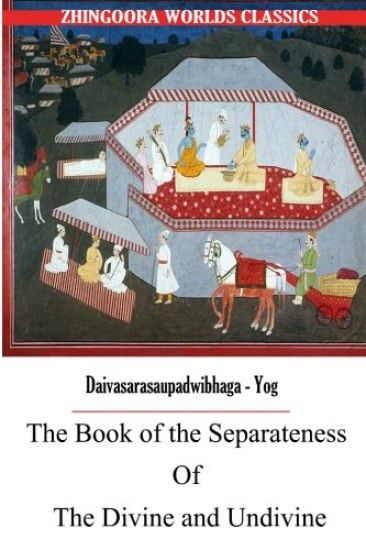
The Book of the Separateness of the Divine and UnDivine

The Book of the Separateness of the Divine and UnDivine

Edwin Arnold

Createspace Independent Publishing Platform
2012
nidottu
This famous and marvellous Sanskrit poem occurs as an episode of the Mahabharata, in the sixth-or "Bhishma"-Parva of the great Hindoo epic. It enjoys immense popularity and authority in India, where it is reckoned as one of the Five Jewels,"-pancharatnani-of Devanagiri literature. In plain but noble language it unfolds a philosophical system which remains to this day the prevailing Brahmanic belief, blending as it does the doctrines of Kapila, Patanjali, and the Vedas. So lofty are many of its declarations, so sublime its aspirations, so pure and tender its piety, that Schlegel, after his study of the poem, breaks forth into this outburst of delight and praise towards its unknown author: "Magistrorum reverentia a Brachmanis inter sanctissima pietatis officia refertur. Ergo te primum, Vates sanctissime, Numinisque hypopheta quisquis tandem inter mortales dictus tu fueris, carminis bujus auctor, cujus oraculis mens ad excelsa quaeque, quaeque, aeterna atque divina, cum inenarraoih quddam delectatione rapitur-te primum, inquam, salvere jubeo, et vestigia tua semper adore." Lassen re-echoes this splendid tribute; and indeed, so striking are some of the moralities here inculcated, and so close the parallelism-ofttimes actually verbal- between its teachings and those of the New Testament, that a controversy has arisen between Pandits and Missionaries on the point whether the author borrowed from Christian sources, or the Evangelists and Apostles from him.
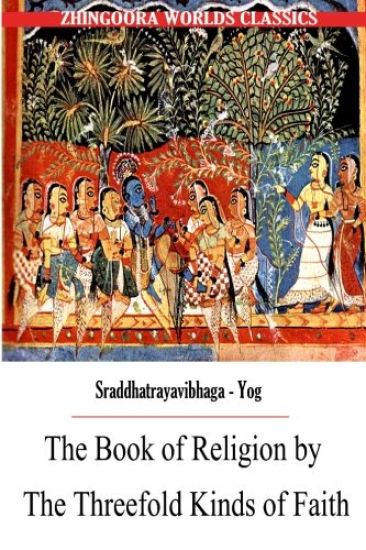
The Book of Religion by the Threefold Kinds of Faith

The Book of Religion by the Threefold Kinds of Faith

Edwin Arnold

Createspace Independent Publishing Platform
2012
nidottu
This famous and marvellous Sanskrit poem occurs as an episode of the Mahabharata, in the sixth-or "Bhishma"-Parva of the great Hindoo epic. It enjoys immense popularity and authority in India, where it is reckoned as one of the Five Jewels,"-pancharatnani-of Devanagiri literature. In plain but noble language it unfolds a philosophical system which remains to this day the prevailing Brahmanic belief, blending as it does the doctrines of Kapila, Patanjali, and the Vedas. So lofty are many of its declarations, so sublime its aspirations, so pure and tender its piety, that Schlegel, after his study of the poem, breaks forth into this outburst of delight and praise towards its unknown author: "Magistrorum reverentia a Brachmanis inter sanctissima pietatis officia refertur. Ergo te primum, Vates sanctissime, Numinisque hypopheta quisquis tandem inter mortales dictus tu fueris, carminis bujus auctor, cujus oraculis mens ad excelsa quaeque, quaeque, aeterna atque divina, cum inenarraoih quddam delectatione rapitur-te primum, inquam, salvere jubeo, et vestigia tua semper adore." Lassen re-echoes this splendid tribute; and indeed, so striking are some of the moralities here inculcated, and so close the parallelism-ofttimes actually verbal- between its teachings and those of the New Testament, that a controversy has arisen between Pandits and Missionaries on the point whether the author borrowed from Christian sources, or the Evangelists and Apostles from him.
Seas and Lands. Reprinted by permission of the Proprietors of the "Daily Telegraph" from letters published under the title "By Sea and Land" in that journal ... With illustrations.
Title: Seas and Lands. Reprinted by permission of the Proprietors of the "Daily Telegraph" from letters published under the title "By Sea and Land" in that journal ... With illustrations.Publisher: British Library, Historical Print EditionsThe British Library is the national library of the United Kingdom. It is one of the world's largest research libraries holding over 150 million items in all known languages and formats: books, journals, newspapers, sound recordings, patents, maps, stamps, prints and much more. Its collections include around 14 million books, along with substantial additional collections of manuscripts and historical items dating back as far as 300 BC.The GENERAL HISTORICAL collection includes books from the British Library digitised by Microsoft. This varied collection includes material that gives readers a 19th century view of the world. Topics include health, education, economics, agriculture, environment, technology, culture, politics, labour and industry, mining, penal policy, and social order. ++++The below data was compiled from various identification fields in the bibliographic record of this title. This data is provided as an additional tool in helping to insure edition identification: ++++ British Library Arnold, Edwin; 1892. xii. 601 p.; 8 . 010057.e.10.