Kirjojen hintavertailu. Mukana 12 390 323 kirjaa ja 12 kauppaa.

Kirjailija

Euripides

Kirjat ja teokset yhdessä paikassa: 535 kirjaa, julkaisuja vuosilta 1802-2026, suosituimpien joukossa Euripides: Herakles. Vertaile teosten hintoja ja tarkista saatavuus suomalaisista kirjakaupoista.

Mukana myös kirjoitusasut: Eurípides, Euripides .

535 kirjaa

Kirjojen julkaisuhaarukka 1802-2026.

Ten Plays

Ten Plays

Euripides

Digireads.com
2020
pokkari
Of Euripides' roughly ninety-two plays, only seventeen tragedies survive. Both ridiculed and lauded during his life, Euripides now stands as one of the greatest innovators of Greek drama. Collected here are ten of Euripides' most important tragedies in prose translation by Edward P. Coleridge. In the first play in this collection, "The Alcestis", Euripides expands upon the myth of Princess Alcestis at the time of her death. "Medea", tells the horrific tale of a woman who seeks revenge on her husband by killing her children. "Hippolytus" relates the tragedy of its titular character, son of Theseus, and his tragic fall at the hands of Phaedra. "Andromache" dramatizes the life of a Greek slave in the years after the Trojan War. In "Ion" we discover the divine origins of an orphan. "The Trojan Women" is the most complete surviving play of Euripides' Trojan War trilogy in which we learn of the fates of the women of Troy following its sacking. In "Electra" we find the daughter of a slain king plotting her revenge. "Iphigenia Among the Taurians" relates how Agamemnon's daughter Iphigenia is saved from sacrifice and travels to Tauris to meet her brother Orestes. "The Bacchae" tells the tragic consequences for King Pentheus of Thebes and his mother Agave for their persecution of Dionysus worshippers. Finally in "Iphigenia at Aulis" we have the classic myth of Agamemnon before and during the Trojan War and his decision to sacrifice his daughter Iphigenia. Together these plays represent the brilliance of one of classical antiquity's greatest playwrights. This edition is printed on premium acid-free paper.

The Trojan Women

The Trojan Women

Euripides

Les Prairies Numeriques
2020
pokkari
The Trojan Women, also known as Troades, is a tragedy by the Greek playwright Euripides. Produced in 415 BC during the Peloponnesian War, it is often considered a commentary on the capture of the Aegean island of Melos and the subsequent slaughter and subjugation of its populace by the Athenians earlier that year (see History of Milos). 415 BC was also the year of the scandalous desecration of the hermai and the Athenians' second expedition to Sicily, events which may also have influenced the author.The Trojan Women was the third tragedy of a trilogy dealing with the Trojan War. The first tragedy, Alexandros, was about the recognition of the Trojan prince Paris who had been abandoned in infancy by his parents and rediscovered in adulthood. The second tragedy, Palamedes, dealt with Greek mistreatment of their fellow Greek Palamedes. This trilogy was presented at the Dionysia along with the comedic satyr play Sisyphos. The plots of this trilogy were not connected in the way that Aeschylus' Oresteia was connected. Euripides did not favor such connected trilogies.Euripides won second prize at the City Dionysia for his effort, losing to the obscure tragedian Xenocles.The four Trojan women of the play are the same that appear in the final book of the Iliad lamenting over the corpse of Hector. Taking place near the same time is Hecuba, another play by Euripides.
Kyklops

Kyklops

Euripides

De Gruyter
2020
sidottu
In the heyday of Greek tragedy, each of the three playwrights who competed for victory in the tragedy competition at the Great Dionysia, the most important Dionysus festival in Athens, not only had to present three tragedies, but also a light-hearted epilogue, which was called a satyr play after the satyrs who always formed the chorus. Euripides' Cyclops is the only complete surviving example of this dramatic genre. The play deals with Odysseus' encounter with the Cyclops Polyphemus, which is familiar to every audience member from the Odyssey.
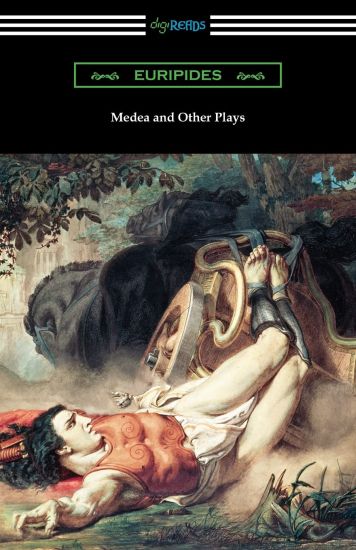
Medea and Other Plays

Medea and Other Plays

Euripides

Digireads.com
2020
pokkari
Euripides, along was Sophocles, and Aeschylus, is largely responsible for the rise of Greek tragedy. It was in the 5th Century BC, during the height of Greece's cultural bloom, that Euripides lived and worked. Of his roughly ninety-two plays, only seventeen tragedies survive. Both ridiculed and lauded during his life, Euripides now stands as an innovator of the Greek drama. Collected here are six of Euripides' tragedies in prose translation by Edward P. Coleridge: "Medea", "Hippolytus", "Hecuba", "Electra", "Heracles", and "Helen". The first play in this collection, "Medea", tells the horrific tale of a woman who seeks revenge on her husband by killing her children. "Hippolytus" relates the tragedy of its titular character, son of Theseus, and his tragic fall at the hands of Phaedra. "Hecuba" is the tale of a fallen Queen, the grief she feels for the death of her daughter, and the revenge she takes for the murder of her son. In "Electra" we find the daughter of a slain king plotting her revenge. In "Heracles" we find a hero racing to save his family from a death sentence. Lastly, "Helen" presents an alternate tale regarding Helen of Troy than that which sparked the Trojan War. For the lover of drama and the ancient world, this collection is not to be missed--Euripides is seen here in all of his valor and brilliance. This edition is printed on premium acid-free paper.

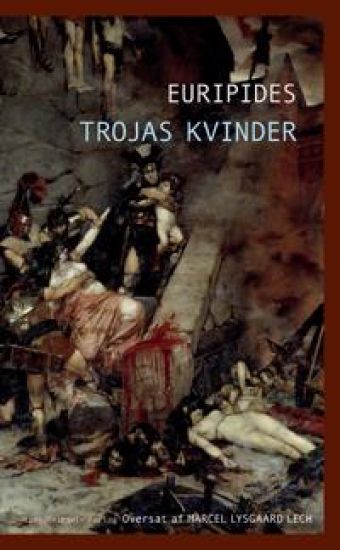
Trojas kvinder

Trojas kvinder

Euripides .

Gyldendal
2020
nidottu
Troja er faldet, og alle mænd er døde. Kvinderne skal fordeles ved lod mellem grækernes konger: Hvilken mand skal have hvilken kvinde? Fra den kollektive tragedie, som er Trojas fald, til det enkelte individs personlige tragedie, scene efter scene, er tragediens episodiske puls også Trojas sidste hjerteslag. Ikke bare er byen tom, hvor der før var liv, nu brændes den også ned, mens Trojas håb, Hektors søn Astyanax, bliver myrdet som den sidste gruopvækkende gerning i krigen. Trojas kvinder er et drama om håbløshed, efter den store tragedie er indtruffet. Mesterstykket, der blev opført første gang i 415 f.Kr., er stadig aktuelt. Tragedien fokuserer på fire kvinder, som har mistet deres fædre, mænd og sønner i krigen. De er tvunget til at forlade den brændende by og går en uvis skæbne i møde som slavinder i et fremmed land. Euripides viser, hvordan krig nedbryder alle implicerede parter, og hvordan fremtiden bliver til frygt, når fortiden ligger i ruiner.
Schenck's Official Stage Play Formatting Series: Vol. 56 Euripides' THE IPHIGENÎA IN TAURIS: Six Versions
Euripides stage play, THE IPHIGEN A IN TAURIS, for the first time ever, is correctly formatted adhering to the strict guidelines established by Walter Schenck's award-winning research manual: How to Properly Format a Stage Play. Schenck offers in this collection six outstanding translations from Greek into English by world renown scholars.
Schenck's Official Stage Play Formatting Series: Vol. 53 Euripides' HIPPOLYTUS: Six Versions
Euripides stage play, HIPPOLYTUS, for the first time ever, is correctly formatted adhering to the strict guidelines established by Walter Schenck's award-winning research manual: How to Properly Format a Stage Play. Schenck offers in this collection six outstanding translations from Greek into English by world renown scholars.
Schenck's Official Stage Play Formatting Series: Vol. 55 Euripides' THE BACCHAE: Seven Versions
Euripides stage play, BACCHAE, for the first time ever, is correctly formatted adhering to the strict guidelines established by Walter Schenck's award-winning research manual: How to Properly Format a Stage Play. Schenck offers in this collection seven outstanding translations from Greek into English by world renown scholars.
Schenck's Official Stage Play Formatting Series: Vol. 54 EURIPIDES' ALCESTIS Seven Versions:
Euripides stage play, ALCESTIS, for the first time ever, is correctly formatted adhering to the strict guidelines established by Walter Schenck's award-winning research manual: How to Properly Format a Stage Play. Schenck offers in this collection seven outstanding translations from Greek into English by world renown scholars.
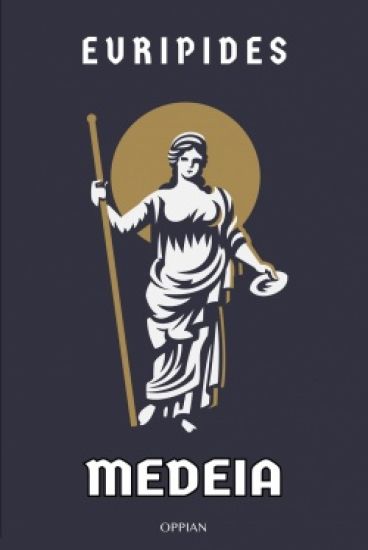
Medeia

Medeia

Euripides

Oppian
2020
nidottu
Euripideen klassinen näytelmä kertoo hylätyksi tulleesta prinsessasta, joka surmaa omat lapsensa ja pakenee sen jälkeen Ateenaan aloittaakseen uuden elämän.
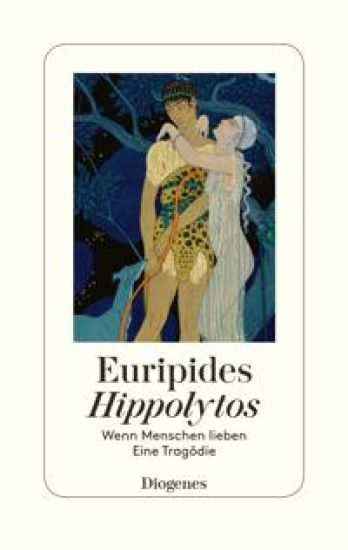
Hippolytos

Hippolytos

Euripides

Hansebooks
2019
pokkari
Hippolytos - Griechisch und Deutsch ist ein unver nderter, hochwertiger Nachdruck der Originalausgabe aus dem Jahr 1891. Hansebooks ist Herausgeber von Literatur zu unterschiedlichen Themengebieten wie Forschung und Wissenschaft, Reisen und Expeditionen, Kochen und Ern hrung, Medizin und weiteren Genres. Der Schwerpunkt des Verlages liegt auf dem Erhalt historischer Literatur. Viele Werke historischer Schriftsteller und Wissenschaftler sind heute nur noch als Antiquit ten erh ltlich. Hansebooks verlegt diese B cher neu und tr gt damit zum Erhalt selten gewordener Literatur und historischem Wissen auch f r die Zukunft bei.
Medea

Medea

Euripides

University of California Press
2019
pokkari
Renowned poet and acclaimed translator Charles Martin faithfully captures Euripides’s dramatic tone and style in this searing tale of revenge and sacrifice.The Medea of Euripides is one of the greatest of all Greek tragedies and arguably the one with the most significance today. A barbarian woman brought to Corinth and there abandoned by her Greek husband, Medea seeks vengeance on Jason and is willing to strike out against his new wife and family—even slaughtering the sons she has born him. At its center is Medea herself, a character who refuses definition: Is she a hero, a witch, a psychopath, a goddess? All that can be said for certain is that she is a woman who has loved, has suffered, and will stop at nothing for vengeance. In this stunning translation, poet Charles Martin captures the rhythms of Euripides’ original text through contemporary rhyme and meter that speak directly to modern readers. An introduction by classicist and poet A.E. Stallings examines the complex and multifaceted Medea in patriarchal ancient Greece. Perfect in and out of the classroom as well as for theatrical performance, this faithful translation succeeds like no other.
Medea (Adansonia Greek Plays)
This edition of the Greek classic play Medea by Euripides is translated by well-regarded scholar of classics Gilbert Murray, who offers the reader a vivid yet accurate interpretation of the play.Medea is imperiled as her husband plans to leave her for another woman. Angry at having been abandoned for a Corinthian princess, Medea enacts vengeance befitting her status as a barbarian queen: she slays her former husband's new wife and their children, before absconding to Athens where she begins a new life.Ever since its publication over 2,400 years ago, Medea has been considered a shocking work of fiction, primarily for its violent and malevolent scenes. Despite these horrific events, it was Euripides portrayal of Medea as a sympathetic antihero frustrated by a world of male dominance which won over audiences. Owing to this nuanced depiction, Medea the play and Medea the character has become well-regarded by feminists. It remains the most popular and performed drama by Euripides in the modern day.