
Kirjailija
Günter Grass
Kirjat ja teokset yhdessä paikassa: 79 kirjaa, julkaisuja vuosilta 1966-2025, suosituimpien joukossa Tin Drum. Vertaile teosten hintoja ja tarkista saatavuus suomalaisista kirjakaupoista.
Mukana myös kirjoitusasut: Gunter Grass
79 kirjaa
Kirjojen julkaisuhaarukka 1966-2025.

"It is impossible not to be impressed by Grass's] inexhaustible desire to experiment with the novel and by the many good stories and passages of exquisite writing in The Box."--Charles Simic, New York Review of Books In this inspired and daring work of fiction, G nter Grass writes in the voices of his eight children as they record memories of their childhoods, of growing up, and especially of their father, who was always at work on a new book, always at the margins of their lives. Memories contradictory, happy, loving, accusatory--they piece together an intimate picture of this most public of men. To say nothing of Marie, a photographer and family friend of many years, perhaps even a lover, whose snapshots taken with an old-fashioned Agfa box camera provide the author with ideas for his work. But her images offer much more than simple replication. They reveal a truth beyond ordinary life, depict the future, tell what might have been, grant the wishes of those photographed. The children speculate on the nature of this magic: Was the enchanted camera a source of inspiration for their father? Did it represent the power of art itself? Was it the eye of God? An audacious literary experiment, The Box is Grass at his best.

Die Brüder Grimm erhalten im Jahr 1838 einen ehrenvollen Auftrag: Ein Wörterbuch der deutschen Sprache sollen sie erstellen. Voller Eifer machen sie sich ans Werk. Aberwitz, Angesicht, Atemkraft - fleißig sammeln sie Wörter und Zitate, in wenigen Jahren sollte es zu schaffen sein. Barfuß, Bettelbrief, Biermörder - sie erforschen Herkommen und Verwendung, sie verzetteln sich gründlich. Capriolen, Comödie, Creatur - am Ende ihres Lebens haben Jacob und Wilhelm Grimm nur wenige Buchstaben bewältigt. Günter Grass erzählt das Leben der Brüder Grimm auf einzigartige Weise als Liebeserklärung an die deutsche Sprache und die Wörter, aus denen sie gefügt ist. Er schreibt über die Lebensstationen der Märchen-Brüder, über ihre uferlose Aufgabe und die Zeitgenossen an ihrer Seite: Familie und Verleger, Freunde, Verehrer und Verächter. Spielerisch-virtuos spürt "Grimms Wörter" dem Reichtum der deutschen Sprache nach und durchstreift die deutsche Geschichte seit der Fürstenherrschaft und den ersten Gehversuchen der Demokratie. Von der Vergangenheit mit ihren politischen Kämpfen und ganz alltäglichen Sorgen schlägt Günter Grass manche Brücke in seine eigene Zeit.
"Knips mal Mariechen" ruft der Schriftsteller, wann immer seine treue Freundin ein Foto für ihn machen soll. Maries Schnappschüsse haben es in sich, denn ihre alte Agfa-Box ist anders als andere Kameras: Seit sie den Krieg überstanden hat, zeigt sie mehr als die Wirklichkeit - sie kann in die Vergangenheit und die Zukunft schauen, Wünsche und Ängste in Szene setzen.Viel später sitzen die acht Kinder des berühmten Schriftstellers beisammen, längst erwachsen geworden. Im lebhaften Dialog lassen sie das Leben ihrer komplizierten Familie Revue passieren, und jeder erinnert sich auf seine Weise an den Vater, die Kindheit, an Maries Wunder-Box und ihre verblüffenden Bilder.Günter Grass schreibt in diesem Buch seine Autobiographie fort. Zugleich hat er mit der "Box" der Fotografin und Freundin Maria Rama, die ihn und seine Familie ab Mitte der fünfziger Jahre bis zu ihrem Tod 1997 begleitete, ein heiteres Denkmal gesetzt.
One of the greatest modern novels, The Tin Drum is the story of thirty-year-old Oskar Matzerath, who has lived through the long Nazi nightmare and who, as the novel begins, is being held in a mental institution. Matzerath provides a profound yet hilarious perspective on both German history and the human condition in the modern world.In this edition, Breon Mitchell, acclaimed translator and scholar, draws from a wealth of detailed scholarship to produce a translation that is more faithful to Grass's style and rhythm than the 1959 translation, restoring omissions and reflecting the complexity of the original work.After more than sixty years, The Tin Drum has, if anything, gained in power and relevance. All of Grass's amazing evocations are still there, and still amazing: Oskar Matzerath, the indomitable drummer; his grandmother, Anna Koljaiczek; his mother, Agnes; Alfred Matzerath and Jan Bronski, his presumptive fathers; Oskar's midget friends -- Bebra, the great circus master and Roswitha Raguna, the famous somnambulist; Sister Scholastica and Sister Agatha, the Right Reverend Father Wiehnke; the Greffs, the Schefflers, Herr Fajngold, all Kashubians, Poles, Germans, and Jews -- waiting to be discovered and re-discovered.
Peeling the Onion is a searingly honest account of Grass' modest upbringing in Danzig, his time as a boy soldier fighting the Russians, and the writing of his masterpiece, The Tin Drum, in Paris. It is a remarkable autobiography and, without question, one of Gunter Grass' finest works. By the Nobel Prize-winning author of The Tin Drum.
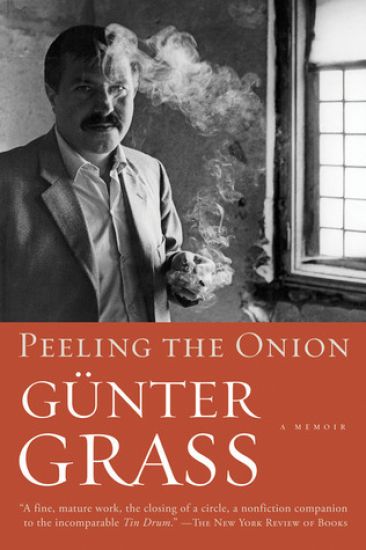
In this extraordinary memoir, Nobel Prize-winning author G nter Grass remembers his early life, from his boyhood in a cramped two-room apartment in Danzig through the late 1950s, when The Tin Drum was published. During the Second World War, Grass volunteered for the submarine corps at the age of fifteen but was rejected; two years later, in 1944, he was instead drafted into the Waffen-SS. Taken prisoner by American forces as he was recovering from shrapnel wounds, he spent the final weeks of the war in an American POW camp. After the war, Grass resolved to become an artist and moved with his first wife to Paris, where he began to write the novel that would make him famous. Full of the bravado of youth, the rubble of postwar Germany, the thrill of wild love affairs, and the exhilaration of Paris in the early fifties, Peeling the Onion--which caused great controversy when it was published in Germany--reveals Grass at his most intimate.
Günter Grass erzählt von sich selbst. Vom Ende seiner Kindheit beim Ausbruch des Zweiten Weltkriegs. Vom Knaben in Uniform, der so gern zur U-Boot-Flotte möchte und sich hungernd in einem Kriegsgefangenenlager wiederfindet. Von dem jungen Mann, der sich den Künsten verschreibt, den Frauen hingibt und in Paris an der ›Blechtrommel‹ arbeitet.Günter Grass erzählt von der spannendsten Zeit eines Menschen: den Jahren, in denen eine Persönlichkeit entsteht. ›Beim Häuten der Zwiebel‹ ist ein mit komischen und traurigen, oft ergreifenden Geschichten prall gefülltes, sehr aufrichtiges Erinnerungsbuch.

Samtliche Gedichte 1956-2007
Gunter Grass; Joanne Harris
Deutscher Taschenbuch Verlag GmbHCo.
2008
pokkari
Zum 80. Geburtstag von Günter Grass - Sämtliche Gedichte des Nobelpreisträgers in einem Band.

Ausstattung der Erstausgabe
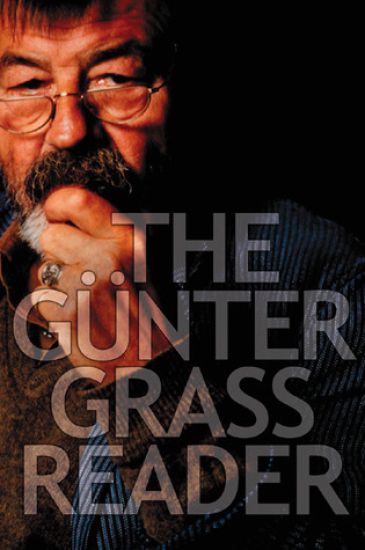
An anthology of selected works by the Nobel Prize-winning writer of Crabwalk and Too Far Afield includes excerpts from his major novels, numerous short fictional works, essays, and poems, in a volume that recounts the author's participation in political causes, his observations of current events, and his advocacy of the disadvantaged. Simultaneous. 35,000 first printing.
G nter Grass has been wrestling with Germany's past for decades now, but no book since The Tin Drum has generated as much excitement as this engrossing account of the sinking of the Wilhelm Gustloff. A German cruise ship turned refugee carrier, it was attacked by a Soviet submarine in January 1945. Some 9,000 people went down in the Baltic Sea, making it the deadliest maritime disaster of all time. Born to an unwed mother on a lifeboat the night of the attack, Paul Pokriefke is a middle-aged journalist trying to piece together the tragic events. While his mother sees her whole existence in terms of that calamitous moment, Paul wishes their life could have been less touched by the past. For his teenage son, who dabbles in the dark, far-right corners of the Internet, the Gustloff embodies the denial of Germany's wartime suffering. "Scuttling backward to move forward," Crabwalk is at once a captivating tale of a tragedy at sea and a fearless examination of the ways different generations of Germans now view their past. Winner of the Nobel Prize
In this new novel Günter Grass examines a subject that has long been taboo - the sufferings of the Germans during the Second World War. He explores the sinking of the Wilhelm Gustloff, the deadliest maritime disaster of all time, and the repercussions upon three generations of a German family.
Die dramatische Geschichte vom Untergang der ?Wilhelm Gustloff? im Januar 1945 und ihre Auswirkungen bis in die deutsche Gegenwart. ?Das bisher politischste und bewegendste Prosastück des Nobelpreisträgers.? Peter Mohr im >General-Anzeiger< ?Diese Geschichte fing lange vor mir, vor mehr als hundert Jahren an, und zwar in der mecklenburgischen Residenzstadt Schwerin.? Hier wird 1895 jener Mann geboren, der später als ?Blutzeuge? gefeiert und einem Schiff den Namen geben wird, dessen Untergang am 30. Januar 1945 die größte Katastrophe in der Geschichte der Seefahrt darstellt. Das ehemalige Kraft-durch-Freude-Kreuzschiff ?Wilhelm Gustloff? mit Tausenden von Flüchtlingen und Soldaten an Bord wird von den Torpedos eines sowjetischen U-Boots versenkt, schätzungsweise fünf- bis neuntausend Menschen finden in der eisigen Ostsee den Tod. Eine der Überlebenden des Grauens ist die hochschwangere Tulla Pokriefke aus Danzig, die schon in >Katz und MausHundejahre< und in >Die Rättin< eine Rolle spielt. Ihr in jener Nacht geborener Sohn Paul, Journalist und Chronist der Geschichte, stößt eines Tages zufällig auf die brisante Internet-Seite einer ?Kameradschaft Schwerin?, die ihn fortan umtreibt. Dabei fördert er ein menschliches Drama zutage, das bis in unsere Gegenwart hineingreift und nicht zuletzt seine eigene Familie tangiert.
From the Nobel Prize-winning author of My Century and The Tin Drum, a novel of broad historical proportions set in Berlin during the years of German reunification. Two old men roam through Berlin observing life in the former German Democratic Republic after the fall of the Wall in 1989. Theo Wuttke, a former East German functionary, is a keen observer and a gifted speaker. Ludwig Hoftaller is a mid-level spy whose loyalties shift with each new regime. Together, both men see what the future is bringing as they try to save what they can from the past and understand the meaning of being German. A complex and challenging exploration of what Germany's reunification will mean-for Germans, for Europe, and for the world-Too Far Afield is a masterwork from one of Europe's greatest writers. Written with the wit, fantasy, literary erudition, and political acerbity for which Grass is celebrated, it is a deeply human story laced with pain and humor in equal measure.

GÜNTER GRASS fick nobelpriset 1999. Trots fem diktsamlingar är detta första gången han presenteras på svenska som poet. ”Versmakarens uppgift är att klarlägga, inte att fördunkla”, säger han i en programförklaring. Och han tillägger, på sitt karakteristiska sätt, att man måste släcka glödlampan för att kunna se den. LASSE SÖDERBERG som nu översatt ett urval av hans poesi, skriver bland annat i sitt initierade förord: ”Günter Grass låter fantasin leka fritt utan att därför tappa ur sikte det uppsåt han menar sig ha.” ”Berättare i storformat är sällan särskilt intresserade av eller särskilt bra på att skriva dikter. På samma sätt är renodlade poeter sällan intresserade av eller särskilt bra på att skriva breda romaner. Undantag finns: Grass är ett.” Och det blommar ut i MÄSSINGSMUSIK.

In a work of great originality, Germany's most eminent writer examines the victories and terrors of the twentieth century, a period of astounding change for mankind. Great events and seemingly trivial occurrences, technical developments and scientific achievements, war and disasters, and new beginnings, all unfold to display our century in its glory and grimness. A rich and lively display of Grass's extraordinary imagination, the 100 interlinked stories in this volume-one for each year from 1900 to 1999-present a historical and social portrait for the millennium, a tale of our times in all its grandeur and all its horror.
In an explosive fusion of myth and reality, magic and romance, Dog Years charts forty years of German history, starting with 1917, to expose the madness of a society that bred and nurtured the horrors of the Third Reich before anaesthetising itself with the chaos of disintegration.
Günter Grass, says The Times, 'is on his own as an artist', and indeed this extraordinary, provoking and joyously Rabelaisian celebration of life, food and sex is unique. Lifted from their ancient fairytale, the fisherman and his wife are still living today.