Kirjojen hintavertailu. Mukana 12 152 606 kirjaa ja 12 kauppaa.

Kirjailija

Hélène Cixous

Kirjat ja teokset yhdessä paikassa: 98 kirjaa, julkaisuja vuosilta 1986-2026, suosituimpien joukossa Manhattan. Vertaile teosten hintoja ja tarkista saatavuus suomalaisista kirjakaupoista.

Mukana myös kirjoitusasut: Helene Cixous

98 kirjaa

Kirjojen julkaisuhaarukka 1986-2026.

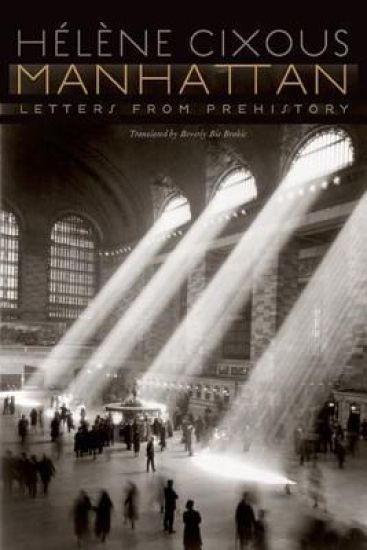
Manhattan

Manhattan

Hélène Cixous

FORDHAM UNIVERSITY PRESS
2023
pokkari
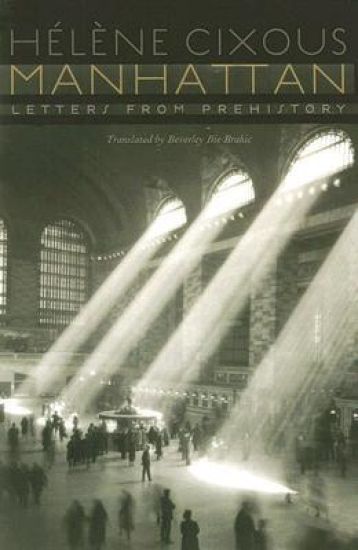
Manhattan is the tale of a young French scholar who travels to the United States in 1965 on a Fulbright Fellowship to consult the manuscripts of beloved authors. In Yale University's Beinecke Library, tantalized by the conversational and epistolary brilliance of a fellow researcher, she is lured into a picaresque and tragic adventure. Meanwhile, back in France, her children and no-nonsense mother await her return. A young European intellectual's first contact with America and the city of New York are the background of this story. The experience of Manhattan haunts this labyrinth of a book as, over a period of thirty-five years, its narrator visits and revisits Central Park and a half-buried squirrel, the Statue of Liberty and a never again to be found hotel in the vicinity of Morningside Heights: a journey into memory in which everything is never the same. Traveling from library to library, France to the United States, Shakespeare to Kafka to Joyce, Manhattan deploys with gusto all the techniques for which Cixous's fiction and essays are known: rapid juxtapositions of time and place, narrative and description, analysis and philosophical reflection. It investigates subjects Cixous has spent her life probing: reading, writing, and the "omnipotence-other" seductions of literature; a family's flight from Nazi Germany and postcolonial Algeria; childhood, motherhood, and, not least, the strange experience of falling in love with a counterfeit genius.
Manhattan

Manhattan

Hélène Cixous

Fordham University Press
2007
pokkari
Manhattan is the tale of a young French scholar who travels to the United States in 1965 on a Fulbright Fellowship to consult the manuscripts of beloved authors. In Yale University's Beinecke Library, tantalized by the conversational and epistolary brilliance of a fellow researcher, she is lured into a picaresque and tragic adventure. Meanwhile, back in France, her children and no-nonsense mother await her return. A young European intellectual's first contact with America and the city of New York are the background of this story. The experience of Manhattan haunts this labyrinth of a book as, over a period of thirty-five years, its narrator visits and revisits Central Park and a half-buried squirrel, the Statue of Liberty and a never again to be found hotel in the vicinity of Morningside Heights: a journey into memory in which everything is never the same. Traveling from library to library, France to the United States, Shakespeare to Kafka to Joyce, Manhattan deploys with gusto all the techniques for which Cixous's fiction and essays are known: rapid juxtapositions of time and place, narrative and description, analysis and philosophical reflection. It investigates subjects Cixous has spent her life probing: reading, writing, and the "omnipotence-other" seductions of literature; a family's flight from Nazi Germany and postcolonial Algeria; childhood, motherhood, and, not least, the strange experience of falling in love with, as Jacques Derrida writes, "a counterfeit genius."
Manhattan

Manhattan

Hélène Cixous

Fordham University Press
2007
sidottu
Manhattan is the tale of a young French scholar who travels to the United States in 1965 on a Fulbright Fellowship to consult the manuscripts of beloved authors. In Yale University’s Beinecke Library, tantalized by the conversational and epistolary brilliance of a fellow researcher, she is lured into a picaresque and tragic adventure. Meanwhile, back in France, her children and no-nonsense mother await her return. A young European intellectual’s first contact with America and the city of New York are the background of this story. The experience of Manhattan haunts this labyrinth of a book as, over a period of thirty-five years, its narrator visits and revisits Central Park and a half-buried squirrel, the Statue of Liberty and a never again to be found hotel in the vicinity of Morningside Heights: a journey into memory in which everything is never the same. Traveling from library to library, France to the United States, Shakespeare to Kafka to Joyce, Manhattan deploys with gusto all the techniques for which Cixous’s fiction and essays are known: rapid juxtapositions of time and place, narrative and description, analysis and philosophical reflection. It investigates subjects Cixous has spent her life probing: reading, writing, and the “omnipotence-other” seductions of literature; a family’s flight from Nazi Germany and postcolonial Algeria; childhood, motherhood, and, not least, the strange experience of falling in love with, as Jacques Derrida writes, “a counterfeit genius.”
Death Shall Be Dethroned

Death Shall Be Dethroned

Hélène Cixous

Polity Press
2016
nidottu
Death Shall Be Dethroned is the “shadow book” of Los, a Chapter, Hélène Cixous tells us. It came along after Los, but it was always there "hidden" in her notebooks, in the Beethoven notebook, say, the one Jacques Derrida gave her. But when it tapped at the window, she ignored it until the day she had to let it in. This is just of one the enigmas Death explores as it probes an old relationship between the narrator and “Carlos.” Another is her discovery on the Internet that Carlos’s archives were at Princeton, and that the archive containing their correspondence was closed to the public: “Bluebeard’s closet. The fruit on the tree of Good and Evil. You shall not open.” Death Shall Be Dethroned is the logbook of Los, a Chapter. It owes its life to the death of a lover.
Death Shall Be Dethroned

Death Shall Be Dethroned

Hélène Cixous

Polity Press
2016
sidottu
Death Shall Be Dethroned is the “shadow book” of Los, a Chapter, Hélène Cixous tells us. It came along after Los, but it was always there "hidden" in her notebooks, in the Beethoven notebook, say, the one Jacques Derrida gave her. But when it tapped at the window, she ignored it until the day she had to let it in. This is just of one the enigmas Death explores as it probes an old relationship between the narrator and “Carlos.” Another is her discovery on the Internet that Carlos’s archives were at Princeton, and that the archive containing their correspondence was closed to the public: “Bluebeard’s closet. The fruit on the tree of Good and Evil. You shall not open.” Death Shall Be Dethroned is the logbook of Los, a Chapter. It owes its life to the death of a lover.
Incinarration

Incinarration

Hélène Cixous

SEAGULL BOOKS LONDON LTD
2026
sidottu
A genre-defying book about survival, transformation, and the human ability to rise from the ashes. Hélène Cixous’s powerful new book, masterfully translated by Peggy Kamuf, is a vivid journey through fire. From the ashes of wars, wildfires, and upheaval, Cixous traces a dramatic path across time—from the Second World War and the Nazi occupation of Oran to the European wildfires of 2022—weaving a rich, intimate narrative that merges history, autobiography, and myth. With her piercing, lyrical voice, Cixous confronts the human cost of destruction and upheaval, and asks a universal question: What do we carry with us when everything we know is falling to ashes? In Incinarration, Cixous finds hope in the power of words, memory, and imagination to illuminate our darkest moments and redeem the future. As forests burn and regimes collapse, Cixous shows us how stories become a form of resistance—a way to remember, to bear testimony, and to find renewal in the face of oblivion.
Angst

Angst

Hélène Cixous

Silver Press
2026
nidottu
A woman replays her abandonment by her mother, who is sometimes addressed as a male mother-god. She is also abandoned by her lover, to whom she is in thrall. She tries repeatedly to make or receive phone calls with the beloved figures, without success. She waits for their letters and imagines their contents. In a dream-like, torrid sequence, suffering, fear, fatigue and imperfection are apostrophised. Forgetting is examined and toyed with from every angle. Mythical hybrid creatures are invoked: a snake-headed lion, wolf-snakes, a wolf-peacock. How did this come to be? In a cunningly, wittily wrought rush, the unique, unpredictable voice of the narrator speaks from multiple perspectives to express powerful anguish and, ultimately, catharsis.
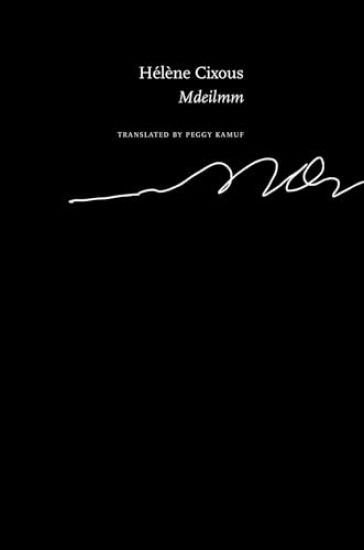
Mdeilmm

Mdeilmm

Hélène Cixous

SEAGULL BOOKS LONDON LTD
2025
sidottu
Weaving together history, literature, and personal experience, this recent book from a master of literature crafts a mesmerizing exploration of language, loss, and the enduring power of the spirit world. The strange word “Mdeilmm” was reported to have been uttered by the spirit of Shakespeare when called up during a séance in 1854 at the instigation of the French poet Victor Hugo. Hugo was then living in exile on the island of Jersey where he took part in several such séances. Hélène Cixous weaves this scene into a rich tapestry that draws from many corners of her world, both real and fictional: Dostoevsky’s Idiot, Hugo’s Last Day of a Condemned Man, Poe’s story “The Gold Bug,” but also film footage of the assassination of Itzhak Rabin and many layers of memories of her Algerian childhood. Transcribed communications from spirits of the departed, her father and grandfather among them, provide a fascinating glimpse into past spiritual practices. Cixous’s unique narrative style enhances the book’s enchanting quality, ensuring that readers are not only engaged by the content but also captivated by the beauty of the prose. Meanwhile, the reader falls under the spell of the author’s incomparable “mole speech,” the language in which poets communicate.
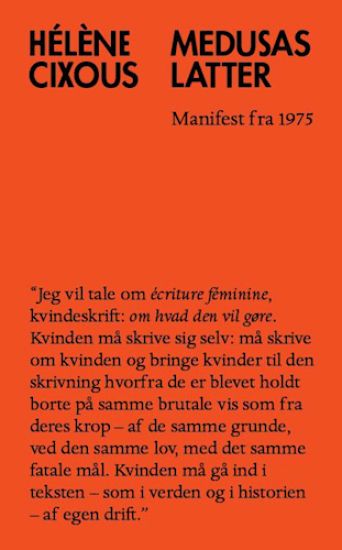
Medusas latter

Medusas latter

Hélène Cixous

Forlaget Mindspace
2025
pokkari
Essayet Medusas latter fra 1975 indvarslede en ny tilgang til spørgsmål om køn, kønnede forskelle og seksualitet, der opstod i forbindelse med feminismen og kvindekampen i 1970'erne. Det er en filosofisk refleksion, et poetisk skrift og politisk manifest med en afgørende virkningshistorie. Hélène Cixous (født 1937) er fransk forfatter og professor i kvindestudier. @font-face {font-family:"Cambria Math"; panose-1:2 4 5 3 5 4 6 3 2 4; mso-font-charset:0; mso-generic-font-family:roman; mso-font-pitch:variable; mso-font-signature:-536870145 1107305727 0 0 415 0;}@font-face {font-family:Calibri; panose-1:2 15 5 2 2 2 4 3 2 4; mso-font-charset:0; mso-generic-font-family:swiss; mso-font-pitch:variable; mso-font-signature:-469750017 -1040178053 9 0 511 0;}@font-face {font-family:Garamond; panose-1:2 2 4 4 3 3 1 1 8 3; mso-font-charset:0; mso-generic-font-family:roman; mso-font-pitch:variable; mso-font-signature:647 2 0 0 159 0;}@font-face {font-family:"Open Sans"; panose-1:2 11 6 4 2 2 2 2 2 4; mso-font-charset:0; mso-generic-font-family:swiss; mso-font-pitch:variable; mso-font-signature:-536870161 1073750107 40 0 415 0;}p.MsoNormal, li.MsoNormal, div.MsoNormal {mso-style-unhide:no; mso-style-qformat:yes; mso-style-parent:""; margin:0cm; mso-pagination:widow-orphan; font-size:12.0pt; font-family:"Calibri",sans-serif; mso-ascii-font-family:Calibri; mso-ascii-theme-font:minor-latin; mso-fareast-font-family:Calibri; mso-fareast-theme-font:minor-latin; mso-hansi-font-family:Calibri; mso-hansi-theme-font:minor-latin; mso-bidi-font-family:"Times New Roman"; mso-bidi-theme-font:minor-bidi; mso-font-kerning:1.0pt; mso-ligatures:standardcontextual; mso-fareast-language:EN-US;}span.sentence-text {mso-style-name:sentence-text; mso-style-unhide:no;}.MsoChpDefault {mso-style-type:export-only; mso-default-props:yes; font-family:"Calibri",sans-serif; mso-ascii-font-family:Calibri; mso-ascii-theme-font:minor-latin; mso-fareast-font-family:Calibri; mso-fareast-theme-font:minor-latin; mso-hansi-font-family:Calibri; mso-hansi-theme-font:minor-latin; mso-bidi-font-family:"Times New Roman"; mso-bidi-theme-font:minor-bidi; mso-fareast-language:EN-US;}div.WordSection1 {page:WordSection1;}
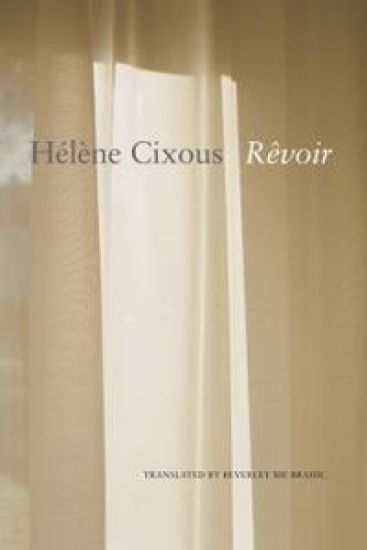
Rêvoir

Rêvoir

Hélène Cixous

SEAGULL BOOKS LONDON LTD
2024
sidottu
A genre-defying account of confinement and its literary echoes through history. As the pandemic sweeps through Paris in March 2020, the writer HC faces a choice: stay in Paris or flee to the countryside? The weight of historical responses bears down on her—those of her ancestors and Jewish writers during moments of persecution. Still uncertain, she flees to the country at the last moment, with her cats and her daughter, with her diaries and notebooks. What will she do here? Write? What will she write about? Can she write about the experience of being confined? She will write about her cats; every day she will observe their lives and take notes about how they cope with being housebound, and later, in the spring, with the outdoors. Thucydides, Defoe, Camus, Kafka—she will compare her experiences with those of others who have been confined by malady or persecution. She will write of her mother, who fled impending disaster on many occasions and always kept a suitcase ready. She too will endure. The important thing is to have a good death, surrounded by those she loves, not locked down in a hospital.
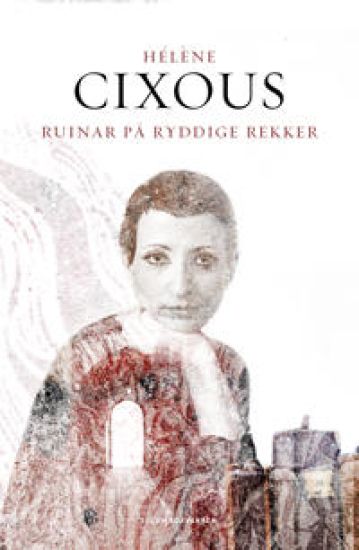
Ruinar på ryddige rekker

Ruinar på ryddige rekker

Hélène Cixous

Solum Bokvennen
2023
sidottu
- Kvar skal vi? Til byen Osnabrück. Og vi skal til mange tider, til fjerne og nyare fortider og vi skal til samtida, ofte samstundes. Osnabrück er byen til Ève, mor til forteljaren. Denne mora døydde i 2013, 103 år gamal, men her er ho like sprek og lett til beins som ho alltid har vore, det er ho som viser veg. «Medan vi går over plassen framfor Katedralen med stadig raskare steg, ser vi bilar som minnest at dei har vore hestar.» Dei levande minna er både knytte til familien og til det kollektive. I alle epokar er det forfølgjing og flukt, fengsel og tortur. Her er det heksejakt på 1500-talet, jødar som blir verande eller flyktar på 1930-talet og Ève som blir fenglsa i Algerie i 1962. Erfaringar, minne, levde liv. I denne teksten blir håp og opningar sett opp mot hat og øydelegging. Osnabrück er byen der freden i Westfahlen blei underskriven i 1648, ein fredsavtale som avslutta den gruvsame 30-årskrigen og gav håp for det moderne Europa. I same by blei synagoga fullstendig øydelagt Krystallnatta i november 1938. Byen har prøvd å reparere fortida si ved å sette opp eit minnesmerke over synagoga. Steinar frå denne bygningen er stabla på ryddige rekker bak eit gitter ... Omsett av Grete Kleppen. Ruinar på ryddige rekker er den åttande boka av Hélène Cixous som er omsett til norsk av Grete Kleppen. Dei sju første er Osnabrück (2003), Blendverk (2006), Gull, breva frå far min (2008), Sypress - så nær (2010), Hyperdraum (2012), Mor Homer er død (2016) og 1938, Netter (2021). For omsetjinga av Blendverk fekk Kleppen Bastianprisen 2007.
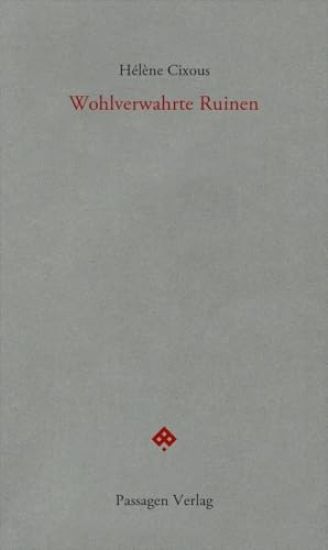
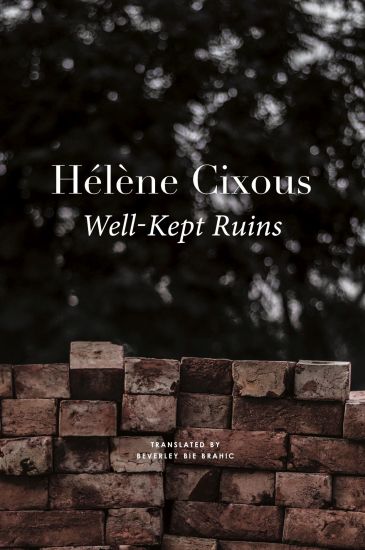
Well–Kept Ruins

Well–Kept Ruins

Hélène Cixous; Beverley Bie Brahic

SEAGULL BOOKS LONDON LTD
2023
sidottu
A genre-defying book from one of France’s most well-known philosopher-writers. In the Lower Saxony region of northwestern Germany sits the city of Osnabrück. This is where, in 1648, the Peace of Westphalia was signed, bringing the Thirty Years’ War and one of the most calamitous periods of European history to an end. But the city was later to witness another calamity. Today, as one walks through Old Synagogue Street in a rich neighborhood of Osnabrück, one might miss noticing a pile of pale stones held together by chicken wire that sits between two fashionable homes. These are the well-kept ruins from behind which stares a gaping space—a place of memory and oblivion. Four polished plaques tell the tale of the horror-filled night of November 9, 1938—today known as Kristallnacht—when the synagogue that had stood on this spot was desecrated, looted, set on fire, and eventually demolished by Hitler’s forces. On the same day, ninety parishioners were imprisoned by the Gestapo and eventually sent to the Buchenwald concentration camp. Osnabrück was also home to Eve Klein, a member of the city’s early-twentieth-century Jewish community and the mother of author Hélène Cixous. In Well-Kept Ruins, Cixous returns to the historic city in 2019 and reflects on the remains of the synagogue that “express the life lost, the life kept.” Walking the streets of the city, plumbing the depths of the past along with her own family’s history, looking deep into the future, and punctuating her poetic prose with haunting photographs, Cixous explores the ruins at the heart of humanity. Part memoir, part philosophical meditation, Well-Kept Ruins is a genre-defying and timely reflection of the contemporary human condition.
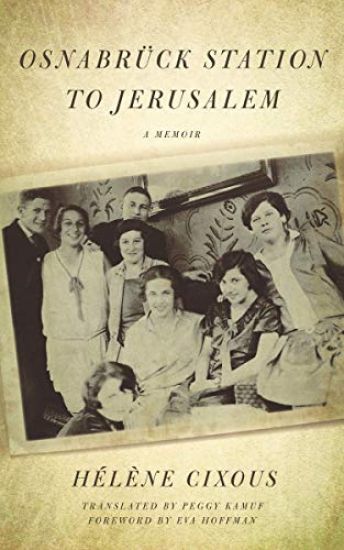
Osnabrück Station to Jerusalem

Osnabrück Station to Jerusalem

Hélène Cixous; Eva Hoffman

FORDHAM UNIVERSITY PRESS
2022
pokkari
An inventive literary account of Cixous's remarkable journey to her mother's birthplace Winner, French Voices Award for Excellence in Publication and Translation For about eighty years, the Jonas family of Osnabrück were part of a small but vibrant Jewish community in this mid-size city of Lower Saxony. After the war, Osnabrück counted not a single Jew. Most had been deported and murdered in the camps, others emigrated if they could and if they managed to overcome their own inertia. It is this inertia and failure to escape that Hélène Cixous seeks to account for in Osnabrück Station to Jerusalem. Vicious anti-Semitism hounded all of Osnabrück's Jews long before the Nazis' rise to power in 1933. So why did people wait to leave when the threat was so patent, so in-their-face? Drawn from the stories told to Cixous by her mother, Ève, and grandmother, Rosalie (Rosi), this literary work reimagines fragments of Ève's and Rosi's stories, including the death of Ève's uncle, Onkel André. Piecing together the story of Andreas Jonas from what she was told and from what she envisages, Cixous recounts the tragedy of the one she calls the King Lear of Osnabrück, who followed his daughter to Jerusalem only to be sent away by her and to return to Osnabrück in time to be deported to a death camp. Cixous wanders the streets of the city she had heard about all her life in her mother's and grandmother's stories, digs into its archives, meets city officials, all the while wondering if she should have come. These hesitations and reflections in the present, often voiced in dialogues staged with her own son or daughter, are woven with scenes from her childhood in Algeria and the half-remembered, half-invented stories of the Jonas family, making Osnabrück Station to Jerusalem one of the author's most intensely engaging books. This work received the French Voices Award for excellence in publication and translation. French Voices is a program created and funded by the French Embassy in the United States and FACE (French American Cultural Exchange).
Sisään kirjoittamiseen

Sisään kirjoittamiseen

Hélène Cixous

Aporia kustannus
2022
nidottu
Vaan jos minulle ei silloin olisi annettu rajatonta tilaa, en olisi kirjoittanut sitä, minkä kuulen. Sillä kirjoitan Rakkautta varten; alkaen ja lähtien Rakkaudesta. Kirjoitan Rakkaudesta. Kirjoittaa: rakastaa, toisistaan erottamattomat. Kirjoittaminen on rakkauden ele. Suuri ele. Sisään kirjoittamiseen on itsenäinen osa laajempaa tekstikokoelmaa Entre l'écriture, joka ilmestyi Ranskassa vuonna 1986 ja kokosi yhteen kirjoituksia vuosilta 1975-1984. Niissä käsitellään muun muassa yhtä feministisen ajattelun kiehtovinta ja kiistellyintä kysymystä, niin kutsuttua naiskirjoitusta, écriture féminine. Teoksen syvästi henkilökohtainen ote tuo kirjoittajansa lähelle lukijaa samalla kun hätkähdyttävän moniselitteinen kieli tempaa pyörteisiinsä pohtimaan kirjoittamisen liikkeelle panevia voimia - ja sen esteitä, syitä ja edellytyksiä. Teoksen täydentää Cixous'n ilmaisua ja tuotantoa koskeva laaja katsaus, jossa suomentaja Aura Sevón avaa Cixous'n kääntämisen mahdollisuuksia koskevaa keskustelua sekä pohtii kirjan suomennostyön erityispiirteitä ja siinä tehtyjä ratkaisuja.