Kirjojen hintavertailu. Mukana 12 390 323 kirjaa ja 12 kauppaa.

Kirjailija

Ian Stewart

Kirjat ja teokset yhdessä paikassa: 115 kirjaa, julkaisuja vuosilta 1983-2026, suosituimpien joukossa Torry. Vertaile teosten hintoja ja tarkista saatavuus suomalaisista kirjakaupoista.

115 kirjaa

Kirjojen julkaisuhaarukka 1983-2026.

Eye of the Tiger

Eye of the Tiger

Ian Stewart

Pitch Publishing Ltd
2021
sidottu
Eye of the Tiger is the story of one of the most legendary figures in Glasgow Rangers' rich history, a man who epitomised what it meant to be a Ranger. Jock Shaw was a no-nonsense full-back whose fierce, uncompromising tackling earned him the nickname 'Tiger' from club supporters. He joined the Gers from Airdrie in 1938 for GBP2,000 and was a key figure in the Ibrox defence in the immediate post-war years. That defence was dubbed the 'Iron Curtain' because it seemed as unyielding as the barrier that divided Europe at the time. The book charts Jock's extraordinary journey from the coal pit at Bedlay (Annathill) to becoming Rangers' first treble-winning captain. His signing for Rangers started a remarkable association with the club, which lasted over 40 years and saw him serve as team captain, third-team coach and groundsman. He also captained Scotland and shared the distinction of beating England with his brother David. Ian Stewart worked with Tiger Shaw's family to bring you the inside track on his life and career.
What's the Use?: How Mathematics Shapes Everyday Life
See the world in a completely new way as an esteemed mathematician shows how math powers the world--from technology to health care and beyond. Almost all of us have sat in a math class, wondering when we'd ever need to know how to find the roots of a polynomial or graph imaginary numbers. And in one sense, we were right: if we needed to, we'd use a computer. But as Ian Stewart argues in What's the Use?, math isn't just about boring computations. Rather, it offers us new and profound insights into our world, allowing us to accomplish feats as significant as space exploration and organ donation. From the trigonometry that keeps a satellite in orbit to the prime numbers used by the world's most advanced security systems to the imaginary numbers that enable augmented reality, math isn't just relevant to our lives. It is the very fabric of our existence.
Algebraic Number Theory and Fermat's Last Theorem

Algebraic Number Theory and Fermat's Last Theorem

Ian Stewart; David Tall

CRC Press
2020
nidottu
Updated to reflect current research, Algebraic Number Theory and Fermat’s Last Theorem, Fourth Edition introduces fundamental ideas of algebraic numbers and explores one of the most intriguing stories in the history of mathematics—the quest for a proof of Fermat’s Last Theorem. The authors use this celebrated theorem to motivate a general study of the theory of algebraic numbers from a relatively concrete point of view. Students will see how Wiles’s proof of Fermat’s Last Theorem opened many new areas for future work.New to the Fourth EditionProvides up-to-date information on unique prime factorization for real quadratic number fields, especially Harper’s proof that Z(v14) is EuclideanPresents an important new result: Mihailescu’s proof of the Catalan conjecture of 1844Revises and expands one chapter into two, covering classical ideas about modular functions and highlighting the new ideas of Frey, Wiles, and others that led to the long-sought proof of Fermat’s Last TheoremImproves and updates the index, figures, bibliography, further reading list, and historical remarksWritten by preeminent mathematicians Ian Stewart and David Tall, this text continues to teach students how to extend properties of natural numbers to more general number structures, including algebraic number fields and their rings of algebraic integers. It also explains how basic notions from the theory of algebraic numbers can be used to solve problems in number theory.
Do Dice Play God?

Do Dice Play God?

Ian Stewart

Profile Books Ltd
2020
pokkari
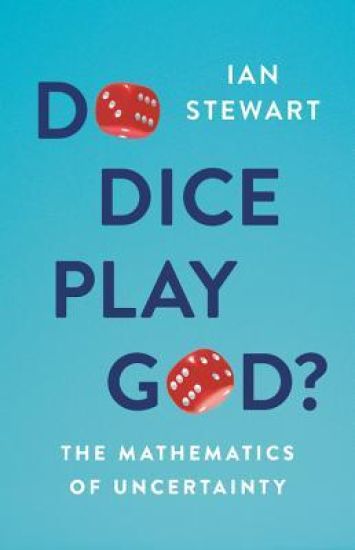
Uncertainty is everywhere. It lurks in every consideration of the future - the weather, the economy, the sex of an unborn child - even quantities we think that we know such as populations or the transit of the planets contain the possibility of error. It's no wonder that, throughout that history, we have attempted to produce rigidly defined areas of uncertainty - we prefer the surprise party to the surprise asteroid. We began our quest to make certain an uncertain world by reading omens in livers, tea leaves, and the stars. However, over the centuries, driven by curiosity, competition, and a desire be better gamblers, pioneering mathematicians and scientists began to reduce wild uncertainties to tame distributions of probability and statistical inferences. But, even as unknown unknowns became known unknowns, our pessimism made us believe that some problems were unsolvable and our intuition misled us. Worse, as we realized how omnipresent and varied uncertainty is, we encountered chaos, quantum mechanics, and the limitations of our predictive power. Bestselling author Professor Ian Stewart explores the history and mathematics of uncertainty. Touching on gambling, probability, statistics, financial and weather forecasts, censuses, medical studies, chaos, quantum physics, and climate, he makes one thing clear: a reasonable probability is the only certainty.
A Contextual Behavioral Guide to the Self

A Contextual Behavioral Guide to the Self

Louise McHugh; Ian Stewart; Priscilla Almada

ReadHowYouWant
2020
pokkari
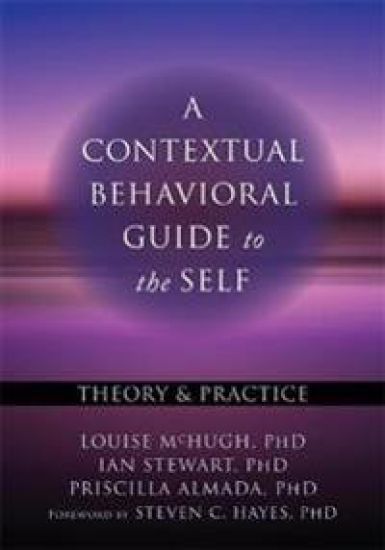
The self plays an integral role in human motivation, cognition, and social identity. That's why observing the self is such an important element of acceptance and commitment therapy (ACT). However, for many ACT clinicians, it can be difficult to apply this complex theory in everyday practice. A must-have addition to any ACT practitioner's library, A Contextual Behavioral Guide to the Self translates the ACT model's most difficult-yet essential-process into easy-to-apply steps and user-friendly language. With this unique road map, clinicians will help clients develop empathy, compassion, and flexible perspective taking-leading to better treatment outcomes and better lives for clients.
Do Dice Play God?: The Mathematics of Uncertainty
A celebrated mathematician explores how math helps us make sense of the unpredictableWe would like to believe we can know things for certain. We want to be able to figure out who will win an election, if the stock market will crash, or if a suspect definitely committed a crime. But the odds are not in our favor. Life is full of uncertainty --- indeed, scientific advances indicate that the universe might be fundamentally inexact --- and humans are terrible at guessing. When asked to predict the outcome of a chance event, we are almost always wrong. Thankfully, there is hope. As award-winning mathematician Ian Stewart reveals, over the course of history, mathematics has given us some of the tools we need to better manage the uncertainty that pervades our lives. From forecasting, to medical research, to figuring out how to win Let's Make a Deal, Do Dice Play God? is a surprising and satisfying tour of what we can know, and what we never will.
A Contextual Behavioral Guide to the Self

A Contextual Behavioral Guide to the Self

Louise McHugh; Ian Stewart; Priscilla Almada

New Harbinger Publications
2019
pokkari
The self plays an integral role in human motivation, cognition, and social identity. A must-have addition to any acceptance and commitment therapy (ACT) practitioner's library, The Self in Practice translates the ACT model's most difficult-yet essential-process into easy-to-apply steps and user-friendly language. Every client who partakes in ACT must identify a self as part of their treatment, and clinicians often report that observing the self is the most difficult of all six core ACT processes. This is because it's so hard for people to shed preconceived notions of "who they really are," and negative perceptions of the self can lead to feelings of low self-worth that stand in the way of treatment.Problems with the self arise when clients orient themselves in the world and learn to relate to others, but these problems can vary considerably. For example, some clients may have deficits in developing a strong sense of self in the first place-particularly if they are diagnosed with autism spectrum conditions (ASC). Depressed clients or those with borderline personality disorder (BPD) may develop a skewed, negative sense of self, and those with narcissistic personality disorder (NPD) may develop an inflated sense of self.With this unique road map, you will learn to apply the complex theory of the self into everyday practice, and help all clients develop empathy, compassion, and flexible perspective taking-leading to better treatment outcomes and better lives for clients.
Complex Analysis

Complex Analysis

Ian Stewart; David Tall

Cambridge University Press
2018
pokkari
This new edition of a classic textbook develops complex analysis from the established theory of real analysis by emphasising the differences that arise as a result of the richer geometry of the complex plane. Key features of the authors' approach are to use simple topological ideas to translate visual intuition to rigorous proof, and, in this edition, to address the conceptual conflicts between pure and applied approaches head-on. Beyond the material of the clarified and corrected original edition, there are three new chapters: Chapter 15, on infinitesimals in real and complex analysis; Chapter 16, on homology versions of Cauchy's theorem and Cauchy's residue theorem, linking back to geometric intuition; and Chapter 17, outlines some more advanced directions in which complex analysis has developed, and continues to evolve into the future. With numerous worked examples and exercises, clear and direct proofs, and a view to the future of the subject, this is an invaluable companion for any modern complex analysis course.
Significant Figures

Significant Figures

Ian Stewart

Profile Books Ltd
2018
pokkari
Which mathematician elaborated a crucial concept the night before he died in a duel? Who funded his maths and medical career through gambling and chess? Who learned maths from her wallpaper? Ian Stewart presents the extraordinary lives and amazing discoveries of twenty-five of history's greatest mathematicians from Archimedes and Liu Hui to Benoit Mandelbrot and William Thurston. His subjects are the inspiring individuals from all over the world who have made crucial contributions to mathematics. They include the rediscovered geniuses Srinivasa Ramanujan and Emmy Noether, alongside the towering figures of Muhammad al-Khwarizmi (inventor of the algorithm), Pierre de Fermat, Isaac Newton, Carl Friedrich Gauss, Nikolai Ivanovich Lobachevsky, Bernhard Reimann (precursor to Einstein), Henri Poincaré, Ada Lovelace (arguably the first computer programmer), Kurt Gödel and Alan Turing. Ian Stewart's vivid accounts are fascinating in themselves and, taken together, cohere into a riveting history of key steps in the development of mathematics.
The John Benitez Bass Method, Vol. 2: El Sonero del Barrio - A Creative Approach to Salsa
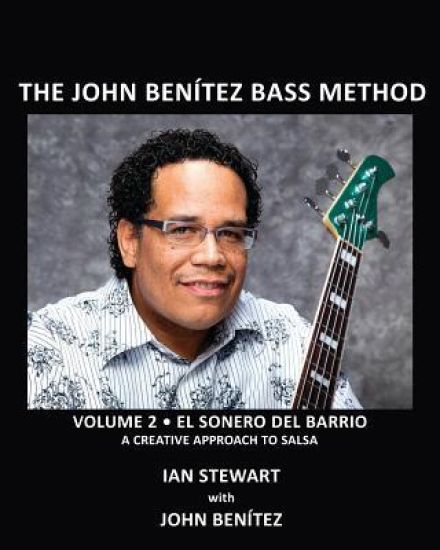
"The John Ben tez Bass Method Volume 2 - El Sonero del Barrio: A Creative Approach To Salsa" is the second in a comprehensive book series documenting the unique playing and teaching methods of five-time GRAMMY Award winning bassist John Ben tez. While its predecessor "Volume 1 - Freedom In The Clave: A Rhythmic Approach To Bass Playing" is a vast collection of rhythmic independence exercises designed to strengthen a student's overall rhythmic confidence and awareness in regards to the clave, Volume 2 is the first installment that deals with Benitez's playing in specific contexts throughout his extensive recording career. Vol. 2 concentrates on Ben tez's incredibly innovative approach to salsa playing via eleven note-for-note transcriptions from the Frankie Vazquez 1999 classic "Los Soneros del Barrio" along with in-depth analyses to demonstrate how this master musician puts his own concepts to work in real time. For inquisitive bassists and musicians looking to explore the seemingly limitless possibilities of the Afro-Cuban tumbao, this book is a must-have.
Calculating the Cosmos: How Mathematics Unveils the Universe
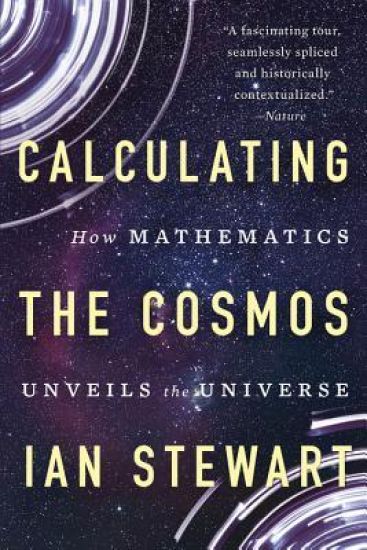
A prize-winning popular science writer uses mathematical modeling to explain the cosmos. In Calculating the Cosmos, Ian Stewart presents an exhilarating guide to the cosmos, from our solar system to the entire universe. He describes the architecture of space and time, dark matter and dark energy, how galaxies form, why stars implode, how everything began, and how it's all going to end. He considers parallel universes, the fine-tuning of the cosmos for life, what forms extraterrestrial life might take, and the likelihood of life on Earth being snuffed out by an asteroid. Beginning with the Babylonian integration of mathematics into the study of astronomy and cosmology, Stewart traces the evolution of our understanding of the cosmos: How Kepler's laws of planetary motion led Newton to formulate his theory of gravity. How, two centuries later, tiny irregularities in the motion of Mars inspired Einstein to devise his general theory of relativity. How, eighty years ago, the discovery that the universe is expanding led to the development of the Big Bang theory of its origins. How single-point origin and expansion led cosmologists to theorize new components of the universe, such as inflation, dark matter, and dark energy. But does inflation explain the structure of today's universe? Does dark matter actually exist? Could a scientific revolution that will challenge the long-held scientific orthodoxy and once again transform our understanding of the universe be on the way? In an exciting and engaging style, Calculating the Cosmos is a mathematical quest through the intricate realms of astronomy and cosmology.
Know Thyself

Know Thyself

Ian Stewart

Christian Faith Publishing, Inc
2018
pokkari
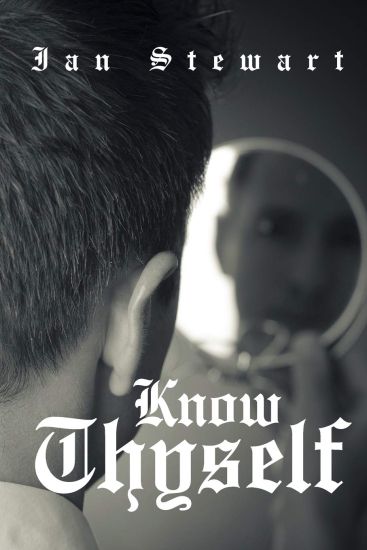
Addictions and compulsive behaviors seem to be the normal currently. Many new people to 12-Step programs are kept back from completing the 12 Steps of recovery. There doesn't seem to be much information available for completing the actual Steps. Before you can complete the Step, you must have the information to do so. This book will help you gather all the information you will need. Nothing can be written to take the place of meetings and having a sponsor. They are essential parts of any recovery process to gain a healthier life. To understand an addict or one with compulsive behaviors takes someone who has already been there. It takes someone who knows what it is like, one who can understand. Someone who has walked a mile in your shoes. It also takes a careful evaluation of your life. This book will walk you through the gathering of information you need to be able to understand you. After you have gathered the information, you and your sponsor, accountability partner, clergy, or other trustworthy individual can piece together an accurate accounting for the working of the Step work. You will actually write down the Step information so you will be able to review it any time you need it. Many times, this Step work is read aloud to the 12-Step group you attend, or in your accountability group. Other times, you might be asked to speak at a convention or a larger 12-Step meeting. You will already have your talk ready, and you will have the confidence to deliver it. Know Thyself gives you the tools to gather all the information to enhance your recovery process.
Know Thyself

Know Thyself

Ian Stewart

Christian Faith Publishing, Inc
2018
sidottu
Addictions and compulsive behaviors seem to be the normal currently. Many new people to 12-Step programs are kept back from completing the 12 Steps of recovery. There doesn't seem to be much information available for completing the actual Steps. Before you can complete the Step, you must have the information to do so. This book will help you gather all the information you will need. Nothing can be written to take the place of meetings and having a sponsor. They are essential parts of any recovery process to gain a healthier life. To understand an addict or one with compulsive behaviors takes someone who has already been there. It takes someone who knows what it is like, one who can understand. Someone who has walked a mile in your shoes. It also takes a careful evaluation of your life. This book will walk you through the gathering of information you need to be able to understand you. After you have gathered the information, you and your sponsor, accountability partner, clergy, or other trustworthy individual can piece together an accurate accounting for the working of the Step work. You will actually write down the Step information so you will be able to review it any time you need it. Many times, this Step work is read aloud to the 12-Step group you attend, or in your accountability group. Other times, you might be asked to speak at a convention or a larger 12-Step meeting. You will already have your talk ready, and you will have the confidence to deliver it. Know Thyself gives you the tools to gather all the information to enhance your recovery process.
How to Read Bridges

How to Read Bridges

Edward Denison; Ian Stewart

Herbert Press Ltd
2018
nidottu
A lavishly illustrated practical guide for understanding bridges, with case studies of the world's most famous bridges.How to Read Bridges is a practical introduction to looking at the structure and purpose of bridges and a guide to reading the structural clues embedded in every bridge which allows you to appreciate their variety and ingenuity.Small enough to carry in your pocket and serious enough to provide real answers, this comprehensive guide analyses and explores all types of bridges from around the world from the first millennium to the present day and features the Brooklyn Bridge, Sydney Harbour Bridge, Golden Gate Bridge, Ponte Vecchio, Millau Viaduct and Pont des Arts. The book also explores fundamental concepts of bridge design, key materials and engineering techniques whilst providing an accessible visual guide with intelligent text, using detailed illustrations and cross-sections of technical features.
Calculating the Cosmos

Calculating the Cosmos

Ian Stewart

Profile Books Ltd
2017
pokkari
Ian Stewart's up-to-the-minute guide to the cosmos moves from the formation of the Earth and its Moon to the planets and asteroids of the solar system and from there out into the galaxy and the universe. He describes the architecture of space and time, dark matter and dark energy, how galaxies form, why stars implode, how everything began, and how it will end. He considers parallel universes, what forms extra-terrestrial life might take, and the likelihood of Earth being hit by an asteroid. Mathematics, Professor Stewart shows, has been the driving force in astronomy and cosmology since the ancient Babylonians. He describes how Kepler's work on planetary orbits led Newton to formulate his theory of gravity, and how two centuries later irregularities in the motion of Mars inspired Einstein's theory of general relativity. In crystal-clear terms he explains the fundamentals of gravity, spacetime, relativity and quantum theory, and shows how they all relate to each other. Eighty years ago the discovery that the universe is expanding led to the Big Bang theory of its origins. This in turn led cosmologists to posit features such as dark matter and dark energy. But does dark matter exist? Could another scientific revolution be on the way to challenge current scientific orthodoxy? These are among the questions Ian Stewart raises in his quest through the realms of astronomy and cosmology.
Infinity

Infinity

Ian Stewart

Oxford University Press
2017
nidottu
Infinity is an intriguing topic, with connections to religion, philosophy, metaphysics, logic, and physics as well as mathematics. Its history goes back to ancient times, with especially important contributions from Euclid, Aristotle, Eudoxus, and Archimedes. The infinitely large (infinite) is intimately related to the infinitely small (infinitesimal). Cosmologists consider sweeping questions about whether space and time are infinite. Philosophers and mathematicians ranging from Zeno to Russell have posed numerous paradoxes about infinity and infinitesimals. Many vital areas of mathematics rest upon some version of infinity. The most obvious, and the first context in which major new techniques depended on formulating infinite processes, is calculus. But there are many others, for example Fourier analysis and fractals. In this Very Short Introduction, Ian Stewart discusses infinity in mathematics while also drawing in the various other aspects of infinity and explaining some of the major problems and insights arising from this concept. He argues that working with infinity is not just an abstract, intellectual exercise but that it is instead a concept with important practical everyday applications, and considers how mathematicians use infinity and infinitesimals to answer questions or supply techniques that do not appear to involve the infinite. ABOUT THE SERIES: The Very Short Introductions series from Oxford University Press contains hundreds of titles in almost every subject area. These pocket-sized books are the perfect way to get ahead in a new subject quickly. Our expert authors combine facts, analysis, perspective, new ideas, and enthusiasm to make interesting and challenging topics highly readable.