Kirjojen hintavertailu. Mukana 12 390 323 kirjaa ja 12 kauppaa.
Kirjailija
Ian Stewart
Kirjat ja teokset yhdessä paikassa: 115 kirjaa, julkaisuja vuosilta 1983-2026, suosituimpien joukossa Torry. Vertaile teosten hintoja ja tarkista saatavuus suomalaisista kirjakaupoista.
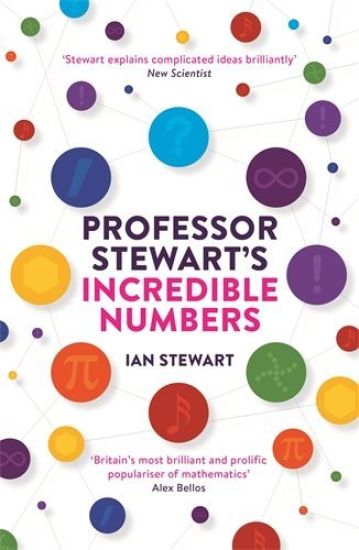
Ian Stewart explores the astonishing properties of numbers from 1 to10 to zero and infinity, including one figure that, if you wrote it out, would span the universe. He looks at every kind of number you can think of -- real, imaginary, rational, irrational, positive and negative -- along with several you might have thought you couldn't think of. He explains the insights of the ancient mathematicians, shows how numbers have evolved through the ages, and reveals the way numerical theory enables everyday life. Under Professor Stewart's guidance you will discover the mathematics of codes, Sudoku, Rubik's cube, music, primes and pi. You may be surprised to find you live in eleven-dimensional space, that of the twenty-three people on a football pitch two are more likely than not to share the same birthday, and that forty-two is a very interesting number. Professor Stewart's Incredible Numbers will delight everyone who loves numbers -- including those who currently think they don't.
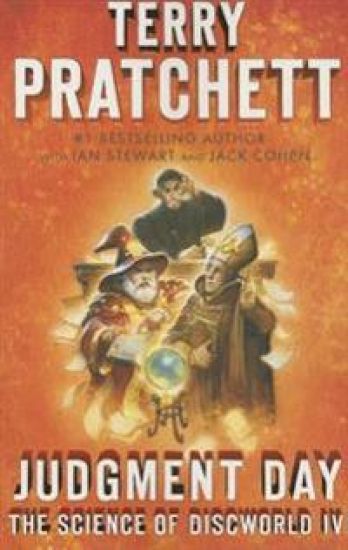
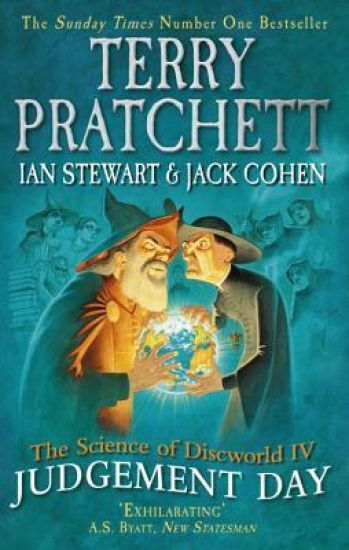
The wizards of Unseen University are again called upon to defend their creation, Roundworld, this time in a courtroom--where its very existence hangs in the balance. The Omnians fervently believe that the world is round, not flat, and view the discovery of Roundworld as a vindication of their faith. To leave this artifact in the hands of the wizards would be unacceptable. Not only do the academics hold that Discworld is flat, but by creating the Roundworld universe, they have elevated themselves to the level of gods. Ankh-Morpork's venerable tyrant Lord Vetinari agrees to a tribunal, where the wizards Ridcully, Rincewind, and Ponder Stibbons can present their case--with key assistance from a Roundworld librarian named Marjorie Daw. JUDGMENT DAY weaves together explorations of such Earthly topics as big science, creation, subatomic particles, the existence of dark matter, and the psychology of belief--a treat for Discworld fans and readers of popular science alike.
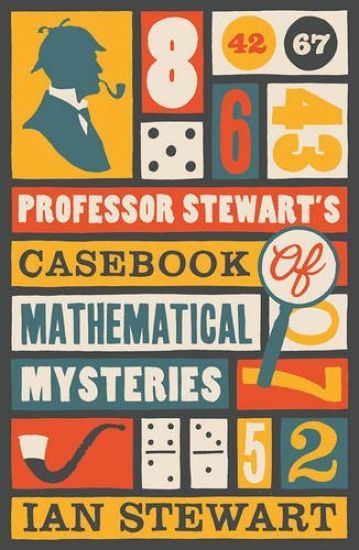
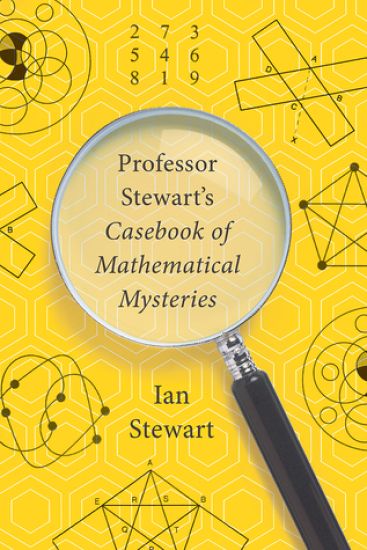
Like its wildly popular predecessors Cabinet of Mathematical Curiosities and Hoard of Mathematical Treasures, Professor Stewart's brand-new book is a miscellany of over 150 mathematical curios and conundrums, packed with trademark humour and numerous illustrations.In addition to the fascinating formulae and thrilling theorems familiar to Professor Stewart's fans, the Casebook follows the adventures of the not-so-great detective Hemlock Soames and his sidekick Dr John Watsup (immortalised in the phrase 'Watsup, Doc?'). By a remarkable coincidence they live at 222B Baker Street, just across the road from their more illustrious neighbour who, for reasons known only to Dr Watsup, is never mentioned by name. A typical item is 'The Case of the Face-Down Aces', a mathematical magic trick of quite devilish cunning... Ranging from one-liners to four-page investigations from the frontiers of mathematical research, the Casebook reveals Professor Stewart at his challenging and entertaining best.
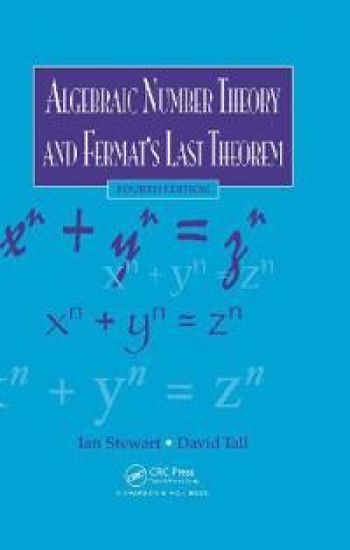
Updated to reflect current research, Algebraic Number Theory and Fermat’s Last Theorem, Fourth Edition introduces fundamental ideas of algebraic numbers and explores one of the most intriguing stories in the history of mathematics—the quest for a proof of Fermat’s Last Theorem. The authors use this celebrated theorem to motivate a general study of the theory of algebraic numbers from a relatively concrete point of view. Students will see how Wiles’s proof of Fermat’s Last Theorem opened many new areas for future work.New to the Fourth EditionProvides up-to-date information on unique prime factorization for real quadratic number fields, especially Harper’s proof that Z(v14) is EuclideanPresents an important new result: Mihailescu’s proof of the Catalan conjecture of 1844Revises and expands one chapter into two, covering classical ideas about modular functions and highlighting the new ideas of Frey, Wiles, and others that led to the long-sought proof of Fermat’s Last TheoremImproves and updates the index, figures, bibliography, further reading list, and historical remarksWritten by preeminent mathematicians Ian Stewart and David Tall, this text continues to teach students how to extend properties of natural numbers to more general number structures, including algebraic number fields and their rings of algebraic integers. It also explains how basic notions from the theory of algebraic numbers can be used to solve problems in number theory.
When Charles Darwin writes the wrong book and reverses the progress of science, Unseen University's wizards must once again save Roundworld (Earth, that is) from an apocalyptic end. Ever since a wizardly experiment inadvertently brought about the creation of Roundworld, the wizard scholars of Unseen University have done their best to put things on the right course. In Darwin's Watch they may face their greatest challenge yet: A man called Darwin has written a bestselling book called The Theology of the Species, and his theory of scientific design has been witlessly embraced by Victorian society. As a result, scientific progress has slowed to a crawl, and the wizards must find a way to change history back to the way it should have been. DARWIN'S WATCH EXPLORES THE REVERBERATIONS of major scientific advances on our planet and our culture, the dangers of obscurantism, and the theory of evolution as you have never seen it before. This brilliant addition to Pratchett's beloved Discworld series illustrates with great wit and wisdom how the laws of our universe truly are stranger than fiction.
Renowned mathematician Ian Stewart uses remarkable (and some unremarkable) numbers to introduce readers to the beauty of mathematics. At its heart, mathematics is about numbers, our fundamental tools for understanding the world. In Professor Stewart's Incredible Numbers, Ian Stewart offers a delightful introduction to the numbers that surround us, from the common (Pi and 2) to the uncommon but no less consequential (1.059463 and 43,252,003,274,489,856,000). Along the way, Stewart takes us through prime numbers, cubic equations, the concept of zero, the possible positions on the Rubik's Cube, the role of numbers in human history, and beyond An unfailingly genial guide, Stewart brings his characteristic wit and erudition to bear on these incredible numbers, offering an engaging primer on the principles and power of math.
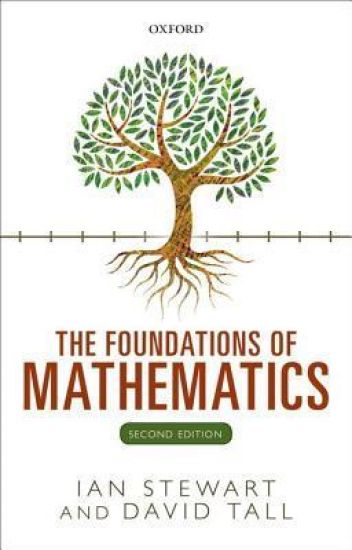
The transition from school mathematics to university mathematics is seldom straightforward. Students are faced with a disconnect between the algorithmic and informal attitude to mathematics at school, versus a new emphasis on proof, based on logic, and a more abstract development of general concepts, based on set theory. The authors have many years' experience of the potential difficulties involved, through teaching first-year undergraduates and researching the ways in which students and mathematicians think. The book explains the motivation behind abstract foundational material based on students' experiences of school mathematics, and explicitly suggests ways students can make sense of formal ideas. This second edition takes a significant step forward by not only making the transition from intuitive to formal methods, but also by reversing the process- using structure theorems to prove that formal systems have visual and symbolic interpretations that enhance mathematical thinking. This is exemplified by a new chapter on the theory of groups. While the first edition extended counting to infinite cardinal numbers, the second also extends the real numbers rigorously to larger ordered fields. This links intuitive ideas in calculus to the formal epsilon-delta methods of analysis. The approach here is not the conventional one of 'nonstandard analysis', but a simpler, graphically based treatment which makes the notion of an infinitesimal natural and straightforward. This allows a further vision of the wider world of mathematical thinking in which formal definitions and proof lead to amazing new ways of defining, proving, visualising and symbolising mathematics beyond previous expectations.
The transition from school mathematics to university mathematics is seldom straightforward. Students are faced with a disconnect between the algorithmic and informal attitude to mathematics at school, versus a new emphasis on proof, based on logic, and a more abstract development of general concepts, based on set theory. The authors have many years' experience of the potential difficulties involved, through teaching first-year undergraduates and researching the ways in which students and mathematicians think. The book explains the motivation behind abstract foundational material based on students' experiences of school mathematics, and explicitly suggests ways students can make sense of formal ideas. This second edition takes a significant step forward by not only making the transition from intuitive to formal methods, but also by reversing the process- using structure theorems to prove that formal systems have visual and symbolic interpretations that enhance mathematical thinking. This is exemplified by a new chapter on the theory of groups. While the first edition extended counting to infinite cardinal numbers, the second also extends the real numbers rigorously to larger ordered fields. This links intuitive ideas in calculus to the formal epsilon-delta methods of analysis. The approach here is not the conventional one of 'nonstandard analysis', but a simpler, graphically based treatment which makes the notion of an infinitesimal natural and straightforward. This allows a further vision of the wider world of mathematical thinking in which formal definitions and proof lead to amazing new ways of defining, proving, visualising and symbolising mathematics beyond previous expectations.
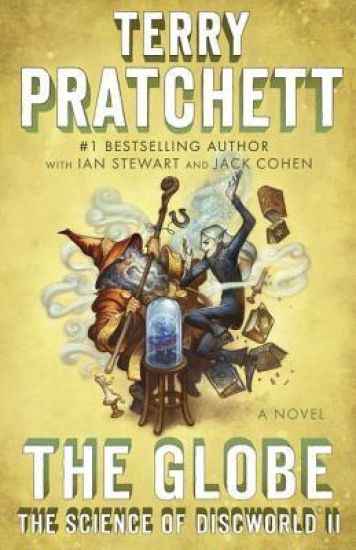
Roundworld, aka Earth, is under siege. Are three wizards and an orangutan Librarian enough to thwart the Elvish threat? When the wizards of Unseen University first created Roundworld, they were so concerned with discovering the rules of this new universe that they overlooked its inhabitants entirely. Now, they have noticed humanity. And humanity has company. Arriving in Roundworld, the wizards find the situation is even worse than they'd expected. Under the elves' influence, humans are superstitious, fearful, and fruitlessly trying to work magic in a world ruled by logic. Ridcully, Rincewind, Ponder Stibbons, and the orangutan Librarian must travel through time to get humanity back on track and out of the dark ages. The Globe goes beyond science to explore the development of the human mind. Terry Pratchett and his acclaimed co-authors Ian Stewart and Jack Cohen combine the tale of the wizards rewriting human history with discussions of the origins and evolution of culture, language, art, and science, offering a fascinating and brilliantly original view of the world we live in.
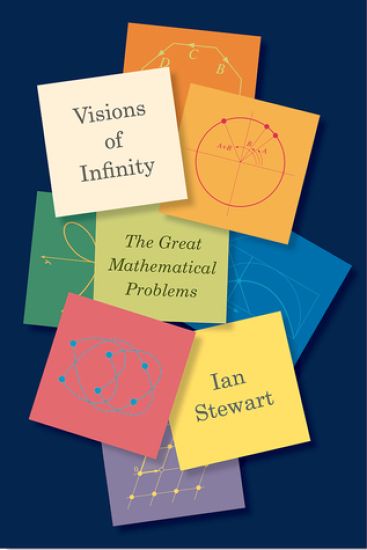
It is one of the wonders of mathematics that, for every problem mathematicians solve, another awaits to perplex and galvanize them. Some of these problems are new, while others have puzzled and bewitched thinkers across the ages. Such challenges offer a tantalizing glimpse of the field's unlimited potential, and keep mathematicians looking toward the horizons of intellectual possibility. In Visions of Infinity, celebrated mathematician Ian Stewart provides a fascinating overview of the most formidable problems mathematicians have vanquished, and those that vex them still. He explains why these problems exist, what drives mathematicians to solve them, and why their efforts matter in the context of science as a whole. The three-century effort to prove Fermat's last theorem -- first posited in 1630, and finally solved by Andrew Wiles in 1995 -- led to the creation of algebraic number theory and complex analysis. The Poincare conjecture, which was cracked in 2002 by the eccentric genius Grigori Perelman, has become fundamental to mathematicians' understanding of three-dimensional shapes. But while mathematicians have made enormous advances in recent years, some problems continue to baffle us. Indeed, the Riemann hypothesis, which Stewart refers to as the "Holy Grail of pure mathematics," and the P/NP problem, which straddles mathematics and computer science, could easily remain unproved for another hundred years. An approachable and illuminating history of mathematics as told through fourteen of its greatest problems, Visions of Infinity reveals how mathematicians the world over are rising to the challenges set by their predecessors -- and how the enigmas of the past inevitably surrender to the powerful techniques of the present.
In Professor Stewart's Casebook of Mathematical Mysteries , acclaimed mathematician Ian Stewart presents an enticing collection of mathematical curios and conundrums. With a new puzzle on each page, this compendium of brainteasers will both teach and delight. Guided by stalwart detective Hemlock Soames and his sidekick, Dr. John Watsup, readers will delve into almost two hundred mathematical problems, puzzles, and facts. Tackling subjects from mathematical dates (such as Pi Day), what we don't know about primes, and why the Earth is round, this clever, mind-expanding book demonstrates the power and fun inherent in mathematics.
Bill Struth is the most celebrated Manager in the history of Rangers Football Club. In his 34 year tenure, he led the club to 30 major trophies and nurtured many of the club's greatest players. To them, he was simply 'Mr. Struth' - a father figure who guided them with the principle that, '... to be a Ranger is to sense the sacred trust of upholding all that such a name means in this shrine of football.'If these words set the ideals for his players to attain, his own personal life was clouded by moments of indiscretion which were to influence the course of his life and career. Drawing on family accounts and Rangers archives, the book explores his early life in Edinburgh and Fife, as well as his celebrated years in Glasgow. It recounts his career in professional athletics and in football with Heart of Midlothian, Clyde and ultimately, Rangers. It reflects on the legacy of the Struth era and his influences that remain at Ibrox today.
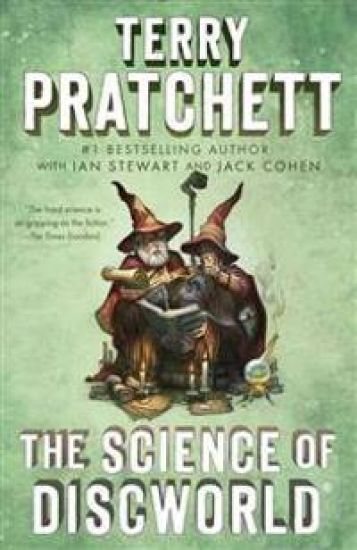
Not just another science book and not just another Discworld novella, The Science of Discworld is a creative, mind-bending mash-up of fiction and fact, that offers a wizard's-eye view of our world that will forever change how you look at the universe. Can Unseen University's eccentric wizards and orangutan Librarian possibly shed any useful light on hard, rational Earthly science? In the course of an exciting experiment, the wizards of Discworld have accidentally created a new universe. Within this universe is a planet that they name Roundworld. Roundworld is, of course, Earth, and the universe is our own. As the wizards watch their creation grow, Terry Pratchett and acclaimed science writers Ian Stewart and Jack Cohen use Discworld to examine science from the outside. Interwoven with the Pratchett's original story are entertaining, enlightening chapters which explain key scientific principles such as the Big Bang theory and the evolution of life on earth, as well as great moments in the history of science.
Marjorie Daw is a librarian, and takes her job - and indeed the truth of words - very seriously. She doesn't know it, but her world and ours - Roundworld - is in big trouble. On Discworld, a colossal row is brewing. The Wizards of Unseen University feel responsible for Roundworld (as one would for a pet gerbil).
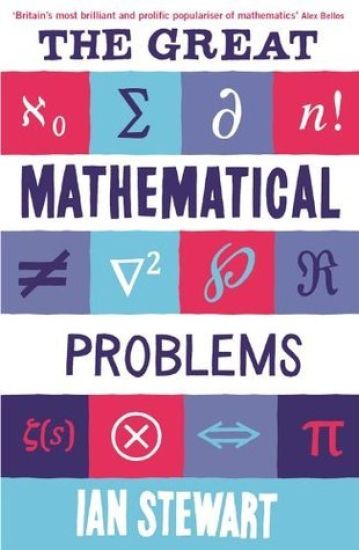
There are some mathematical problems whose significance goes beyond the ordinary - like Fermat's Last Theorem or Goldbach's Conjecture - they are the enigmas which define mathematics. The Great Mathematical Problems explains why these problems exist, why they matter, what drives mathematicians to incredible lengths to solve them and where they stand in the context of mathematics and science as a whole. It contains solved problems - like the Poincaré Conjecture, cracked by the eccentric genius Grigori Perelman, who refused academic honours and a million-dollar prize for his work, and ones which, like the Riemann Hypothesis, remain baffling after centuries. Stewart is the guide to this mysterious and exciting world, showing how modern mathematicians constantly rise to the challenges set by their predecessors, as the great mathematical problems of the past succumb to the new techniques and ideas of the present.
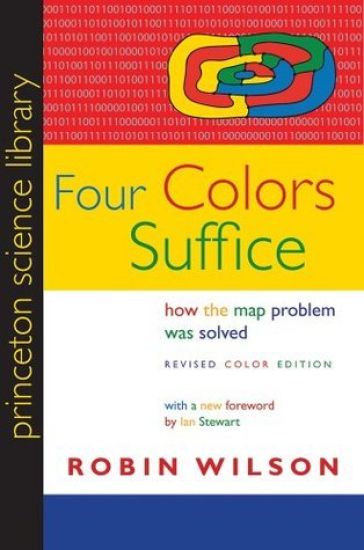
On October 23, 1852, Professor Augustus De Morgan wrote a letter to a colleague, unaware that he was launching one of the most famous mathematical conundrums in history--one that would confound thousands of puzzlers for more than a century. This is the amazing story of how the "map problem" was solved. The problem posed in the letter came from a former student: What is the least possible number of colors needed to fill in any map (real or invented) so that neighboring counties are always colored differently? This deceptively simple question was of minimal interest to cartographers, who saw little need to limit how many colors they used. But the problem set off a frenzy among professional mathematicians and amateur problem solvers, among them Lewis Carroll, an astronomer, a botanist, an obsessive golfer, the Bishop of London, a man who set his watch only once a year, a California traffic cop, and a bridegroom who spent his honeymoon coloring maps. In their pursuit of the solution, mathematicians painted maps on doughnuts and horseshoes and played with patterned soccer balls and the great rhombicuboctahedron. It would be more than one hundred years (and countless colored maps) later before the result was finally established. Even then, difficult questions remained, and the intricate solution--which involved no fewer than 1,200 hours of computer time--was greeted with as much dismay as enthusiasm. Providing a clear and elegant explanation of the problem and the proof, Robin Wilson tells how a seemingly innocuous question baffled great minds and stimulated exciting mathematics with far-flung applications. This is the entertaining story of those who failed to prove, and those who ultimately did prove, that four colors do indeed suffice to color any map. This new edition features many color illustrations. It also includes a new foreword by Ian Stewart on the importance of the map problem and how it was solved.
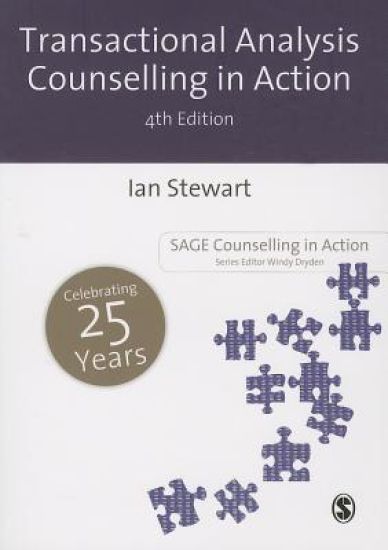
Selling over 25,000 copies across three editions, this book provides an unrivalled introduction to the core concepts and basic techniques of Transactional Analysis (TA). Ian Stewart guides the reader step-by-step through the successive stages in using TA to create therapeutic change, building understanding of the way the approach works in real-life practice. Key features of this new edition include: -a single extended case study running through the book -'Key ideas' panels to summarize the main ideas in each section -Detailed discussion of 'closing the escape hatches': TA's distinctive approach to resolving the issues of suicide, self-harm or violence -Practice Checklists offering suggested questions readers can use to appraise their own work with clients at strategic points in the text - Space for Reflection sections and Further Reading lists to conclude each chapter. This bestselling textbook offers trainee and practising psychotherapists and counsellors a concise, hands-on exploration of current concepts and techniques in Transactional Analysis. Ian Stewart is Co-Director of The Berne Institute, Nottingham. He is the author of Eric Berne (SAGE, 1992) and Developing Transactional Analysis Counselling (SAGE, 1996), and co-author of TA Today (2nd edn, Lifespace, 2012).
Selling over 25,000 copies across three editions, this book provides an unrivalled introduction to the core concepts and basic techniques of Transactional Analysis (TA). Ian Stewart guides the reader step-by-step through the successive stages in using TA to create therapeutic change, building understanding of the way the approach works in real-life practice. Key features of this new edition include: -a single extended case study running through the book -'Key ideas' panels to summarize the main ideas in each section -Detailed discussion of 'closing the escape hatches': TA's distinctive approach to resolving the issues of suicide, self-harm or violence -Practice Checklists offering suggested questions readers can use to appraise their own work with clients at strategic points in the text - Space for Reflection sections and Further Reading lists to conclude each chapter. This bestselling textbook offers trainee and practising psychotherapists and counsellors a concise, hands-on exploration of current concepts and techniques in Transactional Analysis. Ian Stewart is Co-Director of The Berne Institute, Nottingham. He is the author of Eric Berne (SAGE, 1992) and Developing Transactional Analysis Counselling (SAGE, 1996), and co-author of TA Today (2nd edn, Lifespace, 2012).