
Kirjailija
Jean-Luc Nancy
Kirjat ja teokset yhdessä paikassa: 124 kirjaa, julkaisuja vuosilta 1988-2025, suosituimpien joukossa Nus Sommes (La Peau Des Images). Vertaile teosten hintoja ja tarkista saatavuus suomalaisista kirjakaupoista.
Mukana myös kirjoitusasut: Jean–luc Nancy
124 kirjaa
Kirjojen julkaisuhaarukka 1988-2025.
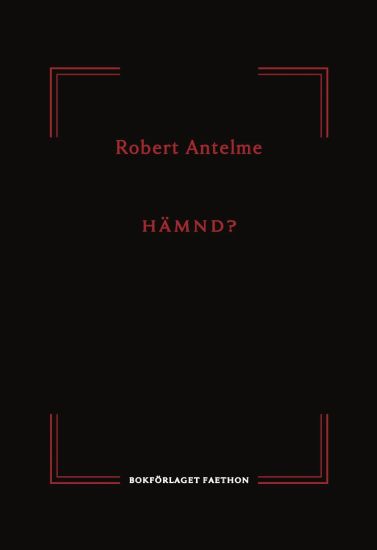
»Saken är klar: fången är en helig varelse därför att han är en utlämnad och har förlorat alla möjligheter. Om han har gjort sig personligen skyldig till brottsliga handlingar ska han dömas, och döms han till döden har han de rättigheter som tillkommer dödsdömda; avrättningen ska vara en ren och tydlig handling, en direkt följd av domen, ingenting får läggas till och den dömde ska inte utstå något vid sidan av denna linjära process. Barbariet är det som någon lägger till.« Kort efter att Robert Antelme befriats från Dachau får han veta att hans syster som deporterades har mördats. I Hämnd? undersöker han frågan om rättvisa och dess grundvalar, och han förkastar alla försök till hämnd. I översättning av Jan Stolpe med ett efterord av Jean-Luc Nancy.
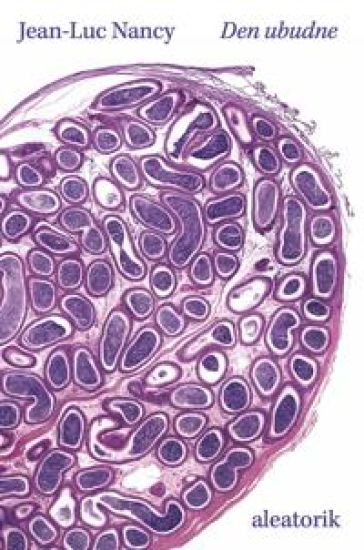
I begyndelsen af 90’erne er filosoffen Jean-Luc Nancys hjerte ved at give op, og da et egnet donorhjerte bliver tilgængeligt, transplanteres det ind i hans brystkasse. Det nye hjerte afstødes af kroppens immunforsvar, og således lever han permanent med en fremmed i kroppen, som nu ikke helt er hans egen krop, men heller ikke længere nogen andens.Bogen er en rejse gennem lægevidenskabens overnaturlige evner og ubevidste idealer, men også en refleksion over menneskets kropslige vilkår i den moderne verden. Samtidig med transplantationens personlige drama udfolder migrationens politiske drama sig i Europa, og den ubudne bliver i bogen både et vilkår for mennesket og for kontinentet.Jean-Luc Nancy (1940-2021) var fransk filosof. Store dele af hans filosofiske værk kredser om fællesskab som grundlæggende fænomen, og hans tænkning kan beskrives som en poetisk dialog med den filosofiske tradition.

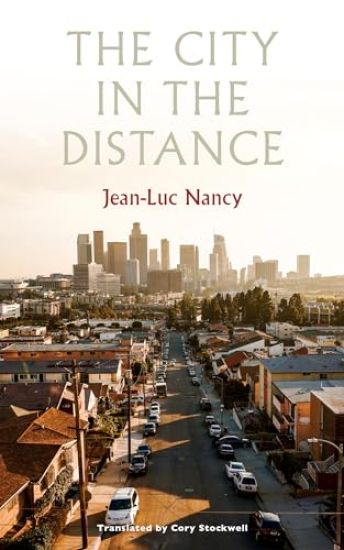
The City in the Distance
Jean-Luc Nancy; Jean-Christophe Bailly
FORDHAM UNIVERSITY PRESS
2024
sidottu
FINALIST, 38th ANNUAL FRENCH-AMERICAN FOUNDATION TRANSLATION PRIZE Exploring the ever-changing philosophy of city life with Jean-Luc Nancy In The City in the Distance, Jean-Luc Nancy embarks on nothing less than a philosophy of the city. Drawing on his widely discussed accounts of sense and of the fraught question of community, Nancy views the city as the site of a disposition that is constantly undergoing metamorphoses. Far from an abstract account, Nancy attends in the most concrete way possible to the workings of a city not typically taken as paradigmatic, Los Angeles. As Jean-Christophe Bailly suggests in his foreword, Nancy joins Walter Benjamin in thinking the city not from an external vantage point, but on its own terms.
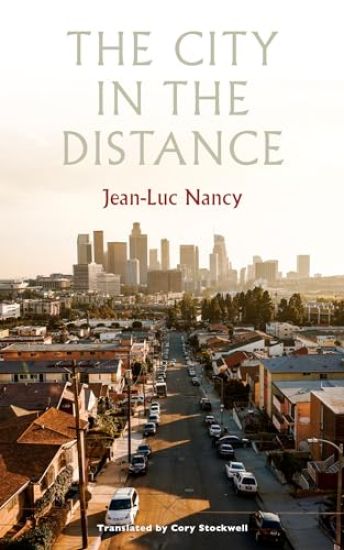
The City in the Distance
Jean-Luc Nancy; Jean-Christophe Bailly
FORDHAM UNIVERSITY PRESS
2024
pokkari
FINALIST, 38th ANNUAL FRENCH-AMERICAN FOUNDATION TRANSLATION PRIZE Exploring the ever-changing philosophy of city life with Jean-Luc Nancy In The City in the Distance, Jean-Luc Nancy embarks on nothing less than a philosophy of the city. Drawing on his widely discussed accounts of sense and of the fraught question of community, Nancy views the city as the site of a disposition that is constantly undergoing metamorphoses. Far from an abstract account, Nancy attends in the most concrete way possible to the workings of a city not typically taken as paradigmatic, Los Angeles. As Jean-Christophe Bailly suggests in his foreword, Nancy joins Walter Benjamin in thinking the city not from an external vantage point, but on its own terms.
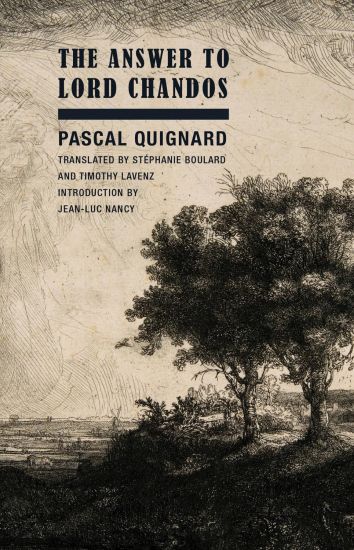
In defense of the poetic, Pascal Quignard pens an impassioned reply to von Hofmannsthal’s despondent Lord Chandos In 1902, Hugo von Hofmannsthal’s Lord Chandos Letter articulated a deep crisis of faith in language. Having “lost completely the ability to think or speak of anything coherently,” the titular character abandons literature in favor of silence. In The Answer to Lord Chandos, a text that was meticulously crafted over 41 years, Pascal Quignard passionately challenges this withdrawal and urges us not to forsake the power of poetry. His exhortation meditates on Emily Brontë, Handel, Rembrandt and more to demonstrate how literature rejuvenates our connection to the universe. In an introduction to this first English edition, French philosopher Jean-Luc Nancy illuminates the core question animating this debate, which has resonated within literature since its inception: can poetry give access to the real? Quignard’s resounding answer offers a testament to the immense value of literary expression. Pascal Quignard (born 1948) is the author of A Terrace in Rome and more than 60 fiction and nonfiction titles. He has won both the Prix Goncourt, France’s top literary prize, and the Formentor Prize for Letters.
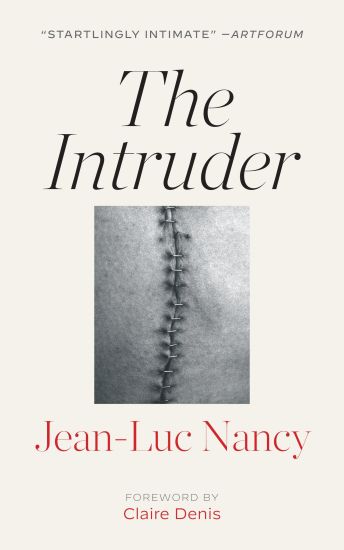
In 1991, Jean-Luc Nancy's heart gave out. In one of the first such procedures in France, a stranger's heart was grafted into his body. Numerous complications followed, including more surgeries and lymphatic cancer. The procedure and illnesses he endured revealed to him, in a more visceral way than most of us ever experience, the strangeness of bodily existence itself and surviving the stranger within him. During this same period, Europe began closing its borders to those seeking refuge from war and poverty. Alarmed at this trend and drawn to a highly intimate form of strangeness with which he had been living for years, Nancy set out in The Intruder to articulate how intrusion—whether of a body or a border—is not antithetical to one's identity but constitutive of it. In 2004, Claire Denis adapted The Intruder into a film already hailed among the most important of our century. This edition includes Nancy's and Denis's accounts of turning philosophy into film and the text of a shorter collaboration between the two of them. Throughout, Nancy and Denis push us to recognize that to truly welcome strangers means a constant struggle against exoticism, enforced assimilation, and confidence in our own self-identity.
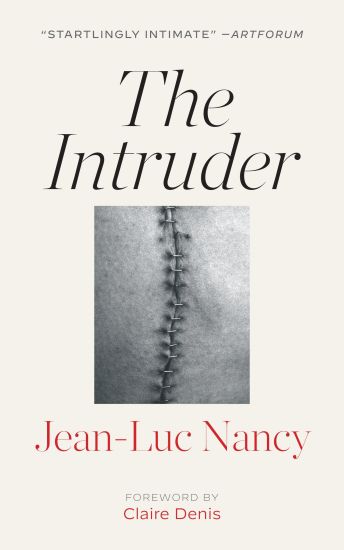
In 1991, Jean-Luc Nancy's heart gave out. In one of the first such procedures in France, a stranger's heart was grafted into his body. Numerous complications followed, including more surgeries and lymphatic cancer. The procedure and illnesses he endured revealed to him, in a more visceral way than most of us ever experience, the strangeness of bodily existence itself and surviving the stranger within him. During this same period, Europe began closing its borders to those seeking refuge from war and poverty. Alarmed at this trend and drawn to a highly intimate form of strangeness with which he had been living for years, Nancy set out in The Intruder to articulate how intrusion—whether of a body or a border—is not antithetical to one's identity but constitutive of it. In 2004, Claire Denis adapted The Intruder into a film already hailed among the most important of our century. This edition includes Nancy's and Denis's accounts of turning philosophy into film and the text of a shorter collaboration between the two of them. Throughout, Nancy and Denis push us to recognize that to truly welcome strangers means a constant struggle against exoticism, enforced assimilation, and confidence in our own self-identity.
When Jean-Luc Nancy first encountered the work of Jacques Derrida in the 1960s, he knew he was hearing something new, a voice genuinely of its time. Thinking with and against each other over the course of their long friendship, the two thinkers reshaped the European intellectual landscape. Nancy's writings on Derrida, collected in this volume, reflect on the elements of their shared concerns with politics, the arts, religion, the fate of deconstruction, and the future of sense. Rather than studies, commentaries, or interpretations of Derrida's thought, they are responses to his presence—not exactly a presence to self, but a presence in the world.

When Jean-Luc Nancy first encountered the work of Jacques Derrida in the 1960s, he knew he was hearing something new, a voice genuinely of its time. Thinking with and against each other over the course of their long friendship, the two thinkers reshaped the European intellectual landscape. Nancy's writings on Derrida, collected in this volume, reflect on the elements of their shared concerns with politics, the arts, religion, the fate of deconstruction, and the future of sense. Rather than studies, commentaries, or interpretations of Derrida's thought, they are responses to his presence—not exactly a presence to self, but a presence in the world.
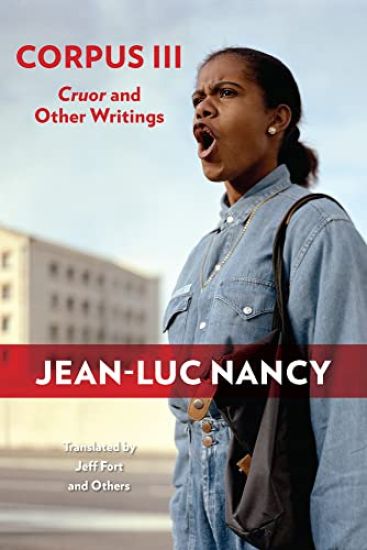
A beautiful, profound series of reflections on the body by one of the most prominent and consequential philosophers of continental Europe This landmark volume brings into English Jean-Luc Nancy's last completed work and concludes his remarkable philosophical reflections on the body, a project he began almost thirty years ago. Taking the body as an intersection of pulsing life and destructive cruelty on a global scale, Nancy's account becomes more vivid, more physical, than ever, even as it ventures into language that is as lyrical as it is profound. This vividness is manifest in blood: as it flows, in all its pulsing and forceful circulation, and as it spills, in the cruelty of existences confronted daily by countless destructions. This can be described as sanguis and cruor, the two Latin words for blood's intermingled but distinct aspects. This distinction allows Nancy to highlight an almost mystical sense of the body (yet one that remains soberly on this side of its manifest insistence), alongside the cruelty that pervades our world—a world whose very existence is threatened by its reduction to mere objects. The exceptional writings brought together in Corpus III comprise a masterful work of philosophy that marries rigorous erudition—on Freud, Nietzsche, and others—with rich poetic language and an actual poem. Nancy's thought opens the body onto its own unaccountable origins, its plural singularities, its enmeshed instantiations, and its excessive irreducibles, which are also the elusive excesses of language. Whereas in earlier texts Nancy has referred to this excess as poetry, here he performs it in the form of a poem, in the extraordinary hymn entitled Stoma. While the publication of a poem by Nancy is a notable event, equally noteworthy is a remarkable essay entitled "Scandalous Death," in which Nancy meditated on a subject that was to come to him too soon after. Above all, the book is crucial for bringing into English Cruor, the very last book Nancy completed before his death, an evocative meditation offered by a great thinker on the complex conditions of his own—and our—singular survival.
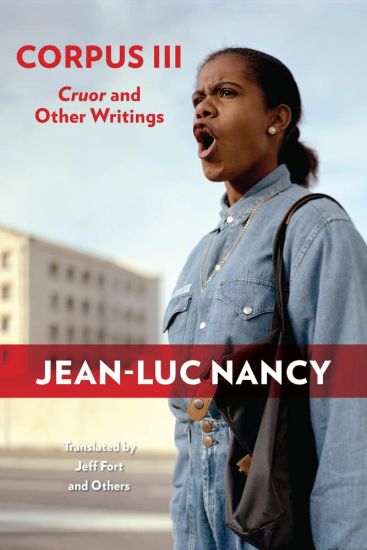
A beautiful, profound series of reflections on the body by one of the most prominent and consequential philosophers of continental Europe This landmark volume brings into English Jean-Luc Nancy's last completed work and concludes his remarkable philosophical reflections on the body, a project he began almost thirty years ago. Taking the body as an intersection of pulsing life and destructive cruelty on a global scale, Nancy's account becomes more vivid, more physical, than ever, even as it ventures into language that is as lyrical as it is profound. This vividness is manifest in blood: as it flows, in all its pulsing and forceful circulation, and as it spills, in the cruelty of existences confronted daily by countless destructions. This can be described as sanguis and cruor, the two Latin words for blood's intermingled but distinct aspects. This distinction allows Nancy to highlight an almost mystical sense of the body (yet one that remains soberly on this side of its manifest insistence), alongside the cruelty that pervades our world—a world whose very existence is threatened by its reduction to mere objects. The exceptional writings brought together in Corpus III comprise a masterful work of philosophy that marries rigorous erudition—on Freud, Nietzsche, and others—with rich poetic language and an actual poem. Nancy's thought opens the body onto its own unaccountable origins, its plural singularities, its enmeshed instantiations, and its excessive irreducibles, which are also the elusive excesses of language. Whereas in earlier texts Nancy has referred to this excess as poetry, here he performs it in the form of a poem, in the extraordinary hymn entitled Stoma. While the publication of a poem by Nancy is a notable event, equally noteworthy is a remarkable essay entitled "Scandalous Death," in which Nancy meditated on a subject that was to come to him too soon after. Above all, the book is crucial for bringing into English Cruor, the very last book Nancy completed before his death, an evocative meditation offered by a great thinker on the complex conditions of his own—and our—singular survival.

D'une rencontre est n un dialogue au sujet de la rencontre: un tonnement partag de la possibilit qu'ait lieu l'incalculable, l'impr visible et l'irr ductible. Une curiosit pour la justesse de ce qui n'a t ni concert ni d cid . Hasard, providence, intrication quantique, rituel, animisme, treinte ou porosit , pens e ou art sont autant de tentatives de tourner autour de ce qui nous chappe quand nous nous rencontrons. Et autant de fa ons de se rencontrer l o la philosophie reconnait que l'art lui chappe.
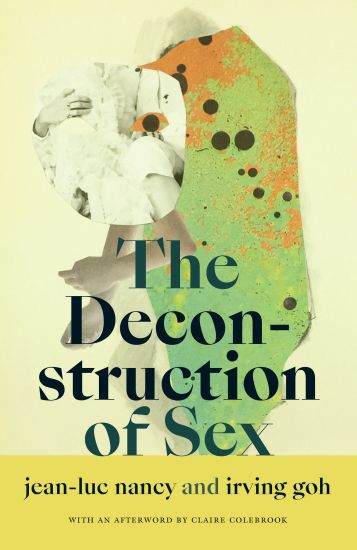
In The Deconstruction of Sex, Jean-Luc Nancy and Irving Goh discuss how a deconstructive approach to sex helps us negotiate discourses about sex and foster a better understanding of how sex complicates our everyday existence in the age of #MeToo. Throughout their conversation, Nancy and Goh engage with topics ranging from relation, penetration, and subjection to touch, erotics, and jouissance. They show how despite its entrenchment in social norms and centrality to our being-in-the-world, sex lacks a clearly defined essence. At the same time, they point to the potentiality of literature to inscribe the senses of sex. In so doing, Nancy and Goh prompt us to reconsider our relations with ourselves and others through sex in more sensitive, respectful, and humble ways without bracketing the troubling aspects of sex.
In The Deconstruction of Sex, Jean-Luc Nancy and Irving Goh discuss how a deconstructive approach to sex helps us negotiate discourses about sex and foster a better understanding of how sex complicates our everyday existence in the age of #MeToo. Throughout their conversation, Nancy and Goh engage with topics ranging from relation, penetration, and subjection to touch, erotics, and jouissance. They show how despite its entrenchment in social norms and centrality to our being-in-the-world, sex lacks a clearly defined essence. At the same time, they point to the potentiality of literature to inscribe the senses of sex. In so doing, Nancy and Goh prompt us to reconsider our relations with ourselves and others through sex in more sensitive, respectful, and humble ways without bracketing the troubling aspects of sex.
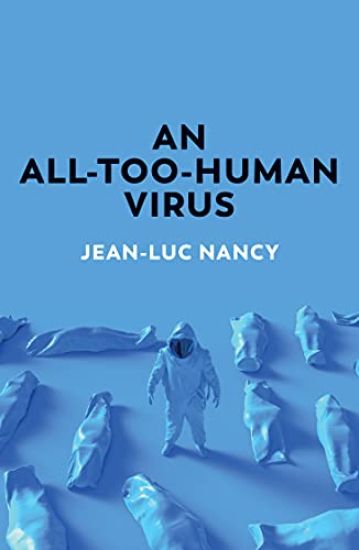
In the past, pandemics were considered divine punishment, but we now understand the biological characteristics of viruses and we know they are spread through social interaction. What used to be divine has become human – all too human, as Nietzsche would say. But while the virus dispels the divine, we are discovering that living beings are more complex and harder to define than we had previously imagined, and also that political power is more complex than we may have thought. And this, argues Nancy, helps us to see why the term ‘biopolitics’ fails to grasp the conditions in which we now find ourselves. Life and politics challenge us together. Our scientific knowledge tells us that we are dependent only on our own technical power, but can we rely on technologies when knowledge itself includes uncertainties? If this is the case for technical power, it is much more so for political power, even when it presents itself as guided by objective data. The virus is a magnifying glass that reveals the contradictions, limitations and frailties of the human condition, calling into question as never before our stubborn belief in progress and our hubristic sense of our own indestructibility as a species.