Kirjojen hintavertailu. Mukana 12 390 323 kirjaa ja 12 kauppaa.
Kirjailija
John Fraser
Kirjat ja teokset yhdessä paikassa: 126 kirjaa, julkaisuja vuosilta 1982-2026, suosituimpien joukossa Robert Burns. Vertaile teosten hintoja ja tarkista saatavuus suomalaisista kirjakaupoista.
TRUE STORIES - three stories of modern life by John Fraser.True Stories poses the question: What is modern life? Struggling with bureaucracy, getting on, and off, lists? The protagonist, Kochi, and his young - then much older - friends, engage with love, philosophy ... the murder of a lover by the mother of a socialite, the centre of the hero's attention: and her reprisal. We follow them, their adventures, the search for the Great Principle, embodied by a fragile ancient, who dosses down and dies on his first night in Kochi's dwelling.Think, says the Master, but no life seems lived by Thinking. There are wildfires, concealed well-shafts, a flight by sea: happenstance determined histories. Eventually, in a declining night-club, the protagonist finds clues, a divan to sleep on, even work. All human knowledge is examined by Kochi and his new partner, the dancer, Jahan. Knowledge at last? Maybe ... The hero, Kochi, leaves by night, seeking a new adventure.Clap Your Hands traces the search for a relationship, taking us from a truncated marriage to Russia, passing through Trabzon in Turkey - the hero caged and dispatched like an exotic bird, and ending in refuge on the Danube's mouth.Smoke addresses the end of life - the narrator's, recalling his youth and his first objectives, the goals to be reached, the satisfaction to be enjoyed - entrusted to him by a sailor in a bar. The ends of life seem trivial, when you reach them - like the end of life itself. His end of life is bitter, though sometimes he remembers sweetness ... It's lived with the dissatisfied, the clueless, and the cheats ... and sadness prevails.
Mercenaries - four new tales by John FraserMercenaries: soldiers of fortune, conottieri, knight errants ... Soldiers have always been paid, somehow; a wage? ... or by their own practices of looting, enslavement, often taking it out on others for vengeance or pleasure, taking prisoners and ransoming - hostages. Yet people who soldier for the money are singled out, and looked down on ... and yet, however you do it, losing, whether done for money or the cause, is never pleasant. Being a prisoner, or dead, gives no material credit whether you are a courageous, altruistic type or needy and conscripted. Now, with people's wars, mass invasions and generalised hostilities - everyone is a soldier. At least, everybody suffers like a soldier, not all bear arms. Many are also mercenaries - have been, would like to be. They are like samurai, who cut the personal risk by doing deals with similars - momentarily, the enemy. Mercenaries concerns attempts by mercenaries to engage more mercenaries to carry out humanitarian work. Maybe it ought to work. It should be clean. What can be accomplished, tying political aims to cash? Suppose the aims are impeccable.... The short concluding pieces, Round Heaven, Square Earth, Hope and Stop, are illustrations of how political schemes might be achieved by force of will, without the cash. All our modern realities, and their dilemmas, are treated here.
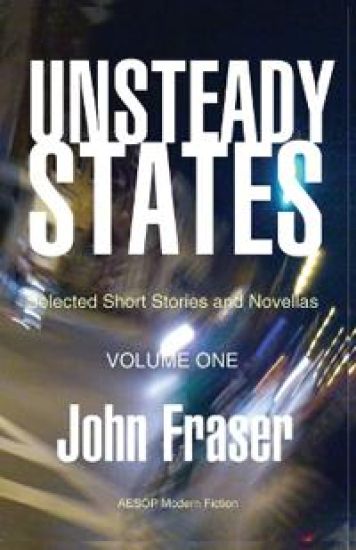
The first volume of John Fraser's selected short stories and novellas features: The White Room (from Animal Tales)Sheep (from Happy Always)The Scorpions (from Enterprising Women)Lenin in the Cinema (from Black Masks)Where the Philosophers Go (from Short Lives)Starting Over (from Blue Light)Broken Chords (from Three Beauties)John Fraser lives near Rome. Previously, he worked in England and Canada. Of Fraser's fiction the Whitbread Award winning poet John Fuller has written: 'One of the most extraordinary publishing events of the past few years has been the rapid, indeed insistent, appearance of the novels of John Fraser. There are few parallels in literary history to this almost simultaneous and largely belated appearance of a mature oeuvre, sprung like Athena from Zeus's forehead; and the novels in themselves are extraordinary. I can think of nothing much like them in fiction. Fraser maintains a masterfully ironic distance from the extreme conditions in which his characters find themselves. There are strikingly beautiful descriptions, veiled allusions to rooted traditions, unlikely events half-glimpsed, abrupted narratives, surreal but somehow apposite social customs.'
Happiness needs time - you need to know what the past was like and, even more inscrutable, what the future might entail.Torsten is an agent, travelling with the overbearing Manlio, a fixer, in South America; seeking merchandise for his boss and sponsor, Odette. Trade and capitalism bring little, and nothing that is gratifying. Odette hosts Elise, a beautiful elusive photographer, Torsten's distant delight - but she can be known, it seems, only indirectly, through images. The three travel the world, by balloon. They are cloud-high - too far up to find their goal. Torsten, disappointed, then tries manual work - digging, petty thieving, grave-digging, rigging the circus tent. It's hard, essential - and not for him. Finally, Odette proposes he seek happiness.In Exploring the Clouds, John Fraser explores the nature of happiness, betrayal, vengeance and the motivation for exploration, and its roots.
The Beach consists of two new tales from John Fraser What is a human life worth? If you save someone's, what is it worth to you - and if you seek a reward, how do you get it, whatever it may be? Is that life, perhaps, the only valuable thing there is, that has value only to the person who wins twice - getting their life back, and not having to give a reward? The characters in The Beach seek answers to this question - what is a life? what worth does it have? - travelling through many remote places and civilisations. Memoirs, Memorials examines a devious spy - a spy on the secrets of life. If saving lives accumulates confusions, a heap of partial, disparate conclusions - what is a life of duplicity, fiddling, false witness and falsity in general, worth? It seems a fiction, in which someone writes all the parts and is the hero/heroine. Is it meaningless, to be condemned, or is it victimless, as victimless as ordinary, straightforward relationships and personalities - with their bad marriages, bad bargains failures, catching infections from partners who should know better?
The Cure consists of two novellas with the related theme of malady and cure. What is a cure for? An ailment, an affliction - the succession and inevitability of them? Cures seem to be directed at the body, but we manage them with our minds, and sometimes we seek a cure for what's been done to us, or what we've done. The son in this tale needs a cure for his father - his parent's sickness, his unavoidable death, the genes, the sex, the burden of the past, his heritage. He breaks horses, writes about it, meets up with a swinging gangster, Emily. She excels at everything, and her ambition is to rule a small country, to be its horse-cure, as it were. Troubles abound, favours are requested - many cures for many conditions are tried and create further dysfunctions. The short piece 'Seals' takes the reader through encounters with the peoples of the world, their infirmities, remedies, placebos and sufferings of a malady that appears universal. The conclusion hints at a therapy.
Two novellas by John Fraser with the common theme of complicity.The Way Back explores the experience of war, of civil war, of flight, rejection, scams and endless voyages. In Elementary Exercises, protagonists who feel they're privileged - as critics, artists, 'free spirits' - engage with authoritarian regimes and contexts, sad relationships conceived as necessary to escape from difficult situations.
The first volume of John Fraser's selected short stories and novellas features: The White Room (from Animal Tales)Sheep (from Happy Always)The Scorpions (from Enterprising Women)Lenin in the Cinema (from Black Masks)Where the Philosophers Go (from Short Lives)Starting Over (from Blue Light) Broken Chords (from Three Beauties)
Happiness needs time - you need to know what the past was like, and, even more inscrutable, what the future might entail. Torsten is an agent, travelling with the overbearing Manlio, a fixer, in South America; seeking merchandise for his boss and sponsor, Odette. Trade and capitalism bring little, and nothing that is gratifying. Odette hosts Elise, a beautiful elusive photographer, Torsten's distant delight - but she can be known, it seems, only indirectly, through images. The three travel the world, by balloon. They are cloud-high - too far up to find their goal. Torsten, disappointed, then tries manual work - digging, petty thieving, grave-digging, rigging the circus tent. It's hard, essential - and not for him. Finally, Odette proposes he seek happiness. In Exploring the Clouds, John Fraser explores the nature of happiness, betrayal, vengeance and the motivation for exploration, and its roots.
Two novellas by John Fraser, described by the Whitbread Award winning poet John Fuller, as 'the most original novelist of our time'.Stardust examines the adventures of the journalist, Hadar. At sea, he and the odious Pietro, a banker cum sailor, are marooned by the shipboard scientists whose expedition has lost contact with land. Hadar's lover, Doctor Chin, is the principal in an experiment into the conversion of humans into marine creatures. The mission is desperate, the participants self-destructive in their wish to make world-saving discoveries. The story explores two connected themes - Hadar's many, unsuccessful relationships under the shadow of Pietro, banks and cashiers, and his memories of following the experiment of a fusion reactor - the attempt to build a star on earth.Wisdom is something many people seek, though what it is remains uncertain. Raul, a common man, is pledged to seek wisdom, though his life is one of happenstance, rebounding from archaeological expeditions to politics, a grooming for leadership which seems more like a prison, interrogation without purpose but with threats, and finally transformation as a literary and sexual subject. Along his haphazard way, he finds himself in extreme situations where the meaning of 'wisdom' should become more evident. Life and wisdom seem incompatible - but in the end, with an old associate, he continues his quest - in control, but in a landscape of increasing hardship, and isolation.
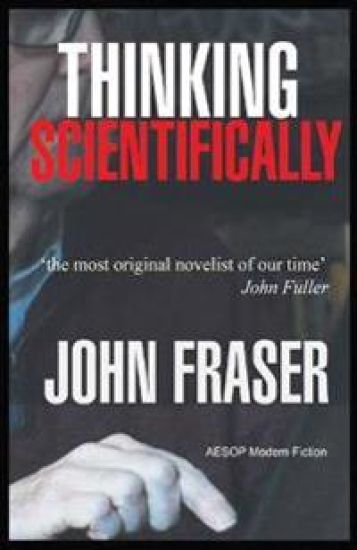
Thinking Scientifically is John Fraser's latest wildly original, experimental work of fiction: three stories ('The Opera', 'Round the World', 'The Shaft') centred on one theme: while we can think scientifically, can we be scientifically?We can train as scientists - but that's a job, and when we stop doing it - we're the same chimpanzee types as everybody else. When we thinkscientifically, what happens to all the other layers, the modalities, systems, of thought and being: the magical, the religious, the hunting and the gathering, the philosophical, the artistic...? The characters in the three long tales that make up Thinking Scientifically are involved in science, certainly - science as setting records, sport, endurance ... science as the psychology ... of art: of desire, the desire to be a libertine, the search for the unknown and unattainable - our Kurdistans: of what we know is there, somewhere, and leaves us flattened and exhausted by the search. Science - has no end: if it has a scope, it is not ours, not our happiness, certainly. Is it the discovery, rather, that what we know, or would like to know, and what we are, are not at all the same? In the end, after the exploration and the hypotheses - there's kids, maybe not ours, crowds and causes, bureaucrats. Not at all scientific ... what then? Enough of thought? Of experiment? In the end ... company? A welcome? An opera, exotic clubs: the world: and a hole in the ground. The protagonists use their best analyses to draw conclusions and wisdom from these familiar settings."One of the most extraordinary publishing events of the past few years has been the rapid, indeed insistent, appearance of the novels of John Fraser. There are few parallels in literary history to this almost simultaneous and largely belated appearance of a mature oeuvre, sprung like Athena from Zeus's forehead; and the novels in themselves are extraordinary. I can think of nothing much like them in fiction. Fraser maintains a masterfully ironic distance from the extreme conditions in which his characters find themselves. There are strikingly beautiful descriptions, veiled allusions to rooted traditions, unlikely events half-glimpsed, abrupted narratives, surreal but somehow apposite social customs. "Fraser's work is conceived on a heroic scale in terms both of its ideas and its situational metaphors. If he were to be filmed, it would need the combined talents of a Bunuel, a Gilliam, a Cameron. Like Thomas Pynchon, whom in some ways he resembles, Fraser is a deep and serious fantasist, wildly inventive. The reader rides as on a switchback or luge of impetuous attention, with effects flashing by at virtuoso speeds. The characters seem to be unwitting agents of chaos, however much wise reflection the author bestows upon them. They move with shrugging self-assurance through circumstances as richly-detailed and as without reliable compass-points as a Chinese scroll." (John Fuller, poet, novelist, Booker Prize nominee and Whitbread Award winner)
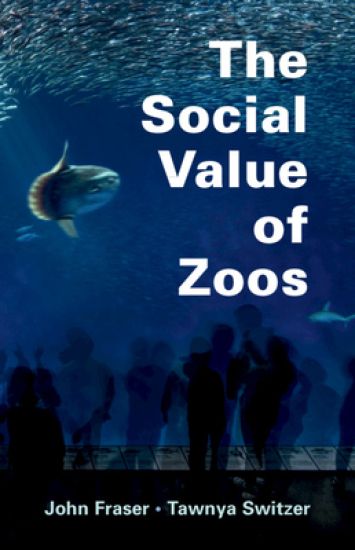
Combining anecdotes with scientific data, this book is a journalistic inquiry into what is currently known about zoos and aquariums as sociocultural intersections of mission, public perception, and on-site meaning making. The authors draw on conservation psychology and other social science research to explore how zoos might develop and deliver more effective learning experiences to promote and nurture conservation values and collective action. While people use zoos with specific priorities and motivations in mind, these are social settings. Indeed, it is because they represent an important, vast, and trusted social enterprise that zoos have such powerful opportunities to change how diverse public audiences view, value, identify, and engage with animals and the broader biophysical environment.
Combining anecdotes with scientific data, this book is a journalistic inquiry into what is currently known about zoos and aquariums as sociocultural intersections of mission, public perception, and on-site meaning making. The authors draw on conservation psychology and other social science research to explore how zoos might develop and deliver more effective learning experiences to promote and nurture conservation values and collective action. While people use zoos with specific priorities and motivations in mind, these are social settings. Indeed, it is because they represent an important, vast, and trusted social enterprise that zoos have such powerful opportunities to change how diverse public audiences view, value, identify, and engage with animals and the broader biophysical environment.
Three novellas by John Fraser with the related theme of friendship: The two cities in Cities on the Plain, on a Hill are the new Jerusalem on the hill, Sodom and Gomorrah on the plain - destinations for Ahmed and Nico, two ex-pats and best friends. Ahmed, an ex-dancer, interested in the law and justice, becomes an amateur judge and Nico, ex-soldier, poetaster, small-time dealer, comes to reside in a city run by drug-cartels.What does it mean, to leave something of oneself? The protagonist of Fame is engaged to follow the past life of an ancient, who hopes to achieve a kind of immortality. The trip involves re-running many adventures of the ancient's women, sentimental, tough. He is fixated with goldsmithing, a re-visiting of the Sarmatians, an archaic steppe people. There is a failed robbery in Ukraine, periods of virtual bondage, prison counselling. The search for a life which is one's own leads to an encounter with survivors of catastrophe, and ultimately to a vital encounter...Seeking a clean start should be easy. But in Cleansing there are mysteries, situations not resolved, friends who lead astray and who you lead astray. Art should be able to present a clean vision, but does not. Street cleaning never starts and never ends. Besides, you witness what you ought not see. Living poor, joining the military - both choices imply different kinds of cleanliness, but ultimately, the prospect seems that of wild horses, tattoed on human skin.About the author: One of the most extraordinary publishing events of the past few years has been the rapid, indeed insistent, appearance of the novels of John Fraser. There are few parallels in literary history to this almost simultaneous and largely belated appearance of a mature oeuvre, sprung like Athena from Zeus's forehead; and the novels in themselves are extraordinary. I can think of nothing much like them in fiction. Fraser maintains a masterfully ironic distance from the extreme conditions in which his characters find themselves. There are strikingly beautiful descriptions, veiled allusions to rooted traditions, unlikely events half-glimpsed, abrupted narratives, surreal but somehow apposite social customs. Fraser's work is conceived on a heroic scale in terms both of its ideas and its situational metaphors. If he were to be filmed, it would need the combined talents of a Bunuel, a Gilliam, a Cameron. Like Thomas Pynchon, whom in some ways he resembles, Fraser is a deep and serious fantasist, wildly inventive. The reader rides as on a switchback or luge of impetuous attention, with effects flashing by at virtuoso speeds. The characters seem to be unwitting agents of chaos, however much wise reflection the author bestows upon them. They move with shrugging self-assurance through circumstances as richly-detailed and as without reliable compass-points as a Chinese scroll. (John Fuller, poet, novelist, Booker Prize nominee and Whitbread Award winner)
'When people are forced to leave their home, in the new place they're often told to 'behave themselves' or be sent back, to to somewhere else. In jail or equivalent, they - everyone - may be let go early for 'good behaviour'. Behaving well is a condition for staying somewhere - even somewhere you don't want to be - and 'going back' may pose dilemmas even more problematic than behaving badly. You find yourself in a chain of ill-fortunes and tragedies - a nakba, a catastrophe as one aspect of it has been called. What other rules exist, except our efforts at 'behaving well'? But, you change, through life; you watch injustices you say you cannot remedy. And your behaviour changes, together with its driving principles. If you want history - you can't have good behaviour.Good BehaviourThe narrator, Alex, undocumented immigrant, is inspired, shadowed, by the adventures of Alexander, the Great. No one says Alexander behaved well - but he acted He transformed. He shaped the classical world, scattered Greeks all over, changed cultures, till his suicidal addictions finished him. In this tale, Alex starts precarious: is jailed, meets a real hero, Valerio, - joins the ex-prisoners and outcasts in a barren place.There, they improvise a polity - growing natural drugs, organising an army. Valerio is their inspiration, their guide. Alex teams up with Anicette, whose inspiration is the book 'On lying'. He spins out of control - but his behaviour is consistent. The world is made of imagination, and the real. Each sphere requires its own behaviours. People close to Alex behave in different ways, but all maintain their principles, Anicette as well. Anicette joins with a young ambitious woman, M lisande. After the death of Alex, we see all who are left have indeed behaved quite well - at least, consistently. Alex, though, has acted, and imagined: the others, they only react. Anicette concludes, instructing M lisande - the only judge of our behaviour is ourself. Misconduct: the theme of the book is behaviour. Does behaving well count for something? It doesn't seem to matter for success and failure, revelation or obscurity. In Misconduct, Matti, a political exile with aspirations of humanistic value, tries to make a life - maintaining principles, but surviving - the betrayal of his partner, unofficial enslavement. He wanders, has adventures - becomes a military strategist, travels to the steppes with a lady jockey - but his life is seeing others ride away, betray, or suffer punishments, promotions - which he's been unable to prevent or even understand. Ultimately, his organisation gives him the mission - to assassinate the Chief. To do so means his organisation will be expunged - a mass non-violent movement, non-violent, exposed. But for the other opposition, assassination means a civil war that they are bound to lose. Matti would betray his principles, his own morality - and probably involve all oppositions in disaster. But - loyalty, behaving well or badly - he has no choice. Many real circumstances involve the exiled militants in just this - perfidious - choice.CatastropheThe catastrophe is that everything happens, comes to an end - without a scrap of meaning, still less justice, truth, equity. In the context of 'Behaving Well' some people behave very poorly: Yannick who has 'saved' Hana and enslaved her, Pavel for others, the behaviour is just on the edge of awful. Dr Hoffman sees and can do nothing except register. Hana isn't eaten by the lions - but the herd of zebras is there to be eaten by lions: she finds a moment of peace among the palm trees, the distance earth-sky ... that is no use to her - she can't arise, can't hide in distance nor seek security... The catastrophe is there in the beginning, middle, end - On the whole, she behaves well. Should we all?