
Kirjailija
John Fraser
Kirjat ja teokset yhdessä paikassa: 126 kirjaa, julkaisuja vuosilta 1982-2026, suosituimpien joukossa Robert Burns. Vertaile teosten hintoja ja tarkista saatavuus suomalaisista kirjakaupoista.
126 kirjaa
Kirjojen julkaisuhaarukka 1982-2026.

The moralist and the theatre is an unchanged, high-quality reprint of the original edition of 1887. Hansebooks is editor of the literature on different topic areas such as research and science, travel and expeditions, cooking and nutrition, medicine, and other genres. As a publisher we focus on the preservation of historical literature. Many works of historical writers and scientists are available today as antiques only. Hansebooks newly publishes these books and contributes to the preservation of literature which has become rare and historical knowledge for the future.

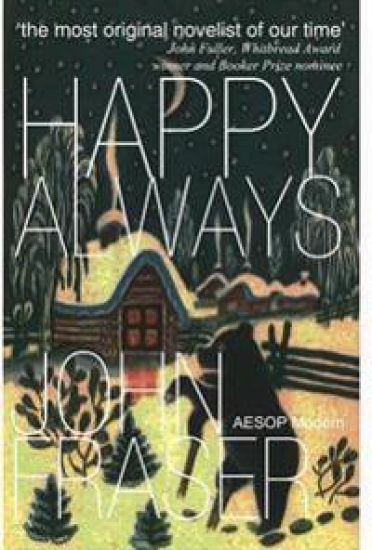
John Fraser's latest novel Happy Always concerns two journeys. In Here and Back Again, the young narrator escapes from his isolated village, lives poor in Paris, is involved in marginal schemes which bring him close to a police unit. The unit is disgraced - through his fault - and he turns to new friends - one, a musician, promotes avant garde mass concerts in Africa, another sends him to a remote part of Russia. Here, he is to supervise an imported jungle installation. He tries, and fails, in an attempt to trek back to humanity's origins in Africa, returns to Paris, working in a team of rickety mountebanks in the M tro. In Happy, a young drifter serves as chauffeur to a wealthy boss, who is killed in a botched robbery, leaving the narrator independent - teaching English and living by expedients among market traders. The latter go their separate, fatal ways. After some vicissitudes, he follows the pursuit of happiness, his outstanding quality, and takes a voyage on a pleasure boat. Its lady captain becomes his lover, but passes on to him a fatal illness. He remains happy.The questions raised give substance to these extravagant tales. The epigraph asks: what is human culture? Does it change through time, or is it always rooted in our species, the animal within? Do individuals begin in personal circumstance, or are they bound to a quest for species consciousness? Does culture lead, or follow, and does humanity possess a set of rules, or laws? How do we recognise our animality, in relation to other animals, and how do we treat and see them? When we die - what do we leave behind? In the end the quest seems circular.

The humorous chap-books of Scotland is an unchanged, high-quality reprint of the original edition of 1873. Hansebooks is editor of the literature on different topic areas such as research and science, travel and expeditions, cooking and nutrition, medicine, and other genres.As a publisher we focus on the preservation of historical literature.Many works of historical writers and scientists are available today as antiques only. Hansebooks newly publishes these books and contributes to the preservation of literature which has become rare and historical knowledge for the future.
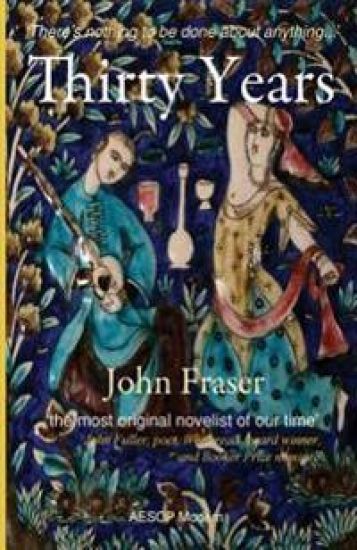
A lawyer looks for the tiny rock of guilt in a sea of innocence. A lawyer looks for the tiny rock of innocence in a sea of guilt. That's their trade.'John Fraser has been described as 'the most original novelist of our time' by the Whitbread Award Winner and Book Prize nominee John Fuller. In Fraser's latest novel, after a convulsive war that rumbles on for thirty years a disparate group search amongst the metal skeletons, detritus and urban wreckage of a shattered land for a new life, a new start and some kind of normality.The group, comprising therapists and entrepreneurs, including the novel's narrator - a cross between a mercenary and a pacifier - generate between them complicated and sometimes fantastic responses to the challenges facing them.The war continues to reverberate, on an individual basis, but also in the wider context of economic recovery, religious radicalism, and commodity speculation.Death and trauma continue, social and ideological cleavages deepen, but ultimately there is a hint that once the Thirty Years are up, the surviving characters may continue their lives back where it all began.Thirty Years has echoes of the Thirty Years War, and of Brecht's Mother Courage. As Fraser's characters continue to commit crimes, financial and physical, the novel questions and reframes the essential issues of crime and punishment that have concerned humanity from the Bible and Koran, to Shakespeare, Dostoevsky and onwards into the future.

Three Beauties is John Fraser's latest tour de force in speculative fiction. Beauty is an idea of perfection, moral, physical, social, political - and these three tales, with their beautiful questing characters, exemplify the search for the best there is. In the first tale, the heroine aspires to perfection in sex, sport and literature. Genetic improvement too is tried - but in the end she runs foul of the classical link between beauty, judgement and the struggle to be top. Afrodite, the acme of beauty, notoriously had her champions, and intervened - unfairly - to have them score in battle. In the second tale, Afrodite is absent or indifferent, as the characters tangle with high politics, and seek in vain a measure of social improvement.The final tale has the beauty, the heroine, in a mechanical role, to oil the plot. The moral is that perfection lies beyond the world, up in the sky.


The Magnificent Wurlitzer is a modern epic, its theme that of the 'guilty Faust' on a fantastic, grotesque journey seeking his truth, his Mephistopheles. Its hero James (aka Jay, Jayman, Hopper) treads in the traces of epics from East and West, Gilgamesh, the Ramayana, G tterd mmerung, from jazzman to shaman, sliding from music and religion to seeking order where there can be none, to politicking and leadership of the virtual and the voiceless.Wurlitzer is the machine that plays all music in its own sweet way. It is creation, innovation, improvisation - a farrago-medley of beauty and bad taste. It is also the nickname of the CIA - Intelligence, politicking, stabs in the dark, secret things, codified meanings. The book plays off the crisis of modernism, its slippage into postmodernism, where anything goes and nothing moves, against its critique of the heartland, of Modernity, which is both sharp as an axe and malleable as clay. Modernisation brings the four horsemen of the apocalypse, drinkable tapwater, the Russian Revolution, the Internet and the Crash.
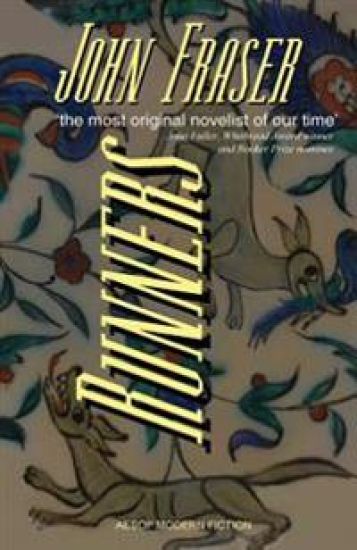
In Runners John Fraser delivers, in his unique, distinctive voice, the story of a kind of redemption - even a kind of utopia - or as much of a utopia as we can possibly expect, given what we know about most of our political leaders ...An unelected leader buys the office of deputy mayor. Although this 'boss' is a monster, he also has a rare, enlightened side. Where other leaders cling to power, he runs - but instead of running for office, he runs from office; he and his friends become the Runners - the running dogs.Runners is a contemporary remake of Machiavelli's Prince with a nod to Gramsci's 'Modern Prince', the revolutionary party. It is a tale of complicity between leaders, the nature of political friendships and loyalties, the contradictions between leaders and electors, between democratic rhetoric and practice, the leadership and the base - the urban and feathered - the volatility, adaptability and motivations of leaders, and of the pursuit of justice in the personal, incongruous instance; the machismo of political culture.'In Fraser's fiction the reader rides as on a switchback or luge of impetuous attention, with effects flashing by at virtuoso speeds. The characters seem to be unwitting agents of chaos, however much wise reflection Fraser bestows upon them; they move with shrugging self-assurance through circumstances as richly detailed and as without reliable compass-points as a Chinese scroll.' (John Fuller)
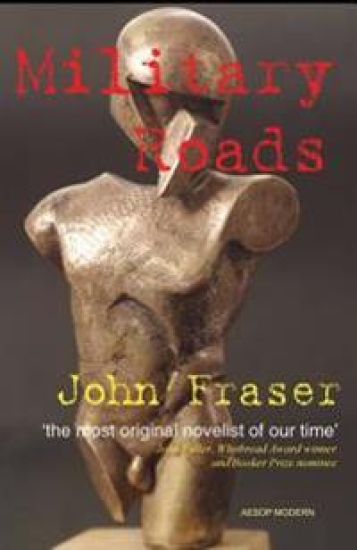
The latest tour de force in speculative fiction from John Fraser. The 'Military Roads' of this book, which consists of three tales running consecutively, are, first, the adventures of a narrator following the fortunes of a leader of a revolution in a distant country: second, a journey starting in the 'military road' which in Soviet times and before, ran from Moscow to the Caucasus: and finally, a mission undertaken from Italy, through North Africa, with the aim of recruiting a private army of bodyguards for a global tycoon.The narrator's amorous adventures, and his struggles to survive these radical shifts of place, commitment and perspective, conclude with a sweet-and-sour relationship with his boss's partner, and a precarious acceptance of traditional religious practices. The military roads, it is supposed, will continue to be travelled, with results which never achieve a lasting resolution, but provide temporary satisfaction for some, at least, of the protagonists.