

Kirjailija
John Gilbert
Kirjat ja teokset yhdessä paikassa: 90 kirjaa, julkaisuja vuosilta 1995-2025, suosituimpien joukossa Ruins and Old Trees, Associated With Memorable Events in English History. Vertaile teosten hintoja ja tarkista saatavuus suomalaisista kirjakaupoista.
90 kirjaa
Kirjojen julkaisuhaarukka 1995-2025.

Joint Venture Disputes in the Energy and Natural Resource Sectors
A. Timothy Martin; John Gilbert; Peter Roberts
Oxford University Press
2023
sidottu
Joint Venture Disputes in the Energy and Natural Resource Sectors provides the most comprehensive review of judgments and arbitral awards in these sectors to date. It presents a comprehensive assessment of model joint venture contracts, examining their impact on customary industry practice and case law. Based on a comprehensive industry review of almost 400 cases, the book discusses close to 200 court cases and 50 arbitral awards from around the world - many of which have been previously unpublished - presenting a detailed examination of the issues typically arising in joint venture disputes, trends forming in this area of international energy law, and lessons that can be distilled for future practice. Given the breadth and depth of its analysis, this volume will be a valuable resource for those involved in negotiating, drafting, managing, and advising on energy and natural resource joint ventures. By identifying the key risk areas in such joint ventures, it will also serve as a critical point of reference for advocates, judges and arbitrators who deal with energy and natural resource disputes.
Reprint of the original, first published in 1859. The publishing house Anatiposi publishes historical books as reprints. Due to their age, these books may have missing pages or inferior quality. Our aim is to preserve these books and make them available to the public so that they do not get lost.
Reprint of the original, first published in 1859. The publishing house Anatiposi publishes historical books as reprints. Due to their age, these books may have missing pages or inferior quality. Our aim is to preserve these books and make them available to the public so that they do not get lost.

An accessible and practical introduction to Tarot divination. John Gilbert was an extraordinary tarot diviner and teacher, and this book draws on his knowledge and expertise to provide a clear and comprehensive outline of how to accurately and easily understand and read the cards. Beginning with an introduction on how tarot cards work, their symbology and divinatory meanings, this is the perfect starting point for anyone looking to understand these fascinating cards and glean a deeper understanding of the world. Gilbert also provides a selection of different tarot spreads, a discussion of tarot and astrology, as well as key tips on developing your intuition.

A fascinating exploration of the symbolic foundations of the Western magical tradition. Using the Cabalistic Tree of Life and the tarot deck, this book takes the foundations of Western esoteric tradition as a basis and goes onward into the deep places of magical spirituality. Written by the influential American tarot teacher and occultist John Gilbert, it is enriched by insights drawn from modern Gnosticism, spiritual alchemy, neopagan nature worship, and ceremonial magic. This book offers a wise and practical path to awakening for the modern student of the mysteries.

The book "" The Book of Brave Old Ballads, has been considered important throughout the human history, and so that this work is never forgotten we have made efforts in its preservation by republishing this book in a modern format for present and future generations. This whole book has been reformatted, retyped and designed. These books are not made of scanned copies and hence the text is clear and readable.
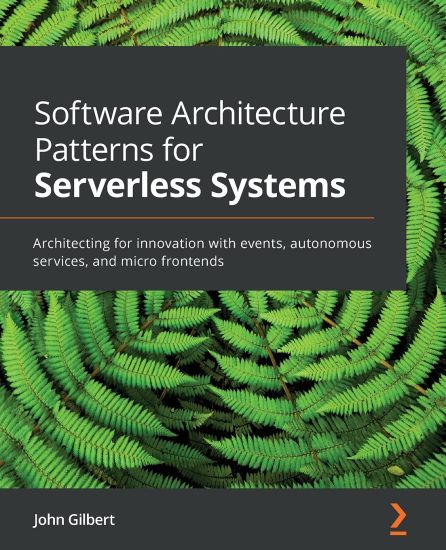
Software Architecture Patterns for Serverless Systems
John Gilbert; Ed Price
PACKT PUBLISHING LIMITED
2021
nidottu
A professional's guide to solving complex problems while designing modern softwareKey FeaturesLearn best practices for designing enterprise-grade software systems from a seasoned CTODeeper your understanding of system reliability, maintainability, and scalabilityElevate your skills to a professional level by learning the most effective software design patterns and architectural conceptsBook DescriptionAs businesses are undergoing a digital transformation to keep up with competition, it is now more important than ever for IT professionals to design systems to keep up with the rate of change while maintaining stability. This book takes you through the architectural patterns that power enterprise-grade software systems and the key architectural elements that enable change (such as events, autonomous services, and micro frontends), along with showing you how to implement and operate anti-fragile systems. First, you'll divide up a system and define boundaries so that your teams can work autonomously and accelerate innovation. You'll cover low-level event and data patterns that support the entire architecture, while getting up and running with the different autonomous service design patterns. Next, the book will focus on best practices for security, reliability, testability, observability, and performance. You'll combine all that you've learned and build upon that foundation, exploring the methodologies of continuous experimentation, deployment, and delivery before delving into some final thoughts on how to start making progress. By the end of this book, you'll be able to architect your own event-driven, serverless systems that are ready to adapt and change so that you can deliver value at the pace needed by your business.What you will learnExplore architectural patterns to create anti-fragile systems that thrive with changeFocus on DevOps practices that empower self-sufficient, full-stack teamsBuild enterprise-scale serverless systemsApply microservices principles to the frontendDiscover how SOLID principles apply to software and database architectureCreate event stream processors that power the event sourcing and CQRS patternDeploy a multi-regional system, including regional health checks, latency-based routing, and replicationExplore the Strangler pattern for migrating legacy systemsWho this book is forThis book is for software architects who want to learn more about different software design patterns and best practices. This isn't a beginner's manual – you'll need an intermediate level of programming proficiency and software design to get started. You'll get the most out of this software design book if you already know the basics of the cloud, but it isn't a prerequisite.


The Poetical Works of Henry Wadsworth Longfellow
John Gilbert; Henry Wadsworth Longfellow
Hansebooks
2021
nidottu

The Poetical Works of Alexander Pope
Alexander Pope; H. F. Cary; John Gilbert
Hansebooks
2020
nidottu

Architecting Cloud Native Applications
Kamal Arora; Erik Farr; John Gilbert; Piyum Zonooz
Packt Publishing Limited
2019
nidottu
Apply cloud native patterns and practices to deliver responsive, resilient, elastic, and message-driven systems with confidenceKey FeaturesDiscover best practices for applying cloud native patterns to your cloud applicationsExplore ways to effectively plan resources and technology stacks for high security and fault toleranceGain insight into core architectural principles using real-world examplesBook DescriptionCloud computing has proven to be the most revolutionary IT development since virtualization. Cloud native architectures give you the benefit of more flexibility over legacy systems.This Learning Path teaches you everything you need to know for designing industry-grade cloud applications and efficiently migrating your business to the cloud. It begins by exploring the basic patterns that turn your database inside out to achieve massive scalability. You’ll learn how to develop cloud native architectures using microservices and serverless computing as your design principles. Then, you’ll explore ways to continuously deliver production code by implementing continuous observability in production. In the concluding chapters, you’ll learn about various public cloud architectures ranging from AWS and Azure to the Google Cloud Platform, and understand the future trends and expectations of cloud providers.By the end of this Learning Path, you’ll have learned the techniques to adopt cloud native architectures that meet your business requirements. This Learning Path includes content from the following Packt products:Cloud Native Development Patterns and Best Practices by John GilbertCloud Native Architectures by Erik Farr et al.What you will learnUnderstand the difference between cloud native and traditional architectureAutomate security controls and configuration managementMinimize risk by evolving your monolithic systems into cloud native applicationsExplore the aspects of migration, when and why to use itApply modern delivery and testing methods to continuously deliver production codeEnable massive scaling by turning your database inside outWho this book is forThis Learning Path is designed for developers who want to progress into building cloud native systems and are keen to learn the patterns involved. Software architects, who are keen on designing scalable and highly available cloud native applications, will also find this Learning Path very useful. To easily grasp these concepts, you will need basic knowledge of programming and cloud computing.


This title was first published in 2000: Examines core issues with respect to the effect of export restrictions, the impact on processing and welfare, the consequences of foreign ownership of the resource, and the possibility of utilizing export restrictions as a retaliatory strategy against escalating tariff structures. It also examines the impact of liberalization of processed good markets. The book employs a combination of formal general equilibrium modelling and counterfactual simulation using computable general equilibrium (CGE) tecniques, with the New Zealand forestry industry used as a case study throughout. The book makes a contribution to the literature in this field by incorporating foreign ownership into an extensive formal analysis of processing incentives, develooping a new CGE model of the New Zealand economy, utilizing this model to evaluate the costs of export restrictions, and utilizing the GTAP to provide insights into the possible effect of the APEC Early Voluntary Sector Liberalization strategy.
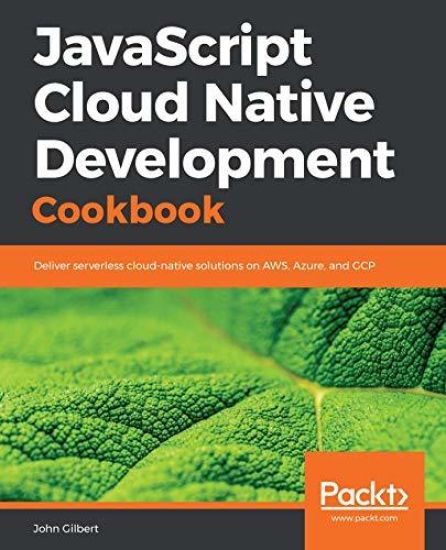
Master over 60 recipes to help you deliver completely scalable and serverless cloud-native applicationsKey FeaturesDevelop global scale and event-driven autonomous servicesContinuously deploy, test, observe, and optimize your servicesPractical Node.js recipes for serverless cloud-native developmentBook DescriptionCloud-native development is a modern approach to building and running applications that leverages the merits of the cloud computing model. With cloud-native development, teams can deliver faster and in a more lean and agile manner as compared to traditional approaches. This recipe-based guide provides quick solutions for your cloud-native applications.Beginning with a brief introduction, JavaScript Cloud-Native Development Cookbook guides you in building and deploying serverless, event-driven, cloud-native microservices on AWS with Node.js. You'll then move on to the fundamental patterns of developing autonomous cloud-native services and understand the tools and techniques involved in creating globally scalable, highly available, and resilient cloud-native applications. The book also covers multi-regional deployments and leveraging the edge of the cloud to maximize responsiveness, resilience, and elasticity.In the latter chapters you'll explore techniques for building fully automated, continuous deployment pipelines and gain insights into polyglot cloud-native development on popular cloud platforms such as Azure and Google Cloud Platform (GCP). By the end of the book, you'll be able to apply these skills to build powerful cloud-native solutions.What you will learnImplement patterns such as Event Streaming, CQRS, and Event SourcingDeploy multi-regional, multi-master solutionsSecure your cloud-native services with OAuth and OpenID ConnectCreate a robust cloud-native continuous deployment pipelineRun services on AWS, Azure, and GCPImplement autonomous services to limit the impact of failuresWho this book is forIf you want to develop powerful serverless, cloud-native solutions, this book is for you. You are expected to have basic knowledge of concepts of microservices and hands-on experience with Node.js to understand the recipes in this book.


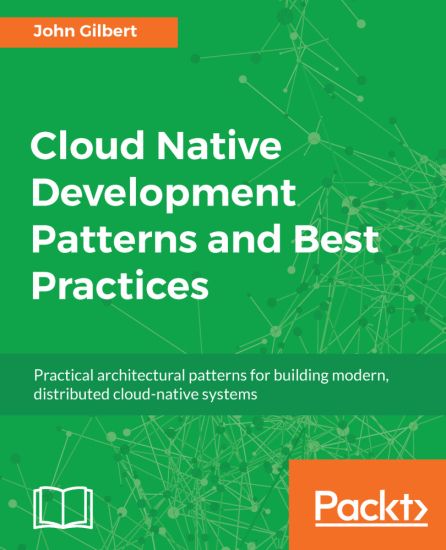
Cloud Native Development Patterns and Best Practices
John Gilbert
Packt Publishing Limited
2018
nidottu
Learn to apply cloud-native patterns and practices to deliver responsive, resilient, elastic, and message-driven systems with confidence About This Book • Understand the architectural patterns involved in cloud-native architectures • Minimize risk by evolving your monolithic applications into distributed cloud-native systems • Discover best practices for applying cloud-native patterns to your enterprise-level cloud applications Who This Book Is For This book is for developers who would like to progress into building cloud-native systems and are keen to learn the patterns involved. Basic knowledge of programming and cloud computing is required. What You Will Learn • Enable massive scaling by turning your database inside out • Unleash flexibility via event streaming • Leverage polyglot persistence and cloud-native databases • Embrace modern continuous delivery and testing techniques • Minimize risk by evolving your monoliths to cloud-native • Apply cloud-native patterns and solve major architectural problems in cloud environment In Detail Build systems that leverage the benefits of the cloud and applications faster than ever before with cloud-native development. This book focuses on architectural patterns for building highly scalable cloud-native systems. You will learn how the combination of cloud, reactive principles, devops, and automation enable teams to continuously deliver innovation with confidence. Begin by learning the core concepts that make these systems unique. You will explore foundational patterns that turn your database inside out to achieve massive scalability with cloud-native databases. You will also learn how to continuously deliver production code with confidence by shifting deployment and testing all the way to the left and implementing continuous observability in production. There's more—you will also learn how to strangle your monolith and design an evolving cloud-native system. By the end of the book, you will have the ability to create modern cloud-native systems. Style and approach This book follows a pragmatic approach to understand cloud-native design patterns and explains the functioning and design considerations to build modern cloud-native systems in depth.

This title was first published in 2000: Examines core issues with respect to the effect of export restrictions, the impact on processing and welfare, the consequences of foreign ownership of the resource, and the possibility of utilizing export restrictions as a retaliatory strategy against escalating tariff structures. It also examines the impact of liberalization of processed good markets. The book employs a combination of formal general equilibrium modelling and counterfactual simulation using computable general equilibrium (CGE) tecniques, with the New Zealand forestry industry used as a case study throughout. The book makes a contribution to the literature in this field by incorporating foreign ownership into an extensive formal analysis of processing incentives, develooping a new CGE model of the New Zealand economy, utilizing this model to evaluate the costs of export restrictions, and utilizing the GTAP to provide insights into the possible effect of the APEC Early Voluntary Sector Liberalization strategy.