Kirjojen hintavertailu. Mukana 12 595 353 kirjaa ja 12 kauppaa.
Kirjailija
John Gilbert
Kirjat ja teokset yhdessä paikassa: 90 kirjaa, julkaisuja vuosilta 1995-2025, suosituimpien joukossa Ruins and Old Trees, Associated With Memorable Events in English History. Vertaile teosten hintoja ja tarkista saatavuus suomalaisista kirjakaupoista.
Stanfield Hall - Vol. 1 is an unchanged, high-quality reprint of the original edition of 1888. Hansebooks is editor of the literature on different topic areas such as research and science, travel and expeditions, cooking and nutrition, medicine, and other genres. As a publisher we focus on the preservation of historical literature. Many works of historical writers and scientists are available today as antiques only. Hansebooks newly publishes these books and contributes to the preservation of literature which has become rare and historical knowledge for the future.
Stanfield Hall - Vol. 2 is an unchanged, high-quality reprint of the original edition of 1888. Hansebooks is editor of the literature on different topic areas such as research and science, travel and expeditions, cooking and nutrition, medicine, and other genres. As a publisher we focus on the preservation of historical literature. Many works of historical writers and scientists are available today as antiques only. Hansebooks newly publishes these books and contributes to the preservation of literature which has become rare and historical knowledge for the future.
Documents Relating to Ireland, 1795-1804 is an unchanged, high-quality reprint of the original edition of 1893. Hansebooks is editor of the literature on different topic areas such as research and science, travel and expeditions, cooking and nutrition, medicine, and other genres. As a publisher we focus on the preservation of historical literature. Many works of historical writers and scientists are available today as antiques only. Hansebooks newly publishes these books and contributes to the preservation of literature which has become rare and historical knowledge for the future.
History of the Viceroys of Ireland - With notices of the castle of Dublin and its chief occupants in former times is an unchanged, high-quality reprint of the original edition of 1865. Hansebooks is editor of the literature on different topic areas such as research and science, travel and expeditions, cooking and nutrition, medicine, and other genres. As a publisher we focus on the preservation of historical literature. Many works of historical writers and scientists are available today as antiques only. Hansebooks newly publishes these books and contributes to the preservation of literature which has become rare and historical knowledge for the future.
Mother Goose's nursery Rhymes: - a collection of Alphabets, rhymes, Tales, and jingles is an unchanged, high-quality reprint of the original edition of 1877. Hansebooks is editor of the literature on different topic areas such as research and science, travel and expeditions, cooking and nutrition, medicine, and other genres. As a publisher we focus on the preservation of historical literature. Many works of historical writers and scientists are available today as antiques only. Hansebooks newly publishes these books and contributes to the preservation of literature which has become rare and historical knowledge for the future.
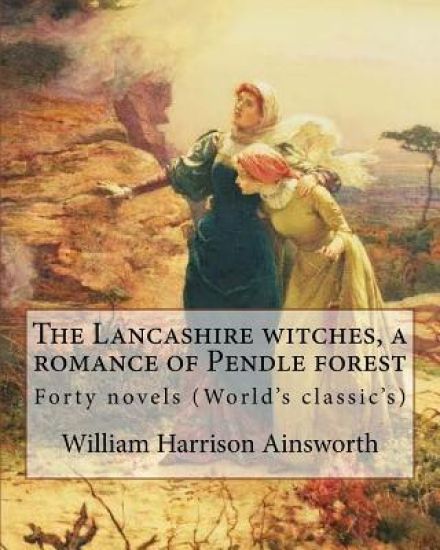
The Lancashire Witches is the only one of William Harrison Ainsworth's forty novels that has remained continuously in print since its first publication.It was serialised in the Sunday Times newspaper in 1848; a book edition appeared the following year, published by Henry Colburn. The novel is based on the true story of the Pendle witches, who were executed in 1612 for causing harm by witchcraft. Modern critics such as David Punter consider the book to be Ainsworth's best work.E. F. Bleiler rated the novel "one of the major English novels about witchcraft". Biographical background and publication: The subject of the Pendle witches was suggested to Ainsworth by antiquarian and long-time friend James Crossley, President of the Chetham Society. During 1846 and 1847 Ainsworth visited all of the major sites involved in the story, such as Pendle Hill and Malkin Tower, home of the Demdikes, one of the two families accused of witchcraft. He wrote the story in 1848, when it was serialised in the Sunday Times newspaper. On completion of the work, Ainsworth was paid 1,000 (equivalent to about 78,600 as of 2008), and the copyright reverted to him. As was common practice at the time, the novel was published in a three-volume set, known as a "triple decker". The first edition was produced by Henry Colburn in 1849, with the subtitle "A Romance of Pendle Forest". At 1 11s 6d, about the amount that a skilled worker could earn in a week, it was expensive. Routledge published an illustrated edition in 1854, reissued in 1878. The twelve full-page illustrations were by John Gilbert. Plot: Ainsworth based his story largely on the official account of the Lancashire witch trials written by the clerk to the court, Thomas Potts, first published in 1613 under the title The Wonderfull Discoverie of Witches in the Countie of Lancaster. Potts himself makes an appearance in the novel, as a "scheming and self-serving lawyer". Book one is set against the backdrop of the 1536 Pilgrimage of Grace, an uprising by northern Catholics against the English Reformation instituted by King Henry VIII... William Harrison Ainsworth (4 February 1805 - 3 January 1882) was an English historical novelist born at King Street in Manchester. He trained as a lawyer, but the legal profession held no attraction for him. While completing his legal studies in London he met the publisher John Ebers, at that time manager of the King's Theatre, Haymarket. Ebers introduced Ainsworth to literary and dramatic circles, and to his daughter, who became Ainsworth's wife. Ainsworth briefly tried the publishing business, but soon gave it up and devoted himself to journalism and literature. His first success as a writer came with Rookwood in 1834, which features Dick Turpin as its leading character. A stream of 39 novels followed, the last of which appeared in 1881. Ainsworth died in Reigate on 3 January 1882.... Sir John Gilbert RA (21 July 1817 - 5 October 1897) was an English artist, illustrator and engraver.Gilbert was born in Blackheath, Surrey, and taught himself to paint. His only formal instruction was from George Lance. Skilled in several media, Gilbert gained the nickname, "the Scott of painting". He was best known for the illustrations and woodcuts he produced for the Illustrated London News....
William Harrison Ainsworth (4 February 1805 - 3 January 1882) was an English historical novelist born at King Street in Manchester. He trained as a lawyer, but the legal profession held no attraction for him. While completing his legal studies in London he met the publisher John Ebers, at that time manager of the King's Theatre, Haymarket. Ebers introduced Ainsworth to literary and dramatic circles, and to his daughter, who became Ainsworth's wife. Ainsworth briefly tried the publishing business, but soon gave it up and devoted himself to journalism and literature. His first success as a writer came with Rookwood in 1834, which features Dick Turpin as its leading character. A stream of 39 novels followed, the last of which appeared in 1881. Ainsworth died in Reigate on 3 January 1882. EARLY LIFE: Ainsworth was born on 4 February 1805 in the family house at 21 King Street, Manchester, to Thomas Ainsworth, a prominent Manchester lawyer, and Ann (Harrison) Ainsworth, the daughter of the Rev. Ralph Harrison, the Unitarian minister at Manchester Cross Street Chapel. On 4 October 1806, Ainsworth's brother, Thomas Gilbert Ainsworth, was born. Although the family home was eventually destroyed, it was a three-storey Georgian home in a well-to-do community. The area influenced Ainsworth with its historical and romantic atmosphere, which existed until the community was later replaced by commercial buildings. Besides the community, Ainsworth read romantic works as a child and enjoyed stories dealing with either adventure or supernatural themes. Of these, Dick Turpin was a favourite of Ainsworth. During his childhood, he adopted Jacobean ideas and held Tory ideas in addition to his Jacobite sympathies, even though his community was strict Whig and Nonconformist. During this time, Ainsworth began to write prolifically. The Ainsworth family moved to Smedly Lane, north of Manchester in Cheetham Hill, during 1811. They kept the old residence in addition to the new, but resided in the new home most of the time. The surrounding hilly country was covered in woods, which allowed Ainsworth and his brother to act out various stories. When not playing, Ainsworth was tutored by his uncle, William Harrison. In March 1817, he was enrolled at Manchester Grammar School, which was described in his novel Mervyn Clitheroe. The work emphasised that his classical education was of good quality but was reinforced with strict discipline and corporal punishment. Ainsworth was a strong student and was popular among his fellow students. His school days were mixed; his time within the school and with his family was calm even though there were struggles within the Manchester community, the Peterloo Massacre taking place in 1819. Ainsworth was connected to the event because his uncles joined in protest at the incident, but Ainsworth was able to avoid most of the political after-effects. During the time, he was able to pursue his own literary interests and even created his own little theatre within the family home at King Street. Along with his friends and brother, he created and acted in many plays throughout 1820. During 1820, Ainsworth began to publish many of his works under the name "Thomas Hall".... Sir John Gilbert RA (21 July 1817 - 5 October 1897) was an English artist, illustrator and engraver.
Documents Relating to Ireland, 1795-1804 is an unchanged, high-quality reprint of the original edition of 1893. Hansebooks is editor of the literature on different topic areas such as research and science, travel and expeditions, cooking and nutrition, medicine, and other genres. As a publisher we focus on the preservation of historical literature. Many works of historical writers and scientists are available today as antiques only. Hansebooks newly publishes these books and contributes to the preservation of literature which has become rare and historical knowledge for the future.
Perform chemistry experiments with skill and confidence in your organic chemistry lab course with this easy-to-understand lab manual. EXPERIMENTAL ORGANIC CHEMISTRY: A MINISCALE AND MICROSCALE APPROACH, Sixth Edition first covers equipment, record keeping, and safety in the laboratory, then walks you step by step through the laboratory techniques you'll need to perform all experiments. Individual chapters show you how to use the techniques to synthesize compounds and analyze their properties, complete multi-step syntheses of organic compounds, and solve structures of unknown compounds. New experiments in Chapter 17 and 18 demonstrate the potential of chiral agents in fostering enantioselectivity and of performing solvent-free reactions. A bioorganic experiment in Chapter 24 gives you an opportunity to accomplish a mechanistically interesting and synthetically important coupling of two a-amino acids to produce a dipeptide.