Kirjojen hintavertailu. Mukana 12 595 353 kirjaa ja 12 kauppaa.
Kirjailija
John Stuart Mill
Kirjat ja teokset yhdessä paikassa: 869 kirjaa, julkaisuja vuosilta 1850-2026, suosituimpien joukossa Sosialismin hyödyt ja haitat. Vertaile teosten hintoja ja tarkista saatavuus suomalaisista kirjakaupoista.
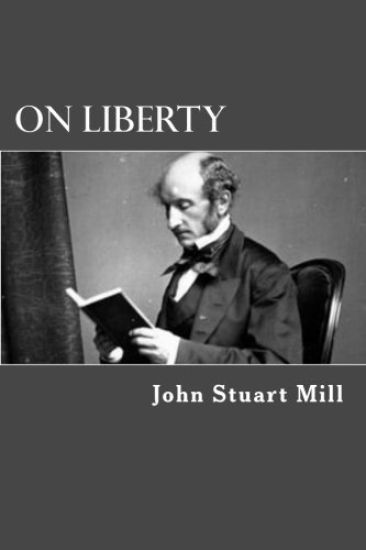
Published in 1859, John Stuart Mill's On Liberty presented one of the most eloquent defenses of individual freedom in nineteenth-century social and political philosophy and is today perhaps the most widely-read liberal argument in support of the value of liberty. Mill's passionate advocacy of spontaneity, individuality, and diversity, along with his contempt for compulsory uniformity and the despotism of popular opinion, has attracted both admiration and condemnation.
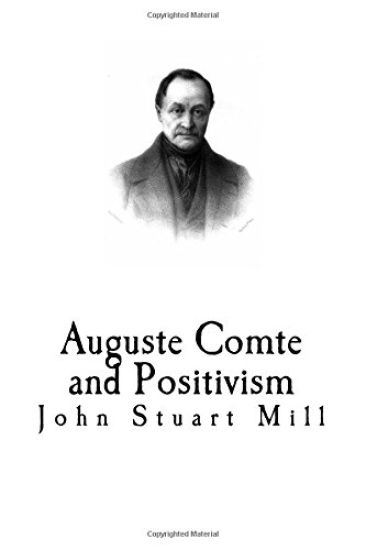
Auguste Comte and PositivismBy John Stuart MillIsidore Marie Auguste Fran ois Xavier Comte was a French philosopher who founded the discipline of praxeology and the doctrine of positivism. He is sometimes regarded as the first philosopher of science in the modern sense of the term.Influenced by the utopian socialist Henri Saint-Simon, Comte developed the positive philosophy in an attempt to remedy the social malaise of the French Revolution, calling for a new social doctrine based on the sciences. Comte was a major influence on 19th-century thought, influencing the work of social thinkers such as Karl Marx, John Stuart Mill, and George Eliot. His concept of sociologie and social evolutionism set the tone for early social theorists and anthropologists such as Harriet Martineau and Herbert Spencer, evolving into modern academic sociology presented by Emile Durkheim as practical and objective social research.
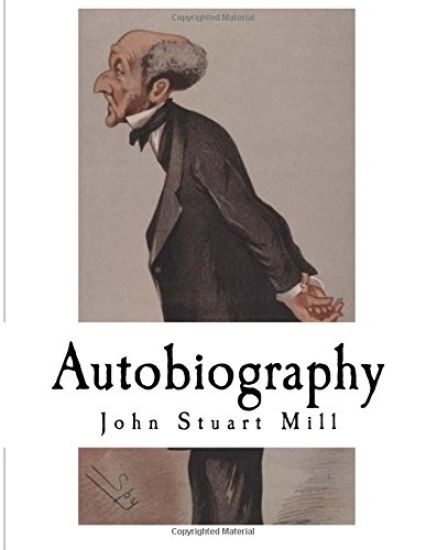
Autobiographyby John Stuart MillJohn Stuart Mill (20 May 1806 - 8 May 1873) was an English philosopher, political economist and civil servant. One of the most influential thinkers in the history of liberalism, he contributed widely to social theory, political theory and political economy. Dubbed "the most influential English-speaking philosopher of the nineteenth century," Mill's conception of liberty justified the freedom of the individual in opposition to unlimited state and social control.It seems proper that I should prefix to the following biographical sketch some mention of the reasons which have made me think it desirable that I should leave behind me such a memorial of so uneventful a life as mine. I do not for a moment imagine that any part of what I have to relate can be interesting to the public as a narrative or as being connected with myself. But I have thought that in an age in which education and its improvement are the subject of more, if not of profounder, study than at any former period of English history, it may be useful that there should be some record of an education which was unusual and remarkable, and which, whatever else it may have done, has proved how much more than is commonly supposed may be taught, and well taught, in those early years which, in the common modes of what is called instruction, are little better than wasted.
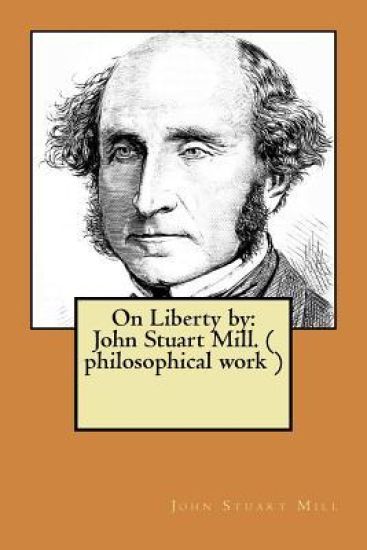
On Liberty is a philosophical work of the English philosopher John Stuart Mill, conceived as a short essay. The work, published in 1859, applies the ethical system of utilitarianism of Mile society and the state. Mill tries to establish standards for the relationship between authority and freedom. He emphasizes the importance of individuality, which he conceived as a prerequisite for the highest places: the summum bonum of utilitarianism. In addition, Mill criticizes the errors of the defenders of individuality where, for example, democratic ideals resulted in the "tyranny of the majority". The groups established in this paper are in the three basic freedoms of Mill for individuals, their three legitimate objections to government intervention and their two maxims regarding the individual's relationship with society.
John Stuart Mill (1806 - 1873) was an English philosopher, political economist and civil servant. One of the most influential thinkers in the history of liberalism, he contributed widely to social theory, political theory and political economy. Dubbed "the most influential English-speaking philosopher of the nineteenth century", Mill's conception of liberty justified the freedom of the individual in opposition to unlimited state and social control. Mill was a proponent of utilitarianism, an ethical theory developed by his predecessor Jeremy Bentham. He contributed to the investigation of scientific methodology, though his knowledge of the topic was based on the writings of others, notably William Whewell, John Herschel and Auguste Comte, and research carried out for Mill by Alexander Bain. Mill engaged in written debate with Whewell. A member of the Liberal Party, he was also the first Member of Parliament to call for women's suffrage. In this book: On Liberty Utilitarianism The Subjection of Women
Analysis of the Phenomena of the Human Mind - Volume 2 is an unchanged, high-quality reprint of the original edition of 1869. Hansebooks is editor of the literature on different topic areas such as research and science, travel and expeditions, cooking and nutrition, medicine, and other genres. As a publisher we focus on the preservation of historical literature. Many works of historical writers and scientists are available today as antiques only. Hansebooks newly publishes these books and contributes to the preservation of literature which has become rare and historical knowledge for the future.
On Liberty is a philosophical work by the English philosopher John Stuart Mill, originally intended as a short essay. The work, published in 1859, applies Mill's ethical system of utilitarianism to society and the state. Mill attempts to establish standards for the relationship between authority and liberty. He emphasizes the importance of individuality, which he conceived as a prerequisite to the higher pleasures-the summum bonum of Utilitarianism. Furthermore, Mill criticizes the errors of past attempts to defend individuality where, for example, democratic ideals resulted in the "tyranny of the majority". Among the standards established in this work are Mill's three basic liberties of individuals, his three legitimate objections to government intervention, and his two maxims regarding the relationship of the individual to society. On Liberty was a greatly influential and well received work, although it did not go without criticism. Some attacked it for its apparent discontinuity with Utilitarianism, while others criticized its vagueness. The ideas presented in On Liberty have remained the basis of much liberal political thought. It has remained in print continuously since its initial publication. To this day, a copy of On Liberty is passed to the president of the British Liberal Democrats as a symbol of office. A copy of the same book is also presented to and then held by the president of the Liberal Party as a symbol of office. Mill's marriage to his wife Harriet Taylor Mill greatly influenced the concepts in On Liberty, which was largely finished prior to her death, and published shortly after she died.
On Liberty is a philosophical work by 19th century English philosopher John Stuart Mill, first published in 1859. To the Victorian readers of the time it was a radical work, advocating moral and economic freedom of individuals from the state.
Full text.Clear, eloquent and profound, Mill's Utilitarianism has had an enormous influence on moral philosophy and is the idea introduction to ethics.Mill balanced the claims of reason and the imagination, justice and expediency, individuality and social well-being in a system of ethics that is as relevant to today's intellectua and moral dilemmas it was to the nineteenth century's.
Full text.John Stuart Mill, one of the most influential thinkers in the history, was convinced that the moral and intellectual advancement of humankind would result in greater happiness for everybody. He asserted that the higher pleasures of the intellect yielded far greater happiness than the lower pleasure of the senses. He conceived of human beings as morally and intellectually capable of being educated and civilised. Mill believed everyone should have the right to vote, with the only exceptions being barbarians and uneducated people.Mill argues that people should be able to vote to defend their own rights and to learn to stand on their two feet, morally and intellectually. This argument is applied to both men and women. Mill often used his position as a member of Parliament to demand the vote for women, a controversial position for the time.In Mill's time a woman was generally subject to the whims of her husband and/or father due to social norms which said women were both physically and mentally less able than men and therefore needed to be "taken care of." Contributing to this view were both hierarchical religious views of men and women within the family and social theories based on biological determinism. The archetype of the ideal woman as mother, wife and homemaker was a powerful idea in 19th century society.
John Stuart Mill's book Utilitarianism is a philosophical defense of utilitarianism in ethics. The essay first appeared as a series of three articles published in Fraser's Magazine in 1861; the articles were collected and reprinted as a single book in 1863. It went through four editions during Mill's lifetime with minor additions and revisions. Although Mill includes discussions of utilitarian ethical principles in other works such as On Liberty and The Subjection of Women, Utilitarianism contains Mill's only major discussion of the fundamental grounds for utilitarian ethical theory.
John Stuart Mill es que las acciones que son correctas son las que se extienden y que tienden a promover la felicidad, y las malas para extender entonces que a su vez producen infelicidad, en donde la felicidad significa placer y la infelicidad significa dolor. Un punto clave aqu es que Mill est hablando de la felicidad total o la mayor felicidad para un mayor n mero de personas. Sin embargo, Mill no estaba completamente feliz de dejar esta formulaci n (expresi n de algo de forma clara y precisa) en su forma actual, ya que permit a la posibilidad de que tal vez ser a mejor pasar la vida ocupados en asuntos hedonistas, en lugar de participar de los frutos de la civilizaci n humana. En consecuencia, se introduce la idea de que ciertos tipos de placer son mejores que otros.
Sobre la libertad es quiz s una de las obras m s importantes que escribi John Stuart Mill. En este libro el autor expone sus ideas fundamentales sobre los l mites de la libertad del individuo y la sociedad. Desde el primer cap tulo Mill establece la separaci n entre lo que es responsabilidad del propio individuo y lo que le corresponde a la sociedad en conjunto. Aun as , el tema sobre el cual escribe el autor es muy pol mico, ya que c mo saber hasta qu punto uno es libre de hacer lo que crea? Aunque Mill no puede responder exactamente a esta cuesti n, plantea que al menos en parte es v lido el articulo 4 de la Declaraci n de los Derechos del Hombre y del Ciudadano IV. La libertad consiste en poder hacer todo aquello que no cause perjuicio a los dem s. El ejercicio de los derechos naturales de cada hombre, no tiene otros l mites que los que garantizan a los dem s miembros de la sociedad el disfrute de los mismos derechos. Estos l mites s lo pueden ser determinados por la ley.Sin embargo, no se puede decir que es determinante en la definici n de los l mites entre unos y otros, ya que la l nea de separaci n entre ambas libertades es muy estrecha, lo cual dificulta poder entender qu tipo de acciones est n a uno u otro lado de ella. Por ello, Mill explica detalladamente a lo largo del libro, y con la ayuda de diversos ejemplos clarificadores, aquello que, en su opini n, corresponde al propio individuo y lo que corresponde a la sociedad.