Kirjojen hintavertailu. Mukana 12 595 353 kirjaa ja 12 kauppaa.
Kirjailija
John Stuart Mill
Kirjat ja teokset yhdessä paikassa: 869 kirjaa, julkaisuja vuosilta 1850-2026, suosituimpien joukossa Sosialismin hyödyt ja haitat. Vertaile teosten hintoja ja tarkista saatavuus suomalaisista kirjakaupoista.
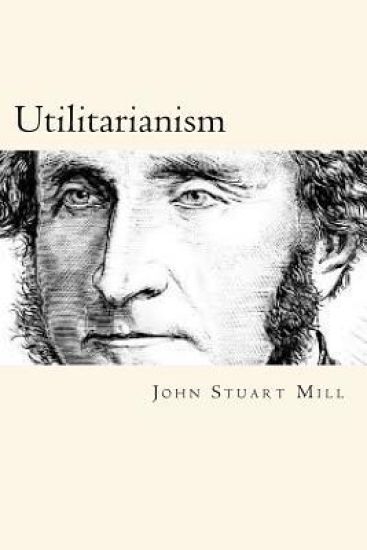
This expanded edition of John Stuart Mill's Utilitarianism includes the text of his 1868 speech to the British House of Commons defending the use of capital punishment in cases of aggravated murder. The speech is significant both because its topic remains timely and because its arguments illustrate the applicability of the principle of utility to questions of large-scale social policy.
The subject of this Essay is not the so-called Liberty of the Will, so unfortunately opposed to the misnamed doctrine of Philosophical Necessity; but Civil, or Social Liberty: the nature and limits of the power which can be legitimately exercised by society over the individual. A question seldom stated, and hardly ever discussed, in general terms, but which profoundly influences the practical controversies of the age by its latent presence, and is likely soon to make itself recognised as the vital question of the future. It is so far from being new, that in a certain sense, it has divided mankind, almost from the remotest ages; but in the stage of progress into which the more civilised portions of the species have now entered, it presents itself under new conditions, and requires a different and more fundamental treatment. The struggle between Liberty and Authority is the most conspicuous feature in the portions of history with which we are earliest familiar, particularly in that of Greece, Rome, and England. But in old times this contest was between subjects, or some classes of subjects, and the government. By liberty, was meant protection against the tyranny of the political rulers. The rulers were conceived (except in some of the popular governments of Greece) as in a necessarily antagonistic position to the people whom they ruled. They consisted of a governing One, or a governing tribe or caste, who derived their authority from inheritance or conquest, who, at all events, did not hold it at the pleasure of the governed, and whose supremacy men did not venture, perhaps did not desire, to contest, whatever precautions might be taken against its oppressive exercise. Their power was regarded as necessary, but also as highly dangerous; as a weapon which they would attempt to use against their subjects, no less than against external enemies.
The work applies Mill's ethical system of utilitarianism to society and the state. Mill attempts to establish standards for the relationship between authority and liberty. He emphasizes the importance of individuality which he conceived as a prerequisite to the higher pleasures-the summum bonum of Utilitarianism. Furthermore, Mill criticized the errors of past attempts to defend individuality where, for example, democratic ideals resulted in the "tyranny of the majority". Among the standards established in this work are Mill's three basic liberties of individuals, his three legitimate objections to government intervention, and his two maxims regarding the relationship of the individual to society "which together form the entire doctrine of Mill's] Essay." On Liberty was a greatly influential and well received work, although it did not go without criticism.
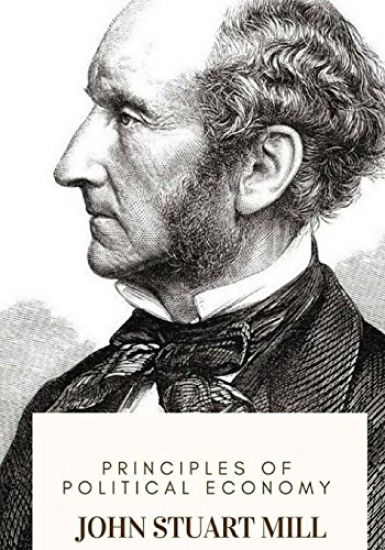
An experience of five years with Mr. Mill's treatise in the class-room not only convinced me of the great usefulness of what still remains one of the most lucid and systematic books yet published which cover the whole range of the study, but I have also been convinced of the need of such additions as should give the results of later thinking, without militating against the general tenor of Mr. Mill's system; of such illustrations as should fit it better for American students, by turning their attention to the application of principles in the facts around us; of a bibliography which should make it easier to get at the writers of other schools who offer opposing views on controverted questions; and of some attempts to lighten those parts of his work in which Mr. Mill frightened away the reader by an appearance of too great abstractness, and to render them, if possible, more easy of comprehension to the student who first approaches Political Economy through this author.
This book makes no pretense of giving to the world a new theory of the intellectual operations. Its claim to attention, if it possess any, is grounded on the fact that it is an attempt, not to supersede, but to embody and systematize, the best ideas which have been either promulgated on its subject by speculative writers, or conformed to by accurate thinkers in their scientific inquiries.
Utilitarianism is philosopher John Stuart Mill's defense and advocacy of utilitarian ethics. First appearing in three magazine articles, this essay was first gathered into a single book in 1863. While Mill discusses utilitarian ethical principles in some of his other writings such as On Liberty and The Subjection of Women, Utilitarianism is Mill's only major discussion of the theory's fundamental grounds.
The Subjection of Women is an essay published in 1869 by English philosopher, political economist, and civil servant John Stuart Mill, with ideas he developed jointly with his wife Harriet Taylor Mill. At the time of its publication, the essay's argument for equality between the sexes was an affront to European conventional norms regarding the status of men and women........................... John Stuart Mill (20 May 1806 - 8 May 1873) was a British philosopher, political economist and civil servant. One of the most influential thinkers in the history of liberalism, he contributed widely to social theory, political theory and political economy. Dubbed "the most influential English-speaking philosopher of the nineteenth century", Mill's conception of liberty justified the freedom of the individual in opposition to unlimited state and social control. Mill was a proponent of utilitarianism, an ethical theory developed by his predecessor Jeremy Bentham. He contributed to the investigation of scientific methodology, though his knowledge of the topic was based on the writings of others, notably William Whewell, John Herschel and Auguste Comte, and research carried out for Mill by Alexander Bain. Mill engaged in written debate with Whewell. A member of the Liberal Party, he was also the first Member of Parliament to call for women's suffrage. Biography: John Stuart Mill was born at 13 Rodney Street in Pentonville, Middlesex, the eldest son of the Scottish philosopher, historian and economist James Mill, and Harriet Burrow. John Stuart was educated by his father, with the advice and assistance of Jeremy Bentham and Francis Place. He was given an extremely rigorous upbringing, and was deliberately shielded from association with children his own age other than his siblings. His father, a follower of Bentham and an adherent of associationism, had as his explicit aim to create a genius intellect that would carry on the cause of utilitarianism and its implementation after he and Bentham had died. Mill was a notably precocious child. He describes his education in his autobiography. At the age of three he was taught Greek. By the age of eight, he had read Aesop's Fables, Xenophon's Anabasis, and the whole of Herodotus, and was acquainted with Lucian, Diogenes La rtius, Isocrates and six dialogues of Plato. He had also read a great deal of history in English and had been taught arithmetic, physics and astronomy. At the age of eight, Mill began studying Latin, the works of Euclid, and algebra, and was appointed schoolmaster to the younger children of the family. His main reading was still history, but he went through all the commonly taught Latin and Greek authors and by the age of ten could read Plato and Demosthenes with ease. His father also thought that it was important for Mill to study and compose poetry. One of Mill's earliest poetic compositions was a continuation of the Iliad. In his spare time he also enjoyed reading about natural sciences and popular novels, such as Don Quixote and Robinson Crusoe. His father's work, The History of British India was published in 1818; immediately thereafter, at about the age of twelve, Mill began a thorough study of the scholastic logic, at the same time reading Aristotle's logical treatises in the original language. In the following year he was introduced to political economy and studied Adam Smith and David Ricardo with his father, ultimately completing their classical economic view of factors of production. Mill's comptes rendus of his daily economy lessons helped his father in writing Elements of Political Economy in 1821, a textbook to promote the ideas of Ricardian economics; however, the book lacked popular support. Ricardo, who was a close friend of his father, used to invite the young Mill to his house for a walk in order to talk about political economy. At the age of fourteen, Mill stayed a year in France with the family of Sir Samuel Bentham, brother of Jeremy Bentham. ....
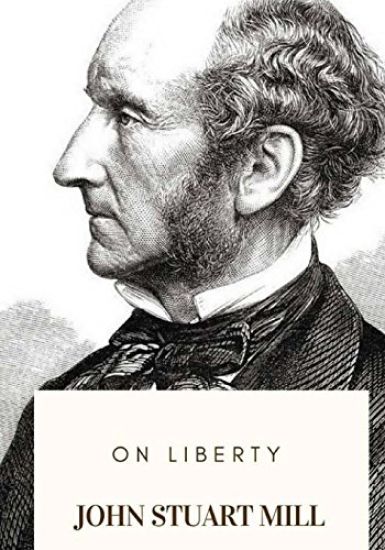
On Liberty is a philosophical work by the English philosopher John Stuart Mill, originally intended as a short essay. The work, published in 1859, applies Mill's ethical system of utilitarianism to society and the state.Mill attempts to establish standards for the relationship between authority and liberty. He emphasizes the importance of individuality, which he conceived as a prerequisite to the higher pleasures-the summum bonum of utilitarianism. Furthermore, Mill criticizes the errors of past attempts to defend individuality where, for example, democratic ideals resulted in the "tyranny of the majority." Among the standards established in this work are Mill's three basic liberties of individuals, his three legitimate objections to government intervention, and his two maxims regarding the relationship of the individual to society. On Liberty was a greatly influential and well received work, although it did not go without criticism. Some attacked it for its apparent discontinuity with Utilitarianism, while others criticized its vagueness. The ideas presented in On Liberty have remained the basis of much liberal political thought. It has remained in print continuously since its initial publication. To this day, a copy of On Liberty is passed to the president of the British Liberal Democrats as a symbol of office. A copy of the same book is also presented to and then held by the president of the Liberal Party as a symbol of office. Mill's marriage to his wife Harriet Taylor Mill greatly influenced the concepts in On Liberty, which was largely finished prior to her death, and published shortly after she died.............. John Stuart Mill (20 May 1806 - 8 May 1873) was a British philosopher, political economist and civil servant. One of the most influential thinkers in the history of liberalism, he contributed widely to social theory, political theory and political economy. Dubbed "the most influential English-speaking philosopher of the nineteenth century," Mill's conception of liberty justified the freedom of the individual in opposition to unlimited state and social control. Mill was a proponent of utilitarianism, an ethical theory developed by his predecessor Jeremy Bentham. He contributed to the investigation of scientific methodology, though his knowledge of the topic was based on the writings of others, notably William Whewell, John Herschel and Auguste Comte, and research carried out for Mill by Alexander Bain. Mill engaged in written debate with Whewell. 8] A member of the Liberal Party, he was also the first Member of Parliament to call for women's suffrage. Works: A System of Logic Main article: A System of Logic Mill joined the debate over scientific method which followed on from John Herschel's 1830 publication of A Preliminary Discourse on the study of Natural Philosophy, which incorporated inductive reasoning from the known to the unknown, discovering general laws in specific facts and verifying these laws empirically. William Whewell expanded on this in his 1837 History of the Inductive Sciences, from the Earliest to the Present Time followed in 1840 by The Philosophy of the Inductive Sciences, Founded Upon their History, presenting induction as the mind superimposing concepts on facts. Laws were self-evident truths, which could be known without need for empirical verification.....
In John Stuart Mill's classic restatement of the utilitarianism of Jeremy Bentham, he continued a philosophical perspective that continues to be appolied to this day. The 'principle of utility', otherwise known as 'the greatest happiness principle' has surfaced over and over again throughout history since then, and has often been the basis for important public policy discussions. As an ethical system that tends to view suffering as the highest, and perhaps the only, evil, it is no surprise that proponents of this perspective include philosophers such as Peter Singer, who has applied it to animals rights, euthanasia, infanticide, and other controversial issues. This edition is based on the first edition which was originally released in installments in "Fraser's Magazine" in 1861 and then by the same publishers, "Parker, Son, and Bourn, West Strand," in 1863.
The work applies Mill's ethical system of utilitarianism to society and the state. Mill attempts to establish standards for the relationship between authority and liberty. He emphasizes the importance of individuality which he conceived as a prerequisite to the higher pleasures-the summum bonum of Utilitarianism. Furthermore, Mill criticized the errors of past attempts to defend individuality where, for example, democratic ideals resulted in the "tyranny of the majority." Among the standards established in this work are Mill's three basic liberties of individuals, his three legitimate objections to government intervention, and his two maxims regarding the relationship of the individual to society "which together form the entire doctrine of Mill's] Essay." On Liberty was a greatly influential and well received work, although it did not go without criticism.
In John Stuart Mill's classic restatement of the utilitarianism of Jeremy Bentham, he continued a philosophical perspective that continues to be appolied to this day. The 'principle of utility', otherwise known as 'the greatest happiness principle' has surfaced over and over again throughout history since then, and has often been the basis for important public policy discussions. As an ethical system that tends to view suffering as the highest, and perhaps the only, evil, it is no surprise that proponents of this perspective include philosophers such as Peter Singer, who has applied it to animals rights, euthanasia, infanticide, and other controversial issues. This edition is based on the first edition which was originally released in installments in "Fraser's Magazine" in 1861 and then by the same publishers, "Parker, Son, and Bourn, West Strand," in 1863.
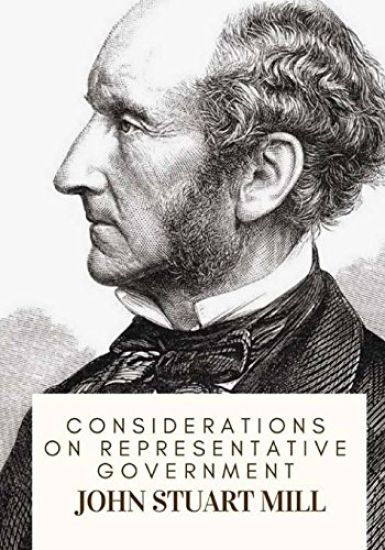
The book presents the concept of representative government, the ideal form of government. Mill suggests that representative bodies such as parliaments and senates are best suited to be places of public debate on the various opinions held by the population and to act as watchdogs of the professionals who create and administer laws and policy.
This book makes no pretense of giving to the world a new theory of the intellectual operations. Its claim to attention, if it possess any, is grounded on the fact that it is an attempt, not to supersede, but to embody and systematize, the best ideas which have been either promulgated on its subject by speculative writers, or conformed to by accurate thinkers in their scientific inquiries.