

Kirjailija
John Stuart Mill
Kirjat ja teokset yhdessä paikassa: 869 kirjaa, julkaisuja vuosilta 1850-2026, suosituimpien joukossa Sosialismin hyödyt ja haitat. Vertaile teosten hintoja ja tarkista saatavuus suomalaisista kirjakaupoista.
869 kirjaa
Kirjojen julkaisuhaarukka 1850-2026.


This book has been considered by academicians and scholars of great significance and value to literature. This forms a part of the knowledge base for future generations. So that the book is never forgotten we have represented this book in a print format as the same form as it was originally first published. Hence any marks or annotations seen are left intentionally to preserve its true nature.
On Liberty (1859) is a philosophical work by British philosopher John Stuart Mill. It was a radical work to the Victorian readers of the time because it supported individuals' moral and economic freedom from the state.Perhaps the most memorable point made by Mill in this work, and his basis for liberty, is that "over himself, over his own body and mind, the individual is sovereign". Mill is compelled to make this assertion in opposition to what he calls the "tyranny of the majority", wherein through control of etiquette and morality, society is an unelected power that can do horrific things. Mill's work could be considered a reaction to this social control by the majority and his advocacy of individual decision-making over the self. The famous Harm Principle, or the principle of liberty, is also articulated in this work: people can do anything they like as long as it does not harm others. All branches of liberalism--as well as other political ideologies--consider this to be one of their core principles. However, they often disagree on what exactly constitutes harm. (wikipedia.org)
On Liberty (1859) is a philosophical work by British philosopher John Stuart Mill. It was a radical work to the Victorian readers of the time because it supported individuals' moral and economic freedom from the state.Perhaps the most memorable point made by Mill in this work, and his basis for liberty, is that "over himself, over his own body and mind, the individual is sovereign". Mill is compelled to make this assertion in opposition to what he calls the "tyranny of the majority", wherein through control of etiquette and morality, society is an unelected power that can do horrific things. Mill's work could be considered a reaction to this social control by the majority and his advocacy of individual decision-making over the self. The famous Harm Principle, or the principle of liberty, is also articulated in this work: people can do anything they like as long as it does not harm others. All branches of liberalism--as well as other political ideologies--consider this to be one of their core principles. However, they often disagree on what exactly constitutes harm. (wikipedia.org)



Axplock ur idéhistorien 2, Kant till Loytard
Frantz Fanon; Fredrika Bremer; Charles Darwin; John Stuart Mill; Immanuel Kant
Vertigo förlag
2019
nidottu
Kant, Svaret på frågan: Vad är upplysningen? Hegel, Förnuftet i historien Feuerbach, Kristendomens väsen Kierkegaard, Begreppet ångest Marx & Engels, Kommunistiska manifestet Gobineau, Människorasernas ojämlikhet Bremer, Hertha Darwin, Om arternas uppkomst Mill, Förtrycket av kvinnorna Spencer, Individen mot staten Nietzsche, Moralens härstamning Freud, Orientering i psykoanalys Nationalsocialistiska tyska arbetarpartiets program Mussolini, Fascismens fundamentala idéer Beauvoir, Det andra könet Fanon, Jordens fördömda Lyotard, Det postmoderna tillståndet

ON LIBERTY - The Philosophy of Individual Freedom
John Stuart Mill; W. Courtney
Madison Adams Press
2019
nidottu
On Liberty, a philosophical work by John Stuart Mill, published in 1859 discuses ethical system of utilitarianism of the society and the state. In it, Mill advocates the rights of the individual against Society, with special emphasis to the importance of individuality. The main focus of this book is on nature and the limits of power which can be legitimately exercised by society over the individual. Among others, Mill examines the questions of whether one or more persons should be able to curtail another person's freedom, to express a divergent point of view and whether there are instances when society can legitimately limit individual liberty. On Liberty remained one of the most read works of the political philosophy to this day. Contents: Of the Liberty of Thought and Discussion Of Individuality, as One of the Elements of Well-being Of the Limits to the Authority of Society Over the Individual Applications

The Subjection of Women (Classic of the Feminist Philosophy)
John Stuart Mill
Madison Adams Press
2019
nidottu
The Subjection of Women offers both detailed argumentation and passionate eloquence in opposition to the social and legal inequalities commonly imposed upon women by a patriarchal culture. Just as in On Liberty, Mill defends the emancipation of women on utilitarian grounds. John Stuart Mill (1806-1873) was an English philosopher, political economist and civil servant. He was an influential contributor to social theory, political theory and political economy. He has been called "the most influential English-speaking philosopher of the nineteenth century".

The Political Theory of John Stuart Mill: 7 Book Collection
John Stuart Mill
Madison Adams Press
2019
nidottu
This collection of selected work presents John Stuart Mill as a political theorist. In this seven-book edition you can find out Mill's thoughts on representative government, parliamentary reform and capital punishment. This collection also contains books where Mill discussed some of the current topics of his time such as the relations between England and Ireland, American Civil War and improvements in the administration of India. Contents: Considerations on Representative Government To What Extent Forms of Government Are a Matter of Choice The Criterion of a Good Form of Government That the Ideally Best Form of Government Is Representative Government Under What Social Conditions Representative Government Is Inapplicable Of the Proper Functions of Representative Bodies Of the Infirmities and Dangers to Which Representative Government Is Liable Of True and False Democracy; Representation of All, and Representation of the Majority Only Of the Extension of the Suffrage Should There Be Two Stages of Election? Of the Mode of Voting Of the Duration of Parliaments Ought Pledges to Be Required From Members of Parliament? Of a Second Chamber Of the Executive in a Representative Government Of Local Representative Bodies Of Nationality, as Connected With Representative Government Of Federal Representative Governments Of the Government of Dependencies by a Free State England and Ireland Memorandum of the Improvements in the Administration of India During the Last Thirty Years Revenue Administration, & Rights of the Rural Population Judicature and Legislation Improvement of the Country by Public Works Education Miscellaneous Improvements Bengal Survey Survey and Assessment of the North-western Provinces Survey and Assessment of the Bombay Territory Exemption of Lands Improved by the Ryots From Extra Assessment Speech in Favor of Capital Punishment The Contest in America Thoughts on Parliamentary Reform A Few Words on Non-intervention

Utilitarianism – The Philosophy of the Greatest Happiness Principle
John Stuart Mill
Madison Adams Press
2019
nidottu
In this classic of the Western philosophy John Stuart Mill tried to explain why utilitarianism is the best theory of ethics, and to defend it against a wide range of criticisms. Mill did that by presenting "the principle of utility" or "the greatest-happiness principle" and offering proofs for his theory. He argued various criticism argument by argument doing a great deal to popularize utilitarian ethic. His work is widely recognized today as "the most influential philosophical articulation of a liberal humanistic morality that was produced in the nineteenth century." Contents: General Remarks What Utilitarianism Is Of the Ultimate Sanction of the Principle of Utility Of What Sort of Proof the Principle of Utility Is Susceptible Of the Connexion Between Justice and Utility

John Stuart Mill: Life, Life Lessons & Achievements
John Stuart Mill
Madison Adams Press
2019
nidottu
This classic memoir brings the complete biography of the one of the greatest thinkers of the western philosophy. Mill is considered to be the most influential mind of liberalism. His work contributed greatly to the development of social theory, political theory and political economy thanks to which he earned the title of "the most influential English-speaking philosopher of the nineteenth century". In this book, John Stuart Mill described his life from childhood and early education until old age. He wrote about his main interests, notable ideas and great influences. Contents: Childhood and Early Education Moral Influences in Early Youth My Father's Character and Opinions Last Stage of Education, and First of Self-education Youthful Propagandism The "Westminster Review" A Crisis in My Mental History One Stage Onward Commencement of the Most Valuable Friendship of My Life My Father's Death Writings and Other Proceedings Up to 1840 General View of the Remainder of My Life Completion of the "System of Logic" Publication of the "Principles of Political Economy" Marriage Retirement From the India House Publication of "Liberty" "Considerations on Representative Government" Civil War in America Examination of Sir William Hamilton's Philosophy Parliamentary Life Remainder of My Life

The Greatest Happiness Principle - Utilitarianism, On Liberty & The Subjection of Women
John Stuart Mill
Madison Adams Press
2019
nidottu
This book brings three timeless classics of Western philosophy which represent the very core of John Stuart Mill's thought. All Mill's major ides, such were his conception of liberty, utilitarianism and call for equality between the sexes, are included in these works. After reading this book you will see why John Stuart Mill is "the most influential English-speaking philosopher of the nineteenth century". Contents: Utilitarianism What Utilitarianism Is Of the Ultimate Sanction of the Principle of Utility Of What Sort of Proof the Principle of Utility Is Susceptible Of the Connexion Between Justice and Utility On Liberty Liberty of Thought and Discussion Individuality, as One of the Elements of Well-being Limits to the Authority of Society Over the Individual Applications The Subjection of Women

Published in 1859, On Liberty by John Locke presents one of the most eloquent defenses of individual freedom in Western Philosophy.

Published in 1859, On Liberty by John Locke is widely regarded as one of the most eloquent defenses of individual freedom.

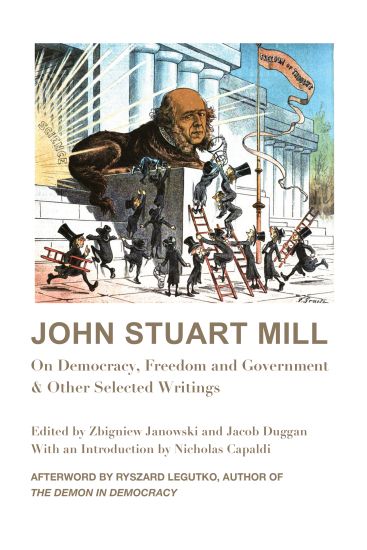
John Stuart Mill – On Democracy, Freedom and Government & Other Selected Writings
John Stuart Mill; Zbigniew Janowski; Jacob Duggan; Ryszard Legutko; Nicholas Capaldi
ST AUGUSTINE'S PRESS
2019
sidottu
In addition to “On Liberty” and “On Representative Government,” this new selection of Mill’s writings includes, among others, a number of less known of his writings, such as: “Civilization,” “Perfectibility,” “The Negro Question,” “On Education,” “On Aristocracy,” “On Marriage,” “On Free Press,” “Socialism,” Mill’s review of Tocqueville’s “Democracy in America,” his letters to Tocqueville, and several other writings. If one can use a somewhat exaggerated language, Mill’s writings are to liberal-democracy what Marx and Engels’ writings were to Communism. Both systems gave expression to 19th century man’s longing for equality and justice, both promised to liberate him from the shackles of oppression, authority and tradition. Instead of liberating man, Communism created the most brutal system in human history, and its spectacular fall in 1989 is one of history’s greatest events. Western world today shows that liberal-democracy is no longer a benign doctrine, which advocates free market, minimum state and individual liberties, but, like Communism, is an all-encompassing ideology which forces an individual to abdicate his freedom and soul in favor of a Communist-like collective. As many critics of real Socialism could see the seeds of totalitarianism in the writings of Marx and Engels, so one can see the seeds of liberal totalitarianism in Mill’s writings. This new edition is intended to help readers to understand why democratic-liberalism came so close to its 19th century ideological rival.
John Stuart Mill – On Democracy, Freedom and Government & Other Selected Writings
John Stuart Mill; Zbigniew Janowski; Jacob Duggan; Ryszard Legutko; Nicholas Capaldi
ST AUGUSTINE'S PRESS
2019
nidottu
In addition to “On Liberty” and “On Representative Government,” this new selection of Mill’s writings includes, among others, a number of less known of his writings, such as: “Civilization,” “Perfectibility,” “The Negro Question,” “On Education,” “On Aristocracy,” “On Marriage,” “On Free Press,” “Socialism,” Mill’s review of Tocqueville’s “Democracy in America,” his letters to Tocqueville, and several other writings. If one can use a somewhat exaggerated language, Mill’s writings are to liberal-democracy what Marx and Engels’ writings were to Communism. Both systems gave expression to 19th century man’s longing for equality and justice, both promised to liberate him from the shackles of oppression, authority and tradition. Instead of liberating man, Communism created the most brutal system in human history, and its spectacular fall in 1989 is one of history’s greatest events. Western world today shows that liberal-democracy is no longer a benign doctrine, which advocates free market, minimum state and individual liberties, but, like Communism, is an all-encompassing ideology which forces an individual to abdicate his freedom and soul in favor of a Communist-like collective. As many critics of real Socialism could see the seeds of totalitarianism in the writings of Marx and Engels, so one can see the seeds of liberal totalitarianism in Mill’s writings. This new edition is intended to help readers to understand why democratic-liberalism came so close to its 19th century ideological rival.
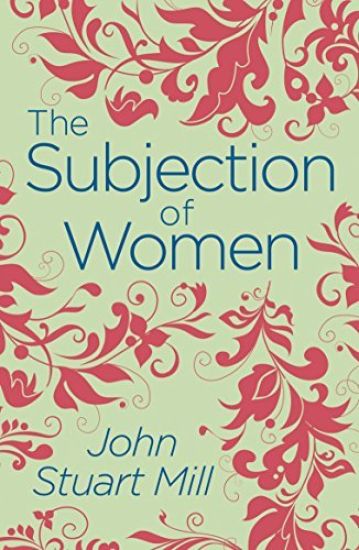
The legal subordination of one sex to the other is wrong itself, and now one of the chief hindrances to human improvement.In this powerful and revolutionary argument for the equality of the sexes, John Stuart Mill accuses society of wasting the potential of an entire sex. From his vantage point in 19th-century England, he observes that historically women have been treated little better than slaves. Mill discusses marriage, education, and law as the chief obstacles to the progress of humanity. Eloquently written and passionately argued, The Subjection of Women was a clarion call to progressives everywhere as Mill set out a path toward a more equal society.ABOUT THE SERIES: The Arcturus Classics series brings together high-quality paperback editions of classics works, presented with contemporary graphic cover designs. Together they make a wonderful collection which is perfect for any home library.