Kirjojen hintavertailu. Mukana 12 595 353 kirjaa ja 12 kauppaa.

Kirjailija

John Stuart Mill

Kirjat ja teokset yhdessä paikassa: 869 kirjaa, julkaisuja vuosilta 1850-2026, suosituimpien joukossa Sosialismin hyödyt ja haitat. Vertaile teosten hintoja ja tarkista saatavuus suomalaisista kirjakaupoista.

869 kirjaa

Kirjojen julkaisuhaarukka 1850-2026.

On Liberty

On Liberty

John Stuart Mill

GD Media
2020
pokkari
John Stuart Mill's resolute dedication to the cause of freedom inspired this 1859 treatise. Discussed and debated from time immemorial, the concept of personal liberty went without codification until the publication of this enduring work which applies an ethical system of utilitarianism to society and the state which to this day remains well known and studied. Mills (1806-1873), a British economist, philosopher, and ethical theorist whose argument does not focus on "the so-called Liberty of the Will...but Civil, or Social Liberty: the nature and limits of the power which can be legitimately exercised by society over the individual" asks and answers provocative questions relating to the boundaries of social authority and individual sovereignty. He declares that there is "one very simple principle" regarding the use of coercion in society -- one may only coerce others either to defend oneself or to defend others from harm. Mill puts forth his basic argument in favor of liberty for the individual as long as it harms no one else. Setting forth the value of liberty of opinion and liberty of action, he emphasizes the importance of individuality versus the "tyranny of the majority" and highlights the positive effects of liberty on all people and on society, as freedom enables progress and prevents social stagnation. He details the appropriate level of authority society ought to have over the individual society's obligation to protect people incapable of exercising their own freedom. On Liberty remains one of the most influential studies on the nature of individual liberty and its role in a democratic society.
Logic of the Moral Sciences

Logic of the Moral Sciences

John Stuart Mill

Dover Publications Inc.
2020
nidottu
John Stuart Mill (1806-73) was the most influential English philosopher of the nineteenth century. His vast intellectual output covered a range of subjects -- traditional philosophy and logic, economics, political science -- and included this work, a founding document in the area now known as social science. In The Logic of the Moral Sciences, Mill applied his considerable talents to examining how the study of human behavior, society, and history could be established on a rational, philosophical basis. The philosopher maintains that casual empiricism and direct experiment are not applicable to the study of complex social phenomena. Instead, "empirical laws," drawn from historical generalizations, must be derivable from a deductive science of human nature. Mills' insights and approaches have remained relevant in the century and a half since this treatise's publication. This volume will prove of vital interest to historians of philosophy and the social sciences as well as to undergraduate social science majors.
Utilitarianism

Utilitarianism

John Stuart Mill

Bibliotech Press
2020
sidottu
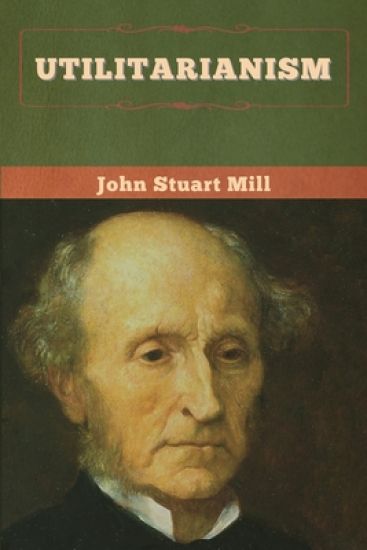
John Stuart Mill (20 May 1806 - 7 May 1873), usually cited as J. S. Mill, was a British philosopher, political economist, and civil servant. One of the most influential thinkers in the history of classical liberalism, he contributed widely to social theory, political theory, and political economy. Dubbed "the most influential English-speaking philosopher of the nineteenth century", Mill's conception of liberty justified the freedom of the individual in opposition to unlimited state and social control.Mill was a proponent of utilitarianism, an ethical theory developed by his predecessor Jeremy Bentham. He contributed to the investigation of scientific methodology, though his knowledge of the topic was based on the writings of others, notably William Whewell, John Herschel, and Auguste Comte, and research carried out for Mill by Alexander Bain. Mill engaged in written debate with Whewell.A member of the Liberal Party and author of the early feminist work The Subjection of Women, he was also the second Member of Parliament to call for women's suffrage after Henry Hunt in 1832. (wikipedia.org)
The Subjection of Women

The Subjection of Women

John Stuart Mill

Bibliotech Press
2020
pokkari
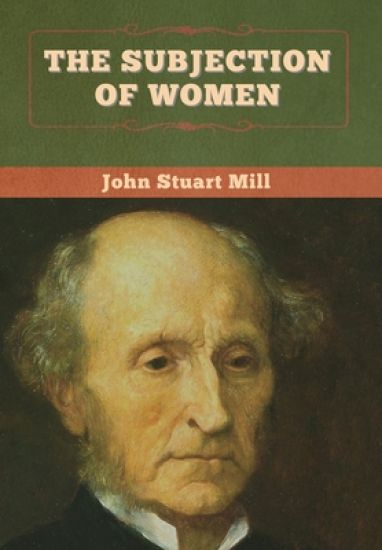
The Subjection of Women is an essay by English philosopher, political economist and civil servant John Stuart Mill published in 1869, with ideas he developed jointly with his wife Harriet Taylor Mill. Mill submitted the finished manuscript of their collaborative work On Liberty (1859) soon after her untimely death in late 1858, and then continued work on The Subjection of Women until its completion in 1861. At the time of its publication, the essay's argument for equality between the sexes was an affront to European conventional norms regarding the status of men and women.In his Autobiography, Mill describes his indebtedness to his wife, and his daughter Helen Taylor for the creation of The Subjection of Women: As ultimately published it was enriched with some important ideas of my daughter's and some passages of her writing. But all that is most striking and profound in what was written by me belongs to my wife, coming from the fund of thought that had been made common to us both by our innumerable conversations and discussions on a topic that filled so large a place in our minds. (wikipedia.org)
The Subjection of Women

The Subjection of Women

John Stuart Mill

Bibliotech Press
2020
sidottu
The Subjection of Women is an essay by English philosopher, political economist and civil servant John Stuart Mill published in 1869, with ideas he developed jointly with his wife Harriet Taylor Mill. Mill submitted the finished manuscript of their collaborative work On Liberty (1859) soon after her untimely death in late 1858, and then continued work on The Subjection of Women until its completion in 1861. At the time of its publication, the essay's argument for equality between the sexes was an affront to European conventional norms regarding the status of men and women.In his Autobiography, Mill describes his indebtedness to his wife, and his daughter Helen Taylor for the creation of The Subjection of Women: As ultimately published it was enriched with some important ideas of my daughter's and some passages of her writing. But all that is most striking and profound in what was written by me belongs to my wife, coming from the fund of thought that had been made common to us both by our innumerable conversations and discussions on a topic that filled so large a place in our minds. (wikipedia.org)
Utilitarianism

Utilitarianism

John Stuart Mill

Bibliotech Press
2020
pokkari
John Stuart Mill (20 May 1806 - 7 May 1873), usually cited as J. S. Mill, was a British philosopher, political economist, and civil servant. One of the most influential thinkers in the history of classical liberalism, he contributed widely to social theory, political theory, and political economy. Dubbed "the most influential English-speaking philosopher of the nineteenth century", Mill's conception of liberty justified the freedom of the individual in opposition to unlimited state and social control.Mill was a proponent of utilitarianism, an ethical theory developed by his predecessor Jeremy Bentham. He contributed to the investigation of scientific methodology, though his knowledge of the topic was based on the writings of others, notably William Whewell, John Herschel, and Auguste Comte, and research carried out for Mill by Alexander Bain. Mill engaged in written debate with Whewell.A member of the Liberal Party and author of the early feminist work The Subjection of Women, he was also the second Member of Parliament to call for women's suffrage after Henry Hunt in 1832. (wikipedia.org)
On Liberty (Squashed Edition)

On Liberty (Squashed Edition)

John Stuart Mill

Lulu.com
2020
pokkari
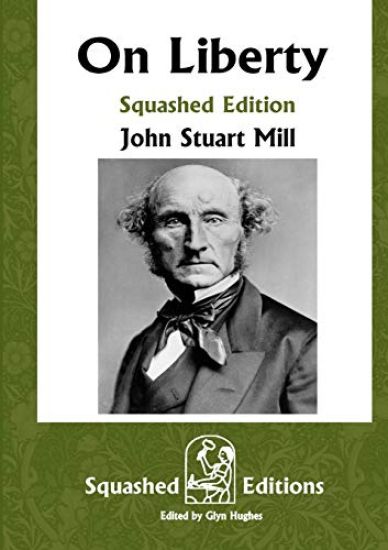
The Squashed edition of On Liberty by John Stuart Mill. Abridged from the original text to read in an hour or so. Rigorously educated by his father James Mill (the co-founder (with Jeremy Bentham) of Utilitarianism) John Stuart grew to suffer horrid depression over an upbringing which had forced classical literature, logic, political economy, history and mathematics down him before he was fourteen. He lived modestly as a clerk to the East India Company, but wrote profusely on political and philosophical matters. In Utilitarianism he states that actions are right if they bring about happiness and wrong if they bring the reverse. In On Liberty, written with his beloved wife, who died before its completion, he moved away from the Utilitarian notion that individual liberty was necessary for economic and governmental efficiency and advanced the classical defense of individual freedom as a value in itself. Squashed editions are precise abridgements - the original ideas, in their own words, the full beam of the book, the quotable quotes and all the famous lines, but neatly honed down to the length of a readable short story. "Like reading the bible without all the begats" - Prof. Jim Curtis
Considerations on Representative Government

Considerations on Representative Government

John Stuart Mill

Bibliotech Press
2020
sidottu
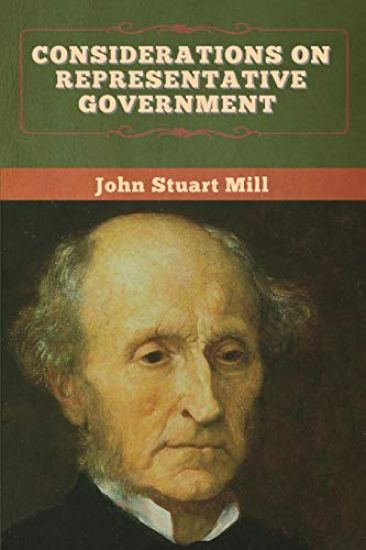
Mill argues for representative government, the ideal form of government in his opinion. One of the more notable ideas Mill puts forth in the book is that the business of government representatives is not to make legislation. Instead Mill suggests that representative bodies such as parliaments and senates are best suited to be places of public debate on the various opinions held by the population and to act as watchdogs of the professionals who create and administer laws and policy. In his words: Their part is to indicate wants, to be an organ for popular demands, and a place of adverse discussion for all opinions relating to public matters, both great and small; and, along with this, to check by criticism, and eventually by withdrawing their support, those high public officers who really conduct the public business, or who appoint those by whom it is conducted. (wikipedia.org)
Considerations on Representative Government

Considerations on Representative Government

John Stuart Mill

Bibliotech Press
2020
pokkari
Mill argues for representative government, the ideal form of government in his opinion. One of the more notable ideas Mill puts forth in the book is that the business of government representatives is not to make legislation. Instead Mill suggests that representative bodies such as parliaments and senates are best suited to be places of public debate on the various opinions held by the population and to act as watchdogs of the professionals who create and administer laws and policy. In his words: Their part is to indicate wants, to be an organ for popular demands, and a place of adverse discussion for all opinions relating to public matters, both great and small; and, along with this, to check by criticism, and eventually by withdrawing their support, those high public officers who really conduct the public business, or who appoint those by whom it is conducted. (wikipedia.org)