

Kirjailija
John Webster
Kirjat ja teokset yhdessä paikassa: 180 kirjaa, julkaisuja vuosilta 1975-2027, suosituimpien joukossa The Works of John Webster. Vertaile teosten hintoja ja tarkista saatavuus suomalaisista kirjakaupoista.
180 kirjaa
Kirjojen julkaisuhaarukka 1975-2027.


The Works of John Webster - With Some Account of the Author, and Notes is an unchanged, high-quality reprint of the original edition of 1877. Hansebooks is editor of the literature on different topic areas such as research and science, travel and expeditions, cooking and nutrition, medicine, and other genres. As a publisher we focus on the preservation of historical literature. Many works of historical writers and scientists are available today as antiques only. Hansebooks newly publishes these books and contributes to the preservation of literature which has become rare and historical knowledge for the future.
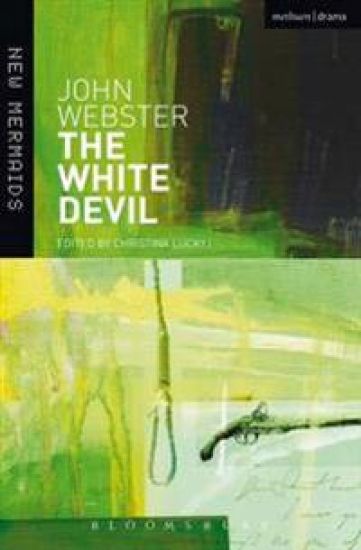
"Woman to man is either a god or a wolf" John Webster's first independent play, The White Devil, originally performed in 1612, centres on the beautiful Vittoria Corombona and her lover, Duke Brachiano, whose passionate, adulterous affair unleashes the powerful revenge of their enemies. While clearly guilty of lust and murder, these unsavoury characters become startlingly heroic under pressure, challenging both conventional moral judgments and oppressive social forces. This revised student edition contains a lengthy new Introduction with background on the author, date and sources, theme, critical interpretation and stage history. The Introduction discusses Webster's radical experimentation with tragic modes, his interest in the heroic potential of women, and evaluates the handling of both in recent stage productions.

A major revision of this classic revenge tragedy. The comprehensive introduction covers recent developments in criticism and key theatre productions, as well as relating the play to other early modern tragedies. The edition gives students and teachers a reliable, annotated text and a stimulating overview of the play's context, critical perspectives and an exploration of its stage history. An invaluable resource for study and performance.


Best Plays of Webster and Tourneur
Cyril Tourneur; John A Symonds; John Webster
Hansebooks
2017
pokkari

The White Devil is a revenge tragedy by English playwright John Webster (c.1580-c.1634). According to Webster's own preface to the 1612 Quarto Edition, "To the Reader", the play's first performance in that year was a notorious failure; he complained that the play was acted in the dead of winter before an unreceptive audience. The play's complexity, sophistication, and satire made it a poor fit with the repertory of Queen Anne's Men at the Red Bull Theatre, where it was first performed. It was successfully revived in 1630 by Queen Henrietta's Men at the Cockpit Theatre and published again in 1631.
A Shared Mercy – Karl Barth on Forgiveness and the Church
Jon Coutts; John Webster
Inter-Varsity Press,US
2016
nidottu
Christians regularly ask God to "forgive us our debts, as we forgive our debtors," but tend to focus on the first half and ignore the second. Something is missing if Christians think of mission only in terms of proclamation or social justice and discipleship only in terms of personal growth and renewal—leaving the relational implications of the gospel almost to chance. It is vital both to spiritual life and mission to think of the church as both invitation and witness to a particularly merciful social dynamic in the world. As a work of constructive practical theology and a critical commentary on the ecclesiology of Karl Barth's unfinished Church Dogmatics, A Shared Mercy explains the place and meaning of interpersonal forgiveness and embeds it within an account of Christ's ongoing ministry of reconciliation. A theologian well-practiced in church ministry, Jon Coutts aims to understand what it means to forgive and reconcile in the context of the Christ-confessing community. In the process he appropriates an area of Barth's theology that has yet to be fully explored for its practical ramifications and that promises to be of interest to both seasoned scholars and newcomers to Barth alike. The result is a re-envisioning of the church in terms of a mercy that is crucially and definitively shared. Featuring new monographs with cutting-edge research, New Explorations in Theology provides a platform for constructive, creative work in the areas of systematic, historical, philosophical, biblical, and practical theology.
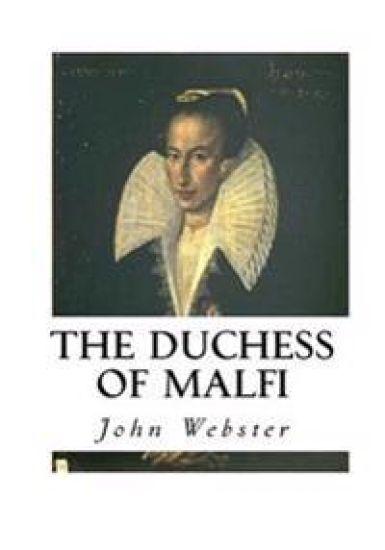
The Duchess of MalfiA Macabre, Tragic PlaybyJohn WebsterThe Duchess of Malfi (originally published as The Tragedy of the Dutchesse of Malfy) is a macabre, tragic play written by the English dramatist John Webster in 1612-13. It was first performed privately at the Blackfriars Theatre, then before a more general audience at The Globe, in 1613-14.Published in 1623, the play is loosely based on events that occurred between about 1508 and 1513. The Duchess was Giovanna d'Aragona, Duchess of Amalfi (d. 1511), whose father, Enrico d'Aragona, Marquis of Gerace, was an illegitimate son of Ferdinand I of Naples. As in the play, she secretly married Antonio Beccadelli di Bologna after the death of her first husband Alfonso I Piccolomini, Duke of Amalfi.The play begins as a love story, with a Duchess who marries beneath her class, and ends as a nightmarish tragedy as her two brothers exact their revenge, destroying themselves in the process. Jacobean drama continued the trend of stage violence and horror set by Elizabethan tragedy, under the influence of Seneca. The complexity of some of its characters, particularly Bosola and the Duchess, plus Webster's poetic language, ensure the play is often considered among the greatest tragedies of English renaissance drama.
Put together as a companion volume to his earlier volume, Word and Church, in this book John Webster begins to give voice to a reordered conception of the substance of Christian teaching, at the heart of which lies a discovery of the content and consequences of Christian teaching about God's perfection.Webster gives the readers a worked example of 'theological theology', that is, Christian theology which takes its rise in the Christian confession of the gospel which seeks to hear, celebrate and commend. This classic volume from one of the leading theologians in the world remains an important contribution to the field of systematic theology. For this Cornerstones edition Webster has written a new preface in which he sets the work against the current debate and his own current theology.
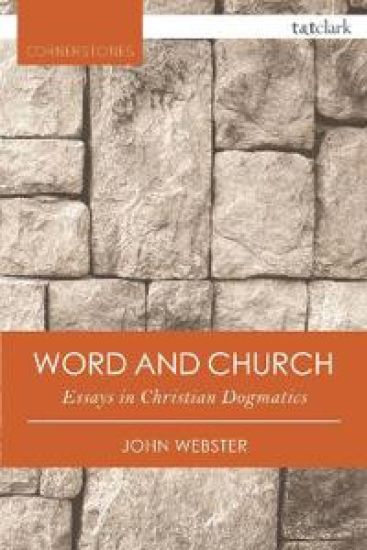
In Word and Church readers are treated to chapters that examine the field of Christian Dogmatics, presenting a clear trajectory in the work of John Webster, that moves from interpretation of 20th-century Protestant theology to doctrinal construction. Webster addresses the modern traditions of Christian divinity, and the topics which come to the fore in making sense of these traditions: the nature of the Bible and its interpretation; the place of Jesus Christ in modern theological culture; and the basis and shape of human agency. As a whole the book boldly indicates how dilemmas or inadequacies in modern treatments of these topics might be clarified by more direct employment of language about God and the gospel.The classic chapters present the work of one of the world's leading contemporary theologians at his creative best. For this Cornerstones edition the author has provided a new preface in which he contextualizes the work within his current theology.
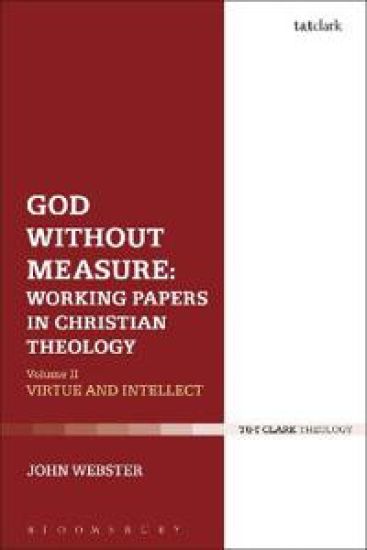
In this second volume, Webster progresses the discussion to include topics in moral theology, and the theology of created intellect. An opening chapter sets the scene by considering the relation of christology and moral theology. This is followed by a set of reflections on a range of ethical themes: the nature of human dignity; mercy; the place of sorrow in Christian existence; the nature of human courage; dying and rising with Christ as a governing motif in the Christian moral life; the presence of sin in human speech. Webster closes with studies of the nature of intellectual life and of the intellectual task of Christian theology.
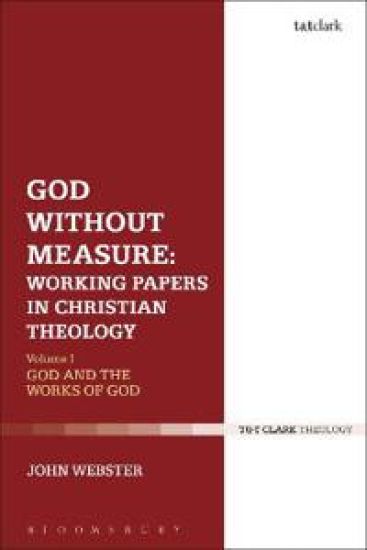
In this two volume collection of essays, which forms a companion to The Domain of the Word, John Webster brings together studies of a range of topics in dogmatic and moral theology. This first volume, God and the Works of God, treats the themes of God's inner being and God's outer acts. After an overall account of the relation between God in himself and the economy of God's external works, there are studies of the divine aseity and of the theology of the eternal Son. These are followed by a set of essays on creation out of nothing; the relation between God and God's creatures; the nature of providence; the relation of soteriology and the doctrine of God; and the place of teaching about justification in Christian theology.Each of the essays explores the relation of theology proper to economy, and together they pose an understanding of Christian doctrine in which all theological teaching flows from the doctrine of the immanent Trinity.

In publishing this tragedy, I do but challenge myself that liberty, which other men have taken before me; not that I affect praise by it, for, nos h c novimus esse nihil, only since it was acted in so dull a time of winter, presented in so open and black a theatre, that it wanted (that which is the only grace and setting-out of a tragedy) a full and understanding auditory; and that since that time I have noted, most of the people that come to that playhouse resemble those ignorant asses (who, visiting stationers' shops, their use is not to inquire for good books, but new books), I present it to the general view with this confidence:

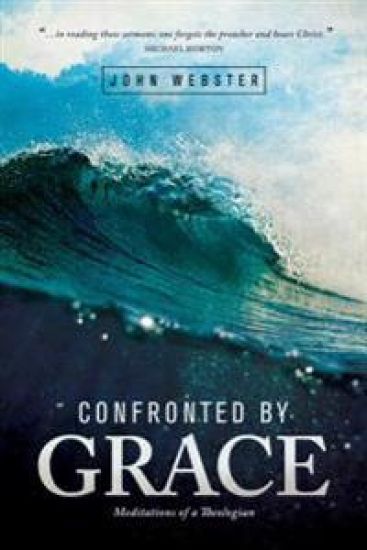
I found myself joining in his joyful 'Amen!' to all of the promises that we have in Jesus Christ. --Michael HortonIn this rich collection of sermons, John Webster considers the power of the gospel and the truth of God's grace. Born from years of theological and biblical study, these reflections serve to challenge, stimulate, and inspire, demonstrating the grace of God at work in the complexities of life.By pointing us toward Christ, Confronted by Grace helps us grow in our understanding of the truth of the gospel.