Kirjojen hintavertailu. Mukana 12 152 606 kirjaa ja 12 kauppaa.

Kirjailija

Joseph E. Stiglitz

Kirjat ja teokset yhdessä paikassa: 56 kirjaa, julkaisuja vuosilta 1996-2026, suosituimpien joukossa For Good Measure. Vertaile teosten hintoja ja tarkista saatavuus suomalaisista kirjakaupoista.

56 kirjaa

Kirjojen julkaisuhaarukka 1996-2026.

For Good Measure

For Good Measure

Joseph E. Stiglitz; Jean-Paul Fitoussi; Martine Durand

The New Press
2020
sidottu
In the first book of its kind, leading economists from around the world, including Thomas Piketty, Emmanuel Saez, Elizabeth Beasely, Jacob Hacker, Francois Bourguignon, Nora Lustig, Alan B. Krueger, and Joseph E. Stiglitz, describe a range of fascinating metrics - from economic insecurity and environmental sustainability to inequality of opportunity and levels of trust and resilience - that can be used to supplement the simplistic measure of gross domestic product, providing a far more nuanced and accurate account of societal health and well-being.
Measuring What Counts

Measuring What Counts

Joseph E. Stiglitz; Jean-Paul Fitoussi; Martine Durand

The New Press
2020
nidottu
In 2009, a group of economists issued a report challenging gross domestic product (GDP) as a measure of progress and well-being. Now, in Measuring What Counts they - propose a new, 'beyond GDP' agenda. This book provides an accessible overview of the last decade's global movement, sparked by the original critique of GDP, and proposes a new 'dashboard' of metrics to assess a society's health, including measures of inequality and economic vulnerability, whether growth is environmentally sustainable, and how people feel about their lives.
Selected Works of Joseph E. Stiglitz

Selected Works of Joseph E. Stiglitz

Joseph E. Stiglitz

Oxford University Press
2019
sidottu
This is the third volume in a new, definitive, six-volume edition of the works of Joseph Stiglitz, one of today's most distinguished and controversial economists. Stiglitz was awarded the Nobel Prize in Economics in 2001 for his work on asymmetric information and is widely acknowledged as one of the pioneers in the field of modern information economics and more generally for his contributions to microeconomics. Volume III contains a selection of Joseph E. Stiglitz's work on microeconomics. It questions well-established tenets, including many that are so fundamental they are almost taken for granted, covering basic concepts of risk and markets; the management of risk; the theory of the firm; the economics of organization; and theory of human behaviour. Stiglitz reflects on his work and the field more generally throughout the volume by including substantial original introductions to the Selected Works, the volume as a whole, and each part within the volume.
Selected Works of Joseph E. Stiglitz

Selected Works of Joseph E. Stiglitz

Joseph E. Stiglitz

Oxford University Press
2013
sidottu
This is the second of six volumes in a series of selected scientific papers by one of the world's most distinguished economists. Volume I presented the basic concepts in the Economics of Information, showing that markets in which information was imperfect or asymmetric (where some individuals know things that others don't) behave markedly different from how they would if information were perfect. Volume II, with papers written between 1969 and 2009, explores the implications of the New Information Paradigm for labor, capital, and product markets. This New Paradigm, for which Stiglitz was awarded the Nobel Memorial Prize in Economics in 2001, has fundamentally changed the way we think about every aspect of economics, raising new questions on corporate governance, and leading us to reconsider old questions on corporate finance, the relationship between finance and the economy, and the theory of economic incentives. While this volume focuses on the application of basic principles, it also extends the theory in important ways, showing the fruitfulness of Stiglitz's research strategy. In doing so, the papers set the ground for questioning some prevailing doctrines: key market phenomena cannot be explained by markets with rational expectations, even when information is imperfect. It demonstrates that how societies organize the obtainment, processing, and transmitting of information is as important as how they organize the production and distribution of goods. Indeed, the two issues are inseparable. The papers thus lay the foundations of a New Institutional Economics, not only describing how institutions (like sharecropping or banks) work and affect resource allocations, but why they arise and take on particular forms.
Discounting for Time and Risk in Energy Policy

Discounting for Time and Risk in Energy Policy

Robert C. Lind; Kenneth J. Arrow; Gordon R. Corey; Partha Dasgupta; Amartya K. Sen; Thomas Stauffer; Joseph E. Stiglitz; J.A. Stockfisch

Resources for the Future Press (RFF Press)
2011
sidottu
This is a collection of theoretical papers, including contributions by Partha Dasgupta and three Nobel prize-winning economists: Kenneth Arrow, Amartya Sen, and Joseph Stiglitz. Originally published in 1982.
Selected Works of Joseph E. Stiglitz

Selected Works of Joseph E. Stiglitz

Joseph E. Stiglitz

Oxford University Press
2008
sidottu
This is the first volume in a new, definitive, six-volume edition of the works of Joseph Stiglitz, one of today's most distinguished and controversial economists. Stiglitz was awarded the Nobel Prize in Economics in 2001 for his work on asymmetric information and is widely acknowledged as one of the pioneers in the field of modern information economics and more generally for his contributions to microeconomics. Volume I includes a number of classic papers which helped to form the foundations for the field of the economics of information. Stiglitz reflects on his work and the field more generally throughout the volume by including substantial original introductions to the Selected Works, the volume as a whole, and each part within the volume. The volume includes a number of foundational papers, specifically looking at market equilibrium with adverse selection, moral hazard, and screening. This volume sets out the basic concepts underlying the economics of information, while volume II goes a step further by applying and extending these concepts in a number of different settings in labour, capital, and product markets.
Euro

Euro

Joseph E. Stiglitz

Into Kustannus
2026
nidottu
Arvostetun taloustieteilijän ja nobelistin Joseph E. Stig litzin teos on tärkeää ja silmiä avaavaa luettavaa meille kaikille. Teoksessaan Stiglitz selvittää, miksi euroalueen valuvioista on tullut vakava uhka koko Euroopan unionille. Alun perin euron piti olla merkittävä askel kohti yhtynyttä Eurooppaa ja vaurautta, mutta toisin kävi. Euron takia euroalueen maat eivät ole toipuneet vuoden 2008 taloudellisesta romahduksesta ja koko talousalue on taantunut nopeasti suhteessa muihin maanosiin. Erityisen vaarallisena kehityksenä Stiglitz pitää yhteiskuntaa kalvavaa nuorisotyöttömyyttä, joka jättää suuren osan kokonaisesta sukupolvesta työelämän ulkopuolelle. Euro on lisäksi kasvattanut Euroopan maiden välisiä ja sisäisiä tulo- ja varallisuuseroja. Vähitellen kroonisessa rahapulassa sinnittelevät valtiot ovat ajautuneet tilanteeseen, jossa niiden täytyy leikata muun muassa opetusta, terveydenhuoltoa ja sosiaaliturvaa yhä voimakkaammin. Stiglitz toteaa, että nämä kehityslinjat saattavat vahvistaa poliittisia ääriliikkeitä niin paljon, että Euroopan unionin toiminta muuttuu mahdottomaksi. Siksi hän pitääkin Euroopan yhdentymistä koko maailman kannalta tärkeänä projektina ja esittää joukon vaihtoehtoisia malleja euroalueen ongelmien ratkaisemiseksi.
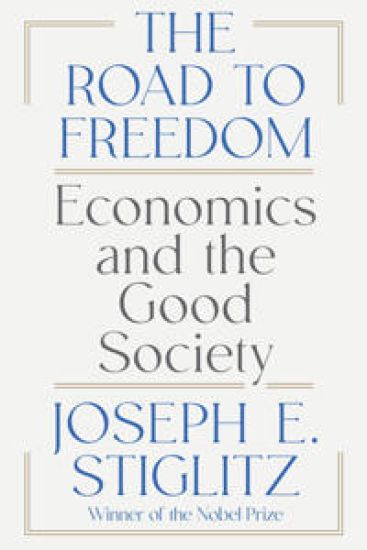
The Road to Freedom: Economics and the Good Society

The Road to Freedom: Economics and the Good Society

Joseph E. Stiglitz

W. W. Norton Company
2026
nidottu
We are a nation born from the conviction that people must be free. But since the middle of the last century, that idea has been co-opted. Forces on the political Right have justified exploitation by cloaking it in the rhetoric of freedom, leading to pharmaceutical companies freely overcharging for medication, a Big Tech free from oversight, politicians free to incite rebellion, corporations free to pollute, and more. How did we get here? Whose freedom are we--and should we--be thinking about?In The Road to Freedom, Nobel prize winner Joseph E. Stiglitz dissects America's current economic system and the political ideology that created it, laying bare their twinned failure. "Free" and unfettered markets have only succeeded in delivering a series of crises: the financial crisis, the opioid crisis, and the crisis of inequality. While a small portion of the population has amassed considerable wealth, wages for most people have stagnated. Free and unfettered markets have exploited consumers, workers, and the environment alike. Such failures have fed populist movements that believe being free means abandoning any obligations citizens have to one another. As they grow in strength, these movements now pose a real threat to true economic and political freedom.As an economic advisor to presidents and as chief economist at the World Bank, Stiglitz has witnessed these profound changes firsthand. As he argues, the failures follow from the elites' unshakeable dedication to "the neoliberal experiment." Explicitly taking on giants such as Friedrich Hayek and Milton Friedman, Stiglitz exposes accepted ideas about our political and economic life for what they are: twisted visions that tear at the social fabric while they enrich the very few. The Road to Freedom breaks new ground, showing how economics--including recent advances in which Stiglitz has played such an important role--reframes how to think about freedom and the role of the state in a twenty-first century society. Drawing on the work of contemporary philosophers, Stiglitz explains a deeper, more humane way to assess freedoms--one that considers with care what to do when one person's freedom conflicts with another's. We must reimagine our existing economic and legal systems and embrace forms of collective action, including regulation and investment, if we are to create an innovative society in which everyone can flourish. The task could not be more urgent, and Stiglitz's latest book is essential reading for those committed to the American ideal of an economic and political system that delivers well-being, opportunity, and meaningful freedoms for all.
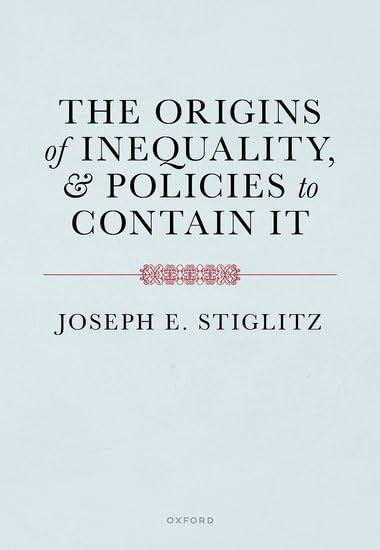
The Origins of Inequality

The Origins of Inequality

Joseph E. Stiglitz

Oxford University Press
2025
sidottu
Joseph E. Stiglitz has had a remarkable career. He is a brilliant academic, capped by sharing the Nobel Memorial Prize in Economics and the Nobel Peace Prize, and honorary degrees from Harvard, Cambridge, Oxford and more than fifty other universities, and elected not only to the National Academy of Sciences and the American Academy of Arts and Letters but the Royal Society and the British Academy; a public servant, who served as Chair of President Clinton's Council of Economic Advisors and Chief Economist and Senior Vice President of the World Bank, headed international commissions for the UN and France, and was awarded the French Legion of Honor and Australia's Sydney Peace Prize; a public intellectual whose numerous books on vital topics have been best sellers. What brought him to economics were his concerns about the inequality and discrimination he saw growing up. Wanting to understand what drives it and what can be done about it has been his lifelong passion. This book gathers together and extends to new frontiers this lifelong work, drawing upon the challenges and insights of each of these phases of his career. In a still very widely cited paper written fifty years ago, Stiglitz set forth the fundamental framework for analyzing intergenerational transfer of wealth and advantage, which plays a central role in persistent inequality. That and subsequent work, developed most fully here for the first time, described today's inequality as a result of centrifugal forces increasing inequality and centripetal forces reducing it. In recent decades, the centrifugal forces have strengthened, the centripetal forces weakened. His general theory provides a framework for understanding the marked growth in inequality in recent decades, and for devising policies to reduce it. A central message is that ever-increasing inequality is not inevitable. Inequality is, in a fundamental sense, a choice. Stiglitz explains that inequality does not largely arise from differences in savings rates between capitalists and others, though that may play a role (as Piketty, Marx, and Kaldor suggest); but rather, it originates importantly from the rules of the game, which have weakened the bargaining power of workers as they have increased the market power of corporations. He also explains how monetary authorities have contributed to increasing wealth inequality, and how, unless something is done about it, likely changes in technology such as AI and robotization will make matters worse. He describes policies that can simultaneously reduce inequality and improve economic performance.
Camino de Libertad. La Economía Y La Buena Sociedad / The Road to Freedom
El nuevo libro de Joseph Stiglitz, Premio Nobel de Econom a«Un argumento s lido a favor de un capitalismo progresista basado en la cooperaci n para el bien com n . -Kirkus La libertad es la idea que subyace a las sociedades occidentales, pero de un tiempo a esta parte su significado se ha desplazado: la libertad es la libertad de las empresas para contaminar, la de las grandes tecnol gicas para escapar de cualquier control y la de los pol ticos para mentir y fomentar la crispaci n. C mo hemos llegado hasta aqu ? De qu libertad estamos hablando? Y de qu libertad deber amos hablar? El experimento neoliberal al que se han entregado las lites en las ltimas d cadas ha provocado que los mercados sin regular hayan explotado a los consumidores, los trabajadores y el medioambiente. A su vez, la desigualdad resultante ha propiciado la aparici n de movimientos populistas que piensan que la libertad es ignorar cualquier responsabilidad que tengamos hacia los dem s ciudadanos. Ahora la verdadera libertad pol tica y econ mica est en peligro. Con pluma afiliada y apoyado en el trabajo de fil sofos contempor neos, Stiglitz dibuja una nueva manera de considerar el papel del Estado y un modo m s profundo y humano de valorar las libertades y decidir qu hacer cuando la libertad de uno choca con la de su vecino. Tenemos que reinventar nuestros sistemas econ micos y legales y adoptar formas de acci n colectiva que incluyan regulaciones e inversiones, si queremos crear una sociedad innovadora en la que todos podamos prosperar. ENGLISH DESCRIPTION From one of the world's leading economists, a compelling new vision of personal and economic freedom. We are a nation born from the conviction that people must be free. But since the middle of the last century, that idea has been co-opted. Forces on the political Right have justified exploitation by cloaking it in the rhetoric of freedom, leading to pharmaceutical companies freely overcharging for medication, a Big Tech free from oversight, politicians free to incite rebellion, corporations free to pollute, and more. How did we get here? Whose freedom are we―and should we―be thinking about? In The Road to Freedom, Nobel prize winner Joseph E. Stiglitz dissects America's current economic system and the political ideology that created it, laying bare their twinned failure. "Free" and unfettered markets have only succeeded in delivering a series of crises: the financial crisis, the opioid crisis, and the crisis of inequality. While a small portion of the population has amassed considerable wealth, wages for most people have stagnated. Free and unfettered markets have exploited consumers, workers, and the environment alike. Such failures have fed populist movements that believe being free means abandoning any obligations citizens have to one another. As they grow in strength, these movements now pose a real threat to true economic and political freedom. As an economic advisor to presidents and as chief economist at the World Bank, Stiglitz has witnessed these profound changes firsthand. As he argues, the failures follow from the elites' unshakeable dedication to "the neoliberal experiment." Explicitly taking on giants such as Friedrich Hayek and Milton Friedman, Stiglitz exposes accepted ideas about our political and economic life for what they are: twisted visions that tear at the social fabric while they enrich the very few. The Road to Freedom breaks new ground, showing how economics―including recent advances in which Stiglitz has played such an important role―reframes how to think about freedom and the role of the state in a twenty-first century society. Drawing on the work of contemporary philosophers, Stiglitz explains a deeper, more humane way to assess freedoms―one that considers with care what to do when one person's freedom conflicts with another's. We must reimagine our existing economic and legal systems and embrace forms of collective action, including regulation and investment, if we are to create an innovative society in which everyone can flourish. The task could not be more urgent, and Stiglitz's latest book is essential reading for those committed to the American ideal of an economic and political system that delivers well-being, opportunity, and meaningful freedoms for all.
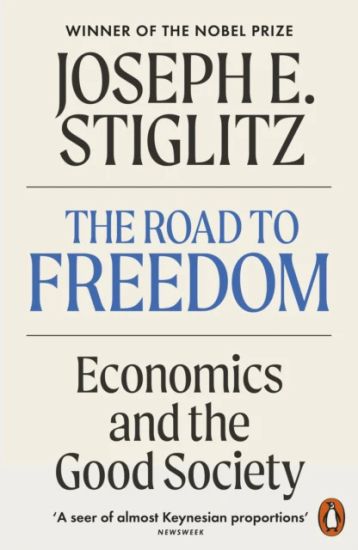
The Road to Freedom

The Road to Freedom

Joseph E. Stiglitz

PENGUIN BOOKS LTD
2025
pokkari
A major reappraisal, by the Nobel-prizewinning economist, of the relationship between capitalism and freedomDespite its manifest failures, the narrative of neoliberalism retains its grip on the public mind and the policies of governments all over the world. By this narrative, less regulation and more ‘animal spirits’ capitalism produces not only greater prosperity, but more freedom for individuals in society - and is therefore morally better.But, in The Road to Freedom Stiglitz asks, whose freedom are we – should we be – thinking about? What happens when one person’s freedom comes at the expense of another’s? Should the freedoms of corporations be allowed to impinge upon those of individuals in the ways they now do?Taking on giants of neoliberalism such as Hayek and Friedman and examining how public opinion is formed, Stiglitz reclaims the language of freedom from the right to show that far from ‘free’ – unregulated – markets promoting growth and enterprise, they in fact reduce it, lessening economic opportunities for majorities and siphoning wealth from the many to the few – both individuals and countries. He shows how neoliberal economics and its implied moral system have impacted our legal and social freedoms in surprising ways, from property and intellectual rights, to education and social media.Stiglitz’s eye, as always, is on how we might create the true human flourishing which should be the great aim of our economic and social system, and offers an alternative to that prevailing today. The Road to Freedom offers a powerful re-evaluation of democracy, economics and what constitutes a good society—and provides a roadmap of how we might achieve it.
The Origins of Inequality

The Origins of Inequality

Joseph E. Stiglitz

Oxford University Press
2025
nidottu
Joseph E. Stiglitz has had a remarkable career. He is a brilliant academic, capped by sharing the Nobel Memorial Prize in Economics and the Nobel Peace Prize, and honorary degrees from Harvard, Cambridge, Oxford and more than fifty other universities, and elected not only to the National Academy of Sciences and the American Academy of Arts and Letters but the Royal Society and the British Academy; a public servant, who served as Chair of President Clinton's Council of Economic Advisors and Chief Economist and Senior Vice President of the World Bank, headed international commissions for the UN and France, and was awarded the French Legion of Honor and Australia's Sydney Peace Prize; a public intellectual whose numerous books on vital topics have been best sellers. What brought him to economics were his concerns about the inequality and discrimination he saw growing up. Wanting to understand what drives it and what can be done about it has been his lifelong passion. This book gathers together and extends to new frontiers this lifelong work, drawing upon the challenges and insights of each of these phases of his career. In a still very widely cited paper written fifty years ago, Stiglitz set forth the fundamental framework for analyzing intergenerational transfer of wealth and advantage, which plays a central role in persistent inequality. That and subsequent work, developed most fully here for the first time, described today's inequality as a result of centrifugal forces increasing inequality and centripetal forces reducing it. In recent decades, the centrifugal forces have strengthened, the centripetal forces weakened. His general theory provides a framework for understanding the marked growth in inequality in recent decades, and for devising policies to reduce it. A central message is that ever-increasing inequality is not inevitable. Inequality is, in a fundamental sense, a choice. Stiglitz explains that inequality does not largely arise from differences in savings rates between capitalists and others, though that may play a role (as Piketty, Marx, and Kaldor suggest); but rather, it originates importantly from the rules of the game, which have weakened the bargaining power of workers as they have increased the market power of corporations. He also explains how monetary authorities have contributed to increasing wealth inequality, and how, unless something is done about it, likely changes in technology such as AI and robotization will make matters worse. He describes policies that can simultaneously reduce inequality and improve economic performance.
The Road to Freedom

The Road to Freedom

Joseph E. Stiglitz

PENGUIN BOOKS LTD
2024
sidottu
A major reappraisal, by the Nobel-prizewinning economist, of the relationship between capitalism and freedomDespite its manifest failures, the narrative of neoliberalism retains its grip on the public mind and the policies of governments all over the world. By this narrative, less regulation and more ‘animal spirits’ capitalism produces not only greater prosperity, but more freedom for individuals in society - and is therefore morally better.But, in The Road to Freedom Stiglitz asks, whose freedom are we – should we be – thinking about? What happens when one person’s freedom comes at the expense of another’s? Should the freedoms of corporations be allowed to impinge upon those of individuals in the ways they now do?Taking on giants of neoliberalism such as Hayek and Friedman and examining how public opinion is formed, Stiglitz reclaims the language of freedom from the right to show that far from ‘free’ – unregulated – markets promoting growth and enterprise, they in fact reduce it, lessening economic opportunities for majorities and siphoning wealth from the many to the few – both individuals and countries. He shows how neoliberal economics and its implied moral system have impacted our legal and social freedoms in surprising ways, from property and intellectual rights, to education and social media.Stiglitz’s eye, as always, is on how we might create the true human flourishing which should be the great aim of our economic and social system, and offers an alternative to that prevailing today. The Road to Freedom offers a powerful re-evaluation of democracy, economics and what constitutes a good society—and provides a roadmap of how we might achieve it.
The Road to Freedom: Economics and the Good Society

The Road to Freedom: Economics and the Good Society

Joseph E. Stiglitz

W. W. Norton Company
2024
sidottu
We are a nation born from the conviction that people must be free. But since the middle of the last century, that idea has been co-opted. Forces on the political Right have justified exploitation by cloaking it in the rhetoric of freedom, leading to pharmaceutical companies freely overcharging for medication, a Big Tech free from oversight, politicians free to incite rebellion, corporations free to pollute, and more. How did we get here? Whose freedom are we--and should we--be thinking about?In The Road to Freedom, Nobel prize winner Joseph E. Stiglitz dissects America's current economic system and the political ideology that created it, laying bare their twinned failure. "Free" and unfettered markets have only succeeded in delivering a series of crises: the financial crisis, the opioid crisis, and the crisis of inequality. While a small portion of the population has amassed considerable wealth, wages for most people have stagnated. Free and unfettered markets have exploited consumers, workers, and the environment alike. Such failures have fed populist movements that believe being free means abandoning any obligations citizens have to one another. As they grow in strength, these movements now pose a real threat to true economic and political freedom.As an economic advisor to presidents and as chief economist at the World Bank, Stiglitz has witnessed these profound changes firsthand. As he argues, the failures follow from the elites' unshakeable dedication to "the neoliberal experiment." Explicitly taking on giants such as Friedrich Hayek and Milton Friedman, Stiglitz exposes accepted ideas about our political and economic life for what they are: twisted visions that tear at the social fabric while they enrich the very few. The Road to Freedom breaks new ground, showing how economics--including recent advances in which Stiglitz has played such an important role--reframes how to think about freedom and the role of the state in a twenty-first century society. Drawing on the work of contemporary philosophers, Stiglitz explains a deeper, more humane way to assess freedoms--one that considers with care what to do when one person's freedom conflicts with another's. We must reimagine our existing economic and legal systems and embrace forms of collective action, including regulation and investment, if we are to create an innovative society in which everyone can flourish. The task could not be more urgent, and Stiglitz's latest book is essential reading for those committed to the American ideal of an economic and political system that delivers well-being, opportunity, and meaningful freedoms for all.
Going Big

Going Big

Robert Kuttner; Joseph E. Stiglitz

THE NEW PRESS
2022
sidottu
With history and the extraordinary parallels between Biden and FDR as his guide, the veteran political analyst diagnoses what’s at stake for America in 2022 and beyondJoe Biden has found his way back to Franklin Roosevelt’s New Deal. After four decades of diminishing prospects for ordinary people, the public likes what Biden is offering. Yet American democracy is in dire peril as Republicans, increasingly the national minority, try to destroy democracy in order to cling to power. It is the best of times and the worst of times. In Going Big, bestselling author and political journalist Robert Kuttner assesses the promise and peril of this critical juncture. Biden, like FDR in his time, faces multiple challenges. Roosevelt had to make terrible compromises with racist legislators to win enactment of his program. Biden, to achieve the necessary governing coalition, needs to achieve durable multiracial coalitions. Roosevelt had to conquer fascism in Europe; Biden must defeat it at home. And after four decades of neoliberal policy disasters reflecting Wall Street’s political influence, Biden needs to go beyond what even FDR achieved, to restore a democratic economy of broad possibility. From a writer with an unparalleled understanding of the history and politics that have made this moment possible, this book is the essential guide to what is at stake for Joe Biden, for America, and for our democracy.
People, Power, and Profits

People, Power, and Profits

Joseph E. Stiglitz

Penguin
2020
pokkari
We all have the sense that our economy tilts toward big business, but, as Joseph E. Stiglitz explains in People, Power, and Profits, a few corporations now dominate entire sectors, contributing to skyrocketing inequality and slow growth. This is how the financial industry has managed to write its own regulations, tech companies have accumulated reams of personal data without oversight, and the government has negotiated trade deals that fail to represent the interests of workers. Too many have made their wealth through exploitation of others rather than through wealth creation. New technologies may make matters worse, increasing inequality and unemployment. Stiglitz identifies the true sources of wealth and of increases in standards of living, based on learning, advances in science and technology, and the rule of law. He shows that the assault on the judiciary, universities, and the media undermines the very institutions that have long been the foundation of economic prosperity and democracy. He sets out the economic solutions which will exploit the benefits of markets while taming their excesses, and how a decent middle-class life can once again be attainable for all.
People, Power, and Profits: Progressive Capitalism for an Age of Discontent
An authoritative account of the dangers of unfettered markets and monied politics, People, Power, and Profits shows us an America in crisis. The American people, however, are far from powerless, and Joseph Stiglitz provides an alternative path forward through his vision of progressive capitalism, with a comprehensive set of political and economic changes.
Rewriting the Rules of the European Economy

Rewriting the Rules of the European Economy

Joseph E. Stiglitz

WW Norton Co
2020
sidottu
The problems of today’s Europe can be traced directly to the rewriting of the “rules of the economic game” that has taken place over several decades under the strong influence of neoliberalism. If Europe is to return to the innovative and dynamic economy it once had—and if there is to be shared prosperity, social solidarity and justice across Europe—the rules must be rewritten once again. With the Foundation for European Progressive Studies (FEPS), Joseph E. Stiglitz lays out comprehensive programmes and policies designed to relieve the suffering of Europeans and restore a prosperous and equitable European Union.
People, Power, and Profits - Progressive Capitalism for an Age of Discontent
We all have the sense that the American economy--and its government--tilts toward big business, but as Joseph E. Stiglitz explains in his new book, People, Power, and Profits, the situation is dire. A few corporations have come to dominate entire sectors of the economy, contributing to skyrocketing inequality and slow growth. This is how the financial industry has managed to write its own regulations, tech companies have accumulated reams of personal data with little oversight, and our government has negotiated trade deals that fail to represent the best interests of workers. Too many have made their wealth through exploitation of others rather than through wealth creation. If something isn't done, new technologies may make matters worse, increasing inequality and unemployment.Stiglitz identifies the true sources of wealth and of increases in standards of living, based on learning, advances in science and technology, and the rule of law. He shows that the assault on the judiciary, universities, and the media undermines the very institutions that have long been the foundation of America's economic might and its democracy.Helpless though we may feel today, we are far from powerless. In fact, the economic solutions are often quite clear. We need to exploit the benefits of markets while taming their excesses, making sure that markets work for us--the U.S. citizens--and not the other way around. If enough citizens rally behind the agenda for change outlined in this book, it may not be too late to create a progressive capitalism that will recreate a shared prosperity. Stiglitz shows how a middle-class life can once again be attainable by all.An authoritative account of the predictable dangers of free market fundamentalism and the foundations of progressive capitalism, People, Power, and Profits shows us an America in crisis, but also lights a path through this challenging time.
Confronting Inequality

Confronting Inequality

Jonathan D. Ostry; Prakash Loungani; Andrew Berg; Joseph E. Stiglitz

Columbia University Press
2019
pokkari
Inequality has drastically increased in many countries around the globe over the past three decades. The widening gap between the very rich and everyone else is often portrayed as an unexpected outcome or as the tradeoff we must accept to achieve economic growth. In this book, three International Monetary Fund economists show that this increase in inequality has in fact been a political choice—and explain what policies we should choose instead to achieve a more inclusive economy.Jonathan D. Ostry, Prakash Loungani, and Andrew Berg demonstrate that the extent of inequality depends on the policies governments choose—such as whether to let capital move unhindered across national boundaries, how much austerity to impose, and how much to deregulate markets. While these policies do often confer growth benefits, they have also been responsible for much of the increase in inequality. The book also shows that inequality leads to weaker economic performance and proposes alternative policies capable of delivering more inclusive growth. In addition to improving access to health care and quality education, they call for redistribution from the rich to the poor and present evidence showing that redistribution does not hurt growth. Accessible to scholars across disciplines as well as to students and policy makers, Confronting Inequality is a rigorous and empirically rich book that is crucial for a time when many fear a new Gilded Age.