Kirjailija
Julia Kristeva
Kirjat ja teokset yhdessä paikassa: 95 kirjaa, julkaisuja vuosilta 1979-2026, suosituimpien joukossa Colette. Vertaile teosten hintoja ja tarkista saatavuus suomalaisista kirjakaupoista.
95 kirjaa
Kirjojen julkaisuhaarukka 1979-2026.
Published on the fiftieth anniversary of her death, this intellectual biography of Colette-the final volume of Julia Kristeva's trilogy "Female Genius"-will be considered a major breakthrough in understanding one of the great creative minds of the twentieth century. Colette (1873-1954) was a prolific novelist who celebrated sexual pleasure and invented a language for it at a time when women writers were inhibited about dealing with the topic. Female sexuality in a male-dominated world and the joys and pains of love served as her main themes, and her novels-Cheri, La Chatte, and Gigi, among them-blurred the boundaries between fact and fiction long before autobiographical novels became commonplace. She married three times, had male and female lovers, and for a time supported herself as a mime, dancing semi-nude in music halls throughout France. When she died, she received the first state funeral the French Republic had ever given a woman. Colette's writing was inspired by entertainers, courtesans, an aristocratic Parisian lesbian subculture, and fin de siecle gay aesthetes. She admired those who lived on the sexual edge and was accused of moral corruption in intellectual matters-she published in pro-Vichy, anti-Semitic journals during the Occupation, even as she fought to keep her Jewish third husband from deportation. Kristeva deftly examines Colette's controversial life and work and considers two of her most important influences, Honore de Balzac and Marcel Proust. In a multifaceted approach, Kristeva considers Colette's use of metaphor, the characters in her novels, and the development of her writing within the context of her life. Paying particular attention to the language the French writer used to "say the unsayable and name the unnameable," Kristeva offers an elegant and sophisticated critique of Colette's psychological conflicts, particularly her sexual relationships and how these conflicts are both recorded in and resolved through the act of writing. Appealing to Freudian and Lacanian concepts such as the Oedipus complex, perversion, the symbolic, and melancholy, Kristeva opens Colette's oeuvre to psychoanalytic interpretation. The impression that remains is of a woman intent on experiencing the world's pleasures-its jouissance-in a melding with the world's flesh.
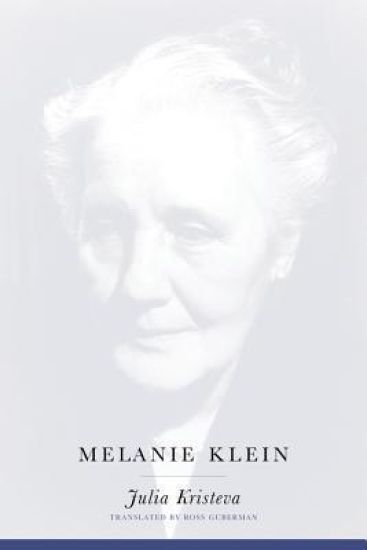
To the renowned psychoanalyst, philosopher, and linguist Julia Kristeva, Melanie Klein (1882-1960) was the most original innovator, male or female, in the psychoanalytic arena. Klein pioneered psychoanalytic practice with children and made major contributions to our understanding of both psychosis and autism. Along the way, she successfully introduced a new approach to the theory of the unconscious without abandoning the principles set forth by Freud. In her first biography of a fellow psychoanalyst, the prolific Kristeva considers Klein's life and intellectual development, weaving a narrative that covers the history of psychoanalysis and illuminates Kristeva's own life and work. Kristeva tells the remarkable story of Klein's life: an unhappy wife and mother who underwent analysis, and-without a medical or other advanced degree-became an analyst herself at the age of 40. In examining her work, Kristeva proposes that Klein's "break" with Freud was really an attempt to complete his theory of the unconscious. Kristeva addresses Klein's numerous critics, and, in doing so, bridges the wide gulf between the clinical and theoretical worlds of psychoanalysis. Klein is celebrated here as the first person to see the mother as the source of not only creativity, but of thought itself, and the first to consider the place of matricide in psychic development. As such, Klein is a seminal figure in the evolution of the provocative ideas about motherhood and the psyche for which Kristeva is most famous. Klein is thus, in a sense, a mother to Kristeva, making this book an account of the development of Kristeva's own thought as well as Klein's.
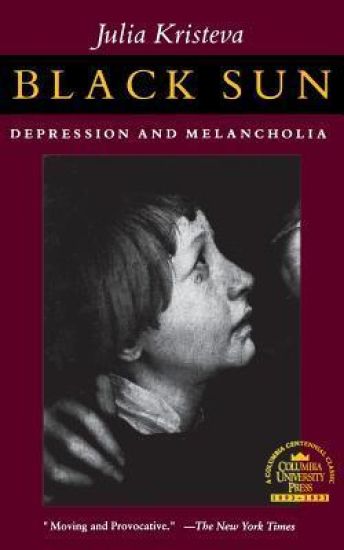
In Black Sun, Julia Kristeva addresses the subject of melancholia, examining this phenomenon in the context of art, literature, philosophy, the history of religion and culture, as well as psychoanalysis. She describes the depressive as one who perceives the sense of self as a crucial pursuit and a nearly unattainable goal and explains how the love of a lost identity of attachment lies at the very core of depression's dark heart. In her discussion she analyzes Holbein's controversial 1522 painting "The Body of the Dead Christ in the Tomb," and has revealing comments on the works of Marguerite Duras, Dostoyevsky and Nerval. Black Sun takes the view that depression is a discourse with a language to be learned, rather than strictly a pathology to be treated.
Julia Kristeva examines melancholia across art, literature, philosophy, the history of religion and culture, and psychoanalysis. She describes the depressive as one who perceives the sense of self as a crucial pursuit and a nearly unattainable goal and explains how the love of a lost identity of attachment lies at the very core of depression’s dark heart. Kristeva analyzes Holbein’s controversial 1522 painting The Body of the Dead Christ in the Tomb and considers the works of Marguerite Duras, Dostoyevsky, and Nerval. Black Sun takes the view that depression is a discourse with a language to be learned, rather than strictly a pathology to be treated.
Psychanalyse, Lieux de Mémoire Et Traumatismes Collectifs: Frenis Zero
Salomon Resnik; Julia Kristeva; René Kaës
Frenis Zero
2021
nidottu
Cette troisi me dition du livre est d di la m moire de Predrag Matvejevic, un historien et crivain qui a consacr beaucoup de ses oeuvres la M diterran e, et Salomon Resnik, le psychanalyste d'origine argentine qui a beaucoup inspir ce livre avec sa notion de "biographie de l'inconscient". Histoire de la M diterran e et psychanalyse sont les deux polarit s de discussion des th mes au centre du livre: l'identit et la m moire collective. L'identit , tant dans sa dimension individuelle que collective, semble une construction et laboration continue de m moires qui sont accueillies dans des lieux qui, en tant que espaces o aller dans un va-et-vient, parcourent les vies des hommes pendant toute la dur e. Mais, en introduisant un tiret, il faut prendre en consid ration le "id" (le a), c'est dire la dimension inconsciente de l'id-entit . Et donc, la question qui se pose est la suivante: "Peut la psychanalyse nous aider comprendre ce dialogue entre lieux de m moire et id-entit ?". Cette question s'inspire de deux diff rentes sources: l'importance des 'biographies de l'inconscient', ainsi que celle du partage de la m moire, voire celle de l'acte de se souvenir ensemble, pour qu'elle maintienne sa significativit . Ce qu'est irrempla able dans l'acte de "se souvenir ensemble", est la configuration d'un climat motionnel unique, on dirait empathique, parfois m me ambivalent. La communaut affective provoqu e par l'acte de "se souvenir ensemble" devient symbolique d'un groupe donn car il se constitue travers des personnes qui ont developp s chacune un itin raire de diff rentes histoires individuelles au cours du temps, mais qui ce moment-l r ussissent se reconna tre et se r unir. Parler de m moire signifie aussi se mesurer avec le probl me de l'usage que un certain groupe, d tenteur d'un pouvoir politique ou conomique, peut faire d'une telle m moire. Cette vision dynamique et conflictuelle des m moires collectives est susceptible, elle seule, d'ouvrir un d bat sur les responsabilit s de la m moire, en d finissant le rapport avec le pass en terme d'une laboration collective, troitement li e la perception sociale des ph nom nes actuels probl matiques tels que ceux des identit s collectives (identit de genre, ethnique, nationale ou locale) ou du pr judice vers les groupes 'autres'. Apr s l'introduction de Giuseppe Leo et le chapitre "Le malaise du monde moderne, les fondements de la vie psychique et le cadre m tapsychique de la souffrance contemporaine", crit par Ren Ka s, la section "La transmission de la m moire des traumatismes collectifs" comprend les crits de Werner Bohleber (sur la rem moration en psychanalyse), de Janine Altounian ("Face au n gationnisme..."), de Silvia Amati Sas ("L'interpr tation dans le trans-subjectif") et de Sverre Varvin (sur le processus de d shumanisation, en particulier concernant notre relation avec les r fugi s). Puis, la section "Les malaises des civilisations du Moyen-Orient" recueille les crits de Yolanda Gampel et de Mayssa El Husseini, et la section "Transmission du f minin, de la culture et malaises des civilisations m diterran ennes" les textes de Julia Kristeva, Anne Loncan, Rita El Khayat et Marie-Rose Moro.
En sommer med Proust
Jérome Prieur; Julia Kristeva; Nicolas Grimaldi; Adrien Goetz; Michel Erman; Raphaël Enthoven; Antoine Compagnon; Laura El Makki; Jean-Yves Tadié
Solum
2016
nidottu
På sporet av den tapte tid er klassikeren mange føler de burde ha lest. Andre regner den til en av sine største leseopplevelser. Uansett hvilken kategori du tilhører er En sommer med Proust tilfredsstillende lesning. Denne lille boken viser at Prousts roman kan leses på like mange måter som det finnes lesere. Her følger vi de åtte forfatterne som alle er eksperter på Prousts litteratur, til salongene, teatrene og bordellene i Paris, og til kysten av Normandie, mens de diskuterer spørsmålet om hvorvidt kjærligheten og kunsten kan lindre livets skuffelser og utfordringer. En sommer med Proust er oppfølgeren til den internasjonale bestselgeren En sommer med Montaigne, som ble både en kritiker- og publikumsfavoritt i Norge.
Mixing fiction, history, psychoanalysis, and personal fantasy, Teresa, My Love turns a past world into a modern marvel, following Sylvia Leclercq, a French psychoanalyst, academic, and incurable insomniac, as she falls for the sixteenth-century Saint Teresa of Avila and becomes consumed with charting her life. Traveling to Spain, Leclercq, Julia Kristeva's probing alter ego, visits the sites and embodiments of the famous mystic and awakens to her own desire for faith, connection, and rebellion. One of Kristeva's most passionate and transporting works, Teresa, My Love interchanges biography, autobiography, analysis, dramatic dialogue, musical scores, and images of paintings and sculpture to engage the reader in Leclercq's-and Kristeva's-journey. Born in 1515, Teresa of Avila outwitted the Spanish Inquisition and was a key reformer of the Carmelite Order. Her experience of ecstasy, which she intimately described in her writings, released her from her body and led to a complete realization of her consciousness, a state Kristeva explores in relation to present-day political failures, religious fundamentalism, and cultural malaise. Incorporating notes from her own psychoanalytic practice, as well as literary and philosophical references, Kristeva builds a fascinating dual diagnosis of contemporary society and the individual psyche while sharing unprecedented insights into her own character.
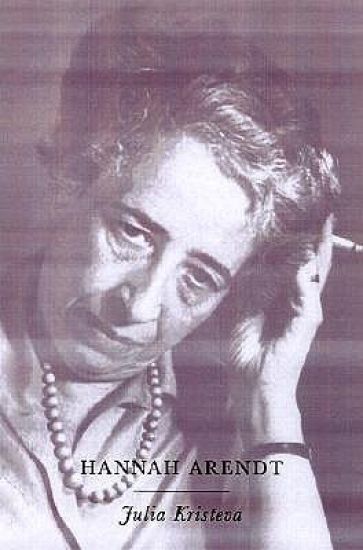
Twenty-five years after her death, we are still coming to terms with the controversial figure of Hannah Arendt. Interlacing the life and work of this seminal twentieth-century philosopher, Julia Kristeva provides us with an elegant, sophisticated biography brimming with historical and philosophical insight. Centering on the theme of female genius, Hannah Arendt emphasizes three features of the philosopher's work. First, by exploring Arendt's critique of Saint Augustine and her biographical essay on Rahel Varnhagen, Kristeva accentuates Arendt's commitment to recounting lives and narration. Second, Kristeva reflects on Arendt's perspective on Judaism, anti-Semitism, and the "banality of evil." Finally, the biography assesses Arendt's intellectual journey, placing her enthusiasm for observing both social phenomena and political events in the context of her personal life. Drawing on fragments of Arendt's most intimate correspondence with her longtime lover Martin Heidegger and her husband Heinrich Blucher, excerpts from her mother's "Unser Kind" (a diary tracking Hannah's formative years), and passages from Arendt's philosophical writings, Kristeva presents a luminous story. With a thorough thematic index and bibliographical references, Hannah Arendt is a major breakthrough in the understanding of an essential thinker.
In this volume, based on the series of Alexander Lectures she delivered at the University of Toronto, Julia Kristeva explores the philosophical aspects of Hannah Arendt's work: her understanding of such concepts as language, self, body, political space, and life. Kristeva's aim is to clarify contradictions in Arendt's thought as well as correct misapprehensions about her political and philosophical views. The first two chapters describe how Arendt followed an original conception of human narrative, such that life, action, and even thought, are only human when they can be narrated and thus shared with other persons who, through the evocation of memory, complete the story and make history into a condensed sign, into a revelation of the 'who.' The third chapter concentrates on Arendt's work in relation to her twentieth-century contemporaries, especially Isak Dinesen, Brecht, Kafka, and Nathalie Sarraute. In the last two chapters, on the body and the Kantian concept of judgment, Kristeva offers a subtle critical exploration of Arendt's ignoring of the world of the unconscious opened up by psychoanalysis, an exploration that, paradoxically, reveals the political force of Arendt's acceptance of herself as woman and Jew. Kristeva's account of Arendt's 'philosophy of narrative' is clear, coherent, forceful, and often impassioned. Much has been written in North America about Arendt's political work, but little about her more philosophical endeavours. Hannah Arendt: Life Is a Narrative makes a compelling case that Arendt may be the twentieth century's only true political philosopher.
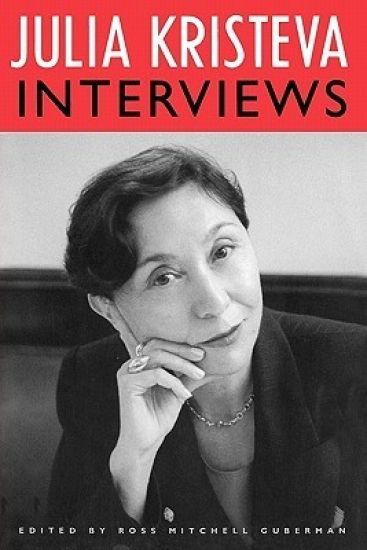
A collection of twenty-two interviews and one personal essay, Julia Kristeva Interviews presents an intimate and accessible portrait of one of France's most important critical thinkers and intellectual personalities.
Compiled by three leading experts in the psychological, sociological, and criminal justice fields, this volume addresses timely questions from an eclectic range of positions. The product of a landmark conference on gangs, Gangs and Society brings together the work of academics, activists, and community leaders to examine the many functions and faces of gangs today. Analyzing the spread of gangs from New York to Texas to the West Coast, the book covers such topics as the spirituality of gangs, the place of women in gang culture, and the effect on gangs of a variety of educational programs and services for at-risk youth. The final chapter examines the "gang-photography phenomenon" by looking at the functions and politics of different approaches to gang photography and features a photographic essay by Donna DeCesare, an award-winning journalist.
Since the late 1980s, Brazilians of Japanese descent have been "return" migrating to Japan as unskilled foreign workers. With an immigrant population currently estimated at roughly 280,000, Japanese Brazilians are now the second largest group of foreigners in Japan. Although they are of Japanese descent, most were born in Brazil and are culturally Brazilian. As a result, they have become Japan's newest ethnic minority.Drawing upon close to two years of multisite fieldwork in Brazil and Japan, Takeyuki Tsuda has written a comprehensive ethnography that examines the ethnic experiences and reactions of both Japanese Brazilian immigrants and their native Japanese hosts. In response to their socioeconomic marginalization in their ethnic homeland, Japanese Brazilians have strengthened their Brazilian nationalist sentiments despite becoming members of an increasingly well-integrated transnational migrant community. Although such migrant nationalism enables them to resist assimilationist Japanese cultural pressures, its challenge to Japanese ethnic attitudes and ethnonational identity remains inherently contradictory. Strangers in the Ethnic Homeland illuminates how cultural encounters caused by transnational migration can reinforce local ethnic identities and nationalist discourses.
An easily accessible introduction to Kristeva's work in English. The essays have been selected as representative of the three main areas of Kristeva's writing--semiotics, psychoanalysis, and political theory--and are each prefaced by a clear, instructive introduction. For beginners or those familiar with Kristeva's work this is a good complement to The Portable Kristeva with a convenient selection of articles from Kristeva's earlier work some of which are otherwise hard to come by.
Desire in Language traces the path of an investigation, extending over a period of ten years, into the semiotics of literature and the arts. But the essays of Julia Kristeva in this volume, though they often deal with literature and art, do not amount to either "literary criticism" or "art criticism." Their concern, writes Kristeva, "remains intratheoretical: they are based on art and literature in order to subvert the very theoretical, philosophical, or semiological apparatus." Probing beyond the discoveries of Sigmund Freud, Jacques Lacan, Roman Jakobson and others, Julia Kristeva proposes and tests theories centered on the nature and development of the novel, and on what she has defined as a signifying practice in poetic language and pictural works. Desire in Language fully shows what Roman Jakobson has called Kristeva's "genuine gift of questioning generally adopted 'axioms,' and her contrary gift of releasing various 'damned questions' from their traditional question marks."
We are still coming to terms with the controversial figure of Hannah Arendt. Interlacing her life and work, this book is an elegant, sophisticated biography brimming with historical and philosophical insight. Focusing on the theme of female genius, Julia Kristeva emphasizes three features of the philosopher’s work. First, by exploring Arendt’s critique of Saint Augustine and her biographical essay on Rahel Varnhagen, Kristeva accentuates Arendt’s commitment to recounting lives and narration. Second, Kristeva reflects on Arendt’s perspective on Judaism, anti-Semitism, and the “banality of evil.” Finally, the biography assesses Arendt’s intellectual journey, placing her enthusiasm for observing both social phenomena and political events in the context of her personal life. Drawing on fragments of Arendt’s correspondence with her longtime lover Martin Heidegger and her husband Heinrich Blucher, excerpts from her mother’s “Unser Kind” (a diary tracking Hannah’s formative years), and passages from Arendt’s philosophical writings, Kristeva presents a luminous account of an essential thinker.
Melanie Klein (1882–1960) pioneered psychoanalytic practice with children and made major contributions to our understanding of both psychosis and autism. Along the way, she introduced a new approach to the theory of the unconscious without abandoning the principles set forth by Freud. In her first biography of a fellow psychoanalyst, Julia Kristeva considers Klein’s life and intellectual development, weaving a narrative that illuminates her own life and work. Kristeva tells the remarkable story of Klein’s life: an unhappy wife and mother who underwent analysis and—without a medical or other advanced degree—became an analyst herself at the age of 40. In Kristeva’s account, Klein was the first person to see the mother as the source of not only creativity but also thought itself and the first to consider the place of matricide in psychic development—making her a crucial figure in the evolution of the provocative ideas about motherhood and the psyche for which Kristeva is renowned.
This intellectual biography of Colette—the final volume of Julia Kristeva's trilogy on "female genius"—is a major breakthrough in understanding one of the great creative minds of the twentieth century. Colette (1873-1954) was a prolific novelist who celebrated sexual pleasure and invented a language for it at a time when women writers were inhibited about dealing with the topic. Female sexuality in a male-dominated world and the joys and pains of love served as her main themes, and her novels—Cheri, La Chatte, and Gigi, among them—blurred the boundaries between fact and fiction long before autobiographical novels became commonplace. She married three times, had male and female lovers, and for a time supported herself as a mime, dancing semi-nude in music halls throughout France. When she died, she received the first state funeral the French Republic had ever given a woman. Colette's writing was inspired by entertainers, courtesans, an aristocratic Parisian lesbian subculture, and fin de siècle gay aesthetes. She admired those who lived on the sexual edge and was accused of moral corruption in intellectual matters—she published in pro-Vichy, anti-Semitic journals during the Occupation, even as she fought to keep her Jewish third husband from deportation. Kristeva deftly examines Colette's controversial life and work and considers two of her most important influences, Honoré de Balzac and Marcel Proust. Paying particular attention to the language the French writer used to "say the unsayable and name the unnameable," Kristeva offers an elegant and sophisticated critique of Colette's psychological conflicts, particularly her sexual relationships and how these conflicts are both recorded in and resolved through the act of writing. Appealing to Freudian and Lacanian concepts such as the Oedipus complex, perversion, the symbolic, and melancholy, Kristeva opens Colette's oeuvre to psychoanalytic interpretation. The impression that remains is of a woman intent on experiencing the world's pleasures—its jouissance.