

Kirjailija
Julia Kristeva
Kirjat ja teokset yhdessä paikassa: 95 kirjaa, julkaisuja vuosilta 1979-2026, suosituimpien joukossa Colette. Vertaile teosten hintoja ja tarkista saatavuus suomalaisista kirjakaupoista.
95 kirjaa
Kirjojen julkaisuhaarukka 1979-2026.

Mixing fiction, history, psychoanalysis, and personal fantasy, Teresa, My Love turns a past world into a modern marvel, following Sylvia Leclercq, a French psychoanalyst, academic, and incurable insomniac, as she falls for the sixteenth-century Saint Teresa of Avila and becomes consumed with charting her life. Traveling to Spain, Leclercq, Julia Kristeva's probing alter ego, visits the sites and embodiments of the famous mystic and awakens to her own desire for faith, connection, and rebellion. One of Kristeva's most passionate and transporting works, Teresa, My Love interchanges biography, autobiography, analysis, dramatic dialogue, musical scores, and images of paintings and sculpture to engage the reader in Leclercq's—and Kristeva's—journey. Born in 1515, Teresa of Avila outwitted the Spanish Inquisition and was a key reformer of the Carmelite Order. Her experience of ecstasy, which she intimately described in her writings, released her from her body and led to a complete realization of her consciousness, a state Kristeva explores in relation to present-day political failures, religious fundamentalism, and cultural malaise. Incorporating notes from her own psychoanalytic practice, as well as literary and philosophical references, Kristeva builds a fascinating dual diagnosis of contemporary society and the individual psyche while sharing unprecedented insights into her own character.
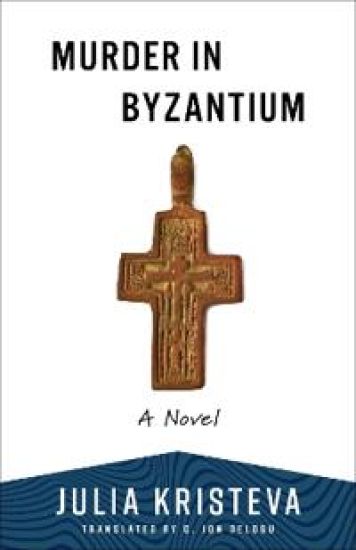
In this absorbing, suspenseful novel Julia Kristeva combines social satire, medieval history, philosophy, psychoanalytic theory, and autobiography within a gruesome murder mystery. Murder in Byzantium deftly moves from eleventh-century Europe, wracked by the turbulence of the First Crusade, to the sun-dappled, cultural wasteland of present-day Santa Varvara, threatened by religious cults, gangs, and a serial killer on the loose. This killer is murdering members of a dubious religious sect, the New Pantheon, and leaving a mysterious figure eight drawn on their corpses. Meanwhile, Sebastian Chrest-Jones, a noted professor of human migrations, clandestinely writing a novel about the Byzantine princess-historian Anna Comnena, disappears on a quest to learn more about an ancestor who roamed across Europe to Byzantium during the First Crusade. Kristeva's recurring characters, detective Northrop Rilsky and the French journalist Stephanie Delacour, step in and desperately try to piece together the two-part mystery in the midst of their unexpected love affair.In the tradition of Umberto Eco, Susan Sontag, and Ian McEwan, Kristeva skillfully weaves philosophical and critical ideas into her fiction. Peering into the mores, obsessions, and excesses of contemporary society, Kristeva offers an engrossing portrait of Santa Varvara, a paradoxical place of sunshine and pollution where skeletons lurk in the closets of politicians and oil company executives. Her descriptions of the First Crusade and the Byzantine Empire vividly evoke a distant past while speaking to such contemporary concerns as immigration, fundamentalism, terrorism, and the East-West divide. Murder in Byzantium is also the only work in which Kristeva explores her Bulgarian roots. In the midst of this rich, multilayered historical novel, Kristeva also presents three stunning, closely observed, and interlocking portraits of characters struggling with loss and emptiness in their personal histories and day-to-day lives.
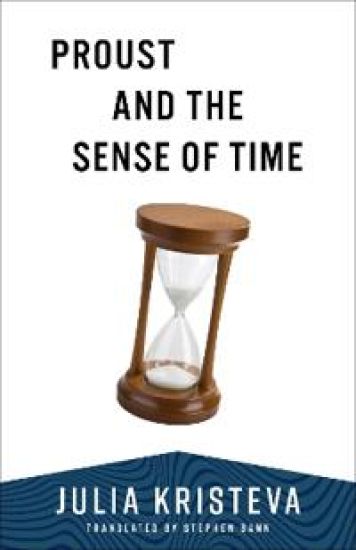
Julia Kristeva presents a thoroughly original and compelling reading of Proust’s Remembrance of Things Past, first delivered at the 1992 T.S. Eliot Memorial Lectures at Canterbury. Kristeva's first essay, “Proust and Time Embodied,” takes a broadly psychoanalytical, linguistically sensitive approach to Proust’s exploration of time and the operation of memory. Next, in “In Search of Madeline,” she delves into Proust’s concept of the little cake that flooded him with the taste of childhood regained, providing an explanation for Proust’s search for the deeper levels of childhood grounded in her psychoanalytic experience.Throughout Proust and the Sense of Time, Kristeva draws on Proust’s notebooks and manuscripts, pointing out significant variations in the different versions of his work. She examines his early philosophical training and the philosophical trends in Paris at the turn of the century, seeking to explain how he arrived at his concept of the primacy of memory and sensation.

Growing up in Bulgaria, Julia Kristeva was warned by her father not to read Dostoyevsky. “Of course, and as usual,” she recalls, “I disobeyed paternal orders and plunged into Dosto. Dazzled, overwhelmed, engulfed.” Kristeva would go on to become one of the most important figures in European intellectual life—and she would return over and over again to Dostoyevsky, still haunted and enraptured by the force of his writing.In this book, Kristeva embarks on a wide-ranging and stimulating inquiry into Dostoyevsky’s work and the profound ways it has influenced her own thinking. Reading across his major novels and shorter works, Kristeva offers incandescent insights into the potent themes that draw her back to the Russian master: God, otherness, violence, eroticism, the mother, the father, language itself. Both personal and erudite, the book intermingles Kristeva’s analysis with her recollections of Dostoyevsky’s significance in different intellectual moments—the rediscovery of Bakhtin in the Thaw-era Eastern Bloc, the debates over poststructuralism in 1960s France, and today’s arguments about whether it can be said that “everything is permitted.” Brilliant and vivid, this is an essential book for admirers of both Kristeva and Dostoyevsky. It also features an illuminating foreword by Rowan Williams that reflects on the significance of Kristeva’s reading of Dostoyevsky for his own understanding of religious writing.

In the Palace of Versailles there is a fabulous golden clock, made for Louis XV by the king's engineer, Claude-Sim on Passemant. The astronomical clock shows the phases of the moon and the movements of the planets, and it will tell time--hours, minutes, seconds, and even sixtieths of seconds--until the year 9999. Passemant's clock brings the nature of time into sharp focus in Julia Kristeva's intricate, poetic novel The Enchanted Clock. Nivi Delisle, a psychoanalyst and magazine editor, nearly drowns while swimming off the le de R ; the astrophysicist Theo Passemant fishes her out of the water. They become lovers. While Theo wonders if he is descended from the clockmaker Passemant, Nivi's son Stan, who suffers from occasional comas, develops a passion for the remarkable clock at Versailles. Soon Nivi is fixated on its maker. But then the clock is stolen, and when a young writer for Nivi's magazine mysteriously dies, the clock is found near his body. The Enchanted Clock combines past and present, jumping back and forth between points of view and across eras from eighteenth-century Versailles to the present day. Its stylistically inventive narrative voices bring both immediacy and depth to our understanding of consciousness. Nivi's life resembles her creator's in many respects, coloring Kristeva's customary erudition with autobiographical poignancy. Part detective mystery, part historical fiction, The Enchanted Clock is a philosophically and linguistically multifaceted novel, full of poetic ruminations on memory, love, and the transcendence of linear time. It is one of the most illuminating works of one of France's great writers and thinkers.
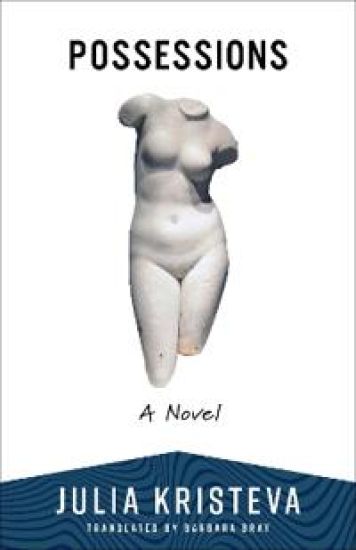
This sequel to Julia Kristeva’s celebrated allegory The Old Man and the Wolves returns to the corrupt seaside resort of a mythical town, where the boundaries between East and West, civilization and barbarism, and good and evil are erased. Part mystery, part meditation, this engrossing tale features the return of Parisian amateur detective and newspaper reporter Stephanie Delacour (Kristeva’s alter ego), drawn into the mystery of a friend's murder.The story opens with the gruesome discovery of the decapitated body of a gifted translator, Gloria Harrison. Delacour finds herself participating in the investigation in the company of Detective Superintendent Northrup Rilsky. As the mystery unfolds, Delacour veers away from Rilsky’s investigation, on to a trail that leads to the real killer. Kristeva uses the classic thriller genre to animate the themes that run through her work as a linguist and philosopher. While Stephanie Delacour probes a brilliant gallery of suspects, we read between the lines some of the sorrows and dilemmas that are the focus of Kristeva’s own life and work: motherhood and the complex relationship between mother and child; art and music; psychoanalysis; mourning and melancholia; language; the powers of horror; and the hostility aroused by a competent, gifted, and attractive woman who is at once devotedly maternal and capable of sexual passion.

Underlying Julia Kristeva’s Nations Without Nationalism is the idea that otherness—whether it be ethnic, religious, social, or political—needs to be understood and accepted in order to guarantee social harmony. This book is an impassioned plea for tolerance and for commonality, aimed at a world brimming over with racism and xenophobia. Responding to the rise of neo-Nazi groups in Germany and Eastern Europe and the popularity of the National Front in France, Kristeva turns to the origins of the nation-state to illustrate the problematic nature of nationalism and its complex configurations in subsequent centuries. For Kristeva, the key to commonality can be found in Montesquieu’s esprit general—his notion of the social body as a guaranteed hierarchy of private rights.Nations Without Nationalism also contains Kristeva’s thoughts on Harlem Desir, the founder of the antiracist organization SOS Racisme; the links between psychoanalysis and nationalism; the historical nature of French national identity; the relationship between esprit general and Volksgeist; Charles de Gaulle’s complex ideas involving the “nation” and his dream of a unified Europe. Nations Without Nationalism reflects a passionate commitment to enlightenment and social justice. As ethnic strife persists in Europe and the United States, Kristeva’s humanistic message carries with it a special resonance and urgency.
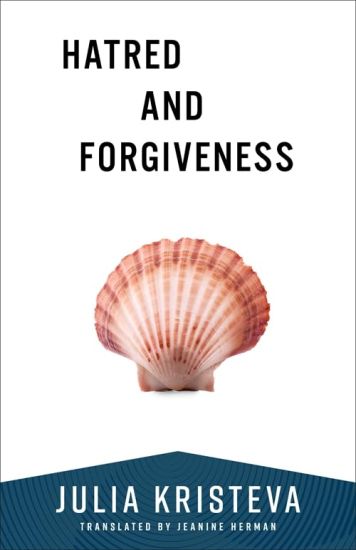
Julia Kristeva refracts the impulse to hate (and our attempts to subvert, sublimate, and otherwise process it) through psychoanalysis and text, exploring worlds, women, religion, portraits, and the act of writing. Her inquiry spans themes, topics, and figures central to her writing, and her paths of discovery advance the theoretical innovations that are so characteristic of her thought.Kristeva rearticulates and extends her analysis of language, abjection, idealization, female sexuality, love, and forgiveness. She examines the "maladies of the soul," utilizing examples from her practice and the ailments of her patients, such as fatigue, irritability, and general malaise. She sources the Bible and texts by Marguerite Duras, St. Teresa of Ávila, Roland Barthes, Simone de Beauvoir, and Georgia O'Keefe. Balancing political calamity and individual pathology, she addresses internal and external catastrophes and global and personal injuries, confronting the nature of depression, obliviousness, fear, and the agony of being and nothingness.Throughout Kristeva develops the notion that psychoanalysis is the key to serenity, with its processes of turning back, looking back, investigating the self, and refashioning psychical damage into something useful and beautiful. Constant questioning, Kristeva contends, is essential to achieving the coming to terms we all seek at the core of forgiveness.
Julia Kristeva is a true polymath, an intellectual of astonishingly wide range whose erudition and insight have been brought to bear on psychoanalysis, literary criticism, gender and sex, and cultural critique. Passions of Our Time showcases recent essays of Kristeva’s that demonstrate the scope of her capacious intellect, her gifts as a stylist, and the profound contribution of her thought to the challenges of the present. The collection begins with ? vivid recollection of celebrating, as a child in Bulgaria, Alphabet Day, the holiday honoring the Cyrillic letters, which proceeds outward into a contemplation of the writer as translator. Kristeva considers literature with Barthes, freedom through Rousseau, Teresa of Avila and mystical experience, Simone de Beauvoir’s dream life, and Antigone and the psychic life of women. A group of essays drawing on her psychoanalytic work delve into Freud, Lacan, maternal eroticism, and the continued importance of psychoanalysis today. In a series of striking investigations, she thinks through disability and normativity, monotheism and secularization, the need to believe and the desire to know. Calling for the courage to renew and reinvent humanism, she outlines the principles of a stance founded on the importance of respecting human life. Finally, Kristeva discusses French culture and diversity, rethinking universalism and interrogating the potential for Islam and psychoanalysis to meet, and pays homage to Beauvoir by rephrasing her dictum into the provocative “One is born woman, but I become one.”
Julia Kristeva pursues her exploration of the core emotions of the human psyche through a series of philosophical and literary texts. She focuses on the role of narcissism and idealization in the formation of a love object, accounting for the role of the death drive by coining the term “love/hate.” Tales of Love offers illuminating psychoanalytic readings of Thomas Aquinas, courtly romances, Romeo and Juliet, Baudelaire, Stendhal, and Bataille, among others.
"Unlike Freud, I do not claim that religion is just an illusion and a source of neurosis. The time has come to recognize, without being afraid of 'frightening' either the faithful or the agnostics, that the history of Christianity prepared the world for humanism." So writes Julia Kristeva in this provocative work, which skillfully upends our entrenched ideas about religion, belief, and the thought and work of a renowned psychoanalyst and critic. With dialogue and essay, Kristeva analyzes our "incredible need to believe"—the inexorable push toward faith that, for Kristeva, lies at the heart of the psyche and the history of society. Examining the lives, theories, and convictions of Saint Teresa of Ávila, Sigmund Freud, Donald Winnicott, Hannah Arendt, and other individuals, she investigates the intersection between the desire for God and the shadowy zone in which belief resides. Kristeva suggests that human beings are formed by their need to believe, beginning with our first attempts at speech and following through to our adolescent search for identity and meaning. Even if we no longer have faith in God, she argues, we must believe in human destiny and creative possibility. Reclaiming Christianity's openness to self-questioning and the search for knowledge, Kristeva urges a "new kind of politics," one that restores the integrity of the human community.
Informed by a provocative exhibition at the Louvre curated by the author, The Severed Head unpacks artistic representations of severed heads from the Paleolithic period to the present. Surveying paintings, sculptures, and drawings, Julia Kristeva turns her famed critical eye to a study of the head as symbol and metaphor, as religious object and physical fact, further developing a critical theme in her work—the power of horror—and the potential for the face to provide an experience of the sacred.Kristeva considers the head as icon, artifact, and locus of thought, seeking a keener understanding of the violence and desire that drives us to sever, and in some cases keep, such a potent object. Her study stretches all the way back to 6,000 B.C.E., with humans' early decoration and worship of skulls, and follows with the Medusa myth; the mandylion of Laon (a holy relic in which the face of a saint appears on a piece of cloth); the biblical story of John the Baptist and his counterpart, Salome; tales of the guillotine; modern murder mysteries; and even the rhetoric surrounding the fight for and against capital punishment. Kristeva interprets these "capital visions" through the lens of psychoanalysis, drawing infinite connections between their manifestation and sacred experience and very much affirming the possibility of the sacred, even in an era of "faceless" interaction.

Part detective story, part fable, this novel—narrated by a French journalist—takes the reader to a mythical postindustrial city where the boundaries between East and West, civilization and barbarianism have been erased. Wolves invade the seaside resort town of Santa Varvara in Eastern Europe, killing thousands of people, but no one will talk of it except a Latin professor known as the Old Man.
Julia Kristeva’s dazzling fictional debut is an intellectual adventure, full of vitality, sensuousness, and sustained lyricism. Reminiscent of The Mandarins, Simone de Beauvoir’s 1954 masterpiece, The Samurai brilliantly reconstructs a pivotal era of postwar French history—Paris in the late 1960s—and at the same time records the political disillusionment and ferment of a generation. In a brisk narrative spanning three continents, the novel follows an array of passionate and promiscuous intellectual warriors—the “samurai” for whom “writing is the only lasting act of pleasure and war combined.”Readers will recognize finely sketched and often searing portraits of figures such as Lacan, Derrida, Barthes, Althusser, and many others. With an authorial voice that modulates between the erotic and the meditative, the ironic and the rancorous, The Samurai moves from Paris to Mao’s China—where revolutionary idealism collides with cold pragmatism—to New York and back to Paris. Over a twenty-five year period, the characters experience countless battles involving love, depression, maternity, and disease, while the various themes of the text—language, prison, madness, emotional ruptures—are brought to fruition with astounding insight.This is a novel whose enormous energy derives from the juxtaposition of vital ideas set on a broad historical canvas. Fluid and captivating, The Samurai brilliantly illuminates both the constantly shifting terrain of human relationships and the manifold psychological entanglements of Left Bank intellectuals.

Freud and psychoanalysis taught us that rebellion is what guarantees our independence and our creative abilities. But in the contemporary "entertainment" culture, is rebellion still a viable option? Is it still possible to build and embrace a counterculture? For whom—and against what?Julia Kristeva illustrates the advances and impasses of rebel culture through the experiences of three twentieth-century writers: the existentialist Jean-Paul Sartre, the surrealist Louis Aragon, and the theorist Roland Barthes. These figures, according to Kristeva, took part in a revolution against accepted notions of identity—of one’s relation to others. She places their accomplishments in the context of other revolutionary movements in art, literature, and politics, also offering an illuminating discussion of Freud’s groundbreaking work on rebellion.
In this wide-ranging introduction, Julia Kristeva presents the evolution and emergence of linguistics. For Kristeva, the object of linguistic investigation is not “What is language?” but rather “How can language be thought?” In a series of carefully documented analyses, she examines the links between philosophical speculation and linguistic practice. She traces postmodern linguistic theory back to its roots, using sources that range from Egyptian hieroglyphics, Mayan and Phoenician writings, and the Hebrew Bible to the Prague School of Structuralism. Thorough and far-reaching in its analysis, Language: The Unknown provides fascinating insights into the history of graphic cultures, philosophy, anthropology, and semiotics.

"These days, who still has a soul?" asks Julia Kristeva in this psychoanalytic exploration. Drawing on her many years of experience as a practicing psychoanalyst, Kristeva reveals to readers a new kind of patient, symptomatic of an age of political upheaval, mass mediated culture, and the dramatic overhaul of familial and sexual mores. New Maladies of the Soul poses a troubling question about the human subject in the West today: Is the psychic space that we have traditionally known disappearing?Kristeva finds that the psychoanalytic models of Freud and Lacan need to be reread in light of this new patient, a product of the contemporary moral crisis of values resulting from a loss of ideology and a deterioration of belief. By revisiting Freud and Lacan, Kristeva offers the hope of a new psychoanalysis. Each patient, she contends, suffers from a unique malady which must be targeted. In the first half of the book, Kristeva offers a series of detailed case studies that reinforce her provocative theoretical notions. These case studies illustrate today's "new maladies"—common psychiatric disturbances as they are manifested in today's patient. Drawing on the work of the psychologist Helene Deutsch and the writer Germaine de Stael. Kristeva turns her attention to women's experiences and contributions. Delving into art, literature, autobiography, and theories of language, she continues with an exploration of cultural products ranging from the Bible to the work of Leonardo da Vinci. Kristeva offers the hope that these maladies harbor new creative potential and new hope for the soul—if we can comprehend their effect on the individual and collective experiences of our time.
Julia Kristeva, herself a product of the famous May 1968 Paris student uprising, has long been fascinated by the concepts of rebellion and revolution. But is it still possible to build and nurture a culture of revolt in today’s world? In this book, Kristeva examines the manner in which three of the most unsettling modern writers—Louis Aragon, Jean-Paul Sartre, and Roland Barthes—affirmed their personal rebellions. She then ponders the future of rebellion, maintaining not only that political revolt is mired in compromise but also that an essential component of European culture—a culture of doubt and criticism—is losing its moral and aesthetic force.
Julia Kristeva’s Time and Sense is a major reassessment of Marcel Proust and In Search of Lost Time. Not only a meditation on Proust, it is also a commentary on how the experience of literature is manifested in time and sensation. Kristeva uses Proust as a starting point to reflect on broader notions of character, time, sensation, metaphor, and history.