Kirjojen hintavertailu. Mukana 12 459 402 kirjaa ja 12 kauppaa.

Kirjailija

Julia Kristeva

Kirjat ja teokset yhdessä paikassa: 95 kirjaa, julkaisuja vuosilta 1979-2026, suosituimpien joukossa Colette. Vertaile teosten hintoja ja tarkista saatavuus suomalaisista kirjakaupoista.

95 kirjaa

Kirjojen julkaisuhaarukka 1979-2026.

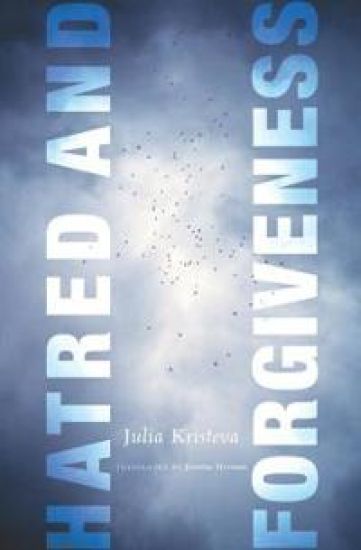
Hatred and Forgiveness

Hatred and Forgiveness

Julia Kristeva

Columbia University Press
2010
sidottu
Julia Kristeva refracts the impulse to hate (and our attempts to subvert, sublimate, and otherwise process it) through psychoanalysis and text, exploring worlds, women, religion, portraits, and the act of writing. Her inquiry spans themes, topics, and figures central to her writing, and her paths of discovery advance the theoretical innovations that are so characteristic of her thought. Kristeva rearticulates and extends her analysis of language, abjection, idealization, female sexuality, love, and forgiveness. She examines the "maladies of the soul," utilizing examples from her practice and the ailments of her patients, such as fatigue, irritability, and general malaise. She sources the Bible and texts by Marguerite Duras, St. Teresa of Avila, Roland Barthes, Simone de Beauvoir, and Georgia O'Keefe. Balancing political calamity and individual pathology, she addresses internal and external catastrophes and global and personal injuries, confronting the nature of depression, obliviousness, fear, and the agony of being and nothingness. Throughout Kristeva develops the notion that psychoanalysis is the key to serenity, with its processes of turning back, looking back, investigating the self, and refashioning psychical damage into something useful and beautiful. Constant questioning, Kristeva contends, is essential to achieving the coming to terms we all seek at the core of forgiveness.
This Incredible Need to Believe

This Incredible Need to Believe

Julia Kristeva

Columbia University Press
2009
sidottu
"Unlike Freud, I do not claim that religion is just an illusion and a source of neurosis. The time has come to recognize, without being afraid of 'frightening' either the faithful or the agnostics, that the history of Christianity prepared the world for humanism." So writes Julia Kristeva in this provocative work, which skillfully upends our entrenched ideas about religion, belief, and the thought and work of a renowned psychoanalyst and critic. With dialogue and essay, Kristeva analyzes our "incredible need to believe"--the inexorable push toward faith that, for Kristeva, lies at the heart of the psyche and the history of society. Examining the lives, theories, and convictions of Saint Teresa of Avila, Sigmund Freud, Donald Winnicott, Hannah Arendt, and other individuals, she investigates the intersection between the desire for God and the shadowy zone in which belief resides. Kristeva suggests that human beings are formed by their need to believe, beginning with our first attempts at speech and following through to our adolescent search for identity and meaning. Kristeva then applies her insight to contemporary religious clashes and the plight of immigrant populations, especially those of Islamic origin. Even if we no longer have faith in God, Kristeva argues, we must believe in human destiny and creative possibility. Reclaiming Christianity's openness to self-questioning and the search for knowledge, Kristeva urges a "new kind of politics," one that restores the integrity of the human community.
Murder in Byzantium

Murder in Byzantium

Julia Kristeva

Columbia University Press
2008
pokkari
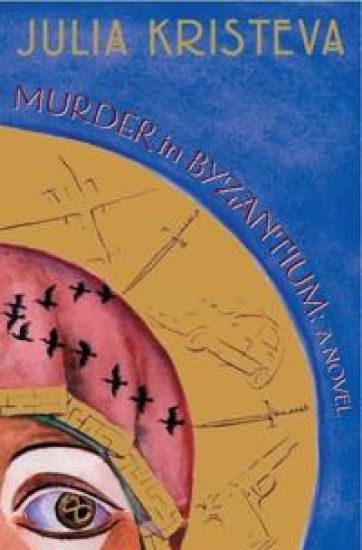
In this absorbing, suspenseful novel Julia Kristeva combines social satire, medieval history, philosophy, psychoanalytic theory, and autobiography within a gruesome murder mystery. Murder in Byzantium deftly moves from eleventh-century Europe, wracked by the turbulence of the First Crusade, to the sun-dappled, cultural wasteland of present-day Santa Varvara, threatened by religious cults, gangs, and a serial killer on the loose. This killer is murdering members of a dubious religious sect, the New Pantheon, and leaving a mysterious figure eight drawn on their corpses. Meanwhile, Sebastian Chrest-Jones, a noted professor of human migrations, clandestinely writing a novel about the Byzantine princess-historian Anna Comnena, disappears on a quest to learn more about an ancestor who roamed across Europe to Byzantium during the First Crusade. Kristeva's recurring characters, detective Northrop Rilsky and the French journalist Stephanie Delacour, step in and desperately try to piece together the two-part mystery in the midst of their unexpected love affair. In the tradition of Umberto Eco, Susan Sontag, and Ian McEwan, Kristeva skillfully weaves philosophical and critical ideas into her fiction. Peering into the mores, obsessions, and excesses of contemporary society, Kristeva offers an engrossing portrait of Santa Varvara, a paradoxical place of sunshine and pollution where skeletons lurk in the closets of politicians and oil company executives. Her descriptions of the First Crusade and the Byzantine Empire vividly evoke a distant past while speaking to such contemporary concerns as immigration, fundamentalism, terrorism, and the East-West divide. Murder in Byzantium is also the only work in which Kristeva explores her Bulgarian roots. In the midst of this rich, multilayered historical novel, Kristeva also presents three stunning, closely observed, and interlocking portraits of characters struggling with loss and emptiness in their personal histories and day-to-day lives.
Svart sol

Svart sol

Julia Kristeva

Pax
2007
nidottu
Gjennom studier av melankolisymptomer hos sine kvinnelige pasienter, viser forfatteren sammenhengen mellom melankoli, språk og kunst og demonstrerer at hun ikke bare er filosof og psykoanalytiker, men også kunstteoretiker.
Murder in Byzantium

Murder in Byzantium

Julia Kristeva

Columbia University Press
2006
sidottu
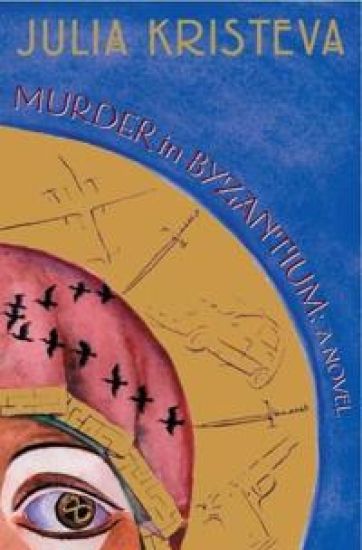
In this absorbing, suspenseful novel Julia Kristeva combines social satire, medieval history, philosophy, psychoanalytic theory, and autobiography within a gruesome murder mystery. Murder in Byzantium deftly moves from eleventh-century Europe, wracked by the turbulence of the First Crusade, to the sun-dappled, cultural wasteland of present-day Santa Varvara, threatened by religious cults, gangs, and a serial killer on the loose. This killer is murdering members of a dubious religious sect, the New Pantheon, and leaving a mysterious figure eight drawn on their corpses. Meanwhile, Sebastian Chrest-Jones, a noted professor of human migrations, clandestinely writing a novel about the Byzantine princess-historian Anna Comnena, disappears on a quest to learn more about an ancestor who roamed across Europe to Byzantium during the First Crusade. Kristeva's recurring characters, detective Northrop Rilsky and the French journalist Stephanie Delacour, step in and desperately try to piece together the two-part mystery in the midst of their unexpected love affair. In the tradition of Umberto Eco, Susan Sontag, and Ian McEwan, Kristeva skillfully weaves philosophical and critical ideas into her fiction. Peering into the mores, obsessions, and excesses of contemporary society, Kristeva offers an engrossing portrait of Santa Varvara, a paradoxical place of sunshine and pollution where skeletons lurk in the closets of politicians and oil company executives. Her descriptions of the First Crusade and the Byzantine Empire vividly evoke a distant past while speaking to such contemporary concerns as immigration, fundamentalism, terrorism, and the East-West divide. Murder in Byzantium is also the only work in which Kristeva explores her Bulgarian roots. In the midst of this rich, multilayered historical novel, Kristeva also presents three stunning, closely observed, and interlocking portraits of characters struggling with loss and emptiness in their personal histories and day-to-day lives.
Intimate Revolt

Intimate Revolt

Julia Kristeva

Columbia University Press
2003
pokkari
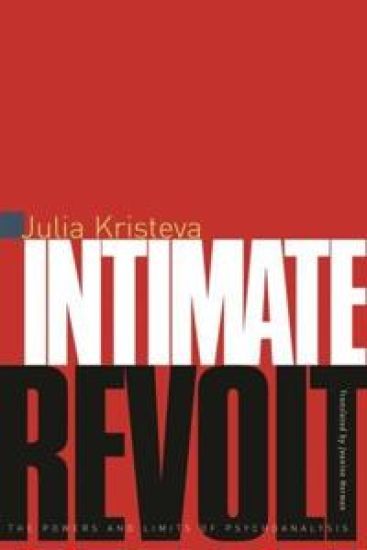
Julia Kristeva, herself a product of the famous May '68 Paris student uprising, has long been fascinated by the concept of rebellion and revolution. Psychoanalysts believe that rebellion guarantees our independence and creative capacities, but is revolution still possible? Confronted with the culture of entertainment, can we build and nurture a culture of revolt, in the etymological and Proustian sense of the word: an unveiling, a return, a displacement, a reconstruction of the past, of memory, of meaning? In the first part of the book, Kristeva examines the manner in which three of the most unsettling modern writers-Aragon, Sartre, and Barthes-affirm their personal rebellion. In the second part of the book, Kristeva ponders the future of rebellion. She maintains that the "new world order" is not favorable to revolt. "What can we revolt against if power is vacant and values corrupt?" she asks. Not only is political revolt mired in compromise among parties whose differences are less and less obvious, but an essential component of European culture-a culture of doubt and criticism-is losing its moral and aesthetic impact.
Hannah Arendt

Hannah Arendt

Julia Kristeva

Columbia University Press
2003
pokkari
Twenty-five years after her death, we are still coming to terms with the controversial figure of Hannah Arendt. Interlacing the life and work of this seminal twentieth-century philosopher, Julia Kristeva provides us with an elegant, sophisticated biography brimming with historical and philosophical insight. Centering on the theme of female genius, Hannah Arendt emphasizes three features of the philosopher's work. First, by exploring Arendt's critique of Saint Augustine and her biographical essay on Rahel Varnhagen, Kristeva accentuates Arendt's commitment to recounting lives and narration. Second, Kristeva reflects on Arendt's perspective on Judaism, anti-Semitism, and the "banality of evil." Finally, the biography assesses Arendt's intellectual journey, placing her enthusiasm for observing both social phenomena and political events in the context of her personal life. Drawing on fragments of Arendt's most intimate correspondence with her longtime lover Martin Heidegger and her husband Heinrich Blucher, excerpts from her mother's "Unser Kind" (a diary tracking Hannah's formative years), and passages from Arendt's philosophical writings, Kristeva presents a luminous story. With a thorough thematic index and bibliographical references, Hannah Arendt is a major breakthrough in the understanding of an essential thinker.
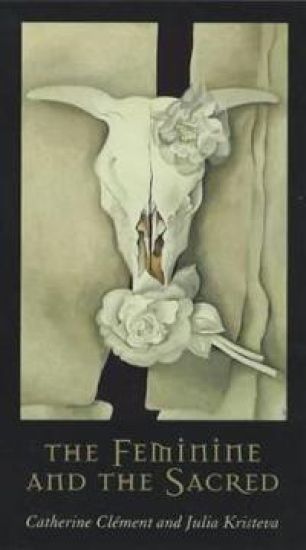
The Feminine and the Sacred

The Feminine and the Sacred

Clement Catherine; Julia Kristeva

Columbia University Press
2003
nidottu
In November 1996, Catherine Cl ment and Julia Kristeva began a correspondence exploring the subject of the sacred. In this collection of those letters Catherine Cl ment approaches the topic from an anthropologist's point of view while Julia Kristeva responds from a psychoanalytic perspective. Their correspondence leads them to a controversial and fundamental question: is there anything sacred that can at the same time be considered strictly feminine? The two voices of the book work in tandem, fleshing out ideas and blending together into a melody of experience. The result is a dialogue that delves into the mysteries of belief--the relationship between faith and sexuality, the body and the senses--which, Cl ment and Kristeva argue, women feel with special intensity. Although their discourse is not necessarily about theology, the authors consider the role of women and femininity in the religions of the world, from Christianity and Judaism to Confucianism and African animism. They are the first to admit that what they have undertaken is "as impossible to accomplish as it is fascinating." Nevertheless, their wide-ranging and exhilarating dialogue succeeds in raising questions that are perhaps more important to ask than to answer.
The Portable Kristeva

The Portable Kristeva

Julia Kristeva

Columbia University Press
2002
pokkari
As a linguist, Julia Kristeva has pioneered a revolutionary theory of the sign in its relation to social and political emancipation; as a practicing psychoanalyst, she has produced work on the nature of the human subject and sexuality, and on the "new maladies" of today's neurotic. The Portable Kristeva is the only fully comprehensive compilation of Kristeva's key writings. The second edition includes added material from Kristeva's most important works of the past five years, including The Sense and Non-Sense of Revolt, Intimate Revolt, and Hannah Arendt. Editor Kelly Oliver has also added new material to the introduction, summarizing Kristeva's latest intellectual endeavors and updating the bibliography.
Revolt, She Said

Revolt, She Said

Julia Kristeva

Semiotext (E)
2002
pokkari
Julia Kristeva extends the definition of revolt beyond politics per se.May '68 in France expressed a fundamental version of freedom: not freedom to succeed, but freedom to revolt. Political revolutions ultimately betray revolt because they cease to question themselves. Revolt, as I understand it-psychic revolt, analytic revolt, artistic revolt-refers to a permanent state of questioning, of transformations, an endless probing of appearances. In this book, Julia Kristeva extends the definition of revolt beyond politics per se. Kristeva sees revolt as a state of permanent questioning and transformation, of change that characterizes psychic life and, in the best cases, art. For her, revolt is not simply about rejection and destruction-it is a necessary process of renewal and regeneration.
Intimate Revolt

Intimate Revolt

Julia Kristeva

Columbia University Press
2002
sidottu
Julia Kristeva, herself a product of the famous May '68 Paris student uprising, has long been fascinated by the concept of rebellion and revolution. Psychoanalysts believe that rebellion guarantees our independence and creative capacities, but is revolution still possible? Confronted with the culture of entertainment, can we build and nurture a culture of revolt, in the etymological and Proustian sense of the word: an unveiling, a return, a displacement, a reconstruction of the past, of memory, of meaning? In the first part of the book, Kristeva examines the manner in which three of the most unsettling modern writers-Aragon, Sartre, and Barthes-affirm their personal rebellion. In the second part of the book, Kristeva ponders the future of rebellion. She maintains that the "new world order" is not favorable to revolt. "What can we revolt against if power is vacant and values corrupt?" she asks. Not only is political revolt mired in compromise among parties whose differences are less and less obvious, but an essential component of European culture-a culture of doubt and criticism-is losing its moral and aesthetic impact.
The Sense and Non-Sense of Revolt

The Sense and Non-Sense of Revolt

Julia Kristeva

Columbia University Press
2001
pokkari
Linguist, psychoanalyst, and cultural theorist, Julia Kristeva is one of the most influential and prolific thinkers of our time. Her writings have broken new ground in the study of the self, the mind, and the ways in which we communicate through language. Her work is unique in that it skillfully brings together psychoanalytic theory and clinical practice, literature, linguistics, and philosophy. In her latest book on the powers and limits of psychoanalysis, Kristeva focuses on an intriguing new dilemma. Freud and psychoanalysis taught us that rebellion is what guarantees our independence and our creative abilities. But in our contemporary "entertainment" culture, is rebellion still a viable option? Is it still possible to build and embrace a counterculture? For whom-and against what-and under what forms? Kristeva illustrates the advances and impasses of rebel culture through the experiences of three twentieth-century writers: the existentialist John Paul Sartre, the surrealist Louis Aragon, and the theorist Roland Barthes. For Kristeva the rebellions championed by these figures-especially the political and seemingly dogmatic political commitments of Aragon and Sartre-strike the post-Cold War reader with a mixture of fascination and rejection. These theorists, according to Kristeva, are involved in a revolution against accepted notions of identity-of one's relation to others. Kristeva places their accomplishments in the context of other revolutionary movements in art, literature, and politics. The book also offers an illuminating discussion of Freud's groundbreaking work on rebellion, focusing on the symbolic function of patricide in his Totem and Taboo and discussing his often neglected vision of language, and underscoring its complex connection to the revolutionary drive.
The Sense and Non-Sense of Revolt

The Sense and Non-Sense of Revolt

Julia Kristeva

Columbia University Press
2000
sidottu
Linguist, psychoanalyst, and cultural theorist, Julia Kristeva is one of the most influential and prolific thinkers of our time. Her writings have broken new ground in the study of the self, the mind, and the ways in which we communicate through language. Her work is unique in that it skillfully brings together psychoanalytic theory and clinical practice, literature, linguistics, and philosophy. In her latest book on the powers and limits of psychoanalysis, Kristeva focuses on an intriguing new dilemma. Freud and psychoanalysis taught us that rebellion is what guarantees our independence and our creative abilities. But in our contemporary "entertainment" culture, is rebellion still a viable option? Is it still possible to build and embrace a counterculture? For whom-and against what-and under what forms? Kristeva illustrates the advances and impasses of rebel culture through the experiences of three twentieth-century writers: the existentialist John Paul Sartre, the surrealist Louis Aragon, and the theorist Roland Barthes. For Kristeva the rebellions championed by these figures-especially the political and seemingly dogmatic political commitments of Aragon and Sartre-strike the post-Cold War reader with a mixture of fascination and rejection. These theorists, according to Kristeva, are involved in a revolution against accepted notions of identity-of one's relation to others. Kristeva places their accomplishments in the context of other revolutionary movements in art, literature, and politics. The book also offers an illuminating discussion of Freud's groundbreaking work on rebellion, focusing on the symbolic function of patricide in his Totem and Taboo and discussing his often neglected vision of language, and underscoring its complex connection to the revolutionary drive.
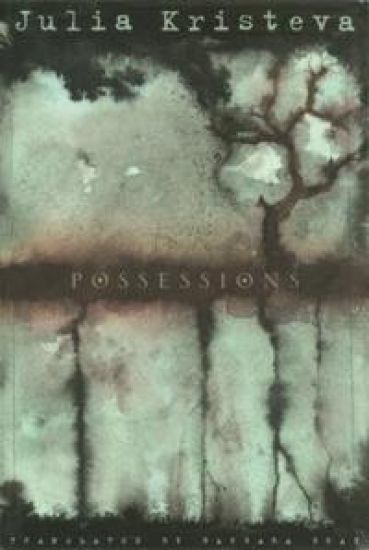
Possessions

Possessions

Julia Kristeva

Columbia University Press
1998
sidottu
This sequel to Kristeva's celebrated allegory The Old Man and the Wolves returns to the corrupt, seaside resort of a mythical town, where the boundaries between East and West, civilization and barbarism, and good and evil are erased.
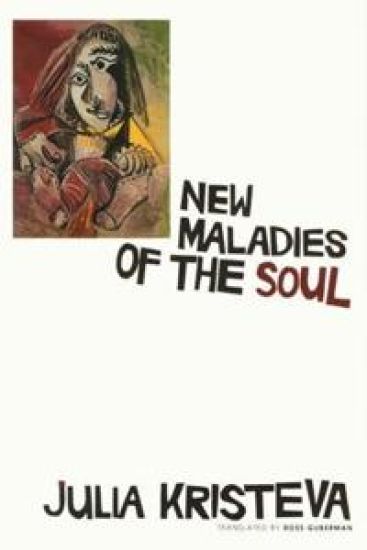
New Maladies of the Soul

New Maladies of the Soul

Julia Kristeva

Columbia University Press
1997
pokkari
These days, who still has a soul? asks Julia Kristeva in her psychoanalytic exploration, New Maladies of the Soul. Hailed by Peter Brooks in the New York Times as "a critic of great psychoanalytic insight," Kristeva reveals to readers a new kind of patient, symptomatic of an age of political upheaval, mass-mediated culture, and the dramatic overhaul of familial and sexual mores. The book poses a troubling question about the human subject in the West today: Is the psychic space that we have traditionally known disappearing?