Kirjailija
Julia Kristeva
Kirjat ja teokset yhdessä paikassa: 95 kirjaa, julkaisuja vuosilta 1979-2026, suosituimpien joukossa Colette. Vertaile teosten hintoja ja tarkista saatavuus suomalaisista kirjakaupoista.
95 kirjaa
Kirjojen julkaisuhaarukka 1979-2026.
This book is concerned with the notion of the stranger—the foreigner, outsider, or alien in a country and society not their own—as well as the notion of strangeness within the self, a person’s deep sense of being, as distinct from outside appearance and their conscious idea of self.Julia Kristeva begins with the personal and moves outward by examining world literature and philosophy. She discusses the foreigner in Greek tragedy, in the Bible, and in the literature of the Middle Ages, Renaissance, Enlightenment, and the twentieth century. By considering the legal status of foreigners throughout history, Kristeva offers a different perspective on our own civilization.
In Revolution in Poetic Language, Julia Kristeva explicates her foundational distinction between the semiotic and the symbolic and explores their interrelationships. Linking the psychosomatic to the literary and the literary to a larger political horizon, she questions the premises of linguistic, psychoanalytic, philosophical, and literary theories.
In Powers of Horror, Julia Kristeva offers an extensive and profound consideration of the nature of abjection. Drawing on Freud and Lacan, she analyzes the nature of attitudes toward repulsive subjects and examines the function of these topics in the writings of Louis-Ferdinand Céline, Marcel Proust, James Joyce, and other authors. Kristeva identifies the abject with the eruption of the real and the presence of death. She explores how art and religion each offer ways of purifying the abject, arguing that amid abjection, boundaries between subject and object break down.
Desire in Language presents a selection of Julia Kristeva’s essays that trace the path of an investigation, extending over a period of ten years, into the semiotics of literature and the arts. Probing beyond the claims of Sigmund Freud, Jacques Lacan, and others, Kristeva proposes and tests theories centered on the nature and development of the novel, and on what she has defined as a signifying practice in poetic language and pictural works. Desire in Language fully shows what Roman Jakobson has called Kristeva’s “genuine gift of questioning generally adopted ‘axioms,’ and her contrary gift of releasing various ‘damned questions’ from their traditional question marks.”
Julia Kristeva has been both attracted and repelled by Dostoyevsky since her youth. In this extraordinary book, by turns poetic and intensely personal, she brings her unique critical sensibility to bear on the tormented and visionary Russian author.Kristeva ranges widely across Dostoyevsky’s novels and his journalism, plunging deep into the great works—and many of the smaller ones—to investigate her fascination with the Russian author. What emerges is a luminous vision of the writer’s achievements, seen in a wholly new way through Kristeva’s distinctive perspective on language. With her keen psychoanalytical eye, she offers brilliant insights into the passionate heroines of the great novels. Focusing on Dostoyevsky’s polyphonic writing, Kristeva also demonstrates the importance of Orthodox Christianity throughout his body of work, analyzing the complex ways his carnivalesque theology informs his fiction and commentary.An original and profound interpretation of one of the nineteenth century’s greatest writers, this book’s insights are also relevant to the twentieth and twenty-first centuries—up to our unsettled present, to which Kristeva’s humane reading of the suffering Russian author brings understanding and even solace.
Dostoyevsky, or The Flood of Language
Julia Kristeva; Rowan Williams
Columbia University Press
2021
sidottu
Growing up in Bulgaria, Julia Kristeva was warned by her father not to read Dostoyevsky. “Of course, and as usual,” she recalls, “I disobeyed paternal orders and plunged into Dosto. Dazzled, overwhelmed, engulfed.” Kristeva would go on to become one of the most important figures in European intellectual life—and she would return over and over again to Dostoyevsky, still haunted and enraptured by the force of his writing.In this book, Kristeva embarks on a wide-ranging and stimulating inquiry into Dostoyevsky’s work and the profound ways it has influenced her own thinking. Reading across his major novels and shorter works, Kristeva offers incandescent insights into the potent themes that draw her back to the Russian master: God, otherness, violence, eroticism, the mother, the father, language itself. Both personal and erudite, the book intermingles Kristeva’s analysis with her recollections of Dostoyevsky’s significance in different intellectual moments—the rediscovery of Bakhtin in the Thaw-era Eastern Bloc, the debates over poststructuralism in 1960s France, and today’s arguments about whether it can be said that “everything is permitted.” Brilliant and vivid, this is an essential book for admirers of both Kristeva and Dostoyevsky. It also features an illuminating foreword by Rowan Williams that reflects on the significance of Kristeva’s reading of Dostoyevsky for his own understanding of religious writing.
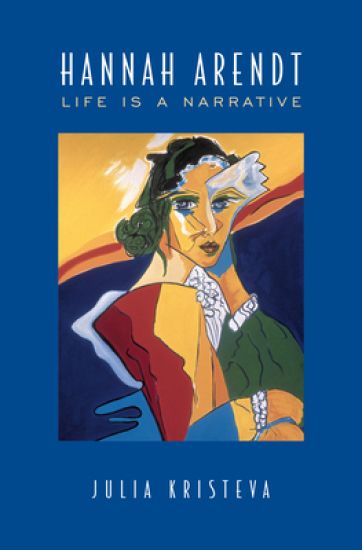
In this volume, based on the series of Alexander Lectures she delivered at the University of Toronto, Julia Kristeva explores the philosophical aspects of Hannah Arendt's work: her understanding of such concepts as language, self, body, political space, and life. Kristeva's aim is to clarify contradictions in Arendt's thought as well as correct misapprehensions about her political and philosophical views. The first two chapters describe how Arendt followed an original conception of human narrative, such that life, action, and even thought, are only human when they can be narrated and thus shared with other persons who, through the evocation of memory, complete the story and make history into a condensed sign, into a revelation of the 'who.' The third chapter concentrates on Arendt's work in relation to her twentieth-century contemporaries, especially Isak Dinesen, Brecht, Kafka, and Nathalie Sarraute. In the last two chapters, on the body and the Kantian concept of judgment, Kristeva offers a subtle critical exploration of Arendt's ignoring of the world of the unconscious opened up by psychoanalysis, an exploration that, paradoxically, reveals the political force of Arendt's acceptance of herself as woman and Jew. Kristeva's account of Arendt's 'philosophy of narrative' is clear, coherent, forceful, and often impassioned. Much has been written in North America about Arendt's political work, but little about her more philosophical endeavours. Hannah Arendt: Life Is a Narrative makes a compelling case that Arendt may be the twentieth century's only true political philosopher.
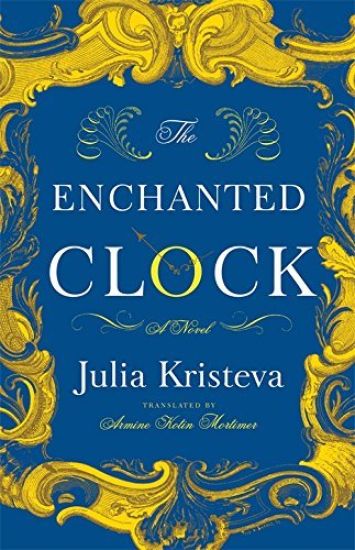
In the Palace of Versailles there is a fabulous golden clock, made for Louis XV by the king’s engineer, Claude-Siméon Passemant. The astronomical clock shows the phases of the moon and the movements of the planets, and it will tell time—hours, minutes, seconds, and even sixtieths of seconds—until the year 9999. Passemant’s clock brings the nature of time into sharp focus in Julia Kristeva’s intricate, poetic novel The Enchanted Clock. Nivi Delisle, a psychoanalyst and magazine editor, nearly drowns while swimming off the Île de Ré; the astrophysicist Theo Passemant fishes her out of the water. They become lovers. While Theo wonders if he is descended from the clockmaker Passemant, Nivi’s son Stan, who suffers from occasional comas, develops a passion for the remarkable clock at Versailles. Soon Nivi is fixated on its maker. But then the clock is stolen, and when a young writer for Nivi’s magazine mysteriously dies, the clock is found near his body. The Enchanted Clock combines past and present, jumping back and forth between points of view and across eras from eighteenth-century Versailles to the present day. Its stylistically inventive narrative voices bring both immediacy and depth to our understanding of consciousness. Nivi’s life resembles her creator’s in many respects, coloring Kristeva’s customary erudition with autobiographical poignancy. Part detective mystery, part historical fiction, The Enchanted Clock is a philosophically and linguistically multifaceted novel, full of poetic ruminations on memory, love, and the transcendence of linear time. It is one of the most illuminating works of one of France’s great writers and thinkers.
Julia Kristeva is a true polymath, an intellectual of astonishingly wide range whose erudition and insight have been brought to bear on psychoanalysis, literary criticism, gender and sex, and cultural critique. Passions of Our Time showcases recent essays of Kristeva’s that demonstrate the scope of her capacious intellect, her gifts as a stylist, and the profound contribution of her thought to the challenges of the present.The collection begins with ? vivid recollection of celebrating, as a child in Bulgaria, Alphabet Day, the holiday honoring the Cyrillic letters, which proceeds outward into a contemplation of the writer as translator. Kristeva considers literature with Barthes, freedom through Rousseau, Teresa of Avila and mystical experience, Simone de Beauvoir’s dream life, and Antigone and the psychic life of women. A group of essays drawing on her psychoanalytic work delve into Freud, Lacan, maternal eroticism, and the continued importance of psychoanalysis today. In a series of striking investigations, she thinks through disability and normativity, monotheism and secularization, the need to believe and the desire to know. Calling for the courage to renew and reinvent humanism, she outlines the principles of a stance founded on the importance of respecting human life. Finally, Kristeva discusses French culture and diversity, rethinking universalism and interrogating the potential for Islam and psychoanalysis to meet, and pays homage to Beauvoir by rephrasing her dictum into the provocative “One is born woman, but I become one.”
In the Palace of Versailles there is a fabulous golden clock, made for Louis XV by the king's engineer, Claude-Simeon Passemant. The astronomical clock shows the phases of the moon and the movements of the planets, and it will tell time-hours, minutes, seconds, and even sixtieths of seconds-until the year 9999. Passemant's clock brings the nature of time into sharp focus in Julia Kristeva's intricate, poetic novel The Enchanted Clock. Nivi Delisle, a psychoanalyst and magazine editor, nearly drowns while swimming off the Ile de Re; the astrophysicist Theo Passemant fishes her out of the water. They become lovers. While Theo wonders if he is descended from the clockmaker Passemant, Nivi's son Stan, who suffers from occasional comas, develops a passion for the remarkable clock at Versailles. Soon Nivi is fixated on its maker. But then the clock is stolen, and when a young writer for Nivi's magazine mysteriously dies, the clock is found near his body. The Enchanted Clock combines past and present, jumping back and forth between points of view and across eras from eighteenth-century Versailles to the present day. Its stylistically inventive narrative voices bring both immediacy and depth to our understanding of consciousness. Nivi's life resembles her creator's in many respects, coloring Kristeva's customary erudition with autobiographical poignancy. Part detective mystery, part historical fiction, The Enchanted Clock is a philosophically and linguistically multifaceted novel, full of poetic ruminations on memory, love, and the transcendence of linear time. It is one of the most illuminating works of one of France's great writers and thinkers.
Att läsa Arendt
Étienne Balibar; Judith Butler; Julia Kristeva; Bonnie Honig; Jürgen Habermas; Seyla Benhabib; Paul Ricoeur
Tankekraft Förlag
2017
nidottu
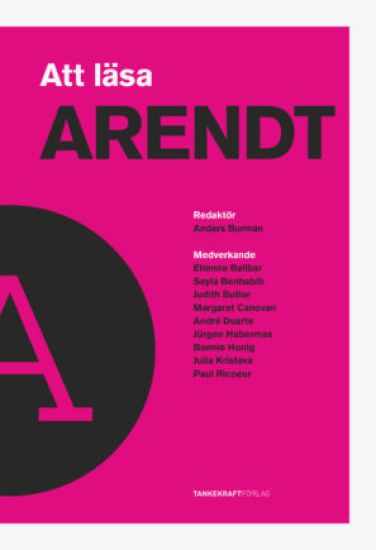
Hannah Arendt framstår med allt större tydlighet som en av det förra århundradets mest egensinniga och användbara teoretiker. Föreliggande antologi samlar nio essäer och artiklar om hennes politiska tänkande. Ett par av texterna är skrivna av författare som primärt kan karakteriseras som Arendtforskare medan de övriga är skrivna av mer namnkunniga politiska tänkare och filosofer för vilka Arendt blir en dialogpartner i det kontinuerliga utvecklandet av deras egna teorier. Genomgående handlar det om författare som tänker med Arendt mot Arendt och som visar att det med utgångspunkt i hennes verk fortfarande är möjligt att ställa de riktigt stora frågorna om politikens mening, våld och makt, mänskliga rättigheter och människans villkor. Parallellt med den här boken publiceras Rätten till rättigheter: Politiska texter i urval som innehåller essäer, fragment och intervjuer av och med Hannah Arendt. Redaktör för båda volymerna är Anders Burman, idéhistoriker verksam vid Södertörns högskola som på TankeKraft förlag tidigare gett ut Att läsa Hegel (tillsammans med Anders Bartonek) och Flykten från Hegel.
"We found so much to say, to share, to learn...For it wasn't just the Marquis de Sade profile and the sporty thighs-and-calves that seduced me. It was even more, perhaps, or certainly just as much, the speed at which you used to read, and still do."-Julia Kristeva "We're married, Julia and I, that's a fact, but we each have our own personalities, our own name, activities, and freedom. Love is the full recognition of the other in their otherness. If this other is very close to you, as in this case, it seems to me that what's at stake is harmony within difference. The difference between men and women is irreducible; there's no possibility of fusion."-Philippe Sollers Marriage as a Fine Art is an enchanting series of exchanges in which Julia Kristeva and Philippe Sollers, married for fifty years, speak candidly about their love. Though they live separately, Kristeva and Sollers are fully committed to each other. Their bond is intellectual and psychological, passionate and mundane. They share everything when together, and lose themselves in their interests when apart. Their marriage is art, rich with history and meaning, idiosyncratic, and dynamic in its expression. Yet it is also as common as they come. Kristeva and Sollers have lived through the same challenges, peaks, and lulls as all married couples do. With humor and honesty, they elaborate on these moments, turning marriage's familiar aspects into exceptional examples of relating, struggling, transcending, and being. Marriage as a Fine Art is a rare chance to know these intellectuals-and marriage-more intimately.
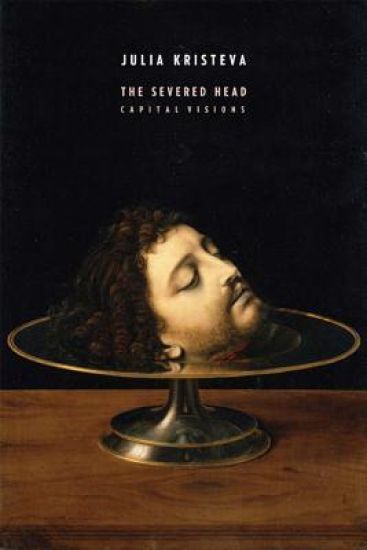
Informed by a provocative exhibition at the Louvre curated by the author, The Severed Head unpacks artistic representations of severed heads from the Paleolithic period to the present. Surveying paintings, sculptures, and drawings, Julia Kristeva turns her famed critical eye to a study of the head as symbol and metaphor, as religious object and physical fact, further developing a critical theme in her work--the power of horror--and the potential for the face to provide an experience of the sacred. Kristeva considers the head as icon, artifact, and locus of thought, seeking a keener understanding of the violence and desire that drives us to sever, and in some cases keep, such a potent object. Her study stretches all the way back to 6,000 B.C.E., with humans' early decoration and worship of skulls, and follows with the Medusa myth; the mandylion of Laon (a holy relic in which the face of a saint appears on a piece of cloth); the biblical story of John the Baptist and his counterpart, Salome; tales of the guillotine; modern murder mysteries; and even the rhetoric surrounding the fight for and against capital punishment. Kristeva interprets these "capital visions" through the lens of psychoanalysis, drawing infinite connections between their manifestation and sacred experience and very much affirming the possibility of the sacred, even in an era of "faceless" interaction.
Julia Kristeva hat eine bahnbrechende Studie zu Depression und Melancholie vorgelegt. Bereits die Nervalsche Metapher der "schwarzen Sonne" verweist auf das Düster-Gleißende ihres Gegenstandes. Kristeva gelingt es, den in der Gegenwart immer stärker aufs Pathologische abzielenden und damit verengenden Diskurs zu jenem "depressiv-melancholischen Komplex" aufzubrechen. Sie zeigt, dass in Depression und Melancholie die Quelle von Leiden liegt, aber auch und davon nicht zu trennen: von Kreativität. In den frühen Theorien von Freud und Abraham kaschiert die Depression eine Aggressivität gegen das verlorene Objekt und offenbart darin eine Ambivalenz des Depressiven gegenüber dem Objekt seiner Trauer. Darüber hinaus verweisen neuere Theorien zum Narzissmus - wie die von Edith Jacobson und B?la Grunberger - auf Depression als archaischen Ausdruck einer nicht symbolisierbaren, unbenennbaren narzisstischen Wunde. Daran und an Melanie Klein wie Jacques Lacan anknüpfend, kommt Julia Kristeva zu dem Befund: dass der Depressive nicht um ein Objekt trauert, sondern um ein sich der Sinngebung entziehendes "Reales". In eindringlichen klinischen Beispielen sowie in vier kunst- und literaturtheoretischen Arbeiten zu Holbein d. J., Nerval, Dostojewski und Marguerite Duras veranschaulicht Julia Kristeva ihren Ansatz, dass die Depression nicht nur eine zu behandelnde Pathologie ist, sondern auch ein Diskurs in einer Sprache, die es zu erlernen gilt. "Der entscheidende Parameter ihrer Theorie der Melancholie ist die Stellung des Subjekts zur Sprache und zum Begehren ... eine Bereicherung des psychodynamischen Diskurses." (Lothar Bayer, Psyche, 2006)
Julia Kristeva refracts the impulse to hate (and our attempts to subvert, sublimate, and otherwise process it) through psychoanalysis and text, exploring worlds, women, religion, portraits, and the act of writing. Her inquiry spans themes, topics, and figures central to her writing, and her paths of discovery advance the theoretical innovations that are so characteristic of her thought. Kristeva rearticulates and extends her analysis of language, abjection, idealization, female sexuality, love, and forgiveness. She examines the "maladies of the soul," utilizing examples from her practice and the ailments of her patients, such as fatigue, irritability, and general malaise. She sources the Bible and texts by Marguerite Duras, St. Teresa of Avila, Roland Barthes, Simone de Beauvoir, and Georgia O'Keefe. Balancing political calamity and individual pathology, she addresses internal and external catastrophes and global and personal injuries, confronting the nature of depression, obliviousness, fear, and the agony of being and nothingness. Throughout Kristeva develops the notion that psychoanalysis is the key to serenity, with its processes of turning back, looking back, investigating the self, and refashioning psychical damage into something useful and beautiful. Constant questioning, Kristeva contends, is essential to achieving the coming to terms we all seek at the core of forgiveness.
Informed by a provocative exhibition at the Louvre curated by the author, The Severed Head unpacks artistic representations of severed heads from the Paleolithic period to the present. Surveying paintings, sculptures, and drawings, Julia Kristeva turns her famed critical eye to a study of the head as symbol and metaphor, as religious object and physical fact, further developing a critical theme in her work--the power of horror--and the potential for the face to provide an experience of the sacred. Kristeva considers the head as icon, artifact, and locus of thought, seeking a keener understanding of the violence and desire that drives us to sever, and in some cases keep, such a potent object. Her study stretches all the way back to 6,000 B.C.E., with humans' early decoration and worship of skulls, and follows with the Medusa myth; the mandylion of Laon (a holy relic in which the face of a saint appears on a piece of cloth); the biblical story of John the Baptist and his counterpart, Salome; tales of the guillotine; modern murder mysteries; and even the rhetoric surrounding the fight for and against capital punishment. Kristeva interprets these "capital visions" through the lens of psychoanalysis, drawing infinite connections between their manifestation and sacred experience and very much affirming the possibility of the sacred, even in an era of "faceless" interaction.
"Unlike Freud, I do not claim that religion is just an illusion and a source of neurosis. The time has come to recognize, without being afraid of 'frightening' either the faithful or the agnostics, that the history of Christianity prepared the world for humanism." So writes Julia Kristeva in this provocative work, which skillfully upends our entrenched ideas about religion, belief, and the thought and work of a renowned psychoanalyst and critic. With dialogue and essay, Kristeva analyzes our "incredible need to believe"--the inexorable push toward faith that, for Kristeva, lies at the heart of the psyche and the history of society. Examining the lives, theories, and convictions of Saint Teresa of Avila, Sigmund Freud, Donald Winnicott, Hannah Arendt, and other individuals, she investigates the intersection between the desire for God and the shadowy zone in which belief resides. Kristeva suggests that human beings are formed by their need to believe, beginning with our first attempts at speech and following through to our adolescent search for identity and meaning. Kristeva then applies her insight to contemporary religious clashes and the plight of immigrant populations, especially those of Islamic origin. Even if we no longer have faith in God, Kristeva argues, we must believe in human destiny and creative possibility. Reclaiming Christianity's openness to self-questioning and the search for knowledge, Kristeva urges a "new kind of politics," one that restores the integrity of the human community.