Kirjojen hintavertailu. Mukana 12 390 323 kirjaa ja 12 kauppaa.
Kirjailija
Kenneth W. Thompson
Kirjat ja teokset yhdessä paikassa: 102 kirjaa, julkaisuja vuosilta 1979-2016, suosituimpien joukossa Paul H. Nitze on National Security and Arms Control. Vertaile teosten hintoja ja tarkista saatavuus suomalaisista kirjakaupoista.
More, perhaps, than any other world region, Africa is a living laboratory for observing the interrelation between American, European, and African ideas of constitutionalism. In the post-World War II era, America sought to bring freedom and self-determination to Africa in what we considered a correction of the policies of the European colonial powers.
Focuses on governance issues after the election. Contents: include: The Presidency and Long-term Economic Problems: Grasping the NettleóRobert C. Holland; Executive-Legislative Relations in Policy-MakingóCongressman Henry J. Hyde; Organizing Policy-Making; The Kennedy TransitionóAmbassador Edwin M. Martin; The Presidency and the PressóDouglass Cater; The Presidency and Congress in Foreign PolicyóCongressman John S. Monagan; Low Intensity Conflict and the Central American QuestionóGeneral Paul Gorman; The Republican Party: Toward a Public Philosophy?óSenator Lowell P. Weicker, Jr.
From the changes wrought and suggested by President Mikhail Gorbachev in the Soviet Union, to progress in arms control and peace agreements among warring nations, to Western Europe's increasing economic unity, the world is changing before our eyes. A "window of opportunity" for the better fulfillment of U.S. national and international goals is gradually opening. How prepared is the United States to face this rapidly transforming world? Are the policies of the postwar 1940s adequate for the 1990s, or do we need to set for ourselves new international objectives and new strategies to carry them out? Is a new U.S. international agenda in order? Are our federal government, especially our foreign service and our military establishment, our private sector and our educational systemógeared to meet the requirements of the coming decade? This, the 16th volume in the Miller Center's Rhetoric and Reality series, explores these questions and more dealing with questions of international policy. Co-published with the Miller Center of Public Affairs.
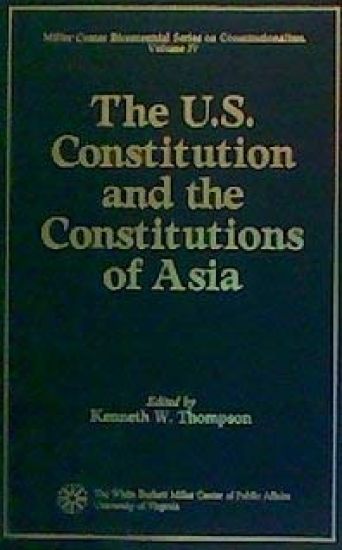
The U.S. Constitution was written by men who sought not only to fashion a government for themselves but for societies everywhere. Their ideas formed a document that may be more far-reaching than the greatest scientific discovery in its influence on governments and societies throughout the world. The present volume, which examines that influence, is one in a series on constitutions in Asia, Africa, Europe, and Latin America. Its focus is on the mutual interaction of the U.S. Constitution and constitutions in Taiwan, Korea, Japan, Thailand, Australia, and the People's Republic of China. It examines both historical and contemporary constitutions and evaluates fundamental problems that recur in important world regions.
The present volume contains a collection of presentations and essays on basic elements of constitutionalism. They run the gamut from a philosophical inquiry into the distinguishing characteristics of constitutionalism and democracy; an historical analysis of the Virginia Ratification Convention of 1788; an essay on Jefferson and the language of liberty; a critical paper on the presidency in relationship to the constitutional system; and a concluding discussion of the living as distinct from the written constitution. Such a group can prepare the way for a discussion of comparative constitutionalism by making clear the essential nature of the U.S. Constitution and the principles and practices that brought it into being.
Focuses on governance issues after the election. Contents: include: The Presidency and Long-term Economic Problems: Grasping the Nettle-Robert C. Holland; Executive-Legislative Relations in Policy-Making-Congressman Henry J. Hyde; Organizing Policy-Making; The Kennedy Transition-Ambassador Edwin M. Martin; The Presidency and the Press-Douglass Cater; The Presidency and Congress in Foreign Policy-Congressman John S. Monagan; Low Intensity Conflict and the Central American Question-General Paul Gorman; The Republican Party: Toward a Public Philosophy?-Senator Lowell P. Weicker, Jr.
The ninth volume of this series on arms control addresses the policies and approaches of successive postwar presidents. It focuses on the individuals in both the United States and foreign nations who have played crucial roles in the shaping of these policies. Finally, it considers the institutions that participate in the arms control debate and provide resources to the negotiators.
This volume examines the rhetoric of contemporary politics and statesmanship. It discusses television, changing value systems, and other forces which influence the national and international politics of the late twentieth century. Topics include the role of rhetoric in the media, liberalism and conservatism, national defense, and intelligence work, as well as the rhetoric and reality of presidential and international politics.
Thousands of books offer competing explanations of the problems of communication between peoples. If there is any consensus, it is that the assumptions and presuppositions of the communicators shape and mold their conclusions. This volume aims to pose the issue through the thoughtful reflections of some of the nation's best minds. Those contributing are: Father Edward A. Malloy, President of the University of Notre Dame; Roger Shinn, former holder of the Reinhold Niebuhr chair at Union Theological Seminary and leader of Protestant thought; Dr. Joseph Fletcher, considered by many to be the father of "situation ethics;" E.D. Hirsch, author of the best-selling book, Cultural Literacy; Richard Rorty, English Professor at the University of Virginia who may be seen as a champion of trial and error, experimentation, pragmatism and empiricism; Edward Teller, a scientist sometimes called the "father of the hydrogen bomb;" Ian Craig, a rising young scholar of international relations; Martin Marty, one of the foremost scholars on the history of religion; Harold J. Berman, Woodruff Professor of Law at the Emory University School of Law; and Robert Benne, leading scholar of religion and society at Roanoke College.
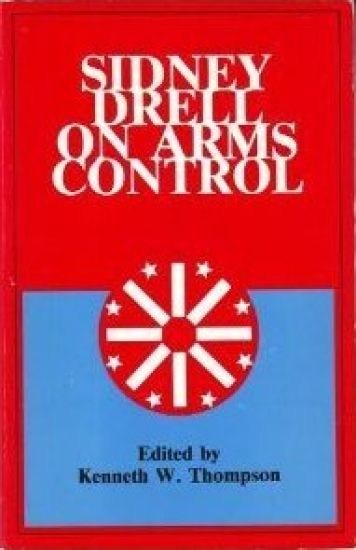
In the lecture which spurred this volume, Sidney Drell equated arms control with the Strategic Defense Initiative and limited his comments exclusively to that subject. Drell stands out among scientists who have contributed to the dialogue on arms control. He has been an advisor to the U.S. government on issues of national security and science policy for many years and served on the President's Science Advisory Committee for Presidents Johnson and Nixon. Two qualities distinguish the speeches and writings collected here. Drell has kept alive the hope of arms control even in its darkest hours, and has clearly explained the scientific side of arms control to public policy students.
In the lecture which spurred this volume, Sidney Drell equated arms control with the Strategic Defense Initiative and limited his comments exclusively to that subject. Drell stands out among scientists who have contributed to the dialogue on arms control. He has been an advisor to the U.S. government on issues of national security and science policy for many years and served on the President's Science Advisory Committee for Presidents Johnson and Nixon. Two qualities distinguish the speeches and writings collected here. Drell has kept alive the hope of arms control even in its darkest hours, and has clearly explained the scientific side of arms control to public policy students.
This volume contains contributions by Elspeth Rostow, Stephen Hess, Tom Wicker, R. W. Apple, Jr., Rep. Lee H. Hamilton; Senator Eugene J. McCarthy, and Ted Turner. Co-published with the Miller Center of Public Affairs.
n this volume, Long addresses himself to some of the central issues of arms control. Having worked with a succession of American presidents, he discusses the role of the president as an initiator of arms control policies, the failures of presidents to educate the American public on the subject and the neglect by some presidents to support arms control. Long disucsses American presidents from Eisenhower through Reagan and helps us understand some of the differences in their approaches.
n this volume, Long addresses himself to some of the central issues of arms control. Having worked with a succession of American presidents, he discusses the role of the president as an initiator of arms control policies, the failures of presidents to educate the American public on the subject and the neglect by some presidents to support arms control. Long disucsses American presidents from Eisenhower through Reagan and helps us understand some of the differences in their approaches.
The aim of this volume is to look first at science advising in the Johnson presidency with that administration's science adviser, Donald F. Hornig, former President of Brown University. Three presentations which represent independent and separate perspectives follow: 'A Scientist's View' by Sidney D. Drell; 'A Science Writer's View' by John Walsh; 'Presidential Studies' by Kenneth W. Thompson.
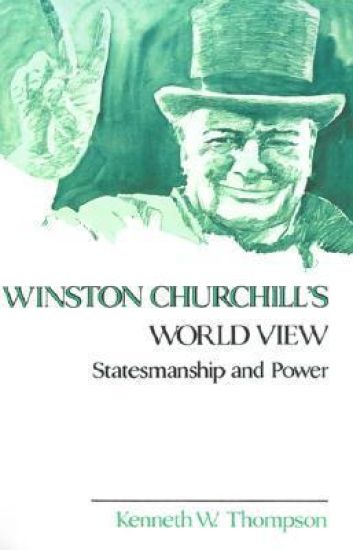
Winston Churchill's place in modern history is assured. As a statesman and world leader, he towers above his contemporaries. As a historian, his reputation is equally secure. But little attention has been given to Churchill's stature as a political theorist, to the ideas and principles that he developed, tested, and followed throughout his long career as a soldier, military correspondent, politician, world leader, and author.Winston Churchill's World View is a study of the underlying principles and goals that shaped the actions of one of the most influential men of our time. Kenneth Thompson traces the genesis and elaboration of Churchill's views from his youth at the fringes of the British Empire through his rise as a politician, his years of determined struggle and final triumph as the prime minister of England in its darkest hour, and the time of reflection that followed his departure from his active political life. Thompson works closely with Churchill's writing to identify and assess his concepts of power, authority, politics, and diplomacy, as well as his thoughts on international organisation and law, collective security, and practical morality.Churchill firmed believed that an effective foreign policy must be based on a set of well-defined but flexible organizing principles. ""Those who are possessed of a definite body of doctrine and of deeply rooted convictions,"" he wrote in the first volume of his history of World War II, ""will be in a much better position to deal with the shifts and surprises of daily affairs."" It was the lack of such a set of principle, Churchill contended, that led the Allies into the conflagration of World War II and that in the postwar era threatened to bring about an even more destructive conflict between the West and the Soviet Union. Churchill's own plan to avert that peril, Thompson shows, was based on the twin pillars of diplomacy and strength. He insisted that peace must be negotiated. But only could a lasting settlement be concluded, a settlement that was not based on weakness and fear.Churchill's political philosophy was rooted in his own experience and in an awareness of the course of man's history. It is a perspective at odds with prevailing viewpoints, based not in history, but in a shifting tide of facts and statistics, and with the current perception of a world with problems too complex and numerous to be solved through the simple application of doctrine and conviction. But this complex age, Thompson argues, is one sorely in need of the lessons of history and the wisdom of experienced statesmen. With this study, Thompson demonstrates the relevance of Winston Churchill's views to the present world situation, and shows the current need for a steady, principled, pragmatic approach to maintaining world peace.
The third volume in the Miller Center's ongoing series on science advising. Authors include William Golden, Ed David, Franklin Long, Hugh Loweth, and Erasmus Kloman. Co-published with the Miller Center of Public Affairs.
The third volume in the Miller Center's ongoing series on science advising. Authors include William Golden, Ed David, Franklin Long, Hugh Loweth, and Erasmus Kloman. Co-published with the Miller Center of Public Affairs.