Kirjojen hintavertailu. Mukana 12 390 323 kirjaa ja 12 kauppaa.

Kirjailija

Marcel Schwob

Kirjat ja teokset yhdessä paikassa: 79 kirjaa, julkaisuja vuosilta 2005-2026, suosituimpien joukossa Vies imaginaires. Vertaile teosten hintoja ja tarkista saatavuus suomalaisista kirjakaupoista.

79 kirjaa

Kirjojen julkaisuhaarukka 2005-2026.

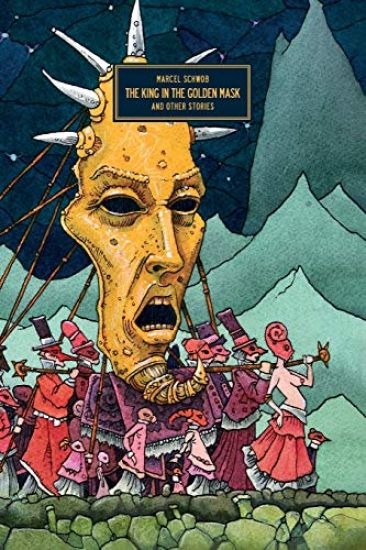
The King In The Golden Mask: and Other Stories
"The king wearing a mask of gold stood up from the black throne upon which he had been seated for hours and demanded to know the cause of the tumult. For the guards at the doors had crossed their pikes and the clash of steel was heard. Gathered about the bronze brazier, to the right there also rose the fifty priests and, to the left, the fifty jesters; and the women, in a semi-circle before the king, waved their arms. The rose and purple glow that shone through the bronze grille of the brazier illuminated the masks on their faces: at the example of the emaciated king, the women, the jesters and the priests wore immovable masks of silver, iron, copper, wood and cloth. And the jesters' masks were open-mouthed with laughter, whilst the masks of the priests were black with care. Fifty hilarious faces beamed on the left, and on the right fifty dismal faces scowled. And the light fabrics stretched over the heads of the women portrayed eternally gracious faces animated by an artificial smile. But the king's golden mask was majestic, noble and truly royal."This edition contains the following stories: The King in the Golden MaskThe Death of OdjighThe Embalming-womenThe PlagueThe Milesian VirginsThe Sabbat at MofflainesBlanche the BloodyThe FluteThe Sleeping City
The Assassins

The Assassins

Marcel Schwob

Snuggly Books
2020
pokkari
The nineteen stories contained herein, all beautifully translated for the first time into English by Sue Boswell, combine work published by Marcel Schwob (1867-1905) in newspapers together with manuscripts never published in his lifetime.From historical pieces, such as "Poupa", an early unfinished novel which takes place in ancient Rome, to horrific tales, such as "The Hand of Glory" and "The Maison Close", and others, such as "On Umbrellas", which are completely unclassifiable, the present collection displays the diversity and genius of one of France's greatest yet largely forgotten writers.
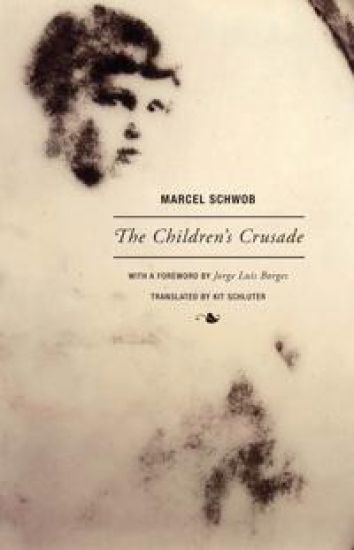
Marcel Schwob - The Children's Crusade

Marcel Schwob - The Children's Crusade

Marcel Schwob; Jorge Luis Borges

Wakefield Press
2018
nidottu
“I’ve just read Marcel Schwob’s The Children’s Crusade twice over, with deep admiration and reverence. I am profoundly moved: what a work! And to think I’d never heard the name of Marcel Schwob. Who is he?”—Rainer Maria Rilke Marcel Schwob’s 1896 novella The Children’s Crusade retells the medieval legend of the exodus of some 30,000 children from all countries to the Holy Land, who traveled to the shores of the sea, which—instead of parting to allow them to march on to Jerusalem—instead delivered them to merchants who sold them into slavery in Tunisia or delivered them to a watery death. It is a cruel and sorrowful story mingling history and legend, which Schwob recounts through the voices of eight different protagonists: a goliard, a leper, Pope Innocent III, a cleric, a qalandar and Pope Gregory IX, as well as two of the marching children, whose naive faith eventually turns into growing fear and anguish. Though it is a tale drawn from the early 13th century, Schwob presents it through a modern framework of shifting subjectivity and fragmented coherency, and its subject matter and its succession of different narrative perspectives has been seen as an influence on and precursor to such diverse works as Alfred Jarry’s The Other Alcestis, Ryunosuke Akutagawa’s “In a Grove,” William Faulkner’s As I Lay Dying and Jerzy Andrzejewski’s The Gates of Paradise. It is a tale told by many yet understood by few, a mosaic surrounding a void, describing a world in which innocence must perish.
Marcel Schwob - Imaginary Lives

Marcel Schwob - Imaginary Lives

Marcel Schwob

Wakefield Press
2018
nidottu
“The art of the biographer consists specifically in choice. He is not meant to worry about speaking truth; he must create human characteristics amidst the chaos.”—Marcel Schwob Imaginary Lives remains, over 120 years since its original publication in French, one of the secret keys to modern literature: under-recognized, yet a decisive influence on such writers as Apollinaire, Borges, Jarry and Artaud, and more contemporary authors such as Roberto Bolaño and Jean Echenoz. Drawing from historical influences such as Plutarch and Diogenes Laërtius, and authors more contemporary to him such as Thomas De Quincey and Walter Pater, Schwob established the genre of fictional biography with this collection: a form of narrative that championed the specificity of the individual over the generality of history, and the memorable detail of a vice over the forgettable banality of a virtue. These 22 portraits present figures drawn from the margins of history, from Empedocles the “Supposed God” and Clodia the “Licentious Matron” to the pirate Captain Kidd and the Scottish murderers Messrs. Burke and Hare. In his quest for unique lives, Schwob also formulated an early conception of the anti-hero, and discarded historical figures in favor of their shadows. These “imaginary lives” thus acquaint us with the “Hateful Poet” Cecco Angiolieri instead of his lifelong rival, Dante Alighieri; the would-be romantic pirate Major Stede Bonnet instead of the infamous Blackbeard who would lead him to the gallows; the false confessor Nicolas Loyseleur rather than Joan of Arc whom he cruelly deceived; or the actor Gabriel Spenser in place of the better-remembered Ben Jonson who ran a sword through his lung. Marcel Schwob (1867–1905) was a scholar of startling breadth and an incomparable storyteller. The secret influence on generations of writers, Schwob was as versed in the street slang of medieval thieves as he was in the poetry of Walt Whitman (whom he translated into French).
Spicilège

Spicilège

Marcel Schwob

Createspace Independent Publishing Platform
2018
nidottu
... La sp cialisation tactile, la science qui en est comme le prolongement instrumental, nous apprennent que le monde est en r alit discontinu. L'espace interstellaire ne diff re de l'espace intermol culaire que parce que nous sommes plac s entre les deux et que nous mesurons leurs rapports. La notion de temps qui est engendr e par celle de l'espace n'est pas plus exacte sous son premier aspect continu. Il peut y avoir de l'infini entre les moments d'un temps divis l'infini. On per oit tr s bien que le temps psychologique (et le temps astronomique se mesure par des diff rences de position dans l'espace) est essentiellement variable. Notre notion du temps se transforme du sauvage l'homme civilis , de l'enfant l'adulte, du r ve la veille...
Le Roi au Masque d'Or

Le Roi au Masque d'Or

Marcel Schwob

Createspace Independent Publishing Platform
2018
nidottu
Le Roi au masque d'or est un recueil de contes fantastiques crit par Marcel Schwob et publi en 1892. Dans la premi re nouvelle, Le roi au masque d'or, le monarque et ses sujets, les femmes, les bouffons et les pr tres, portent tous un masque, selon l'ordre instaur par les rois ancestraux. Ainsi, personne la cour du roi n'a jamais vu de visage humain, en particulier personne n'a vu celui du roi. Un jour, un mendiant aveugle se pr sente, qui dit au roi qu'il ne conna t pas ses sujets, et qu'il ne se conna t pas lui-m me. Il d cide alors de faire tomber les masques; il d couvre alors qu'il est l preux, et que ses anc tres ont ordonn le port du masque pour cacher ce mal dont ils souffraient aussi.
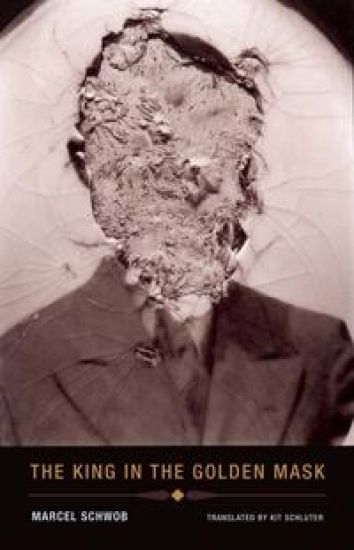
The King in the Golden Mask

The King in the Golden Mask

Marcel Schwob; Kit Schluter

Wakefield Press
2017
pokkari
Twenty one of Marcel Schwob’s cruelest tales, translated to English for the first time First published in French in 1892 and never before translated fully into English, The King in the Golden Mask gathers 21 of Marcel Schwob’s cruelest and most erudite tales. Melding the fantastic with historical fiction, these stories describe moments of unexplained violence both historical and imaginary, often blending the two through Schwob’s collaging of primary source documents into fiction. Brimming with murder, suicide, royal leprosy and medieval witchcraft, Schwob’s stories portray clergymen furtively attending medieval sabbaths, Protestant galley slaves laboring under the persecution of Louis XIV and dice-tumbling sons of Florentine noblemen wandering Europe at the height of the 1374 plague. These writings are of such hallucinatory detail and linguistic specificity that the reader is left wondering whether they aren’t newly unearthed historical documents. To read Schwob is to encounter human history in its most scintillating form as it comes into contact with this unparalleled imagination.
La cruzada de los niños

La cruzada de los niños

Marcel Schwob

Createspace Independent Publishing Platform
2017
nidottu
En 1212 un adolescente asegur al rey de Francia que Jesucristo en persona le hab a encargado organizar una cruzada de ni os para recobrar Jerusal n. En menos de un mes, 30.000 ni os franceses, acompa ados por religiosos y otros peregrinos, emprendieron una desastrosa marcha hacia la Tierra Santa. Tras una ardua y obsesiva preparaci n, Schwob, fiel a la est tica de la elipsis, se dedic a imaginar y seleccionar los momentos clave que, una vez reunidos, narran lo esencial de esta extraordinaria historia.