Kirjojen hintavertailu. Mukana 12 595 353 kirjaa ja 12 kauppaa.

Kirjailija

Marcus Aurelius

Kirjat ja teokset yhdessä paikassa: 336 kirjaa, julkaisuja vuosilta 1890-2027, suosituimpien joukossa Itselleni. Vertaile teosten hintoja ja tarkista saatavuus suomalaisista kirjakaupoista.

336 kirjaa

Kirjojen julkaisuhaarukka 1890-2027.

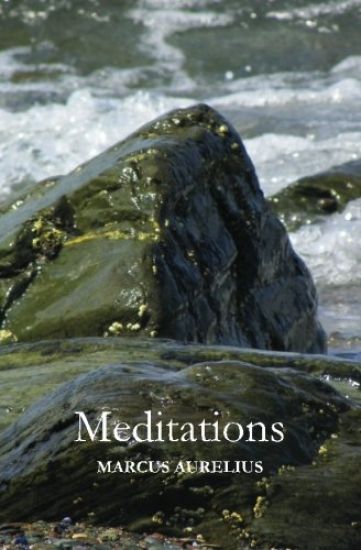
Meditations

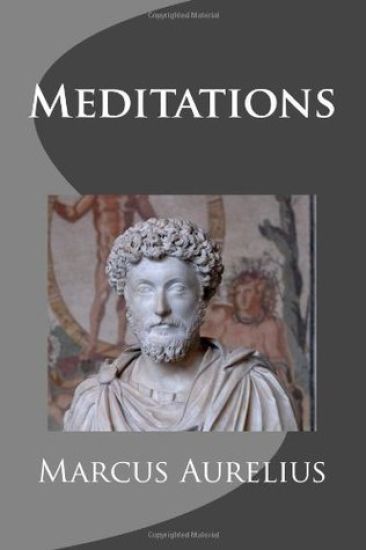
Meditations

Marcus Aurelius

Createspace Independent Publishing Platform
2012
nidottu
Marcus Aurelius (Latin: Marcus Aurelius Antoninus Augustus; 26 April 121 - 17 March 180 AD), was Roman Emperor from 161 to 180 AD. He ruled with Lucius Verus as co-emperor from 161 until Verus' death in 169. He was the last of the "Five Good Emperors", and is also considered one of the most important Stoic philosophers. During his reign, the Empire defeated a revitalized Parthian Empire; Aurelius' general Avidius Cassius sacked the capital Ctesiphon in 164. Aurelius fought the Marcomanni, Quadi, and Sarmatians with success during the Marcomannic Wars, but the threat of the Germanic tribes began to represent a troubling reality for the Empire. A revolt in the East led by Avidius Cassius failed to gain momentum and was suppressed immediately. Marcus Aurelius' Stoic tome Meditations, written in Greek while on campaign between 170 and 180, is still revered as a literary monument to a philosophy of service and duty, describing how to find and preserve equanimity in the midst of conflict by following nature as a source of guidance and inspiration.
Meditations

Meditations

Marcus Aurelius

Oxford University Press
2011
nidottu
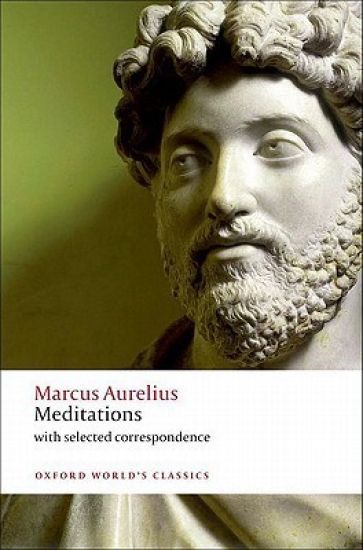
'Do not act as if you had ten thousand years to live ... while you have life in you, while you still can, make yourself good.' The Meditations of Marcus Aurelius (AD 121-180) is a private notebook of philosophical reflections, written by a Roman emperor probably on military campaign in Germany. In short, highly charged comments, Marcus draws on Stoic philosophy to confront challenges that he felt acutely, but which are also shared by all human beings - the looming presence of death, making sense of one's social role and projects, the moral significance of the universe. They bring us closer to the personality of the emperor, who is often disillusioned with his own status and with human activities in general; they are both an historical document and a remarkable spiritual diary. This translation by Robin Hard brings out the eloquence and universality of Marcus' thoughts. The introduction and notes by Christopher Gill place the Meditations firmly in the ancient philosophical context. A selection of Marcus' correspondence with his tutor Fronto broadens the picture of the emperor as a person and thinker. ABOUT THE SERIES: For over 100 years Oxford World's Classics has made available the widest range of literature from around the globe. Each affordable volume reflects Oxford's commitment to scholarship, providing the most accurate text plus a wealth of other valuable features, including expert introductions by leading authorities, helpful notes to clarify the text, up-to-date bibliographies for further study, and much more.
Meditations

Meditations

Marcus Aurelius

Simon Brown
2011
sidottu
Packaged in handsome, affordable trade editions, Clydesdale Classics is a new series of essential works. From the musings of intellectuals such as Thomas Paine in Common Sense to the striking personal narrative of Harriet Jacobs in Incidents in the Life of a Slave Girl, this new series is a comprehensive collection of our intellectual history through the words of the exceptional few. Meditations is a collection of twelve books written by Roman Emperor Marcus Aurelius. The books were originally compiled in the form of private journals. Marcus Aurelius used these notes as personal guides to live by and to better himself as a ruler. He compiled these journals during his time as emperor, and while they were not intended for public consumption, there are valuable lessons to be gleaned from his wisdom. The entries include his views of stoicismthe Hellenistic philosophy devoid of destructive emotions that could tamper with logicand its practical use in ruling and military tactics. Completely unabridged, with a new foreword written by Huffington Post writer Carolyn Gregoire, this publication of Meditations is an all-encompassing collection of Marcus Aurelius s works."
Meditations

Meditations

Marcus Aurelius

White Crow Books Ltd
2010
sidottu
Constantly regard the universe as one living being, having one substance and one soul; and observe how all things have reference to one perception, the perception of this one living being; and how all things act with one movement; and how all things are the cooperating causes of all things which exist; observe too the continuous spinning of the thread and the contexture of the web.A" Marcus Aurelius - 'Meditations' Marcus Aurelius is considered to one of the great Emperors of Rome who was not only a skilled military leader but also a great philosopher in the Stoic tradition. He was born in 121 AD and both of his parents came from wealthy backgrounds. His father died when Marcus was 3 years old and by the time he was 6 he had gained the attention of the Emperor Hadrian who oversaw his education. Hadrian ensured that Marcus was taught by some of the greatest scholars in Rome who educated him in literature, drama, geometry, Greek oratory, Greek and Latin. Marcus later abandoned most of those subjects in favor of philosophy, with the work of the Greek philosopher Epictetus being a major influence on his thinking.In 138, while still a young man, the Emperor Antoninus Pius adopted Marcus, and in 161 he himself became Emperor. Marcus insisted he would only take up the Emperorship if Lucius Verus were also installed. Marcus's insistence on Lucius joining him as Emperor was a military one. At that time Rome was fighting wars on multiple fronts and Marcus wanted someone he could trust to marshal the troops who he knew would not at some point lead a revolt against him. Lucius and Marcus were loyal to each other up until Lucius's death in 169 AD. After Lucius's death, Marcus was the sole Emperor and due to the incessant wars in the provinces he was unable to spend much time indulging his philosophical pursuits. He did manage to found four Chairs of Philosophy in Athens, one for each of the main philosophical schools of thought, Aristotelian, Epicurean, Platonic and Stoic. Although Marcus spent almost all of his reign on campaigns in foreign territories, he managed to write down his thoughts and these became what are now considered a masterpiece of Roman philosophy, the discourses 'Meditations'.Marcus wrote 'Meditations' around 170 - 180, whilst on a campaign in central Europe, most probably in what is now Serbia, Hungary and Austria. The 12 books that make up 'Meditations' were not written as an exercise in explaining his philosophy but rather as a personal notebook for self-improvement and study. 'Meditations' illustrates just how important Epictetus was to Marcus as he quotes the Greek philosopher's famed 'Discourses' on more than one occasion. Epictetus was a legendary figure in Greek philosophy and many claim he is the greatest of the Stoics; texts that remain in existence from the period suggest that in his native Greece, he was even more popular than Plato. As was previously mentioned, 'Meditations' was not written for public consumption but rather as an aid to personal development. Marcus wanted to change his way of living and thinking and to do this he embarked on a set of philosophical exercises. He would reflect on philosophical ideas and by writing them down and by repeating them he hoped to re-programme his mind and find his own philosophy to live by.One of the key exercises in the book discusses Marcus attempting to look at the world from 'the point of view of the cosmos' in a bid to try and look at life and the universe outside of the common and limited parameters of individual concerns. You have the power to strip away many superfluous troubles located wholly in your judgment, and to possess a large room for yourself embracing in thought the whole cosmos, to consider everlasting time, to think of the rapid change in the parts of each thing, of how short it is from birth until dissolution, and how the void before birth and that after dissolution are equally infinite.A" Marcus Aurelius died on March 17, 180, in the city of Vindobona which was situated where Vienna is today. History remembers him as the last of the 'Five Good Emperors' of the Nervan-Antonian dynasty. Marcus' son Commodus replaced his father as Emperor and although he reigned over a relatively stable period in Roman history, in terms of war and peace, his personal behavior and antics were not in the spirit of those Emperors that came immediately before him.Commodus was eventually murdered in a plot that involved his mistress Marcia, thus bringing to an end the highly regarded Nervan-Antonian dynasty.
Meditations

Meditations

Marcus Aurelius

Createspace Independent Publishing Platform
2010
nidottu
One measure, perhaps, of a book's worth, is its intergenerational pliancy: do new readers acquire it and interpret it afresh down through the ages? The Meditations of Marcus Aurelius, translated and introduced by Gregory Hays, by that standard, is very worthwhile, indeed. Hays suggests that its most recent incarnation--as a self-help book--is not only valid, but may be close to the author's intent. The book, which Hays calls, fondly, a "haphazard set of notes," is indicative of the role of philosophy among the ancients in that it is "expected to provide a 'design for living.'" And it does, both aphoristically ("Think of yourself as dead. You have lived your life. Now take what's left and live it properly.") and rhetorically ("What is it in ourselves that we should prize?"). Whether these, and other entries ("Enough of this wretched, whining monkey life.") sound life-changing or like entries in a teenager's diary is up to the individual reader, as it should be. Hays's introduction, which sketches the life of Marcus Aurelius (emperor of Rome A.D. 161-180) as well as the basic tenets of stoicism, is accessible and jaunty. --H. O'Billovich --This text refers to the Hardcover edition.