Kirjailija
Martin Heidegger
Kirjat ja teokset yhdessä paikassa: 207 kirjaa, julkaisuja vuosilta 1956-2026, suosituimpien joukossa Martin Heidegger, Ontologie. Hermeneutik Der Faktizitat. Vertaile teosten hintoja ja tarkista saatavuus suomalaisista kirjakaupoista.
207 kirjaa
Kirjojen julkaisuhaarukka 1956-2026.
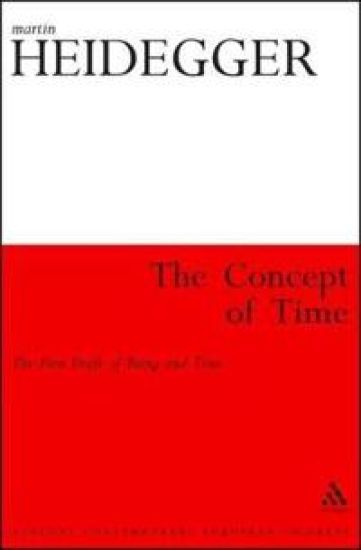
Available in English for the first time, this first draft of Heidegger's opus, "Being and Time", provides a unique insight into Heidegger's Phenomenology. "The Concept of Time" presents Heidegger's so-called Dilthey review, widely considered the first draft of his celebrated masterpiece, "Being and Time". Here Heidegger reveals his deep commitment to Wilhelm Dilthey and Count Yorck von Wartenburg. He agrees with them that historicity must be at the centre of the new philosophy to come. However, he also argues for an ontological approach to history. From this ontological turn he develops the so-called categories of Dasein. This work demonstrates Heidegger's indebtedness to Yorck and Dilthey and gives further evidence to the view that thought about history is the germ cell of "Being and Time". However, it also shows that Heidegger's commitment to Dilthey was not without reservations and that his analysis of Dasein actually employs Husserl's phenomenology. The work reopens the question of history in a broader sense, as Heidegger struggles to thematize history without aligning it with world-historical events. The text also provides a concise and readable summary of the main themes of "Being and Time" and as such is an ideal companion to that text.
Introduction to Philosophy—Thinking and Poetizing
Martin Heidegger
Indiana University Press
2011
sidottu
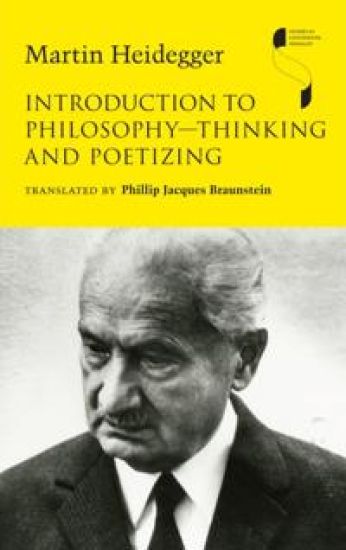
First published in 1990 as the second part of volume 50 of Heidegger's Complete Works, Introduction to Philosophy presents Heidegger's final lecture course given at the University of Freiburg in 1944 before he was drafted into the German army. While the lecture is incomplete, Heidegger provides a clear and provocative discussion of the relation between philosophy and poetry by analyzing Nietzsche's poetry. Here, Heidegger explores themes such as the home and homelessness, the age of technology, globalization, postmodernity, the philosophy of poetry and language, aesthetics, and the role of philosophy in society. Translated into English for the first time, this text will be of particular interest to those who study Heidegger's politics and political philosophy.
Few philosophers have had more influence on the shape of western philosophy after 1900 than Martin Heidegger. Basic Writings offers a full range of this profound and controversial thinker’s writings in one volume, including: The Origin of the Work of Art The introduction to Being and Time What Is Metaphysics? Letter on Humanism The Question Concerning Technology The Way to Language The End of Philosophy Featuring a foreword by Heidegger scholar Taylor Carman, this essential collection provides readers with a concise introduction to the groundbreaking philosophy of this brilliant and essential thinker.
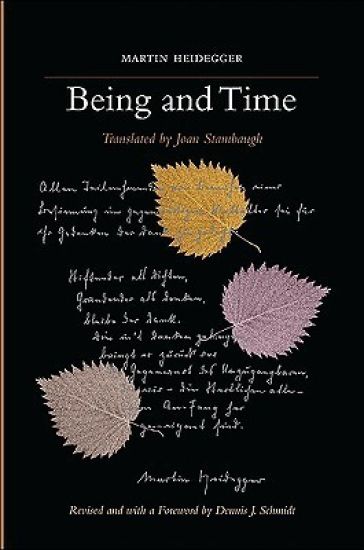
The publication in 1927 of Martin Heidegger's magnum opus, Being and Time, signaled an intellectual event of the first order and had an impact in fields far beyond that of philosophy proper. Being and Time has long been recognized as a landmark work of the twentieth century for its original analyses of the character of philosophic inquiry and the relation of the possibility of such inquiry to the human situation. Still provocative and much disputed, Heidegger's text has been taken as the inspiration for a variety of innovative movements in fields ranging from psychoanalysis, literary theory, existentialism, ethics, hermeneutics, and theology. A work that disturbs the traditions of philosophizing that it inherits, Being and Time raises questions about the end of philosophy and the possibilities for thinking liberated from the presumptions of metaphysics.The Stambaugh translation captures the vitality of the language and thinking animating Heidegger's original text. It is also the most comprehensive edition insofar as it includes the marginal notes made by Heidegger in his own copy of Being and Time, and takes account of the many changes that he made in the final German edition of 1976. The revisions to the original translation correct some ambiguities and problems that have become apparent since the translation appeared fifteen years ago. Bracketed German words have also been liberally inserted both to clarify and highlight words and connections that are difficult to translate, and to link this translation more closely to the German text.
Phenomenology of Intuition and Expression
Martin Heidegger
Continuum International Publishing Group Ltd.
2010
nidottu
This is the first English translation of one of Heidegger's most important early lecture courses, including his most extensive treatment of the topic of destruction. "Phenomenology of Intuition and Expression" is a crucial text for understanding the early development of Heidegger's thought. This lecture course was presented in the summer semester of 1920 at the University of Freiburg. At the center of this course is Heidegger's elaboration of the meaning and function of the phenomenological destruction. In no other work by Heidegger do we find as comprehensive a treatment of the theme of destruction as in this lecture course. Culminating in a destruction of contemporaneous philosophy in terms of its understanding of 'life' as a primal phenomenon, this lecture course can be seen to open the way towards a renewal of the meaning of philosophy as such. This hugely important philosophical work is now available in English for the first time.
Phenomenology of Intuition and Expression
Martin Heidegger
Continuum International Publishing Group Ltd.
2010
sidottu
This is the first English translation of one of Heidegger's most important early lecture courses, including his most extensive treatment of the topic of destruction. "Phenomenology of Intuition and Expression" is a crucial text for understanding the early development of Heidegger's thought. This lecture course was presented in the summer semester of 1920 at the University of Freiburg. At the center of this course is Heidegger's elaboration of the meaning and function of the phenomenological destruction. In no other work by Heidegger do we find as comprehensive a treatment of the theme of destruction as in this lecture course. Culminating in a destruction of contemporaneous philosophy in terms of its understanding of 'life' as a primal phenomenon, this lecture course can be seen to open the way towards a renewal of the meaning of philosophy as such. This hugely important philosophical work is now available in English for the first time.
First published in German in 1995, volume 77 of Heidegger's Complete Works consists of three imaginary conversations written as World War II was coming to an end. Composed at a crucial moment in history and in Heidegger's own thinking, these conversations present meditations on science and technology; the devastation of nature, the war, and evil; and the possibility of release from representational thinking into a more authentic relation with being and the world. The first conversation involves a scientist, a scholar, and a guide walking together on a country path; the second takes place between a teacher and a tower-warden, and the third features a younger man and an older man in a prisoner-of-war camp in Russia, where Heidegger's two sons were missing in action. Unique because of their conversational style, the lucid and precise translation of these texts offers insight into the issues that engaged Heidegger's wartime and postwar thinking.
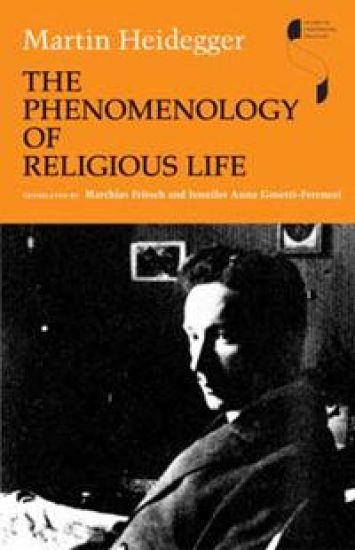
The Phenomenology of Religious Life presents the text of Heidegger's important 1920–21 lectures on religion. The volume consists of the famous lecture course Introduction to the Phenomenology of Religion, a course on Augustine and Neoplatonism, and notes for a course on The Philosophical Foundations of Medieval Mysticism that was never delivered. Heidegger's engagements with Aristotle, St. Paul, Augustine, and Luther give readers a sense of what phenomenology would come to mean in the mature expression of his thought. Heidegger reveals an impressive display of theological knowledge, protecting Christian life experience from Greek philosophy and defending Paul against Nietzsche.
Die Metapher des Weges zieht sich durch Heideggers Gesamtwerk. Wege, nicht Werke stellte Heidegger als Motto uber die Gesamtausgabe seiner Schriften; zwei bedeutende Bande mit Aufsatzen des Philosophen tragen die Titel Wegmarken und Holzwege. Die wenigen Seiten von Der Feldweg eroffnen so den Zugang zu Heideggers Werk und geben den Grundton seiner Philosophie eindrucksvoll an: Wenn die Ratsel einander drangten und kein Ausweg sich bot, half der Feldweg. Diese Ausgabe enthalt zusatzlich zum Text 11 Fotographien des ursprunglichen Messkircher Feldweges.
Die Broschure enthalt den fur die Veroffentlichung durchgesehenen und an einigen Stellen erweiterten Text eines Briefes, der im Herbst 1946 an Jean Beaufret (Paris) geschrieben wurde. Die erste Veroffentlichung erfolgte 1947 zusammen mit Platons Lehre von der Wahrheit im Francke Verlag. Als selbststandige Schrift erschien der Text erstmals 1949 im Verlag Vittorio Klostermann. Die 11. Auflage ist wort- und seitengleich mit dem Abdruck des Textes in der 3., durchgesehenen Auflage der Einzelausgabe der Wegmarken sowie mit dem Abdruck in der 2., durchgesehenen Auflage der Wegmarken als Band 9 der Gesamtausgabe. Sie enthalt damit auch die Randbemerkungen Heideggers aus seinen Handexemplaren. Das Wesen des Menschen besteht aber darin, dass er mehr ist als der blosse Mensch, insofern dieser als das vernunftige Lebewesen vorgestellt wird. .] Das mehr bedeutet: ursprunglicher und darum im Wesen wesentlicher. Aber hier zeigt sich das Ratselhafte: der Mensch ist in der Geworfenheit. Das sagt: der Mensch ist als der ek-sistierende Gegenwurf des Seins insofern mehr denn das animal rationale, als er gerade weniger ist im Verhaltnis zum Menschen, der sich aus der Subjektivitat begreift. Der Mensch ist nicht der Herr des Seienden. Der Mensch ist der Hirt des Seins. In diesem weniger busst der Mensch nichts ein, sondern er gewinnt, indem er in die Wahrheit des Seins gelangt. Er gewinnt die wesenhafte Armut des Hirten, dessen Wurde darin beruht, vom Sein selbst in die Wahrnis seiner Wahrheit gerufen zu sein. Dieser Ruf kommt als der Wurf, dem die Geworfenheit des Daseins entstammt. Der Mensch ist in seinem seinsgeschichtlichen Wesen das Seiende, dessen Sein als Ek-sistenz darin besteht, dass es in der Nahe des Seins wohnt. Der Mensch ist der Nachbar des Seins.
Die Grundbegriffe Der Metaphysik: Welt - Endlichkeit - Einsamkeit
Martin Heidegger; Friedrich-Wilhelm Von Herrmann
Verlag Vittorio Klostermann
2010
nidottu
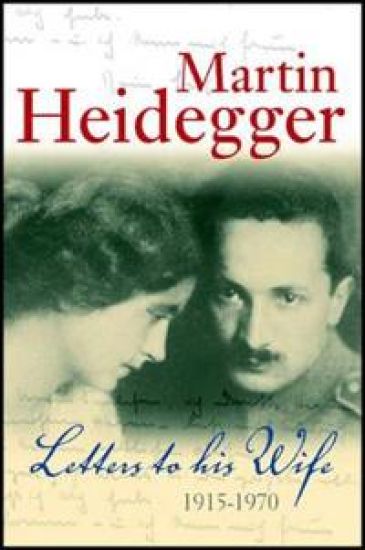
'There is something absolute about the letters between you & me; … The letter is a form of communion of the soul-spirit – … one that is faded & yet unimpeded, complete’, wrote Martin Heidegger to his fiancée Elfride Petri shortly before their wedding. In the course of a marriage that lasted almost sixty years Martin and Elfride were often apart, and the letter thus remained a vital means of communication right through to the final years. The letters he sent her are snapshots of the ups and downs, the crises and everyday minutiae from Heidegger’s life: their engagement, the building of the Cabin at Todtnauberg, the part he played in the two world wars, the difficulties of his early professional career, their financial problems, his dealings with women, and his constant concern with expounding his ideas. Apart from three letters now in the hands of the German Literature Archive in Marbach, Elfride Heidegger kept all of the countless letters and cards from her husband locked away in a wooden chest. After reading them one final time, in 1977 she gave the key to this chest to her granddaughter Gertrud Heidegger on condition that she should not open it until after Elfride’s death. After years spent deciphering, transcribing and ordering the letters with the help of her father and her uncle, Gertrud Heidegger has here made a selection of them available to the public and added a commentary that provides relevant background material. This selection from the many letters written by Martin Heidegger to his wife provides an invaluable insight into their life together, their friendships and relationships, and sheds fresh light on the ideas and beliefs of one of the twentieth century’s greatest philosophers.
Logic as the Question Concerning the Essence of Language
Martin Heidegger
State University of New York Press
2009
pokkari
Aims to transform logic into a reflection on the nature of language. This first English translation of Logik als die Frage nach dem Wesen der Sprache, volume 38 of Martin Heidegger's Gesamtausgabe, contains novel ideas on logic and language that are important for anyone wishing to think beyond traditional views of these topics. Based on student transcripts of Heidegger's lectures and manuscripts for a 1934 summer course, the work contains his first public reflection on the nature of language itself. Given shortly after Heidegger's resignation to the rectorship of the University of Freiburg, the course also opens up fresh perspectives on his controversial involvement with the Nazi regime. Heidegger's critical probing of logic involves metaphysics and poetry and intertwines essential questions concerning language as a world-forming power, the human being, history, and time. This work marks a milestone in Heidegger's path of thinking as his first meditation on language as a primal event of being.
Volume 18 of Martin Heidegger's collected works presents his important 1924 Marburg lectures which anticipate much of the revolutionary thinking that he subsequently articulated in Being and Time. Here are the seeds of the ideas that would become Heidegger's unique phenomenology. Heidegger interprets Aristotle's Rhetoric and looks closely at the Greek notion of pathos. These lectures offer special insight into the development of his concepts of care and concern, being-at-hand, being-in-the-world, and attunement, which were later elaborated in Being and Time. Available in English for the first time, they make a significant contribution to ancient philosophy, Aristotle studies, Continental philosophy, and phenomenology.
Briefwechsel 1925 - 1975
Rudolf Bultmann; Eberhard Jüngel; Martin Heidegger
Mohr Siebeck
2009
sidottu
Nach einer Bemerkung Martin Heideggers besteht zwischen den Lebensformen des Glaubens und der Philosophie eine "Todfeind"schaft. Dieser radikale Gegensatz aber müsse "gerade die mögliche Gemeinschaft von Theologie und Philosophie als Wissenschaften tragen".Diese mögliche Gemeinschaft bezeugt in herausragender Weise der Briefwechsel Heideggers mit dem großen Marburger Theologen Rudolf Bultmann. Die Korrespondenz, die mit der vorliegenden Edition der Öffentlichkeit zugänglich gemacht wird, entfaltet vor allem in den ersten Jahren eine außerordentliche Intensität. Als Heidegger 1928 dem Ruf an die Freiburger Universität als Nachfolger Husserls folgt, gehen die Freunde zum "Du" über. Dies geschieht indes in dem untrüglichen Bewußtsein, fortan getrennte Wege zu gehen. So sehr die in Marburg gemeinsam diskutierte Sache im Blick bleibt, so deutlich offenbart der Briefwechsel doch auch die Spannungen und Entfremdungen, die die Freundschaft zwischen beiden kennzeichnen. In all dem ist der Briefwechsel ein geistesgeschichtliches Zeugnis ersten Ranges und Dokument eines im zwanzigsten Jahrhundert singulären Gesprächs zwischen Philosophie und Theologie.Flankiert wird die Edition des Briefwechsels von einer Reihe von Texten, die in einem Anhang versammelt sind und in direktem oder indirektem Bezug zur Korrespondenz stehen. Erstmals publiziert finden sich darunter das Protokoll eines Referats, das Heidegger 1961 im Zürcher Seminar Gerhard Ebelings über Luther gehalten hat, sowie Bultmanns mehrseitige "Reflexionen zum Denken Martin Heideggers nach der Darstellung von Otto Pöggeler" aus dem Jahre 1963.Die Auslieferung erfolgt ausschließlich über den Vittorio Klostermann Verlag, Frankfurt am Main.
Heidegger's lecture course at the University of Marburg in the summer of 1925, an early version of Being and Time (1927), offers a unique glimpse into the motivations that prompted the writing of this great philosopher's master work and the presuppositions that gave shape to it. The book embarks upon a provisional description of what Heidegger calls "Dasein," the field in which both being and time become manifest. Heidegger analyzes Dasein in its everydayness in a deepening sequence of terms: being-in-the-world, worldhood, and care as the being of Dasein. The course ends by sketching the themes of death and conscience and their relevance to an ontology that makes the phenomenon of time central. Theodore Kisiel's outstanding translation premits English-speaking readers to appreciate the central importance of this text in the development of Heidegger's thought.
Phenomenological Interpretations of Aristotle
Martin Heidegger
Indiana University Press
2008
pokkari
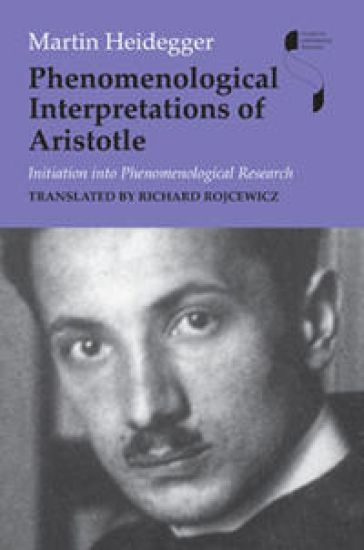
Phenomenological Interpretations of Aristotle, the text of a lecture course presented at the University of Freiburg in the winter of 1921–22, was first published in 1985 as volume 61 of Heidegger's collected works. Preceding Being and Time, the work shows Heidegger introducing novel vocabulary as he searches for his genuine philosophical voice. Here, Heidegger first takes up the role of the definition of philosophy and then elaborates a conception of 'factical life,'or human life as it is lived concretely in relation to the world, a relation he calls 'caring.' Heidegger's descriptions of the movement of life are original, striking, and unique to this lecture course. As he works out a phenomenology of factical life, Heidegger lays the groundwork for a phenomenological interpretation of Aristotle, one of the pivotal influences in the development of his philosophy. As an early articulation of Heidegger's thought, this book will be an indispensable resource for scholars and students.