Kirjojen hintavertailu. Mukana 12 595 353 kirjaa ja 12 kauppaa.

Kirjailija

Martin Heidegger

Kirjat ja teokset yhdessä paikassa: 207 kirjaa, julkaisuja vuosilta 1956-2026, suosituimpien joukossa Martin Heidegger, Ontologie. Hermeneutik Der Faktizitat. Vertaile teosten hintoja ja tarkista saatavuus suomalaisista kirjakaupoista.

207 kirjaa

Kirjojen julkaisuhaarukka 1956-2026.

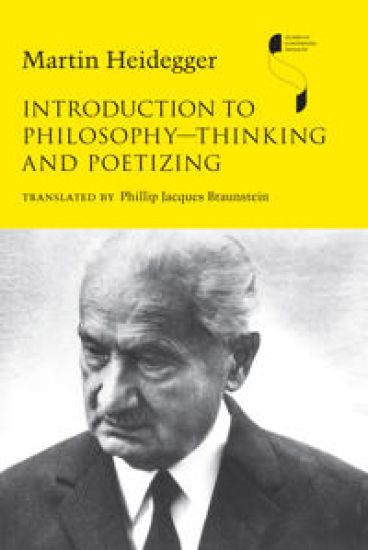
Introduction to Philosophy—Thinking and Poetizing

Introduction to Philosophy—Thinking and Poetizing

Martin Heidegger

Indiana University Press
2016
pokkari
First published in 1990 as the second part of volume 50 of Heidegger's Complete Works, Introduction to Philosophy presents Heidegger's final lecture course given at the University of Freiburg in 1944 before he was drafted into the German army. While the lecture is incomplete, Heidegger provides a clear and provocative discussion of the relation between philosophy and poetry by analyzing Nietzsche's poetry. Here, Heidegger explores themes such as the home and homelessness, the age of technology, globalization, postmodernity, the philosophy of poetry and language, aesthetics, and the role of philosophy in society. Translated into English for the first time, this text will be of particular interest to those who study Heidegger's politics and political philosophy.
Interpretation of Nietzsche's Second Untimely Meditation

Interpretation of Nietzsche's Second Untimely Meditation

Martin Heidegger

Indiana University Press
2016
sidottu
Martin Heidegger's Nietzsche's Second Untimely Meditation presents crucial elements for understanding Heidegger's thinking from 1936 to 1940. Heidegger offers a radically different reading of a text that he had read decades earlier, showing how his relationship with Nietzche's has changed, as well as how his understandings of the differences between animals and humans, temporality and history, and the Western philosophical tradition developed. With his new reading, Heidegger delineates three Nietzschean modes of history, which should be understood as grounded in the structure of temporality or historicity and also offers a metaphysical determination of life and the essence of humankind. Ullrich Hasse and Mark Sinclair offer a clear and accessible translation despite the fragmentary and disjointed quality of the original lecture notes that comprise this text.
Country Path Conversations

Country Path Conversations

Martin Heidegger

Indiana University Press
2016
pokkari
First published in German in 1995, volume 77 of Heidegger's Complete Works consists of three imaginary conversations written as World War II was coming to an end. Composed at a crucial moment in history and in Heidegger's own thinking, these conversations present meditations on science and technology; the devastation of nature, the war, and evil; and the possibility of release from representational thinking into a more authentic relation with being and the world. The first conversation involves a scientist, a scholar, and a guide walking together on a country path; the second takes place between a teacher and a tower-warden, and the third features a younger man and an older man in a prisoner-of-war camp in Russia, where Heidegger's two sons were missing in action. Unique because of their conversational style, the lucid and precise translation of these texts offers insight into the issues that engaged Heidegger's wartime and postwar thinking.
Correspondence 1949-1975

Correspondence 1949-1975

Martin Heidegger; Ernst Jünger

Rowman Littlefield International
2016
sidottu
Beginning in 1949, the German novelist and essayist Ernst Jünger began a correspondence with the philosopher Martin Heidegger that lasted until Heidegger’s death in 1975. This volume contains the first English translation of their complete correspondence, as well as letters from Heidegger’s wife and son and others referred to in their correspondence. It also contains a translation of Jünger’s essay Across the Line (Über die Linie), his contribution to a Festschrift celebrating Heidegger’s sixtieth birthday. Jünger’s and Heidegger’s correspondence is of enormous historical interest, revealing how both men came to understand their cultural roles in post-war Europe. It is valuable as well for showing the emergence of themes pervasive in Heidegger’s post-war thought: his cultural and political pessimism and his concern with the problem of global technology. The correspondence also reveals the evolution of a philosophical friendship between two writers central to twentieth century European thought, and the mutual influence that friendship worked on their writing.
Correspondence 1949-1975

Correspondence 1949-1975

Martin Heidegger; Ernst Jünger

Rowman Littlefield International
2016
nidottu
Beginning in 1949, the German novelist and essayist Ernst Jünger began a correspondence with the philosopher Martin Heidegger that lasted until Heidegger’s death in 1975. This volume contains the first English translation of their complete correspondence, as well as letters from Heidegger’s wife and son and others referred to in their correspondence. It also contains a translation of Jünger’s essay Across the Line (Über die Linie), his contribution to a Festschrift celebrating Heidegger’s sixtieth birthday. Jünger’s and Heidegger’s correspondence is of enormous historical interest, revealing how both men came to understand their cultural roles in post-war Europe. It is valuable as well for showing the emergence of themes pervasive in Heidegger’s post-war thought: his cultural and political pessimism and his concern with the problem of global technology. The correspondence also reveals the evolution of a philosophical friendship between two writers central to twentieth century European thought, and the mutual influence that friendship worked on their writing.
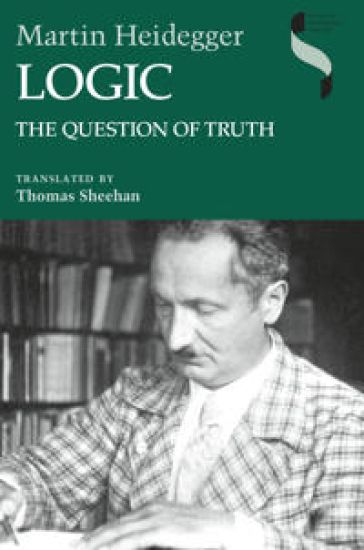
Logic

Logic

Martin Heidegger

Indiana University Press
2016
pokkari
Martin Heidegger's 1925–26 lectures on truth and time provided much of the basis for his momentous work, Being and Time. Not published until 1976 as volume 21 of the Complete Works, three months before Heidegger's death, this work is central to Heidegger's overall project of reinterpreting Western thought in terms of time and truth. The text shows the degree to which Aristotle underlies Heidegger's hermeneutical theory of meaning. It also contains Heidegger's first published critique of Husserl and takes major steps toward establishing the temporal bases of logic and truth. Thomas Sheehan's elegant and insightful translation offers English-speaking readers access to this fundamental text for the first time.
Being and Time

Being and Time

Martin Heidegger

HARPER PERENNIAL
2016
nidottu
"What is the meaning of being?" This is the central question of Martin Heidegger's profoundly important work, in which the great philosopher seeks to explain the basic problems of existence. A central influence on later philosophy, literature, art, and criticism -- as well as existentialism and much of postmodern thought.
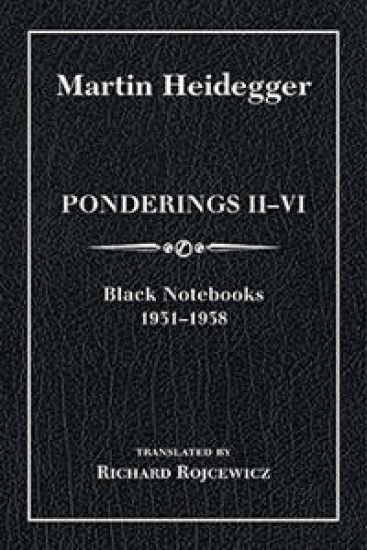
Ponderings II–VI

Ponderings II–VI

Martin Heidegger

Indiana University Press
2016
sidottu
Ponderings II–VI begins the much-anticipated English translation of Martin Heidegger's "Black Notebooks." In a series of small notebooks with black covers, Heidegger confided sundry personal observations and ideas over the course of 40 years. The five notebooks in this volume were written between 1931 and 1938 and thus chronicle Heidegger's year as Rector of the University of Freiburg during the Nazi era. Published in German as volume 94 of the Complete Works, these challenging and fascinating journal entries shed light on Heidegger's philosophical development regarding his central question of what it means to be, but also on his relation to National Socialism and the revolutionary atmosphere of the 1930s in Germany. Readers previously familiar only with excerpts taken out of context may now determine for themselves whether the controversy and censure the "Black Notebooks" have received are deserved or not. This faithful translation by Richard Rojcewicz opens the texts in a way that captures their philosophical and political content while disentangling Heidegger's notoriously difficult language.
Ponderings II–VI, Limited Edition

Ponderings II–VI, Limited Edition

Martin Heidegger

Indiana University Press
2016
sidottu
Ponderings II–VI begins the much-anticipated English translation of Martin Heidegger's "Black Notebooks." In a limited edition binding, this series of small notebooks with black covers, Heidegger confided sundry personal observations and ideas over the course of 40 years. The five notebooks in this volume were written between 1931–1938 and thus chronicle Heidegger's year as Rector of the University of Freiburg during the Nazi era. Published in German as volume 94 of the Complete Works, these challenging and fascinating journal entries shed light on Heidegger's philosophical development regarding his central question of what it means to be, but also on his relation to National Socialism and the revolutionary atmosphere of the 1930s in Germany. Readers previously familiar only with excerpts taken out of context may now determine for themselves whether the controversy and censure the "Black Notebooks" have received are deserved or not. This faithful translation by Richard Rojcewicz opens the texts in a way that captures their philosophical and political content while disentangling Heidegger's notoriously difficult language.
Mindfulness

Mindfulness

Martin Heidegger

Bloomsbury Academic
2016
nidottu
Written in 1938/9, Mindfulness (translated from the German Besinnung) is Martin Heidegger's second major being-historical treatise. Here, Heidegger develops some of his key concepts and themes including truth, nothingness, enownment, art and Be-ing and discusses the Greeks, Nietzsche and Hegel at length. In addition to the main text, the text also includes two further important essays, ‘A Retrospective Look at the Pathway’ (1937/8) and 'The Wish and the Will (On Preserving What is Attempted)' (1937/8), in which Heidegger surveys his unpublished works and discusses his relationship to Catholic and Protestant Christianity and reflects on his life's path. This is a major translation of a key text from one of the most important thinkers of the 20th century, now available in the Bloomsbury Revelations Series.
The History of Beyng

The History of Beyng

Martin Heidegger

Indiana University Press
2015
sidottu
The History of Beyng belongs to a series of Martin Heidegger's reflections from the 1930s that concern how to think about being not merely as a series of occurrences, but as essentially historical or fundamentally as an event. Beginning with Contributions to Philosophy (Of the Event), these texts are important for their meditations on the oblivion and abandonment of being, politics, and race, and for their incisive critique of power, force, and violence. Originally published in 1998 as volume 69 of Heidegger's Complete Works, this English translation opens new avenues for understanding the trajectory of Heidegger's thinking during this crucial time.
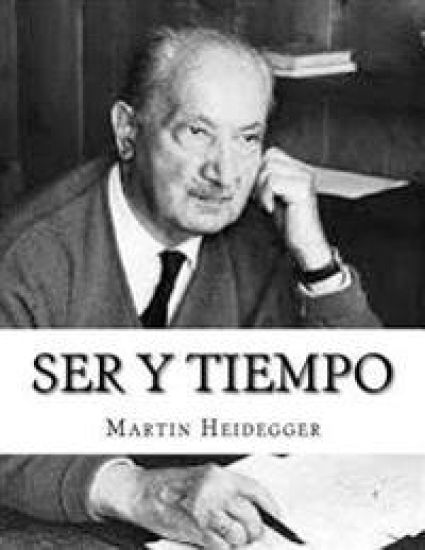
Ser y Tiempo

Ser y Tiempo

Martin Heidegger

Createspace Independent Publishing Platform
2015
nidottu
La pregunta por el ser ha estado siempre, desde los albores de la Filosof a, sobreentendida. Ha habido cierta preocupaci n filos fica por el ente, los entes, el ente supremo, etc. Sin embargo, el concepto m s universal ha sido obviado. Los prejuicios acerca de la innecesariedad de la pregunta por el ser son 3: Primero, el "ser" es el concepto m s universal y por ello, indiscutible. Segundo, el concepto de "ser" es indefinible. Y tercero, el "ser" es un concepto evidente por s mismo
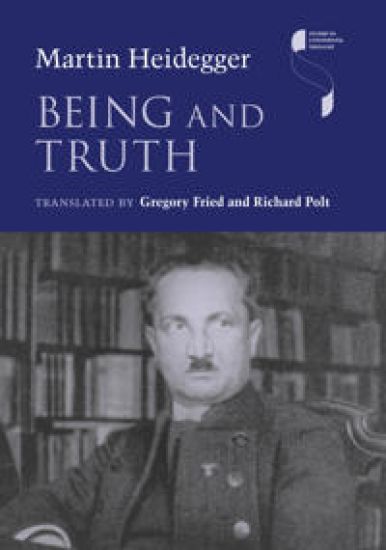
Being and Truth

Being and Truth

Martin Heidegger

Indiana University Press
2015
pokkari
In these lectures, delivered in 1933-1934 while he was Rector of the University of Freiburg and an active supporter of the National Socialist regime, Martin Heidegger addresses the history of metaphysics and the notion of truth from Heraclitus to Hegel. First published in German in 2001, these two lecture courses offer a sustained encounter with Heidegger's thinking during a period when he attempted to give expression to his highest ambitions for a philosophy engaged with politics and the world. While the lectures are strongly nationalistic and celebrate the revolutionary spirit of the time, they also attack theories of racial supremacy in an attempt to stake out a distinctively Heideggerian understanding of what it means to be a people. This careful translation offers valuable insight into Heidegger's views on language, truth, animality, and life, as well as his political thought and activity.
Hegel

Hegel

Martin Heidegger

Indiana University Press
2015
sidottu
Martin Heidegger's writings on Hegel are notoriously difficult but show an essential engagement between two of the foundational thinkers of phenomenology. Joseph Arel and Niels Feuerhahn provide a clear and careful translation of Volume 68 of the Complete Works, which is comprised of two shorter texts—a treatise on negativity, and a penetrating reading of Hegel's Phenomenology of Spirit. In this volume, Heidegger relates his interpretation of Hegel to his own thought on the event, taking up themes developed in Contributions to Philosophy. While many parts of the text are fragmentary in nature, these interpretations are considered some of the most significant as they bring Hegel into Heidegger's philosophical trajectory.
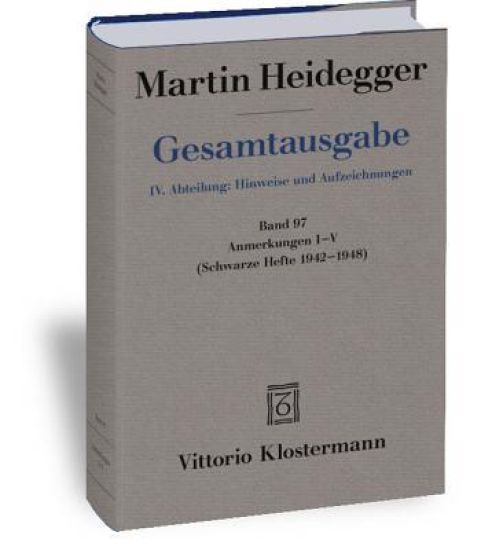
Martin Heidegger, Anmerkungen I-V (Schwarze Hefte 1942-1948)

Martin Heidegger, Anmerkungen I-V (Schwarze Hefte 1942-1948)

Martin Heidegger

Verlag Vittorio Klostermann
2015
sidottu
Die Anmerkungen I-V entstanden zwischen 1942 und 1948 (der Band enthalt auch jenes Schwarze Heft, das bis vor Kurzem noch als verschollen galt). Wie schon in den Uberlegungen (GA 94-96) bieten sie ein einzigartiges Feld verschiedener Gedanken und Einsichten, die zuletzt ein eindrucksvolles Gewebe des Denkens ergeben. Heideggers Gedanke einer Geschichte des Seins beginnt zu verblassen zu Gunsten eines beruhigten Denkens des Gevierts. Dennoch setzen sich die in den Uberlegungen auftauchenden problematischen Deutungen des Judentums im Rahmen des geistigen Untergangs der Deutschen fort. Die Nachkriegszeit wird als Selbstverrat des deutschen Auftrags, den anderen Anfang der Seinsgeschichte zu stiften, erfahren. Damit verbunden beginnt Heidegger, nicht nur das Scheitern seines universitatspolitischen Vorhabens 1933/34, sondern auch das 1946 ausgesprochene Lehrverbot zu verarbeiten. Die Aufzeichnungen erlauben einen bisher unbekannten Einblick in die schmerzhafte Neuorientierung des Denkers.
Nature, History, State

Nature, History, State

Martin Heidegger

Bloomsbury Academic USA
2015
nidottu
Nature, History, State: 1933-1934 presents the first complete English-language translation of Heidegger's seminar 'On the Essence and Concepts of Nature, History and State', together with full introductory material and interpretive essays by five leading thinkers and scholars: Robert Bernasconi, Peter Eli Gordon, Marion Heinz, Theodore Kisiel and Slavoj Žižek. The seminar, which was held while Heidegger was serving as National Socialist rector of the University of Freiburg, represents important evidence of the development of Heidegger's political thought. The text consists of ten 'protocols' on the seminar sessions, composed by students and reviewed by Heidegger. The first session's protocol is a rather personal commentary on the atmosphere in the classroom, but the remainder have every appearance of being faithful transcripts of Heidegger's words, in which he raises a variety of fundamental questions about nature, history and the state. The seminar culminates in an attempt to sketch a political philosophy that supports the 'Führer state'. The text is important evidence for anyone considering the tortured question of Heidegger's Nazism and its connection to his philosophy in general.
The Beginning of Western Philosophy

The Beginning of Western Philosophy

Martin Heidegger

Indiana University Press
2015
sidottu
Volume 35 of Heidegger's Complete Works comprises a lecture course given at the University of Freiburg in 1932, five years after the publication of Being and Time. During this period, Heidegger was at the height of his creative powers, which are on full display in this clear and imaginative text. In it, Heidegger leads his students in a close reading of two of the earliest philosophical source documents, fragments by Greek thinkers Anaximander and Parmenides. Heidegger develops their common theme of Being and non-being and shows that the question of Being is indeed the origin of Western philosophy. His engagement with these Greek texts is as much of a return to beginnings as it is a potential reawakening of philosophical wonder and inquiry in the present.
Holzwege

Holzwege

Martin Heidegger

Verlag Vittorio Klostermann
2015
nidottu
Die "Holzwege" sind nach "Sein und Zeit" das beruhmteste Buch Martin Heideggers. Mit dem "Kunstwerk-Aufsatz" enthalt es einen der grundlegenden Texte der Asthetik des 20. Jahrhunderts. Hier wie in den weiteren Aufsatzen dieses Bandes aus den Jahren 1936 bis 1946 ("Die Zeit des Weltbildes" und Heideggers Interpretationen zu Hegel, Nietzsche, Anaximander, Rilke und Holderlin) werden einzelne Fragen aus dem Zusammenhang des seinsgeschichtlichen Denkens entfaltet. Diese "Holzwege" verlassen den viel begangenen Pfad der Metaphysik und fuhren hinaus ins Offene. Wer Heideggers Denken der Geschichte des Seins nach der "Kehre" kennenlernen will, bleibt auf diesen Band angewiesen.