Kirjojen hintavertailu. Mukana 12 387 362 kirjaa ja 12 kauppaa.

Kirjailija

Niall Ferguson

Kirjat ja teokset yhdessä paikassa: 49 kirjaa, julkaisuja vuosilta 1995-2024, suosituimpien joukossa Maailmalõpp. Mineviku suurõnnetused ja mõni õppetund tulevikuks. Vertaile teosten hintoja ja tarkista saatavuus suomalaisista kirjakaupoista.

49 kirjaa

Kirjojen julkaisuhaarukka 1995-2024.

Maailmalõpp. Mineviku suurõnnetused ja mõni õppetund tulevikuks
Katastroofe - maavärinaid, metsatulekahjusid, finantskriise, sõdu jms - on paratamatult raske ennustada. Nende teke ei allu tahtele; pole ka ajalootsükleid, mille varal neid ette näha saaks. Sellegipoolest tundub, et inimkond peaks tänapäeval suurteks hädadeks ja õnnetusteks paremini valmis olema kui näiteks roomlased Vesuuvi purskeks või keskaja itaallased musta surma tulles. Saame praegu ju teadusele tugineda.Ometi ei suutnud paljud arenenud riigid 2020. aastal uuele viirusele asjalikult reageerida. Miks? Kuigi ka populistid ei olnud koroonakriisi ohjamisel just häid hindeid väärt, väidab Niall Ferguson, et asi oli sügavamal ja sarnaseid näiteid võib leida juba varasemast. Autor pakub eri teadusaladele tuginedes välja üldise katastroofiteooria ning põhjendab näiteks majandusteaduse, kleiodünaamika ja võrgustikuteaduse varal, miks meie üha bürokraatlikumad ja komplekssemad süsteemid suurõnnetuste ohjamisel üha kehvemaks jäävad. Tema raamat annab vajaliku õppetunni, mis tuleks kiiresti omandada, et järgmiste kriisidega paremini toime tulla ja ka pöördumatu häving ära hoida.
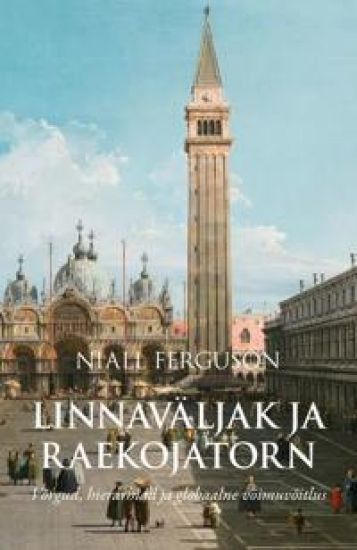
Linnaväljak ja raekojatorn

Linnaväljak ja raekojatorn

Niall Ferguson

Postimees kirjastus
2023
sidottu
Selles raamatus käsitleb autor maailmaajalugu võrguteooria perspektiivist vaadates. Ta jõuab järeldusele, et suurem osa inimkonna ajaloost on hierarhiate ajalugu: riigid, ühiskonnad, sõjaväed, firmad ja isegi ametiühingud on üles ehitatud hierarhiliselt. Hierarhiate kõrval on aga siiski alati olemas olnud ka informaalsed võrgud kui kohad, kus tekivad ja levivad uuenduslikud ideed. Need aga on ikka ja jälle hierarhiates häireid ja muutusi tekitanud. Sama toimub ka praegusel "võrguajastul". Millistele olemasolevatele hierarhiatele see aga saatuslikuks võib saada? * Niall Ferguson on tänapäeva kuulsamaid ajaloolasi. Ta on nõustanud peaministreid ja presidendikandidaate, olnud tähtsate ajalehtede kolumnist - arvamusliider, kes ei jäta külmaks kedagi. Raamatus "Linnaväljak ja raekojatorn" demonstreerib Ferguson nii talle omast lennukust kui ka oskust pöörata tähelepanu detailidele. Mis peamine, lugeja võib olla kindel, et Ferguson teab nii mõndagi võrgustikest, mis juhivad maailma. - Kaarel Piirimäe, Tartu ja Helsingi Ülikooli ajaloolane Autorist: Niall Ferguson on USA Stanford Ülikooli shoti päritolu ajalooprofessor, kes on tuntud uuenduslike, provokatiivsete ja tavaarusaamadele vastanduvate vaadete poolest. Ta on kirjutanud 15 raamatut, mh maailmaajaloo, majandus- ja finantsajaloo ning Briti ja Ameerika imperialismi teemadel. Eesti keeles on neist seni ilmunud "Maailmasõda" (2008), "Raha võidukäik" (2010) ja "Tsivilisatsioon" (2013). Fergusoni on peetud konservatiiviks, kuid ta ise peab end pigem "tüüpiliseks shoti valgustusliberaaliks".
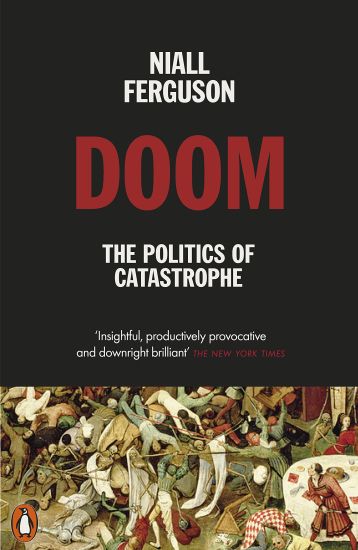
Doom: The Politics of Catastrophe

Doom: The Politics of Catastrophe

Niall Ferguson

PENGUIN BOOKS LTD
2022
pokkari
'Magisterial ... Immensely readable' Douglas Alexander, Financial Times'Insightful, productively provocative and downright brilliant' New York Times A compelling history of catastrophes and their consequences, from 'the most brilliant British historian of his generation' (The Times) Disasters are inherently hard to predict. But when catastrophe strikes, we ought to be better prepared than the Romans were when Vesuvius erupted or medieval Italians when the Black Death struck. We have science on our side, after all. Yet the responses of many developed countries to a new pathogen from China were badly bungled. Why? While populist rulers certainly performed poorly in the face of the pandemic, Niall Ferguson argues that more profound pathologies were at work - pathologies already visible in our responses to earlier disasters. Drawing from multiple disciplines, including economics and network science, Doom: The Politics of Catastrophe offers not just a history but a general theory of disaster. As Ferguson shows, governments must learn to become less bureaucratic if we are to avoid the impending doom of irreversible decline. 'Stimulating, thought-provoking ... Readers will find much to relish' Martin Bentham, Evening Standard
Doom: The Politics of Catastrophe

Doom: The Politics of Catastrophe

Niall Ferguson

PENGUIN BOOKS
2022
nidottu
"All disasters are in some sense man-made." Setting the annus horribilis of 2020 in historical perspective, Niall Ferguson explains why we are getting worse, not better, at handling disasters. Disasters are inherently hard to predict. Pandemics, like earthquakes, wildfires, financial crises. and wars, are not normally distributed; there is no cycle of history to help us anticipate the next catastrophe. But when disaster strikes, we ought to be better prepared than the Romans were when Vesuvius erupted, or medieval Italians when the Black Death struck. We have science on our side, after all. Yet in 2020 the responses of many developed countries, including the United States, to a new virus from China were badly bungled. Why? Why did only a few Asian countries learn the right lessons from SARS and MERS? While populist leaders certainly performed poorly in the face of the COVID-19 pandemic, Niall Ferguson argues that more profound pathologies were at work--pathologies already visible in our responses to earlier disasters. In books going back nearly twenty years, including Colossus, The Great Degeneration, and The Square and the Tower, Ferguson has studied the foibles of modern America, from imperial hubris to bureaucratic sclerosis and online fragmentation. Drawing from multiple disciplines, including economics, cliodynamics, and network science, Doom offers not just a history but a general theory of disasters, showing why our ever more bureaucratic and complex systems are getting worse at handling them. Doom is the lesson of history that this country--indeed the West as a whole--urgently needs to learn, if we want to handle the next crisis better, and to avoid the ultimate doom of irreversible decline.
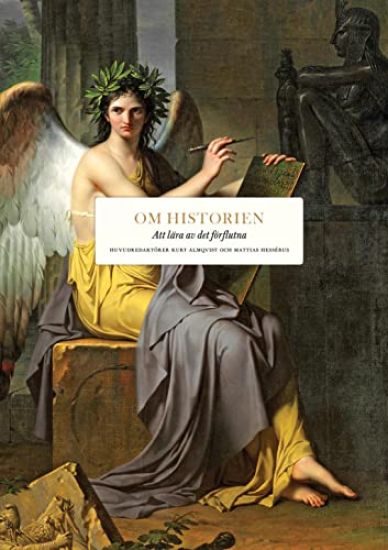
Om historien : att lära av det förflutna

Om historien : att lära av det förflutna

Erica Benner; John Bew; Philip Bobbitt; Vernon Bogdanor; Michael Burleigh; Cory J. Clark; Christopher Coker; Jonathan Fenby; Niall Ferguson; Janne Haaland Matlary; Josef Joffe; Rob Johnson; Elisabeth Kendall; Iain Martin; Rana Mitter; Andrew Monaghan; Fraser Nelson; Gudrun Persson; Peter Ricketts; Brendan Simms

Bokförlaget Stolpe
2020
sidottu
Historien, mänsklighetens samlade erfarenheter, lär oss om nuet och framtiden. Hur är det möjligt att titta på händelser i det förflutna och med hjälp av dem lösa samtidens politiska eller ekonomiska förhållanden och konflikter? Essäerna i denna antologi härrör från Engelsbergsseminariet 2019 där dessa frågor diskuterades. Ur bland annat idéhistoriskt och evolutionspsykologiskt perspektiv tillämpar skribenterna historien på nutida företeelser som internationella relationer, geopolitik och nationalekonomi, individens roll och den mänskliga naturen. Kanske är det bara genom att tillämpa historien som vi hittar vägen framåt?
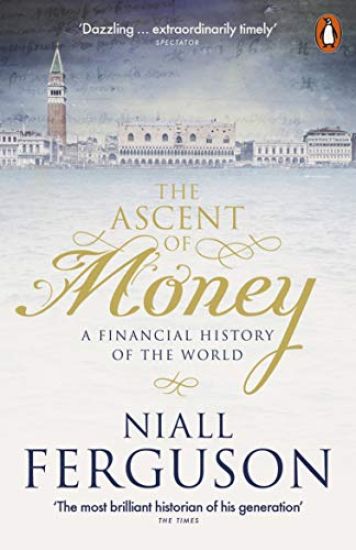
The Ascent of Money

The Ascent of Money

Niall Ferguson

Penguin Books Ltd
2019
pokkari
Bread, cash, dosh, dough, loot. Call if what you like, it matters now more than ever. In The Ascent of Money, Niall Ferguson shows that financial history is the back-story to all history.From the banking dynasty who funded the Italian Renaissance to the stock market bubble that caused the French Revolution, this is the story of booms and busts as it's never been told before.With the world in the grip of the biggest financial crisis since the Great Depression, there's never been a better time to understand the ascent - and descent - of money.'Beautifully written ... Breathtakingly clever' Sunday Telegraph'A lucid and racy account of financial history' New Statesman 'A fine, readable and entertaining history' Dominic Sandbrook, Daily Telegraph, Books of the Year 'The tales he tells of boom and bust, of triumph and disaster, of bubbles that inflate ... are the very essence of financial history' Bill Emmott, Financial Times'An often enlightening and enjoyable tour through the underside of great events, a lesson in how the most successful great powers have always been underpinned by smart money' Robert Skidelsky, New York Review of Books
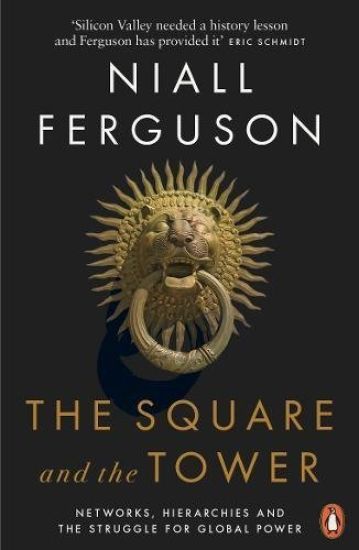
The Square and the Tower: Networks and Power, from the Freemasons to Facebook
The instant New York Times bestseller. A brilliant recasting of the turning points in world history, including the one we're living through, as a collision between old power hierarchies and new social networks. "Captivating and compelling." --The New York Times "Niall Ferguson has again written a brilliant book...In 400 pages you will have restocked your mind. Do it." --The Wall Street Journal "The Square and the Tower, in addition to being provocative history, may prove to be a bellwether work of the Internet Age." --Christian Science MonitorMost history is hierarchical: it's about emperors, presidents, prime ministers and field marshals. It's about states, armies and corporations. It's about orders from on high. Even history "from below" is often about trade unions and workers' parties. But what if that's simply because hierarchical institutions create the archives that historians rely on? What if we are missing the informal, less well documented social networks that are the true sources of power and drivers of change? The 21st century has been hailed as the Age of Networks. However, in The Square and the Tower, Niall Ferguson argues that networks have always been with us, from the structure of the brain to the food chain, from the family tree to freemasonry. Throughout history, hierarchies housed in high towers have claimed to rule, but often real power has resided in the networks in the town square below. For it is networks that tend to innovate. And it is through networks that revolutionary ideas can contagiously spread. Just because conspiracy theorists like to fantasize about such networks doesn't mean they are not real. From the cults of ancient Rome to the dynasties of the Renaissance, from the founding fathers to Facebook, The Square and the Tower tells the story of the rise, fall and rise of networks, and shows how network theory--concepts such as clustering, degrees of separation, weak ties, contagions and phase transitions--can transform our understanding of both the past and the present. Just as The Ascent of Money put Wall Street into historical perspective, so The Square and the Tower does the same for Silicon Valley. And it offers a bold prediction about which hierarchies will withstand this latest wave of network disruption--and which will be toppled.
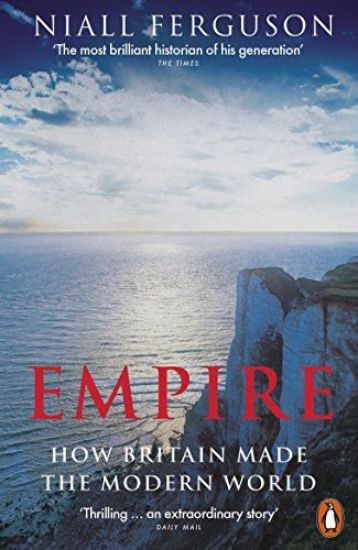
Empire

Empire

Niall Ferguson

Penguin Books Ltd
2018
pokkari
Niall Ferguson's acclaimed bestseller on the highs and lows of Britain's empireOnce vast swathes of the globe were coloured imperial red and Britannia ruled not just the waves, but the prairies of America, the plains of Asia, the jungles of Africa and the deserts of Arabia. Just how did a small, rainy island in the North Atlantic achieve all this? And why did the empire on which the sun literally never set finally decline and fall? Niall Ferguson's acclaimed Empire brilliantly unfolds the imperial story in all its splendours and its miseries, showing how a gang of buccaneers and gold-diggers planted the seed of the biggest empire in all history - and set the world on the road to modernity.'The most brilliant British historian of his generation ... Ferguson examines the roles of "pirates, planters, missionaries, mandarins, bankers and bankrupts" in the creation of history's largest empire ... he writes with splendid panache ... and a seemingly effortless, debonair wit' Andrew Roberts 'Dazzling ... wonderfully readable' New York Review of Books'A remarkably readable précis of the whole British imperial story - triumphs, deceits, decencies, kindnesses, cruelties and all' Jan Morris 'Empire is a pleasure to read and brims with insights and intelligence' Sunday Times
The Square and the Tower

The Square and the Tower

Niall Ferguson

Penguin Books Ltd
2018
pokkari
THE NEW YORK TIMES BESTSELLER'Silicon Valley needed a history lesson and Ferguson has provided it' Eric SchmidtMost history is about the people at the top of the towers of power. But what if the real action is in the social networks down below, in the town squares? Niall Ferguson, the international bestselling author of Empire, The Ascent of Money and Civilization, brilliantly recasts past and present as an unending contest between hierarchies and networks.'Provocative, snappy, a rare book ... fasten your seatbelts' Peter Frankopan, Daily Telegraph'Immensely stimulating, absorbing, illuminating ... sends ideas blazing all over the place ... one of the best popular historians of our time' David Goodhart, Prospect'Powerful, fast-paced ... a pull-yourself-together warning to the present by way of arresting historical precedent' Andrew Anthony, Guardian'Captivating and compelling' Jonathan A. Knee, The New York Times
Civilization

Civilization

Niall Ferguson

Penguin Books Ltd
2018
pokkari
Winner of the Estoril Global Issues Distinguished Book Prize 2013In 1412, Europe was a miserable backwater ravaged by plague, bad sanitation and incessant war, while the Orient was home to dazzling civilizations. Yet, somehow, the West came to dominate the Rest for most of the next half millennium.In this vital, brilliant book, Niall Ferguson reveals the six 'killer applications' that the Rest lacked: competition, science, property rights, medicine, consumerism and the work ethic. And he asks: do we still have these winning tools? Or is this the end of Western ascendancy?'Brilliantly written, full of wit and virtuosity, stuffed with memorable lines and gorgeous bits of information. A great read' The Times'A dazzling history of Western ideas ... epic' Economist'Vivid and fascinating' Daily Telegraph'Superb ... brings history alive ... dazzling' Independent'This is sharp. It feels urgent. Ferguson ... twists his knife with great literary brio' Andrew Marr, Financial Times
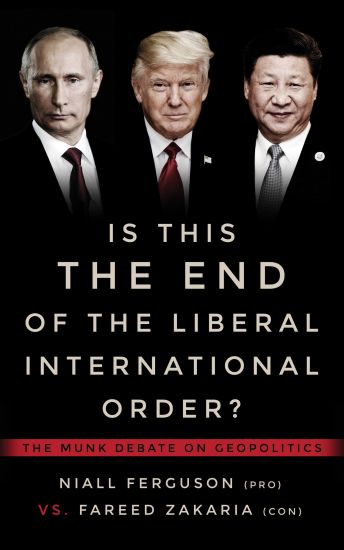
Is This the End of the Liberal International Order?

Is This the End of the Liberal International Order?

Niall Ferguson; Fareed Zakaria

House of Anansi Press Ltd ,Canada
2017
nidottu
Be it resolved, the liberal international order is over...Since the end of World War II, global affairs have been shaped by three broad trends: the increasing free movement of people and goods, international rules setting, and a broad appreciation of the mutual benefits of a more interconnected, interdependent world. Together these factors defined the liberal international order and sustained an era of rising global prosperity and declining international conflict. But is this order now being supplanted by a new global reality; one defined by the assertion of national borders, national interests and protectionist trade polices? More fundamentally, is liberal internationalism a historical aberration; the product of a unique set of forces that are now in retreat? Or, can it survive these challenges and remain the defining rules-based system of the future?The twentieth semi-annual Munk Debate, held on April 28th, 2017, pits prominent historian Niall Ferguson against CNN's Fareed Zakaria to debate the future of liberal internationalism.
Tsivilizatsija. Chem Zapad otlichaetsja ot ostalnogo mira
V nachale xv veka mir zametno otlichalsja ot nyneshnego. Nas porazil by kontrast mezhdu moguschestvennoj Aziej i stradajuschej ot goloda, usobits i epidemij Evropoj, mezhdu anarkhicheskoj Severnoj Amerikoj i imperijami Tsentralnoj i Juzhnoj Ameriki. Mysl o tom, budto Zapad sposoben dominirovat v mire -v voennom, ekonomicheskom ili v kulturnom otnoshenii, - togda pokazalas by strannoj. Tem ne menee sledujuschie poltysjachi let zapadnye strany zadavali ton.Skandalno izvestnyj britanskij istorik vosstanavlivaet "retsept uspekha" Zapada i zadaetsja voprosom, stoit li v nashi dni govorit o ego "zakate".
The End of the Liberal Order?

The End of the Liberal Order?

Niall Ferguson; Fareed Zakaria

Oneworld Publications
2017
pokkari
Is it time to reaffirm our liberal values? Or are we seeing the birth-pangs of a new era? Two great thinkers debate the question burning behind headlines across the world. ‘No civilization, no matter how mighty it may appear to itself, is indestructible.’ –Niall Ferguson ‘We do not need to invent the world anew. The international order established by the United States after World War II is in need of expansion and repair, but not reconception.’ –Fareed Zakaria Fears of a globalized world are rampant. Across the West, borders are being reasserted and old alliances tested to their limits. Could this be the end of the liberal order or will the major crises of the twenty-first century strengthen our resolve?
Kissinger

Kissinger

Niall Ferguson

Penguin
2016
pokkari
No American statesman has been as revered and as reviled as Henry Kissinger. Hailed by some as the "indispensable man", whose advice has been sought by every president from John F. Kennedy to George W. Bush, Kissinger has also attracted immense hostility from critics who have cast him as an amoral Machiavellian - the ultimate cold-blooded "realist".In this remarkable new book, the first of two volumes, Niall Ferguson has created an extraordinary panorama of Kissinger's world, and a paradigm-shifting reappraisal of the man. Only through knowledge of Kissinger's early life (as a Jew in Hitler's Germany, a poor immigrant in New York, a GI at the Battle of the Bulge, an interrogator of Nazis, and a student of history at Harvard) can we understand his debt to the philosophy of idealism.And only by tracing his rise, fall and revival as an adviser to Kennedy, Nelson Rockefeller and, finally, Richard Nixon can we appreciate the magnitude of his contribution to the theory of diplomacy, grand strategy and nuclear deterrence.Drawing not only on Kissinger's hitherto closed private papers but also on documents from more than a hundred archives around the world, this biography is Niall Ferguson's masterpiece. Like his classic two-volume history of the House of Rothschild, Kissinger sheds dazzling new light on an entire era.
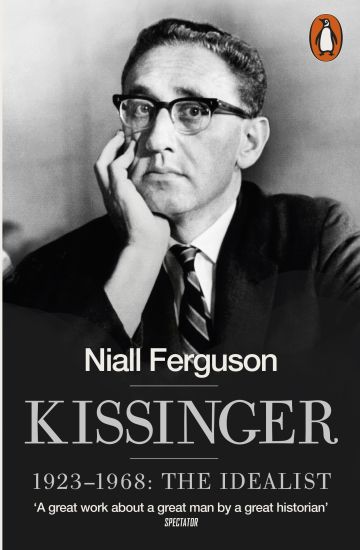
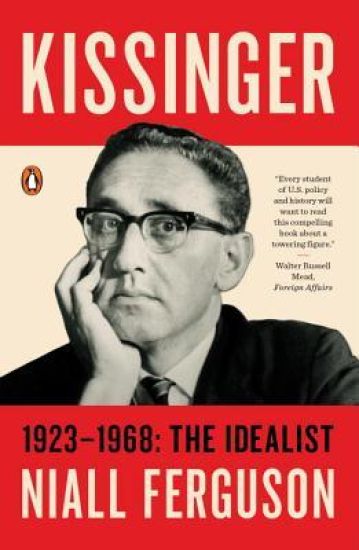
Kissinger: 1923-1968: The Idealist

Kissinger: 1923-1968: The Idealist

Niall Ferguson

PENGUIN BOOKS
2016
nidottu
From the bestselling author of The Ascent of Money and The Square and the Tower, the definitive biography of Henry Kissinger, based on unprecedented access to his private papers. Winner of the Council on Foreign Relations Arthur Ross Book Award No American statesman has been as revered or as reviled as Henry Kissinger. Once hailed as "Super K"--the "indispensable man" whose advice has been sought by every president from Kennedy to Obama--he has also been hounded by conspiracy theorists, scouring his every "telcon" for evidence of Machiavellian malfeasance. Yet as Niall Ferguson shows in this magisterial two-volume biography, drawing not only on Kissinger's hitherto closed private papers but also on documents from more than a hundred archives around the world, the idea of Kissinger as the ruthless arch-realist is based on a profound misunderstanding. The first half of Kissinger's life is usually skimmed over as a quintessential tale of American ascent: the Jewish refugee from Hitler's Germany who made it to the White House. But in this first of two volumes, Ferguson shows that what Kissinger achieved before his appointment as Richard Nixon's national security adviser was astonishing in its own right. Toiling as a teenager in a New York factory, he studied indefatigably at night. He was drafted into the U.S. infantry and saw action at the Battle of the Bulge--as well as the liberation of a concentration camp--but ended his army career interrogating Nazis. It was at Harvard that Kissinger found his vocation. Having immersed himself in the philosophy of Kant and the diplomacy of Metternich, he shot to celebrity by arguing for "limited nuclear war." Nelson Rockefeller hired him. Kennedy called him to Camelot. Yet Kissinger's rise was anything but irresistible. Dogged by press gaffes and disappointed by "Rocky," Kissinger seemed stuck--until a trip to Vietnam changed everything. The Idealist is the story of one of the most important strategic thinkers America has ever produced. It is also a political Bildungsroman, explaining how "Dr. Strangelove" ended up as consigliere to a politician he had always abhorred. Like Ferguson's classic two-volume history of the House of Rothschild, Kissinger sheds dazzling new light on an entire era. The essential account of an extraordinary life, it recasts the Cold War world.
The Great Degeneration: How Institutions Decay and Economies Die
From the bestselling author of The Ascent of Money and The Square and the Tower, a searching and provocative examination of the widespread institutional rot that threatens our collective future What causes rich countries to lose their way? Symptoms of decline are all around us today: slowing growth, crushing debts, increasing inequality, aging populations, antisocial behavior. But what exactly has gone wrong? The answer, Niall Ferguson argues in The Great Degeneration, is that our institutions--the intricate frameworks within which a society can flourish or fail--are degenerating. With characteristic verve and historical insight, Ferguson analyzes the causes of this stagnation and its profound consequences for the future of the West. The Great Degeneration is an incisive indictment of an era of negligence and complacency--and to arrest the breakdown of our civilization, Ferguson warns, will take heroic leadership and radical reform.
The Middle Parts of Fortune

The Middle Parts of Fortune

Frederic Manning; Niall Ferguson

Penguin Classics
2014
pokkari
A moving, raw and powerful novel about fighting on the front - 'The finest and noblest book of men in war that I have ever read' (Ernest Hemingway)Bourne is a private fighting on the front. He is under pressure to accept a commission and become an officer, but he prefers to be among the ranks, drawn into the universal struggle for survival in a world gone mad.Manning's startling work is unlike any other First World War novel in its portrayal of the lives of ordinary British soldiers: the trauma of the Somme; the moments of bloodlust; the camaraderie, rivalry, alcohol and boredom. Considered obscene for its language and previously published in censored form as Her Privates We, The Middle Parts of Fortune appears here in its raw, unexpurgated version.
Inside the House of Money

Inside the House of Money

Steven Drobny; Niall Ferguson

John Wiley Sons Inc
2014
nidottu
New commentary and updates to enlightening interviews with today's top global macro hedge fund managers This updated paperback edition of Inside the House of Money lifts the veil on the typically opaque world of hedge funds offering a rare glimpse at how today's highest paid money managers approach their craft. Now with new commentary, author, Steve Drobny takes you even further into the hedge fund industry. He demystifies how these star traders make billions for their well-heeled investors, revealing their theories, strategies and approaches to markets. Whereas some still maintain that rationality permeates financial markets, Drobny captures a different dimension, showing how the unquantifiable human forces of emotion and intuition are also at play. Along the way, readers get an inside look at firsthand trading experiences through some of the major world financial crises of the last few decades. Discusses how no market or instrument is out of bounds for these elite global macro hedge fund managersOffers unique and illuminating insight into an inaccessible and sometimes downright secretive worldWritten by respected industry expert Steven Drobny Highly accessible and filled with in-depth expert opinion, this updated paperback edition of Inside the House of Money is a must-read for financial professionals and anyone else interested in understanding how greed, fear, and the human forces of emotion drive world markets.
Great Degeneration

Great Degeneration

Niall Ferguson

Penguin
2014
pokkari
The decline of the West is something that has long been prophesied. Symptoms of decline are all around us today: slowing growth, crushing debts, ageing populations. But what exactly is amiss with Western civilization? The author argues that the institutions that were once the four pillars of Western society - representative government, and more.