
Kirjailija
Omar Khayyam
Kirjat ja teokset yhdessä paikassa: 115 kirjaa, julkaisuja vuosilta 1889-2026, suosituimpien joukossa Rubaiyât D'omar Khàyyâm. Vertaile teosten hintoja ja tarkista saatavuus suomalaisista kirjakaupoista.
Mukana myös kirjoitusasut: Omar Khayyám, Omar Khayyàm, Omar Khàyyâm
115 kirjaa
Kirjojen julkaisuhaarukka 1889-2026.

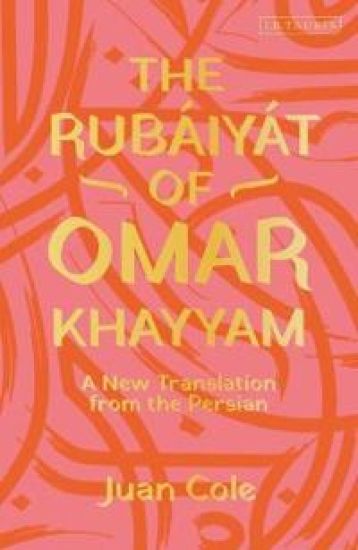
A repository of subversive, melancholic and existentialist themes and ideas, the rubaiyat (quatrains) that make up the collected poems attributed to the 12th century Persian astronomer Omar Khayyam have enchanted readers for centuries. In this modern translation, complete with critical introduction and epilogue, Juan Cole elegantly renders the verse for contemporary readers. Exploring such universal questions as the meaning of life, fate and how to live a good life in the face of human mortality, this translation reveals anew why this singular collection of poems has struck a chord with such a temporally and culturally diverse audience, from the wine houses of medieval Iran to the poets of Western twentieth century modernism.
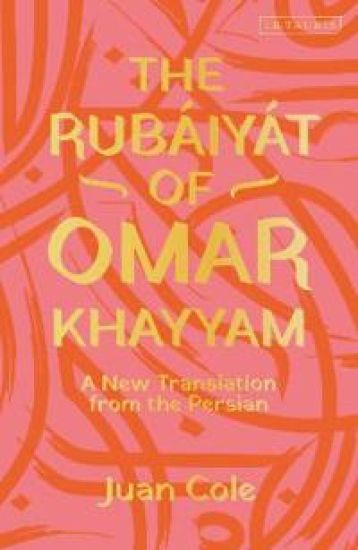
A repository of subversive, melancholic and existentialist themes and ideas, the rubaiyat (quatrains) that make up the collected poems attributed to the 12th century Persian astronomer Omar Khayyam have enchanted readers for centuries. In this modern translation, complete with critical introduction and epilogue, Juan Cole elegantly renders the verse for contemporary readers. Exploring such universal questions as the meaning of life, fate and how to live a good life in the face of human mortality, this translation reveals anew why this singular collection of poems has struck a chord with such a temporally and culturally diverse audience, from the wine houses of medieval Iran to the poets of Western twentieth century modernism.
OMAR KHAYYAM: RUBA'IYYAT(Large Print & Large Format Edition)Translation & Introduction Paul SmithOmar Khayyam (died 1132) was one of the early masters of the Persian poetic form of the ruba'i... so much so that many in collections of these profound, philosophic, mystical, sometimes controversial poems were often attributed to him, although many were by other great Persian poets such as 'Attar, Sa'di, Rumi, Mahsati and Hafiz. More famous in his homeland as an astronomer, mathematician and philosopher, the sometimes nihilistic and hedonistic and often Sufi philosophy in his ruba'is meant that his poems were never really popular in his homeland until after the interpretations of Edward FitzGerald, and the West fell in love with him. Introduction: The Life and Times of Omar Khayyam and his work as a Scientist & Philosopher and a history of the ruba'i and examples by its greatest exponents and a chapter on the various translations into English and other languages. Selected bibliography. The correct rhyme is here achieved & beauty & meaning of these fatalistic & intoxicated, loving & mystical, often satirical 186 four-line poems (twice as many as those 'translated' by Edward FitzGerald). Large Print (16pt) Large Format (7" x 10") Edition. 319 pages. Paul Smith (b. 1945) is a poet, author and translator of many books of Sufi poets of the Persian, Arabic, Urdu, Turkish, Pashtu and other languages... including Hafiz, Sadi, Nizami, Rumi, 'Attar, Sana'i, Jahan Khatun, Obeyd Zakani, Nesimi, Kabir, Anvari, Ansari, Jami, Khayyam, Rudaki, Yunus Emre, Lalla Ded, and many others, as well as poetry, fiction, plays, biographies, children's books and screenplays. amazon.com/author/smithpa
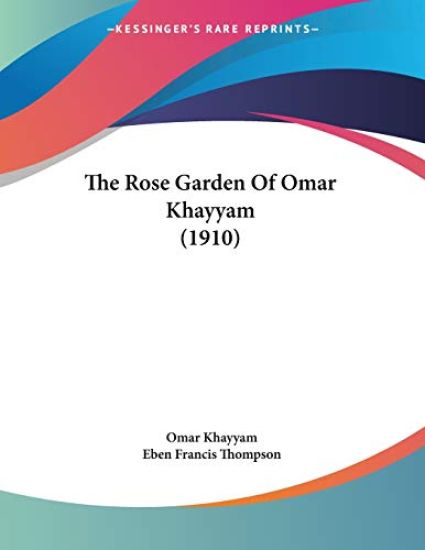
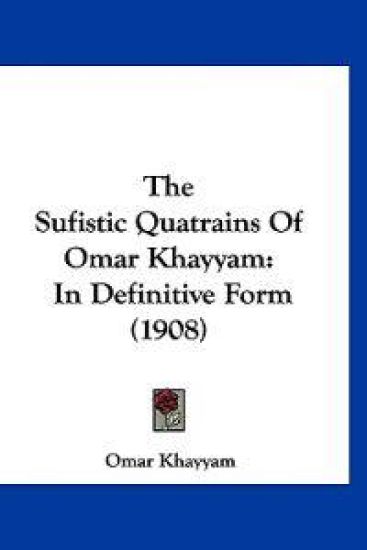
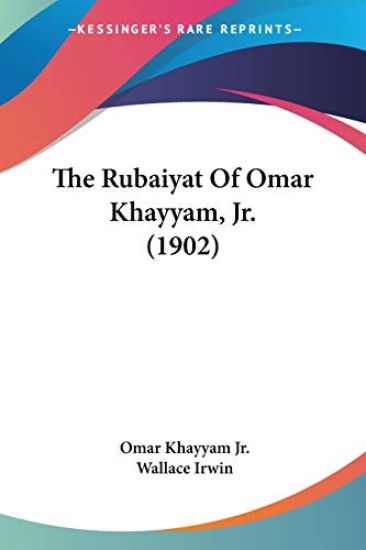
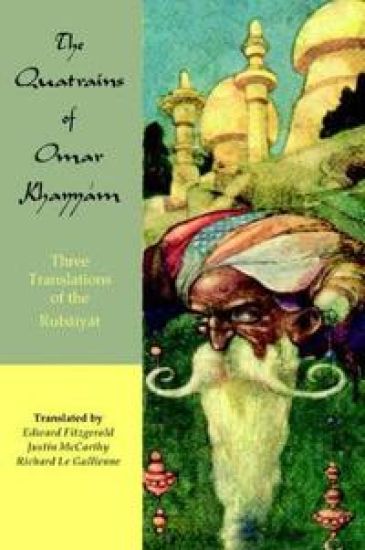
Though few translations have had as much impact as Edward Fitzgerald's Rubaiyat of Omar Khayyam, anyone who wishes to truly appreciate Omar Khayyam needs to read more than one translation. This volume contains Edward Fitzgerald's classic translation with all its variations, Justin McCarthy's elegant and mystical literal translation and Richard Le Gallienne's sharp and poetic version. For the first time the reader can appreciate the range of Omar Khayyam and his interpreters in a single volume.
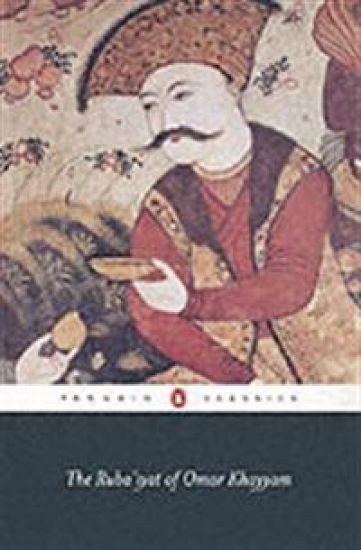
Revered in eleventh-century Persia as an astronomer, mathematician and philosopher, Omar Khayyam is now known first and foremost for his Ruba'iyat. The short epigrammatic stanza form allowed poets of his day to express personal feelings, beliefs and doubts with wit and clarity, and Khayyam became one of its most accomplished masters with his touching meditations on the transience of human life and of the natural world. One of the supreme achievements of medieval literature, the reckless romanticism and the pragmatic fatalism in the face of death means these verses continue to hold the imagination of modern readers.



This book offers the original Robaiyat of Omar Khayyam (AD 1021-1123) as a tent of 1000 logically sewn quatrains serving the poetic Wine of his secretive autobiography. It is an epic, at once a personal, world-historical, and cosmic search for true human happiness. He composed it to be highly readable so that it can be read by all, continually, and today, before it is too late, like a prayer book or a rosary of pearls or ruby stones, since it was meant to be not only reflective but also generative of search for happiness. If you begin reading it, you must do so at least once to its end, so that in later readings any of its parts can be recalled amid the unitary architecture of its philosophical, spiritual, and scientific wisdom rendered as an astounding and most beautiful work of art. Khayyam was right; there is nothing on Earth like his Wine.His poetic "book of life" was intended to be released posthumously, so its existence was not known to his contemporaries. Following his death, it was released but became scattered and its logical unity was shattered by natural and social disasters and scribal poetry alphabetizing styles, some quatrains wandering into other poets' works and others becoming misattributed to him. The Robaiyat as shared in this book were logically re-sewn and newly translated in verse by the sociologist Mohammad H. Tamdgidi during his integrative study of all of Khayyam's works as reported in his unprecedented 12-book series Omar Khayyam's Secret: Hermeneutics of the Robaiyat in Quantum Sociological Imagination (2021-2025). Following a summary of his series' findings, Tamdgidi presents in this book nothing else but Khayyam's Robaiyat, including the Persian originals and his verse translations (his study of them having been shared in his series, especially its Books 8-11). The poems, comprising songs of doubt, hope, and joy, are logically organized to address three questions, based on the 3-phased method of inquiry Khayyam himself introduced in his other writings.Quatrains 1-338 of Part 1, Songs of Doubt, open by explaining his epic's secretiveness and address the question "Does Happiness Exist?" Their order follows a logically inductive reasoning through which Khayyam delves from surface portraits of unhappiness to their deeper chain of causes. Quatrains 339-685 of Part 2, Songs of Hope, address the second question "What Is Happiness?" Their order follows a logically deductive reasoning through which he moves from methodological to explanatory and practical quatrains. Quatrains 686-1000 of Part 3, Songs of Joy, address the third question "Why Can Happiness Exist?" Still deductively ordered, they show how happiness can be made possible through his poetry's Wine itself, realizing that one can never become truly happy by bringing sadness to others since human self and society are always twin-born and universal. Hurting another is always a hurting of that self in you that represents that other. For Khayyam, happiness can be possible by way of joyful, creative, and constructive humanizing efforts by own example, like his Robaiyat, which must also start from our inner and interpersonal todays and spread globally.Khayyam's Robaiyat represented the tent of which he was a "tentmaker," his poetic pen name having been inspired by his true birth date horoscope chart as discovered by Tamdgidi and reported in his series for the first time. The metaphor also underlies the numerical geometry of its triangular unity, proportional to the dazzling Grand Tent (Triplicity) features of his birth chart, the same way he embedded his own triangular golden rule in the mysterious design of Isfahan's North Dome. A metaphor of the Robaiyat as Simorgh (or Phoenix) songs is also hidden in its deep structure. Khayyam's Robaiyat are his Simorgh's millennial rebirth songs served in his tented tavern as 1000 sips of his bittersweet poetic Wine of happiness.