Kirjailija
Peter Johnson
Kirjat ja teokset yhdessä paikassa: 82 kirjaa, julkaisuja vuosilta 1992-2026, suosituimpien joukossa R.G. Collingwood and Christianity. Vertaile teosten hintoja ja tarkista saatavuus suomalaisista kirjakaupoista.
Mukana myös kirjoitusasut: Peter Johnson.
82 kirjaa
Kirjojen julkaisuhaarukka 1992-2026.
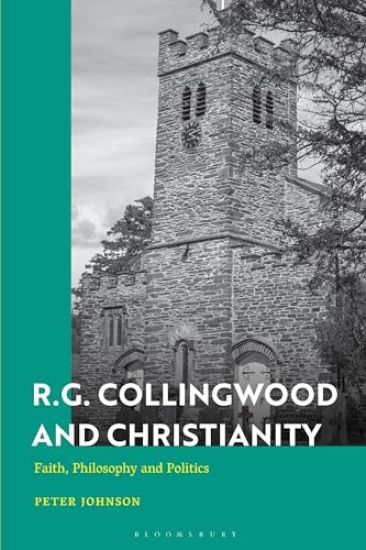
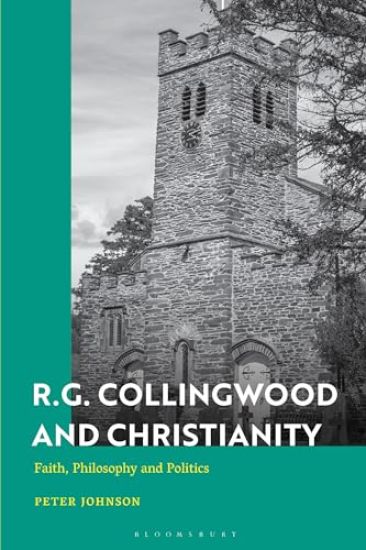
Drawing on his writing on philosophy, history, religion and politics, this is the first in-depth analysis of R.G. Collingwood’s relation to Christian thought. Peter Johnson’s original study sheds new and important light on Collingwood’s views on emotion, civilisation and key political events such as the Spanish Civil War from the perspective of his religious beliefs. Here Collingwood’s Christianity takes centre stage. Johnson considers Collingwood’s relationship to prominent philosophers of the 20th century like Wittgenstein and Rawls, and examines the connection between Collingwood’s views on Christianity and thinkers such as Norman Malcolm and D. Z. Phillips. Chapters also cover Collingwood’s discussion of the Augustine and Pelagius debate, the impact of Collingwood’s Anglicanism on his liberalism and his idea of Christian historiography as a Leaven. A rich and nuanced account of the importance of Christianity, and Christian concepts, to Collingwood’s philosophical and political thought, this is a valuable resource for students and scholars of philosophy of history and philosophy of religion as well as historical and political theory.
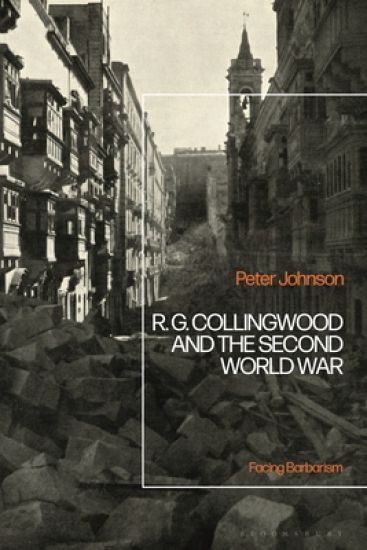
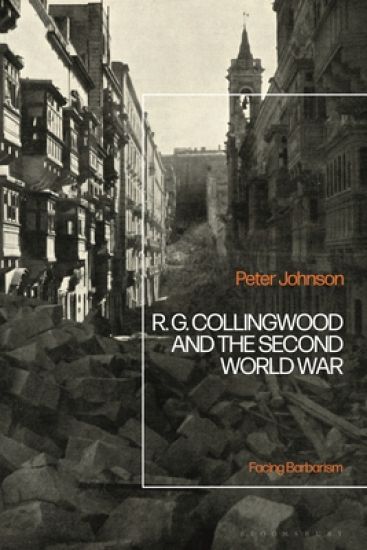
R.G Collingwood’s prolific works have shaped the debate about the nature of civilisation and its status as an ideal governing art, morality and social and political existence. As one of the few philosophers to subject civilisation and barbarism to close analysis, R.G Collingwood was acutely aware of the interrelationship between philosophy and history.In Peter Johnson’s highly original work, R.G Collingwood and the Second World War: Facing Barbarism, Johnson combines historical, biographical and philosophical discussion in order to illuminate Collingwood’s thinking and create the first in-depth analysis of R.G Collingwood’s responses to the Second World War.Peter Johnson examines how R.G Collingwood’s responses to the war developed from his early rejection of appeasement as a policy for dealing with Hitler’s Germany, through his view of Britain’s prosecution of the war once the battle with Nazism had been joined, and finally to his picture of a future liberal society in which civility is its overriding ideal.
Yhdessä oppiminen
Martti Hellström; Peter Johnson; Asko Leppilampi; Pasi Sahlberg
Into Kustannus
2015
nidottu
Yhteistoiminnallisessa oppimisessa työskennellään pienryhmissä. Opettaja innostaa ja ohjaa, ja oppiessa syntyy sosiaalisia taitoja, oppimisen iloa ja positiivista yhteisöllisyyden tunnetta.Yhdessä oppiminen on ajankohtainen, 2020-luvulle päivitetty teos yhteistoiminnallisuudesta, sen perusteista ja menetelmistä. Vuoden 2016 opetussuunnitelman myötä peruskouluille ja lukioille tarjoutuu mahdollisuus uudistua.Kirjan voi lukea itsenäisesti tai sitä voi käyttää yhteistoiminnallisen oppimisen tapaan. Kirja soveltuu opettajille ja opetuksesta päättäville kaikilla hallinnon ja politiikan tasoilla.
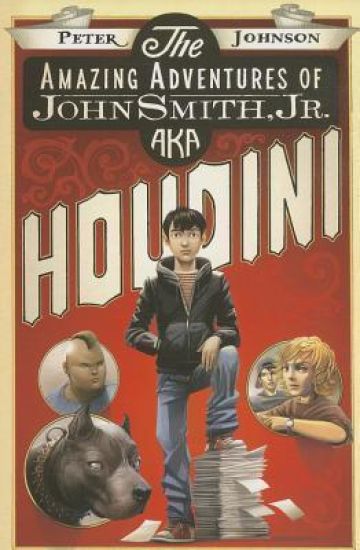
For fans of Jerry Spinelli's Maniac Magee, Gary D. Schmidt's The Wednesday Wars, and Jack Gantos's Joey Pigza Books comes a hilarious and poignant slice-of-life novel from critically acclaimed author and poet Peter Johnson.When an author comes to speak to his class in a rundown area of Providence, Houdini decides to make money by writing his own novel. Houdini chronicles his life as he and his friends start a leaf-raking business, befriend Old Man Jackson (a Vietnam War veteran with a seriously intimidating dog), and get even with the neighborhood bully, Angel. But it's hard to find a way to write about his dad losing his job or his brother, Franklin, who is first reported missing in action in Iraq and then still seems to be missing when he comes home.No matter what, Houdini and his friends rely on one another to figure out how to do the right thing. And Houdini discovers that writing and thinking about his friends and family lets him get to know them in completely new ways.
This text is part of the "Bristol Introductions" series which aims to present perspectives on philosophical themes, using non-technical language, for both the new and the advanced scholar. Why should modern philosophers read the works of R.G. Collingwood? His ideas are often thought difficult to locate in the main lines of development taken by 20th-century philosophy. Some have read Collingwood as anticipating the later Wittgenstein, others have concentrated exclusively on the internal coherence of his thought. This work introduces Collingwood to students of philosophy through direct engagement with his arguments. The text takes the form of a conversation with Collingwood on the topics that interested him: philosophy and method; philosophy of mind; language and logic; the historical imagination; art and expression; action; and metaphysics and life.
Throughout his writing, French philosopher Michel Serres described ways of living in the future that could now prove essential in overcoming the destruction of humanity. This introduction to Serres’ ecological thought lays bare a philosophy that drew on a dazzling range of sources from myths, religion, mathematics, advanced science and the humanities and stands out as profoundly relevant to the challenges of what may prove to be the late Anthropocene era. Peter Johnson explores Serres’ key proposals for a new, shared social contract, and draws parallels between his philosophy and indigenous stories about the kinship of all nature. He also explains how Serres questions and enriches popular notions of ‘Big History’, and challenges widespread calls by environmental groups, politicians and corporations for sustainability and adaptability. Throughout, Serres’ thought is contrasted with a variety of contemporary arguments about the social and political roots of the current crisis. Most importantly, Serres’ thought offers hope about possibilities to come, with a particular emphasis on the skills of young people, the opportunities offered by global communication and access to knowledge. The book’s final section describes Serres’ vision for global knowledge sharing and new forms of communication technology and education, making it essential to all those who wish to explore the underlying roots of the ecological crisis and what we must confront if we are to avoid further destruction.
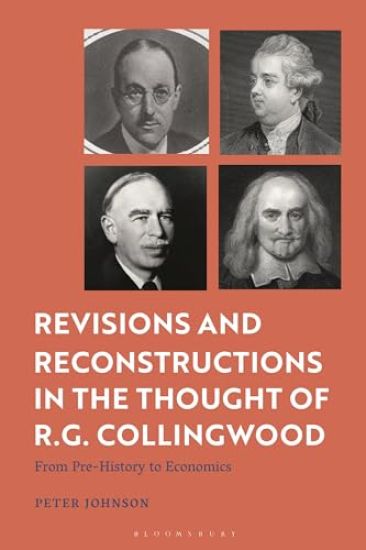
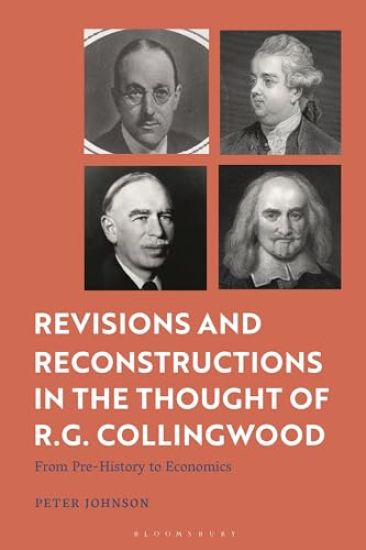
Revisions and Reconstructions in the Thought of R.G. Collingwood
Peter Johnson
BLOOMSBURY PUBLISHING PLC
2026
nidottu
Opening new ground in neglected aspects of R.G. Collingwood’s philosophy, Peter Johnson presents essays on Collingwood as a pre-historian, economist, Christian and commentator of Edward Gibbon together with an investigation into the connection between his later works. The chapters shed light on Collingwood’s distinctive account of pre-history, the relationship between his last great works The Principles of History and The New Leviathan, and his views on money in comparison to those of J.M. Keynes. They also consider his assessment of Edward Gibbon as a historian and his use of biblical citation in relation to the work of Thomas Hobbes. Johnson’s insightful reflections and in-depth analysis of a range of areas in Collingwood’s thinking connect them through historical and conceptual themes relevant to contemporary debates about his philosophy. Uniting important and unique perspectives for understanding the scope and depth of Collingwood’s philosophy, Johnson’s detailed examination of previously underexplored topics will be welcomed by students and scholars across philosophy of history, pre-history, economic theory, intellectual history and philosophical hermeneutics.
Family memories, growing up, getting old, the Troubles, quirky personalities, Covid, cancer, 9/11, Mr Trump, friendship, loss, love, the pangolin, a toad and even the humble potato find a place in this grandfather–granddaughter collaboration of prose and poetry. Sixty-five years between them but a special bond brought about by a shared passion for writing. Emma’s award-winning successes have given her the confidence and desire to continue her writing. Despite her other school commitments, rarely a day goes by without her putting words on a page. She is currently working on a fantasy novel.
Philosophy for a Time of Crisis: Michel Serres and Climate Change
Peter Johnson
EcologyPrint
2026
nidottu
The book is an accessible and comprehensive introduction to the ecological philosophy of Michel Serres. It traces how Serres explores: an inclusive legal contract that embraces all nature; a collective, common story; the transformative potential of digital technologies; the invention of a global politics; and a philosophy of hope. The book will appeal to the general reader as well as those with a specific interest in radical proposals for responding to the climate crisis, more-than -human jurisprudence, the rights of nature, indigenous knowledge, ecological philosophy, political ecology and 'digital nature'. Michel Serres investigated how we have become the world's parasites, taking and giving nothing back. We have broken from the deep alliances of nature. As we battle, as we devour each other and the earth's resources, as we destroy the habitat that we share with all living things, Serres offers a challenging and hopeful way forward.
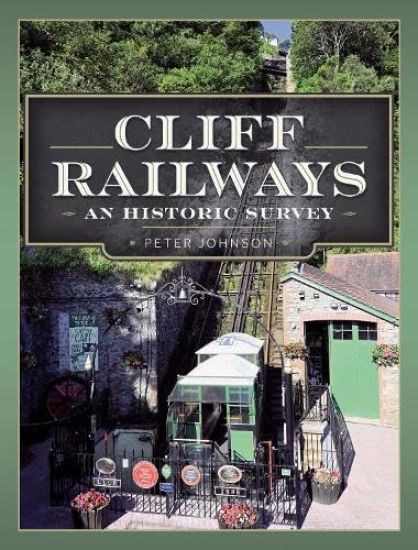
In the 19th Century there was a widespread feeling in seaside resorts with cliffs that visitor numbers would be increased if there was an easy way of reaching, and more importantly, returning from the beach, avoiding flights of stairs or long zig-zag paths. To address this issue, the first cliff railway was built at Scarborough in 1875. Since then, another twenty-nine, or thirty if the Leas lift at Folkestone, which was duplicated in 1890, is counted as two, have been built, including three at inland locations. Despite having the same function, all the cliff railways are different and have their own characteristics. Some of them still use water as a power source. The remainder use electric motors. In addition to telling the story of Britain’s cliff railways, author Peter Johnson tells the story of the authorised but unbuilt cliff railways, vertical lifts and electric stairways that serve or served the same function in a few places, and adds details of what might be called ‘cliff railway derivatives,’ steep-grade, rope-hauled, railways, airport automated people movers, and modern inclined lift installations that might have been built as cliff railways if they had been built a hundred years ago. To compile this new book, Peter Johnson, who has written books on Welsh and narrow gauge railways for Pen & Sword, has carried out extensive research in government files and old newspapers. Many of the illustrations have not been published previously and a few of them are very rare.
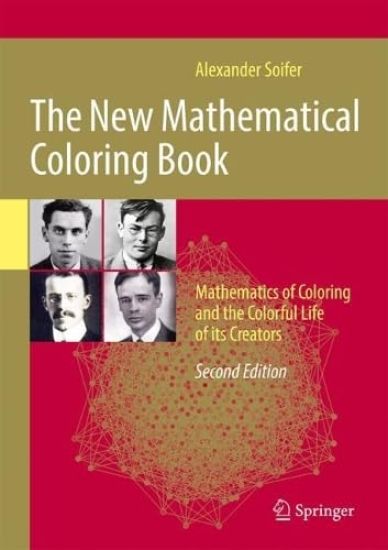
The New Mathematical Coloring Book
Alexander Soifer; Branko Grünbaum; Peter Johnson; Cecil Rousseau
SPRINGER-VERLAG NEW YORK INC.
2025
nidottu
The New Mathematical Coloring Book (TNMCB) includes striking results of the past 15-year renaissance that produced new approaches, advances, and solutions to problems from the first edition. A large part of the new edition “Ask what your computer can do for you,” presents the recent breakthrough by Aubrey de Grey and works by Marijn Heule, Jaan Parts, Geoffrey Exoo, and Dan Ismailescu. TNMCB introduces new open problems and conjectures that will pave the way to the future keeping the book in the center of the field. TNMCB presents mathematics of coloring as an evolution of ideas, with biographies of their creators and historical setting of the world around them, and the world around us.A new thing in the world at the time, TMCB I is now joined by a colossal sibling containing more than twice as much of what only Alexander Soifer can deliver: an interweaving of mathematics with history and biography, well-seasoned with controversy and opinion. –Peter D. Johnson, Jr.Auburn UniversityLike TMCB I, TMCB II is a unique combination of Mathematics, History, and Biography written by a skilled journalist who has been intimately involved with the story for the last half-century. …The nature of the subject makes much of the material accessible to students, but also of interest to working Mathematicians. … In addition to learning some wonderful Mathematics, students will learn to appreciate the influences of Paul Erdos, Ron Graham, and others.–Geoffrey ExooIndiana State UniversityThe beautiful and unique Mathematical coloring book of Alexander Soifer is another case of “good mathematics”, containing a lot of similar examples (it is not by chance that Szemerédi’s Theorem story is included as well) and presenting mathematics as both a science and an art…–Peter MihókMathematical Reviews, MathSciNetA postman came to the door with a copy of the masterpiece of the century. I thank you and the mathematics community should thank you for years to come. You have set a standard for writing about mathematics and mathematicians that will be hard to match.– Harold W. KuhnPrinceton UniversityI have never encountered a book of this kind. The best description of it I can give is that it is a mystery novel… I found it hard to stop reading before I finished (in two days) the whole text. Soifer engages the reader's attention not only mathematically, but emotionally and esthetically. May you enjoy the book as much as I did!– Branko GrünbaumUniversity of WashingtonI am in absolute awe of your 2008 book.–Aubrey D.N.J. de GreyLEV Foundation
Revisions and Reconstructions in the Thought of R.G. Collingwood
Peter Johnson
BLOOMSBURY PUBLISHING PLC
2025
sidottu
Opening new ground in neglected aspects of R.G. Collingwood’s philosophy, Peter Johnson presents essays on Collingwood as a pre-historian, economist, Christian and commentator of Edward Gibbon together with an investigation into the connection between his later works. The chapters shed light on Collingwood’s distinctive account of pre-history, the relationship between his last great works The Principles of History and The New Leviathan, and his views on money in comparison to those of J.M. Keynes. They also consider his assessment of Edward Gibbon as a historian and his use of biblical citation in relation to the work of Thomas Hobbes. Johnson’s insightful reflections and in-depth analysis of a range of areas in Collingwood’s thinking connect them through historical and conceptual themes relevant to contemporary debates about his philosophy. Uniting important and unique perspectives for understanding the scope and depth of Collingwood’s philosophy, Johnson’s detailed examination of previously underexplored topics will be welcomed by students and scholars across philosophy of history, pre-history, economic theory, intellectual history and philosophical hermeneutics.
Situated in the Welsh borderland to the West of Oswestry, the scenic Tanat Valley reached westwards into Wales, its Llangynog terminus nestling where the road starts the climb over the Berwyn mountain range towards Bala. It was a lightly populated area that sustained agriculture and some mineral extraction whose residents struggled to get their produce to market. During the 19th Century there were several schemes for a railway that failed due their inability to raise sufficient capital. The Tanat Valley Light Railway is, therefore, a true child of the 1896 Light Railways Act, promoted by the Oswestry Urban District Council the following year to take advantage of the grant-making facilities of that legislation. Because it took so long to obtain powers, and it was not opened until 1906, the Light Railway never really fulfilled its potential. Operated initially by the Cambrian Railways, it was not heavily worked, although it benefited from pipe traffic generated by renewals of Liverpool Corporation’s Vyrnwy reservoir pipeline. Although closure came in stages during the 1950s, and was deemed to be complete in 1960, a short section of track remains in situ at Porthywaen. Author Peter Johnson has drawn on the material available at the National Archives at Kew and the Parliamentary Archives in the House of Lords as well as conducting extensive research in digitised newspapers to tell the Light Railway’s story, producing the first in-depth account of its development, operation and closure. Peter Johnson is also the author of The Shropshire & Montgomeryshire Light Railway – the rise and fall of a rural byway, published by Pen & Sword Transport in 2024\. The two railways were connected at Blodwel Junction and the surviving section of the Tanat Valley Light Railway thence to Porthywaen enabled stone traffic on the Shropshire & Montgomeryshire’s Nantmawr branch to continue until 1971.
The New Mathematical Coloring Book
Alexander Soifer; Branko Grünbaum; Peter Johnson; Cecil Rousseau
SPRINGER-VERLAG NEW YORK INC.
2024
sidottu
The New Mathematical Coloring Book (TNMCB) includes striking results of the past 15-year renaissance that produced new approaches, advances, and solutions to problems from the first edition. A large part of the new edition “Ask what your computer can do for you,” presents the recent breakthrough by Aubrey de Grey and works by Marijn Heule, Jaan Parts, Geoffrey Exoo, and Dan Ismailescu. TNMCB introduces new open problems and conjectures that will pave the way to the future keeping the book in the center of the field. TNMCB presents mathematics of coloring as an evolution of ideas, with biographies of their creators and historical setting of the world around them, and the world around us.A new thing in the world at the time, TMCB I is now joined by a colossal sibling containing more than twice as much of what only Alexander Soifer can deliver: an interweaving of mathematics with history and biography, well-seasoned with controversy and opinion. –Peter D. Johnson, Jr.Auburn UniversityLike TMCB I, TMCB II is a unique combination of Mathematics, History, and Biography written by a skilled journalist who has been intimately involved with the story for the last half-century. …The nature of the subject makes much of the material accessible to students, but also of interest to working Mathematicians. … In addition to learning some wonderful Mathematics, students will learn to appreciate the influences of Paul Erdos, Ron Graham, and others.–Geoffrey ExooIndiana State UniversityThe beautiful and unique Mathematical coloring book of Alexander Soifer is another case of “good mathematics”, containing a lot of similar examples (it is not by chance that Szemerédi’s Theorem story is included as well) and presenting mathematics as both a science and an art…–Peter MihókMathematical Reviews, MathSciNetA postman came to the door with a copy of the masterpiece of the century. I thank you and the mathematics community should thank you for years to come. You have set a standard for writing about mathematics and mathematicians that will be hard to match.– Harold W. KuhnPrinceton UniversityI have never encountered a book of this kind. The best description of it I can give is that it is a mystery novel… I found it hard to stop reading before I finished (in two days) the whole text. Soifer engages the reader's attention not only mathematically, but emotionally and esthetically. May you enjoy the book as much as I did!– Branko GrünbaumUniversity of WashingtonI am in absolute awe of your 2008 book.–Aubrey D.N.J. de GreyLEV Foundation
Yhtenäisempi peruskoulu
Peter Johnson; Kimmo Tanttu; Mari Heikkinen; Hanna Maunumäki
Professional Publishing Finland
2024
nidottu
Rohkeita ja kestäviä ratkaisuja peruskoulun kehittämiseenPeruskoulun menestystarina on jatkunut 50-vuoden ajan. Vuonna 1999 alkoi peruskoulun uusi kehittämisvaihe, jonka tarkoituksena on ollut lisätä sen yhtenäisyyttä. Yhä useampi koulu toimii 1-9 luokkien yhtenäiskouluna saman katon alla, mutta kehittämistyötä tarvitaan kaikissa peruskouluissa.Rohkeita ja kestäviä ratkaisuja on syntynyt eri puolilla maata. Niistä kerrotaan tässä kirjassa. Ääneen pääsevät niin tutkijat kuin koulujen ammattilaiset oppilaita unohtamatta. Kirja on tarkoitettu suomalaisesta peruskoulusta ja sen yhtenäisyyden kehittämisestä kiinnostuneille tiekartaksi ja kompassiksi. Matkalle kestävään koulun kehittämiseen.Kirjan tekijät Peter Johnson, Kimmo Tanttu, Mari Heikkinen ja Henna Maunumäki ovat kokeneita peruskoulun johtajia ja kehittäjiä. Kirjaan on haastateltu kymmeniä opetustoimen ja koulujen johtajia sekä opettajia ja alan asiantuntijoita. Haastattelut, tutkimukset ja kokemukset antavat laajan näköalan peruskoulun kehittämiseen.
Retirement and the impending move to his new family home will be challenging for workaholic Headmaster John Stevens after years of being at the top of the professional tree. His wife Sally, a highly respected GP, intends to work for at least another five years. Can he adjust to being the partner at home? And has he spent too much time with other people’s children and neglected his own? To make matters worse, within weeks of leaving his post John’s life is thrown into turmoil and he needs all his strength and resilience to cope. His weaknesses as a parent are exposed, family tensions are heightened and unsettling questions about his marriage are raised. “Life’s always been about him and his job.”
Self-confessed 'wise guy of the prose poem' and also its unofficial laureate, Peter Johnson is one of America's foremost practitioners and critics of prose poetry. The publication of his While the Undertaker Sleeps: Collected and New Prose Poems provides an important opportunity to reflect on the reputation of a master of the form, who, according to poet and critic Chard deNiord, 'almost singlehandedly revived the currency of the prose poem during the nineties and early oughts.' Indeed, Johnson has been a major force in the development of the American prose poem for more than three decades and has contributed significantly to its prominence on the world stage.... But it is his darkly comic and often deeply poignant prose poems that have done most to advance the form. His own writing possesses many of the characteristics he prioritizes and supports as a critic and editor. These include a sobering directness, a persuasive and unostentatious intellectualism, and a powerful sense of the ironic and absurd....