Kirjailija
Peter Johnson
Kirjat ja teokset yhdessä paikassa: 82 kirjaa, julkaisuja vuosilta 1992-2026, suosituimpien joukossa R.G. Collingwood and Christianity. Vertaile teosten hintoja ja tarkista saatavuus suomalaisista kirjakaupoista.
Mukana myös kirjoitusasut: Peter Johnson.
82 kirjaa
Kirjojen julkaisuhaarukka 1992-2026.
Self-confessed 'wise guy of the prose poem' and also its unofficial laureate, Peter Johnson is one of America's foremost practitioners and critics of prose poetry. The publication of his While the Undertaker Sleeps: Collected and New Prose Poems provides an important opportunity to reflect on the reputation of a master of the form, who, according to poet and critic Chard deNiord, 'almost singlehandedly revived the currency of the prose poem during the nineties and early oughts.' Indeed, Johnson has been a major force in the development of the American prose poem for more than three decades and has contributed significantly to its prominence on the world stage.... But it is his darkly comic and often deeply poignant prose poems that have done most to advance the form. His own writing possesses many of the characteristics he prioritizes and supports as a critic and editor. These include a sobering directness, a persuasive and unostentatious intellectualism, and a powerful sense of the ironic and absurd....
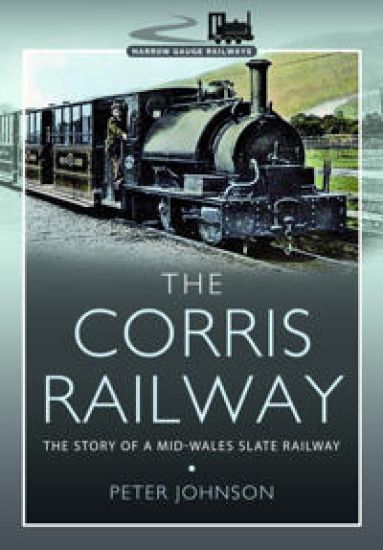
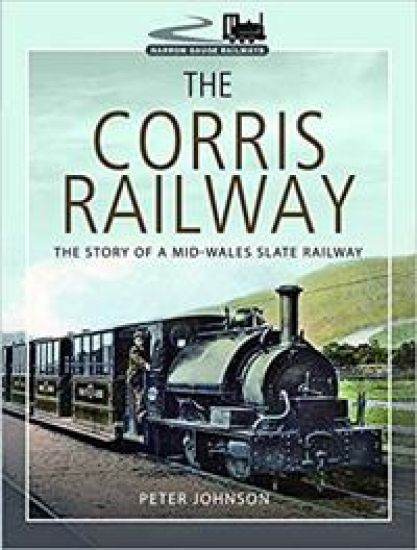
One of Wales' oldest narrow gauge railways, the 2ft 3in gauge Corris Railway was built to carry slate from several quarries in the Dulas valley to wharves on the river Dyfi. At first forbidden to use steam locomotives or to carry passengers, it overcame these obstacles and became an essential part of the community that it served. It was also a forerunner in encouraging tourists, offering inclusive tours to nearby Talyllyn, passengers travelling on the train and on railway-operated road services. Taken over by the Great Western Railway in 1930, the railway was closed by British Railways in 1948, apparently for good. Fortunately, the last two steam locomotives and some rolling stock was saved by the nearby Talyllyn Railway, where it played an essential role in that railway's preservation. Eventually, the thoughts of enthusiasts turned to reviving the Corris Railway, and, after many twists and turns, the first passengers were carried on a short section in 2002. Historian Peter Johnson has delved into many sources to uncover the intricacies of the railway's origins, its development, operation and revival.
Mail by Rail - The Story of the Post Office and the Railways
Peter Johnson
PEN SWORD BOOKS LTD
2022
sidottu
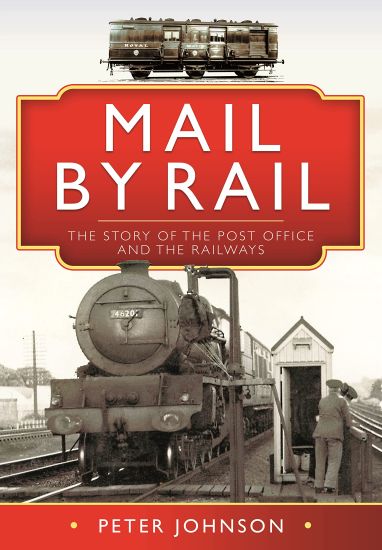
Railways have been used for the carriage of mail since soon after the Liverpool & Manchester Railway opened in 1830, the development of the first travelling post offices following, enabling the Post Office to achieve maximum efficiencies in mail transportation. As the rail network grew the mail network grew with it, reaching a peak with the dedicated mail trains that ran between London and Aberdeen. The Post Office also turned to railways when it sought a solution to the London traffic that hindered its operations in the Capital, obtaining powers to build its own narrow gauge, automatic underground railway under the streets to connect railway stations and sorting offices. Although construction and completion were delayed by the First World War, the Post Office (London) Railway was eventually brought into use and was an essential part of Post Office operations for many years. Changing circumstances brought an end to both the travelling post offices and the underground railway but mail is still carried, in bulk, by train and a part of the railway has found a new life as the Mail Rail tourist attraction. Author Peter Johnson has delved into the archives and old newspapers to uncover the inside story of the Post Office and its use of railways to carry the mail for nearly 200 years.
Peter Johnson Sr. shares the stunning story of how an evil preacher tricked his elderly mother out of his inheritance in this autobiography. The preacher even stole all the money from the sale of the family home, which the author had paid for by working tirelessly since he was a boy. His mother, however, was not the only person this hateful preacher misguided. As a pastor to Hollywood stars, he preyed on so many people. He never shared any of his spoils. The author also recalls getting shot up twice in mean streets and navigating suicide, treachery, and deceit-as well as the challenges of growing up Black. Join the author as he looks back at a life filled with wins, losses, and lots of surprises in An Evil Preacher Tricked My Mother.
On their final day at Oakwood Primary two talented pupils, Sam Martin, the best in school at sport, and Charlie Woods, its brightest academic prospect, go head to head in the Year 6 fifty metre dash. It is a day neither of them will forget. Afterwards, they go their separate ways to different schools. Charlie achieves her goal of gaining a place to read engineering at Imperial College London and Sam fulfils his dream of winning a professional rugby contract but struggles with the physical and mental pressures inherent in playing sport for a living. When life changing events bring the two together again, can the spark of friendship that Sam and Charlie felt when they were young be rekindled? A story of loss, love, frustrated ambitions and shattered hopes unfolds as they strive to overcome their emotional and physical challenges.
First published in 1988. Moral innocence is of enduring interest because it seems to embody our ideals in their purest form. The place of moral innocence in politics is the central theme of Peter Johnson’s subtle and original book. Are there moral dispositions which are not only incompatible with politics but actually endanger it? If it is sometimes necessary to act badly in order to achieve desirable objectives, what moral standpoints would exclude such a course at action? Peter Johnson demonstrates convincingly why philosophical accounts of morality, past and present, are unable to explain moral innocence: its full impact on politics can only be grasped by putting aside traditional theories. Literature provides the key to a deeper understanding of the relationship between politics and morality. Melville’s Billy Budd, Shakespeare’s Henry VI, and Graham Greene’s The Quiet American reveal moral innocence at work in political circumstances of great intensity. Through these and other literary figures, we see at last the specific character of moral innocence and why it is connected with political disaster. This closely reasoned yet deeply passionate book illuminates a problem of great contemporary interest and nowhere more so than in American public life. Original in theme and content, it confronts central issues of concern to the modern mind, not simply to academics, both teachers and taught, but to all those interested in how they might be governed.
Humans are adaptive creatures. We are constantly conforming and shapeshifting to fit the circumstances and conditions of our environment. Here, we confront the realities of evolution through the examination of a unique feature, adaptability. In doing so, we look at some of the ways in which the natural world provides as with a range of examples that pertain to the resilience, survival, and reproduction of species. But at the same time, this feature of adaptability crosses boundaries into more sophisticated parts of our life including the ways in which we interact with the inanimate parts of our environment as well as species of plants, animals, and microorganisms. It is interesting to note the effect that we, as a cultural species, are having on the environment and the ways in which the environment comes back to affect us. This crosstalk is the topic of this anthology and a way in which we organize and cultivate growth and maturity, as a species.
Wishful idealism, youthful optimism, and a rose-tinted romanticism of the world is a somewhat necessary precondition for ambition, dreams, and ways of life. However, when these ideals get tested in the crucible of reality, the space for naivete is very limited. Oftentimes, there is a rite of passage, with maturity and age, whereby an individual or a collective may abandon a past, perhaps more innocent outlook, in exchange for a more realistic one. That being said, sometimes this realism, if not properly tempered, can produce a type of jaded complacency that can spiral into loneliness, despair, or detachment. The rise of social media, new pandemic variants, and endeavours that tread further and further beyond familiar terrains put our ideas and ideals to the test and ask us to consider and reconsider our realities in the context of both hope and rationality.
In the contemporary world, the Anthropocene has become a deeply societal and personal term to express the end of civilization and culture. The culture wars, a raging pandemic, and the realities of climate change haunt and wreak havoc on the planet, in ways that are real and ethereal. However, perhaps all this demise is a consequence of the nature that certain objects, systems, and people interact with one another. Whether it be an anterior cruciate ligament tear or a greater tear in the fabric of our society, the aggressive contacts between moving parts can lead to injury. That being said, these tears can be healed and there are ways in which we can support and destabilize that healing. In this anthology, we synergized a spectrum of stories, science, and syntheses (in a somewhat silly sibilance).
In this novel, told from multiple points of view, critically acclaimed and award-winning author Peter Johnson paints a nuanced and convincing portrait of teenagers whose lives are forever changed-and linked-by the sound of a single gunshot. Johnson never apologizes for his characters' thoughts or actions, and therein lies this novel's brilliance. The brutal honesty and lack of self-reflection with which the narrators speak ring true and provide penetrating insights into the insecurity and insensitivity that permeate our lives. We are not only left wondering how we have created a society that continues to condone tremendous violence against women, but, like Maura, we are also left asking why we allow and even encourage people-especially young men-to remain irresponsible and uncaring.-Padma Venkatraman, author of The Bridge Home and Climbing the StairsThe high-compression stories in Peter Johnson's hyper-readable Shot open in 4th gear and accelerate from there. Take "Pretty Girl," which begins: "So you ask, 'How could anyone so drop-dead gorgeous be afraid of mirrors'" The considerable underlying art in these stories is matched by their fresh energy and flat-out fun. What this book has in common with Johnson's poetry is his insistence that a writer gets down more than craft, that a work of art also entertain. -Stuart Dybek, MacArthur fellow and author of The Coast of Chicago and I Sailed with Magellan Nobody knows the dark chemistry of relationships better than Peter Johnson. In these gripping tales, Johnson gets right down to the real nitty-gritty. Love, hate, fear. All the elements of great fiction, in the hands of a master storyteller. Stories that will forever beat in the American heart.-Rod Philbrick, Newbery Honor recipient and author of Freak the Mighty Peter Johnson hits the bullseye with this memorable collection of linked short stories that examines the impact of a fatal shooting on a group of surviving teens. The dead-on results, both thought-provoking and compelling, will appeal equally to teen and adult readers.-Michael Cart, Booklist columnist and author of From Romance to Realism: Fifty Years of Growth and Change in Young Adult Literature
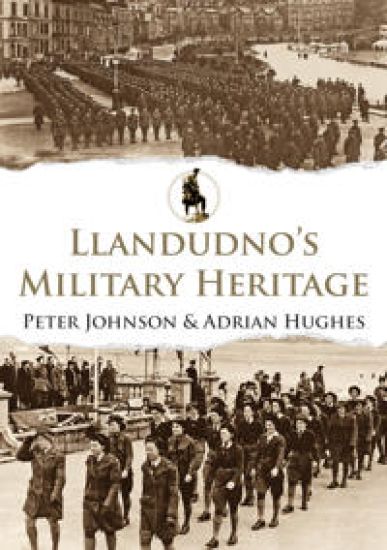
The north Wales seaside resort of Llandudno developed in the 1850s from a scatter of small settlements on the slopes of the Great Orme. The Iron Age defences of Pen Dinas hill fort and the presence of Roman coin hoards suggest local military conflict, and skirmishes are recorded from the time of the Vikings. In later centuries the focus for military activity stretches a mile or so down the Conwy Valley to the castles of Deganwy and battles between Welsh and English. Llandudno became embroiled in the invasion of Edward I when he gave the Bishop of Bangor land on the Great Orme to build a ‘palace’. This was sacked in Owain Glyndwr’s revolt of the early 1400s. With the rise of Britain’s empire copper was mined, partly to provide cladding for the wooden-hulled ships of her navy. By the twentieth century significant military training establishments were based in the area, as were prisoner-of-war camps and convalescent homes for military personnel. In 1915 a German U-boat attempted to pick up escaped POWs in Llandudno Bay, and the town was chosen as the new location for the Royal Artillery’s Coast Artillery School and the Inland Revenue. In Llandudno’s Military Heritage authors Peter Johnson and Adrian Hughes cover all this and more, showing the impact that the military has had on this north Wales town, its combatants and its citizens over the centuries.
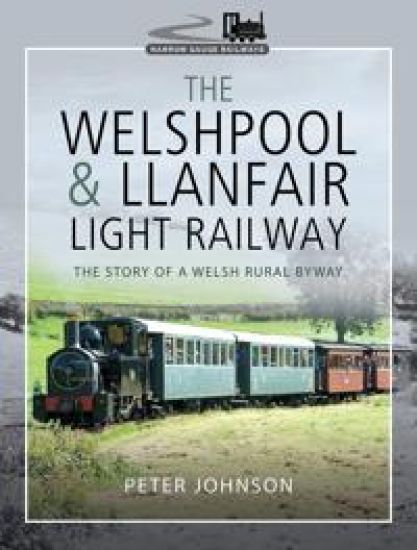
Unusually among Welsh narrow-gauge railways, the 2ft 6in gauge Welshpool & Llanfair Light Railway was built to benefit agriculture, not minerals. After several failed attempts to connect the market town at Welshpool with the rural community around Llanfair Caereinion, the 1896 Light Railways Act paved the way for the railway which opened in 1902. Operated by the Cambrian Railways and then by the Great Western Railway it became the only narrow-gauge steam railway catering for goods traffic under the auspices of British Railways. Sadly, it was closed in 1956 but enthusiasts ensured its revival, which started in 1963. Overcoming many obstacles, the railway is now run by a charitable trust and is a leading volunteer-operated tourist attraction in Montgomeryshire.
Built to carry minerals from mines in the Rheidol valley, the 2ft gauge Vale of Rheidol Railway found its niche carrying tourists to the tourist attraction at Devil's Bridge, 12 miles inland from the Cardigan coast resort of Aberystwyth. Taken over by the Cambrian Railways and then the Great Western Railway, it became the last steam railway operated by British Rail. In 1989 it became the first part of the national network to be privatised. Now under the control of a charitable trust it is undergoing a revival that will see it become one of the leading tourist attractions in Mid-Wales.
First published in 1997, this volume constitutes an attempt to resolve certain misunderstandings and ignorance concerning the constants of Nature. Its purpose is to look closely at the philosophical arguments made to support the customary conventional view of measurement, particularly with regard to constants. Peter Johnson argues that historic accounts provide only a partial understanding of the nature of constants, and that the conventionalism that rises relates only to the numerical representations used to quantify the measurement of quantities.
First published in 1988. Moral innocence is of enduring interest because it seems to embody our ideals in their purest form. The place of moral innocence in politics is the central theme of Peter Johnson’s subtle and original book. Are there moral dispositions which are not only incompatible with politics but actually endanger it? If it is sometimes necessary to act badly in order to achieve desirable objectives, what moral standpoints would exclude such a course at action? Peter Johnson demonstrates convincingly why philosophical accounts of morality, past and present, are unable to explain moral innocence: its full impact on politics can only be grasped by putting aside traditional theories. Literature provides the key to a deeper understanding of the relationship between politics and morality. Melville’s Billy Budd, Shakespeare’s Henry VI, and Graham Greene’s The Quiet American reveal moral innocence at work in political circumstances of great intensity. Through these and other literary figures, we see at last the specific character of moral innocence and why it is connected with political disaster. This closely reasoned yet deeply passionate book illuminates a problem of great contemporary interest and nowhere more so than in American public life. Original in theme and content, it confronts central issues of concern to the modern mind, not simply to academics, both teachers and taught, but to all those interested in how they might be governed.
This book, first published in 1986, is an important contribution to the economic analysis of new firms. It emphasises the importance of analysing the economic inter-relationship between new and established firms. These links are especially relevant in the assessment of the employment effects of formation activity.
One of Wales' oldest narrow gauge railways, the 2ft 3in gauge Corris Railway was built to carry slate from several quarries in the Dulas valley to wharves on the river Dyfi. At first forbidden to use steam locomotives or to carry passengers, it overcame these obstacles and became an essential part of the community that it served. It was also a forerunner in encouraging tourists, offering inclusive tours to nearby Talyllyn, passengers travelling on the train and on railway-operated road services. Taken over by the Great Western Railway in 1930, the railway was closed by British Railways in 1948, apparently for good. Fortunately, the last two steam locomotives and some rolling stock was saved by the nearby Talyllyn Railway, where it played an essential role in that railway's preservation. Eventually, the thoughts of enthusiasts turned to reviving the Corris Railway, and, after many twists and turns, the first passengers were carried on a short section in 2002. Historian Peter Johnson has delved into many sources to uncover the intricacies of the railway's origins, its development, operation and revival.
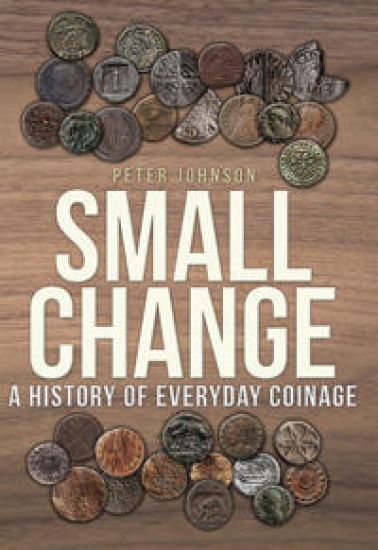
Since the Greeks of Asia Minor invented coined money in the late seventh century BC, the emphasis throughout history has been to focus on minting higher value pieces, with the production of small denomination coins used by ‘the poorer sorts’ often being neglected. Imagine trying to buy an 80p loaf of bread in the corner shop if our currency consisted only of £20 notes. Many people the world over in times past did not have to imagine - this was a conundrum they faced every day. Human ingenuity being what it is, this inconvenience was resolved in many different ways. Here, Peter Johnson explores these responses, from those which were eminently practical to others which, on first sight, appear somewhat bizarre, if not comical. The spotlight is on Britain, exploring both its official and unofficial coinages, though the dilemmas faced in other countries at points of their history are also covered in this, a social and often local history of small change.