Kirjailija
Peter Johnson
Kirjat ja teokset yhdessä paikassa: 82 kirjaa, julkaisuja vuosilta 1992-2026, suosituimpien joukossa R.G. Collingwood and Christianity. Vertaile teosten hintoja ja tarkista saatavuus suomalaisista kirjakaupoista.
Mukana myös kirjoitusasut: Peter Johnson.
82 kirjaa
Kirjojen julkaisuhaarukka 1992-2026.
The two volumes of A Philosopher at War examine the political thought of the philosopher and archaeologist, R G Collingwood, against the background of the First and Second World Wars. Collingwood served in Admiralty Intelligence during the First World War and although he was not physically robust enough to play an active role in the Second World War, he was swift to condemn the policies of appeasement which he thought largely responsible for bringing it about. The author uses a blend of political philosophy, history and discussion of political policy to uncover what Collingwood says about the First World War, the Peace Treaty which followed it and the crises which led to the Second World War in 1939, together with the response he mustered to it before his death in 1943. The aim is to reveal the kind of liberalism he valued and explain why he valued it. By 1940 Collingwood came to see that a liberalism separated from Christianity would be unable to meet the combined evils of Fascism and Nazism. How Collingwood arrived at this position, and how viable he finally considered it, is the story told in these volumes.
Wealthy people study wealth Life without reading books is like jogging while dragging a car tyre. Ideas in this book could save or make you Millions, Some readers already have. "Success is a choice, Make it yours", Buy this book today: -)There are many books about making money but like my rich uncle used to say, those who tell don't know and those who know seldom tell. That is why this book is a bit different, there is as many ways to make wealth as there are people on the planet and so why would telling you the way that suited me best help you? The fact is that most people read or at least buy one of these books the way some people might buy a lotto ticket. They don't really think it will win but they are prepared to pay a few dollars for the dream that all their money problems will be over this week if they read the book. I understand how attractive that sentiment is and if you want to add my book to your collection of money success dreams and have it sitting on your shelf unread for years, that is up to you. In reality most of the books on the market about how to make money, are written by people who really don't understand how they made it and that is why they can not teach you to do the same. If I won the lotto, do you really think I could write a book teaching you how to win at the lotto..... No I could only teach you how to buy a ticket and play the game. I can teach you the odds and some tricks or tips to getting cheaper tickets but the bottom line is that if you win or not, is not in my control or yours.Learn the simple rules to succeed with the three pilars of lifeHealth InvestmentsHappiness The three real pillars of True wealth, without a good measure of all 3 you will have none, all have some simple but not always obvious rules that when followed lead easily to wealth of all kinds. The way letting go at the top of a slippery slide leads to the bottom with great ease and lots of fun as long as you follow the rules and don't fall off on the way down. Most people imagine wealth the other way around where if they do the hard work they can climb to the top of some financial ladder? That is why they are always working very hard and wealth eludes them.Learning the rules to any game will not make you an expert and wealth is the same, it is not a theory that is understood intellectually, it is a Lifestyle that needs to be understood by living it. You live the wealthy lifestyle when you have no money and by practice you will become better at it and eventually have lots of all 3 Pillars of Wealth. Imagine any game, you can not play the game until you learn the rules but it is only when you step onto the field and apply the rules in faith that you start to really understand them and profit by them. Wealth is the same, you can be very wealthy at any financial level but the last thing a person with money problems needs is more money I actually wrote this for my children or unborn heirs, so they could learn directly from me how I changed my fortunes to retire at 25 years old. All the wealth I give my children is in this book and for a very small investment I am giving it to you, what they or you do with it is up to you. I genuinely did not write this to make money but to help other people find there freedom, I am a very open book and I talk about many of the issues that have effected the people I have advised over the years. So if this book helps you, track me down and send me an email, I am always up for a chat about important things that help peoples lives be Happier, Healthier and Wealthier.RegardsPeter
A comprehensive spread by spread approach to Bible places and history. Accessible and packed with time charts, diagrams, maps and photographs, this compact Bible Atlas provides everything you need to know about the Bible's history, geography and archaeology. The Atlas traces the unfolding of the major events in the Old and New Testaments and draws on the latest findings of historians and archaeologists. The modern, flexiback format makes this new Atlas portable but equally stunning as a browsable reference book.
The Idea of History is the best known work of the Oxford philosopher and historian RG Collingwood. Published posthumously in 1946 it is, in effect, two books: a historiography and a philosophy of history. Students look to Collingwood for a history of thinking about history, and to discover his ideas about the nature of historical understanding. It is an indispensable text for historians and philosophers yet it is also highly challenging and many of Collingwood's innovations have been seriously misunderstood. The primary focus of this book is on Collingwood's actual arguments, especially the most radical of these, with the aim of elucidating their construction and appraising them in the clearest possible way. This guide is the ideal companion to Collingwood's classic text both for students coming to it for the first time and for those wishing to consider its arguments afresh. It offers clear and concise accounts of the book's composition; the intellectual context of Collingwood's ideas; its central arguments concerning the nature of history; and its reception and influence.
This book is volume one of a two-part series (volumes sold separately). Taken together, the two volumes of A Philosopher at War examine the political thought of the philosopher and archaeologist, R.G. Collingwood, against the background of the First and Second World Wars. Collingwood served in Admiralty Intelligence during the First World War and although he was not physically robust enough to play an active role in the Second World War, he was swift to condemn the policies of appeasement which he thought largely responsible for bringing it about. The author uses a blend of political philosophy, history and discussion of political policy to uncover what Collingwood says about the First World War, the Peace Treaty which followed it and the crises which led to the Second World War in 1939, together with the response he mustered to it before his death in 1943. The aim is to reveal the kind of liberalism he valued and explain why he valued it. By 1940 Collingwood came to see that a liberalism separated from Christianity would be unable to meet the combined evils of Fascism and Nazism. How Collingwood arrived at this position, and how viable he finally considered it, is the story told in these volumes.
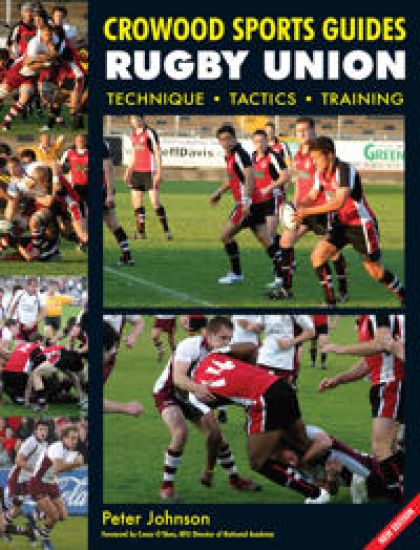
Crowood Sports Guides provide sound, practical advice that will help make you a better player whether you are learning the basic skills, discovering more advanced techniques or reviewing the fundamentals of your game.
The Surgeons Are Tied Up In The Operating Room, a cartoon compendium, views the surgical experience through the eyes of a patient. It is a rich traverse through the jargon-ridden world of modern medicine, which leaves room for wildly visual misinterpretations.
This book brings together thirty years of original empirical research on key aspects of the formation and development of small firms from selected articles authored or co-authored by Peter Johnson. Complete with a comprehensive introduction from the author placing the work in relation to the contemporary debates on the subject and providing a cohesive overview, these essays provide an excellent historical context for current research in this area. Many of the studies in this book emphasise the interrelatedness of economic activity and decisions, an emphasis that serves as an important reminder of the complex business environments in which small firms operate. The book is divided into five sections. The first part focuses on the process of business formation. In part two, the role of new firms in regional development is considered. The third section deals with employment issues, whilst part four looks at various aspects of growth and development. Finally, the book concludes with two articles on policy.
Frames of Deceit is a philosophical investigation of the nature of trust in public and private life. It examines how trust originates, how it is challenged, and how it is recovered when moral and political imperfections collide. In politics, rulers may be called upon to act badly for the sake of a political good, and in private life intimate attachments are formed in which the costs of betrayal are high. This book asks how trust is tested by human goods, moral character and power relations. It explores whether an individual's experience of betrayal differs totally from that of a community when it loses and then seeks to recover a vital public trust. Although this is a work of political philosophy it is distinctive in examining three literary texts - Sophocles' Philoctetes, Shakespeare's Troilus and Cressida, and Zola's Thérése Raquin - in order to deepen our understanding of the place of trust in morality and politics.
Student-friendly and international in scope and relevance, this book provides an accessible introduction to the economics of small business for those with little knowledge of economics. Economics, alongside other disciplines and interacting with them, has some important insights to offer and it is in this context that The Economics of Small Firms examines the formation, survival, growth and financing of small businesses, spatial variations in business formation, the economic role of small businesses, and key policy issues. This informative text is an essential purchase for anybody studying business and management who is eager for an easy-to-use and engaging overview of economics, entrepreneurship and small business.
This book is embedded in practical tools which proposes a fourth field of economics in addition to macro, micro and industrial organisation economics (IO); namely what may be called the economics of diversity. This book asserts that businesses are as individual as people. All have unique identities, what may be called genomes. As such economic diversity is the norm, rather than the economics of commodities. Contemporary economics deals very effectively with commodities in situations of perfect competition. It also makes some useful insights into imperfect competition and monopoly. The first half of the book expands the conceptual underpinnings of the economics of diversity (ecosystems, business models, advantage, rents and valuation of resources); the second half demonstrates how these methods can be practically applied through tools and techniques to deal with questions of business development, corporate strategy, mergers and acquisitions, and start-ups.
In 1964, a group of 20 Aboriginal women and children in the Western Desert made their first contact with European Australians -- patrol officers from the Woomera Rocket Range, clearing an area into which rockets were to be fired. They had been pursued by the patrol officers for several weeks, running from this frightening new force in the desert.Yuwali, 17 at the time, remembers every detail of the drama - first seeing these 'devils' and their 'rocks that moved', escaping the strange intruders. Her sharp recollections are complemented in a 3-part diary of the 'chase' by the colourful official reports of the patrol. These reflect a similar drama - arguments within Government about the treatment of desert inhabitants and public scepticism about the Government's intent. Line-drawn maps and black & white illustrations complement the text.Yuwali's story also resonates in today's debate about the future of many Indigenous desert communities. Cleared Out combines three oral histories, detailed archival research and a wealth of photographs and rare film footage from the patrol. Through one extraordinary episode, the multiple perspectives on the moment of contact are revealed.
The colourful characters who populate these stories live in Buffalo, but they will be readily recognisable to everyone. These are the blue collar men who never leave the neighbourhood and move to the large house in the suburbs. They work in the steel mills, and when those mills close, they do whatever they can to stay afloat on the sea of anger created by the circumstances of their lives. They drink, they fight, they hang out in pool halls waiting for "something to develop". They never achieve the American Dream -- in most cases, they don't even buy into it -- yet they are in the truest sense heroic. They are ordinary people stumbling through one small disaster after another.
A concise introduction to the floor mosaics of Roman Britain. Romano-British Mosaics first chronicles the history of mosaic discovery in Britain and discusses the changing attitudes towards mosaics, no longer considered merely art objects but social documents. It deals with the different periods of mosaic-laying, from the first-century pavements at Fishbourne, of Italian craftsmanship, to the Hadrianic and Antonine periods, when mosaic was first established in the towns. It traces the apparent collapse of the craft in the third century and the remarkable fourth-century revival, when many villas were decorated with sophisticated mosaics, and it examines the probable techniques of the Roman mosaicist by reference to both literary and archaeological evidence. A chapter deals with the recording, conservation and research of mosaics, and a list of sites where mosaics can be seen includes comments on items of outstanding interest. The book is illustrated throughout with photographs and distribution maps showing the fourth-century schools of mosaic, and supported by a glossary of technical terms.
SONET-based Metro Area Networks
Daniel Minoli; Peter Johnson; Emma Minoli
McGraw-Hill Inc.,US
2002
nidottu
This volume offers the reader advice on how to achieve new generation features with enhanced SONET and multi-lambda rings, compares SONET features and services with rival Ethernet-based offerings, and offers design approaches and business models for real-world deployment.
Ethernet-Based Metro Area Networks
Daniel Minoli; Peter Johnson; Minoli Emma
McGraw-Hill Professional
2002
nidottu
This book is your survival guide to making sense of the complex technologies and burgeoning opportunities of ethernet in the metro access and core. Suddenly all the action in telecom is on the local segment of the carrier network - the Metropolitan Area Network (MAN). The big challenge in 2002 and beyond will be to re-architect MANs for broadband services. Of course, great promise comes with great risk, and in today's confusing telecom market people are searching for ways to minimize the unknowns."Ethernet-Based Area Networks" is the perfect first resource for assessing your technology options in terms of next-generation platforms, products, and business models. This is the first book to review all emerging metro protocols and their interactions and likely market impact. Written by hands-on industry insiders, "Ethernet-Based Area Networks": sorts out options and reviews each proposed solution against application requirements; helps you find your way through complicated regulatory issues; offers design approaches and business models for real-world deployments; details new and proposed standards for the metro environment; critically examines broadband architectures; and challenges providers to think out of the box. If you've been looking for an informative, plainspoken reference that sheds light on all corners of the metro access and metro core environments - your search ends here.