Kirjailija
Thomas Bernhard
Kirjat ja teokset yhdessä paikassa: 170 kirjaa, julkaisuja vuosilta 1984-2026, suosituimpien joukossa Ja. Vertaile teosten hintoja ja tarkista saatavuus suomalaisista kirjakaupoista.
170 kirjaa
Kirjojen julkaisuhaarukka 1984-2026.
To rike systrer bestemmer seg for å hente heim den geniale broren, filosofen Ludwig, frå mentalsjukehuset. Systrene lever eit sløvande, monotont overklasseliv i barndomsheimen, og den einaste spenninga i live deira er broren, familiens svarte får. Dei førebur seg grundig på at han skal kome heim, men velkomstmiddagen tek ei uventa vending. Oppført på Det Norske Teatret i 1997.
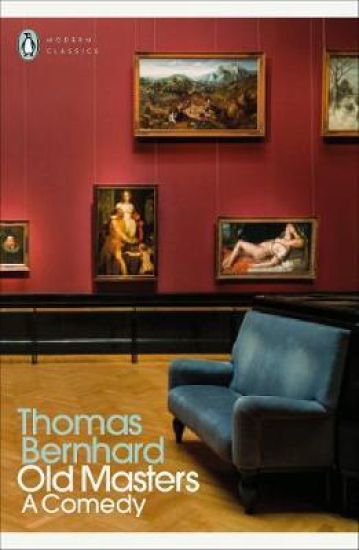
'Bernhard is one of the masters of contemporary European fiction'George SteinerOld Masters (1985) is Thomas Bernhard's devilishly funny story about the friendship between two old men.For over thirty years Reger, a music critic, has sat on the same bench in front of a Tintoretto painting in a Viennese museum, thinking and railing against contemporary society, his fellow men, artists, the weather, even the state of public lavatories. His friend Atzbacher has been summoned to meet him, and through his eyes we learn more about Reger - the tragic death of his wife, his thoughts of suicide and, eventually, the true purpose of their appointment. At once pessimistic and exuberant, rancorous and hilarious, Old Masters is a richly satirical portrait of culture, genius, nationhood, class, the value of art and the pretensions of humanity.
Kellari on itävaltalaisen klassikon Thomas Bernhardin (1931-1989) viisiosaisen omaelämäkerrallisen teossarjan toinen osa.Kun ensimmäinen osa Syy kuvaa Bernhardin kouluvuosien painajaista Salzburgissa, Kellari vie 16-vuotiaan Thomasin kauppiaan oppipojaksi lähiöön, jota asuttavat juopot, rikolliset ja muut syrjäytyneet.Nuori Thomas kohtaa kauppiaassa viisaan ihmisen, joka avaa hänelle jo kerran kadotetun tulevaisuuden - ihmisläheisyyden ja musiikin.Saksankielisen kirjallisuuden johtava kriitikko Marcel Reich-Ranicki on luonnehtinut Thomas Bernhardin autobiografista teossarjaa rikkaimmaksi osaksi tämän tuotantoa.
Syy on itävaltalaisen modernin klassikon Thomas Bernhardin (1931-1989) viisiosaisen omaelämäkerrallisen teossarjan avaus. Syy kuvaa kirjailijan koulu- ja opiskeluvuosia Salzburgissa 1943-1946. Nuori Thomas asuu internaatissa, jota johdetaan tyrannimaisesti. Kaupungin ilmapiiri on painajaismainen johtuen kansallissosialismista, katolisuudesta ja maailmansodan pommituksista. Syy:ssä päähenkilön toivottomuutta lisää ero perheestään ja rakastamastaan isoisästä. Lohtua tarjoavat klassinen musiikki ja ajatus itsemurhasta. Saksankielisen kirjallisuuden johtava kriitikko Marcel Reich-Ranicki on luonnehtinut Thomas Bernhardin omaelämäkerrallista teossarjaa rikkaimmaksi osaksi tämän tuotantoa.
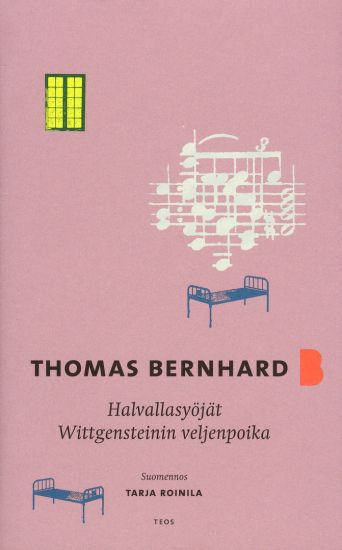
Halvallasyöjien päähenkilö, Koller, on vuosia sitten puistokävelyllä sattuneen koiranpureman seurauksena menettänyt jalkansa. Koiran omistajalta, lasitehtailija Welleriltä saamansa korvaussumman turvin Koller pystyykeskittymään tieteelliseen työhönsä fysiognomian parissa. Se puolestaan saa ratkaisevan käänteen, kun Koller toisella puistokävelyllä yhtäkkiä kävelee vanhan saarnen sijaan vanhan tammen suuntaan ja törmää halvallasyöjiin, porukkaan, joka käy syömässä Wienin yleisessä ruokalassa... Sattumaa ei ole, asia johtaa toiseen, Bernhardin huikea proosa vyöryy epätoivosta slapstickiin ja takaisin.Vuonna 1982 julkaistu Wittgensteinin veljenpoika on autofiktiivinen kuvaus kertojan ja kuuluisan filosofi-Wittgensteinin serkun pojan Paulin ystävyydestä. Kertoja on sairaalassa keuhkosairauden ja Wittgenstein hulluuskohtauksensa takia. Toivottomuuden ja kuolevaisuuden äärellänämä omalaatuiset henkilöt löytävät tukea ja turvaa yhteisestäintohimostaan musiikkiin, huumorintajustaan ja porvarillista Wieniä kohtaan tuntemastaan vastenmielisyydestä. Teos on ystävyyden ylistys, Bernhardia herkimmillään.
LRB BOOKSHOP'S AUTHOR OF THE MONTH ONE OF THE GUARDIAN'S BEST BOOKS OF 2019'If you haven't read Bernhard, you will not know of the most radical advance in fiction since Joyce ... My advice: dive in.' Lucy Ellmann'I absolutely love Bernhard: he is one of the darkest and funniest writers ... A must read for everybody.' Karl Ove KnausgaardMid-century Austria. Three aspiring concert pianists - Wertheimer, Glenn Gould, and the narrator - have dedicated their lives to achieving the status of a virtuoso. But one day, two of them overhear Gould playing Bach's Goldberg Variations, and his incomparable genius instantly destroys them both. They are forced to abandon their musical ambitions: Wertheimer, over a tortured process of disintegration that sees him becoming obsessed with both writing and his own sister, with whom he has a quasi-incestuous relationship culminating in death; and the narrator, instantly, retreating into obscurity to write a book that he periodically destroys and restarts. Written as a monologue in one remarkable unbroken paragraph, Thomas Bernhard's dazzling meditation on failure, genius, and fame is a radical new reading experience: musical, paralysing, raging, and inimitable.
LRB BOOKSHOP'S AUTHOR OF THE MONTH ONE OF THE GUARDIAN'S BEST BOOKS OF 2019WITH A NEW AFTERWORD BY ANNE ENRIGHT, AUTHOR OF THE ACTRESS'If you haven't read Bernhard, you will not know of the most radical advance in fiction since Joyce ... My advice: dive in.' Lucy Ellmann'I absolutely love Bernhard: he is one of the darkest and funniest writers ... A must read for everybody.' Karl Ove KnausgaardAn unnamed writer arrives at an 'artistic dinner' hosted by a composer and his society wife: a couple he once admired, but has now come to detest. They have been brought together by their friend Joana's suicide, but the guest of honour, a famous actor from the Burgtheatre, is late. As the guests await his arrival, little do they know that they are being subjected to the narrator's merciless scrutiny from his wing-backed throne, the targets of a tirade of epic, frenzied proportions. When the star actor finally arrives, he ushers in an explosive end to the evening that is impossible to see coming. Originally banned in Thomas Bernhard's homeland, Woodcutters brutally exposes the hollow pretentiousness of the Austrian bourgeoisie in an unforgettable firework display of humour and horror - newly illuminated by Anne Enright's afterword.
LRB BOOKSHOP'S AUTHOR OF THE MONTH ONE OF THE GUARDIAN'S BEST BOOKS OF 2019WITH A NEW AFTERWORD BY BEN LERNER, AUTHOR OF THE TOPEKA SCHOOL'If you haven't read Bernhard, you will not know of the most radical advance in fiction since Joyce ... My advice: dive in.' Lucy Ellmann'I absolutely love Bernhard: he is one of the darkest and funniest writers ... A must read for everybody.' Karl Ove KnausgaardIt is 1967. Two men lie bedridden in separate wings of a Viennese hospital. The narrator, Thomas Bernhard, is stricken with a lung ailment; his friend Paul, nephew of Ludwig Wittgenstein, is suffering from one of his periodic bouts of madness. As their friendship quickens, these two eccentric men discover in each other an antidote to their feelings of despair on the unexpected strength of what they share - a spiritual symmetry forged by their love of music, black humour, disgust for bourgeois Vienna, and fear of mortality. A restless blend of fiction and memoir, Wittgenstein's Nephew is not only a haunting meditation on the artist's struggle to maintain a foothold on reality, but an impassioned eulogy to a real-life friendship - newly illuminated by Ben Lerner's afterword.
This collection of four stories by the writer George Steiner called “one of the masters of European fiction” is, as longtime fans of Thomas Bernhard would expect, bleakly comic and inspiringly rancorous. The subject of his stories vary: in one, Goethe summons Wittgenstein to discuss the Tractatus Logico-Philosophicus; “Montaigne: A Story (in 22 Installments)” tells of a young man sealing himself in a tower to read; “Reunion,” meanwhile, satirizes that very impulse to escape; and the final story rounds out the collection by making Bernhard himself a victim, persecuted by his greatest enemy—his very homeland of Austria. Underpinning all these variously comic, tragic, and bitingly satirical excursions is Bernhard’s abiding interest in, and deep knowledge of, the philosophy of doubt. Bernhard’s work can seem off-putting on first acquaintance, as he suffers no fools and offers no hand to assist the unwary reader. But those who make the effort to engage with Bernhard on his own uncompromising terms will discover a writer with powerful comic gifts, penetrating insight into the failings and delusions of modern life, and an unstinting desire to tell the whole, unvarnished, unwelcome truth. Start here, readers; the rewards are great.
«Gå» er en av Thomas Bernhards mest filosofiske utgivelser. Romanen følger en spasertur der de to spaserende, fortelleren og Oehler, speiler og gjentar hverandre, bytter posisjon og endrer identitet. De diskuterer det som til enhver tid faller dem inn, men vender stadig tilbake til en tredje person, deres felles venn Karrer, som er blitt gal og havnet på sykehus. Fortellingen vakler mellom tragedie og komedie, og er preget av forfatterens umiskjennelige stil, der han skriver uten stans, uten avsnitt. «Gå» er således en utmerket inngang til et av etterkrigstidens mest særegne forfatterskap.
LRB BOOKSHOP'S AUTHOR OF THE MONTH ONE OF THE GUARDIAN'S BEST BOOKS OF 2019WITH A NEW AFTERWORD BY GEOFF DYER'If you haven't read Bernhard, you will not know of the most radical advance in fiction since Joyce ... My advice: dive in.' Lucy Ellmann'I absolutely love Bernhard: he is one of the darkest and funniest writers ... A must read for everybody.' Karl Ove KnausgaardFranz-Josef Murau is the intellectual black sheep of a powerful Austrian land-owning family. He now lives in Rome in self-imposed exile, surrounded by a coterie of artistic and intellectual friends. On returning from his sister's wedding on the family estate of Wolfsegg, having resolved never to go home again, Murau receives a telegram informing him of the death of his parents and brother in a car crash. Not only must he now go back, he must do so as the master of Wolfsegg: and he must decide its fate.The summit of Thomas Bernhard's artistic genius - mesmerising, addictive, explosively tragicomic - Extinction is a landmark of post-war literature, newly illuminated by Geoff Dyer's afterword.
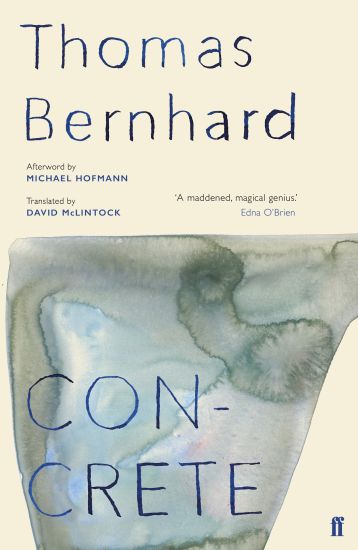
LRB BOOKSHOP'S AUTHOR OF THE MONTH ONE OF THE GUARDIAN'S BEST BOOKS OF 2019WITH A NEW AFTERWORD BY MICHAEL HOFMANN'If you haven't read Bernhard, you will not know of the most radical advance in fiction since Joyce ... My advice: dive in.' Lucy Ellmann'I absolutely love Bernhard: he is one of the darkest and funniest writers ... A must read for everybody.' Karl Ove KnausgaardInstead of the book he is meant to write, Rudolph, a Viennese musicologist, produces this dark and grotesquely funny account of small woes writ large, of profound horrors detailed and rehearsed to the point of distraction. We learn of Rudolph's sister, whose help he invites then reviles; his 'really marvellous' house which he hates; the suspicious illness he carefully nurses; his ten-year-long attempt to write the perfect opening sentence; and his escape to the island of Majorca, which turns out to be the site of someone else's very real horror story, and ultimately brings him no release from himself.Concrete is Thomas Bernhard at his very finest: a bleakly hilarious insight into procrastination and failure that scratches the murky depths of our souls.
Thomas Bernhard (1931-1989), østrigsk forfatter, hvis værker hører til de betydeligste inden for tysksproget litteratur efter Anden Verdenskrig. Bernhard har skrevet en lang række skuespil og romaner, der ofte behandler problemer ved den moderne civilisation, kultur og tradition. I Beton fra 1982 kæmper musikologen Rudolf med at skrive en afhandling om komponisten Mendelsohn Bartholdy. I stedet for at komme i gang med skriveprocessen, fortaber Rudolf sig i alle mulige overvejelser om livet, særligt centreret om forholdet til hans søster. For at få skrivero tager han til Palma på Mallorca, men forstyrres her af mindet om en kvinde med en grufuld skæbne.
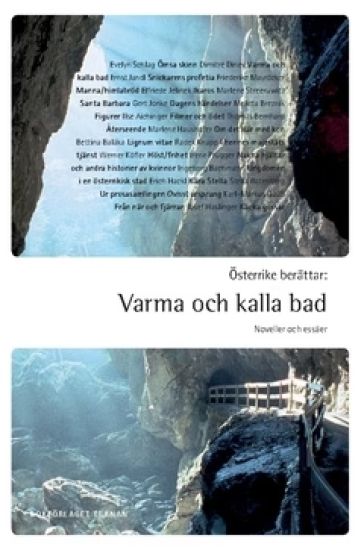
Österrike berättar : varma och kalla bad - noveller och essäer
Melitta Breznik; Marlene Haushofer; Marlene Streeruwitz; Dimitré Dinev; Karl-Markus Gauss; Thomas Bernhard; Gert Jonke; Ilse Aichinger; Evelyn Schlag; Friederike Mayröcker; Ernst Jandl; Erich Hackl; Elfriede Jelinek; Radek Knapp; Ingeborg Bachmann; Stella Rotenberg; Irene Prugger; Werner Köfler; Josef Haslinger; Bettina Baláka
Bokförlaget Tranan
2019
nidottu
Varma och kalla bad utspelas i ett land som besväras av det förflutna. Av det Habsburgska riket, kejsardömet mitt i Europa, återstår det betydligt mindre Österrike. Namnen på de författare som kommer till tals vittnar dels om ett slaviskt, dels om ett tyskt eller tyskjudiskt ursprung, även om alla skriver på tyska. I Varma och kalla bad medverkar flera generationer författare som berättar om sina personliga upplevelser av kriget och nazismen, men här skildras också samtiden. Alltifrån valutareformer till hembygds-berättelser, kvinnlig frigörelse och lyriska kärleksförklaringar gör antologin till ett både roande och tankeväckande nedslag i dagens österrikiska samhälle och litteratur.
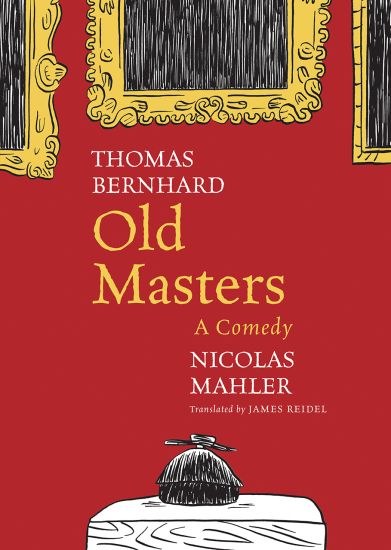
Thomas Bernhard's Old Masters has been called his "most enjoyable novel" by the New York Review of Books. It's a wild satire that takes place almost entirely in front of Tintoretto's White-Bearded Man, on display in the Kunsthistorisches Museum, as two typically Viennese pedants (serving as alter egos for Bernhard himself) irreverently, even contemptuously take down high culture, society, state-supported artists, Heidegger, and much more. It's a book built on thought and conversation rather than action or visuals. Yet somehow celebrated Austrian cartoonist Nicholas Mahler has brought it to life in graphic form and it's brilliant. This volume presents Mahler's typically minimalist cartoons alongside new translations of selected passages from the novel. The result is a version of Old Masters that is strikingly new, yet still true to Bernhard's bleak vision, and to the novel's outrageous proposition that the perfect work of art is truly unbearable to even think about let alone behold.
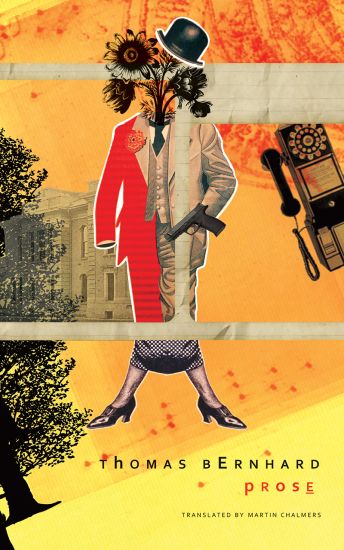
“His manner of speaking, like that of all the subordinated, excluded, was awkward, like a body full of wounds, into which at any time anyone can strew salt, yet so insistent, that it is painful to listen to him,” from The CarpenterThe Austrian playwright, novelist, and poet Thomas Bernhard (1931–89) is acknowledged as among the major writers of our time. The seven stories in this collection capture Bernhard’s distinct darkly comic voice and vision—often compared to Kafka and Musil—commenting on a corrupted world. First published in German in 1967, these stories were written at the same time as Bernhard’s early novels Frost, Gargoyles, and The Lime Works, and they display the same obsessions, restlessness, and disarming mastery of language. Martin Chalmer’s outstanding translation, which renders the work in English for the first time, captures the essential personality of the work. The narrators of these stories lack the strength to do anything but listen and then write, the reader in turn becoming a captive listener, deciphering the traps laid by memory—and the mere words, the neverending words with which we try to pin it down. Words that are always close to driving the narrator crazy, but yet, as Bernhard writes “not completely crazy.” “Bernhard's glorious talent for bleak existential monologues is second only to Beckett's, and seems to have sprung up fully mature in his mesmerizing debut.”—From Publishers Weekly, on Frost “The feeling grows that Thomas Bernhard is the most original, concentrated novelist writing in German. His connections . . . with the great constellation of Kafka, Musil, and Broch become ever clearer.” —George Steiner, Times Literary Supplement, on Gargoyles
One night in the middle of winter, as deep snow covers the mountains and forests, a doctor is crossing the ridge in Austria from Traich to Föding to see a patient. He stumbles over a body in the darkness and fears it is a corpse. But it’s not a corpse at all. In fact, it’s wooden-legged Victor Halfwit, collapsed, but still very much alive. So begins this simultaneously absurd and tragic tale by celebrated Austrian playwright, novelist, and poet Thomas Bernhard. Combining the darkly comic voice and vision of Bernhard with the lush and beautiful collages of Indian designer Sunandini Banerjee, Victor Halfwit is a unique and collectible artist’s book. Illustrated in color throughout, this edition imaginatively presents Bernhard’s fable in a distinctive and unconventional style. It is the perfect gift book that will be cherished by fans of Bernhard’s other works and will inspire new interest among visual artists.