Kirjailija
Thomas C. Oden
Kirjat ja teokset yhdessä paikassa: 77 kirjaa, julkaisuja vuosilta 1989-2022, suosituimpien joukossa After Modernity . . . What?. Vertaile teosten hintoja ja tarkista saatavuus suomalaisista kirjakaupoista.
Mukana myös kirjoitusasut: Thomas C Oden
77 kirjaa
Kirjojen julkaisuhaarukka 1989-2022.
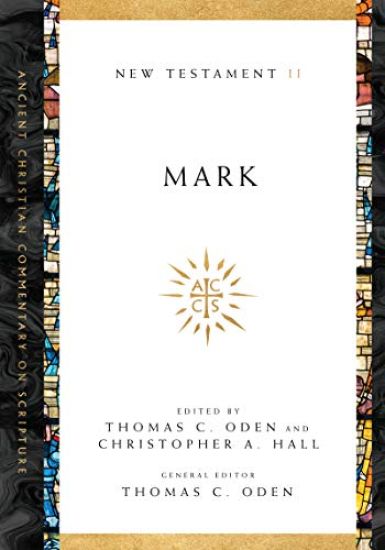
Christianity Today Book Award Winner The early church valued the Gospel of Mark for its preservation of the apostolic voice and gospel narrative of Peter. Yet the early church fathers very rarely produced sustained commentary on Mark. This brisk-paced and robust little Gospel, so much enjoyed by modern readers, was overshadowed in the minds of the fathers by the magisterial Gospels of Matthew and John. But now with the assistance of computer searches, an abundance of comment has been discovered to be embedded and interleaved amidst the textual archives of patristic homilies, apologies, letters, commentaries, theological treatises and hymnic verses. In this Ancient Christian Commentary on Mark, the insights of Augustine of Hippo and Clement of Alexandria, Ephrem the Syrian and Cyril of Jerusalem join in a polyphony of interpretive voices of the Eastern and Western church from the second century to the seventh. St. Mark's Gospel displays the evocative power of its story, parables and passion as it ignites a brilliant exhibit of theological insight and pastoral wisdom. The Ancient Christian Commentary on Mark (now in its second edition) opens up a long-forgotten passage through the arid and precipitous slopes of post-Enlightenment critical interpretation and bears us along to a fertile valley basking in the sunshine of theological and spiritual interpretation. In these pages we enter the interpretive world that long nurtured the great premodern pastors, theologians and saints of the church.
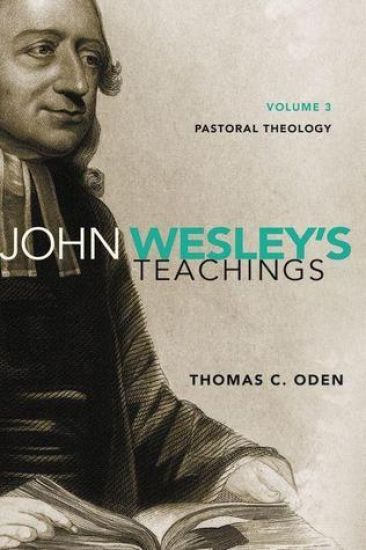
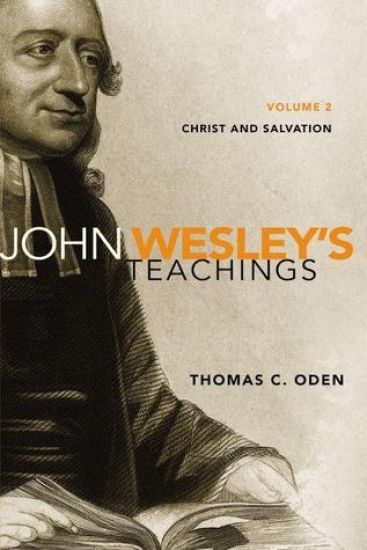
John Wesley’s Teachings is the first systematic exposition of John Wesley's theology that is also faithful to Wesley's own writings. Wesley was a prolific writer and commentator on Scripture—his collected works fill eighteen volumes—and yet it is commonly held that he was not systematic or consistent in his theology and teachings. On the contrary, Thomas C. Oden demonstrates that Wesley displayed a remarkable degree of internal consistency over sixty years of preaching and ministry. This series of 4 volumes is a text-by-text guide to John Wesley’s teaching. It introduces Wesley’s thought on the basic tenets of Christian teaching: God, providence, and man (volume 1), Christ and salvation (volume 2), the practice of pastoral care (volume 3), and issues of ethics and society (volume 4). In everyday modern English, Oden clarifies Wesley’s explicit intent and communicates his meaning clearly to a contemporary audience. Both lay and professional readers will find this series useful for devotional reading, moral reflection, sermon preparation, and for referencing Wesley’s opinions on a broad range of pressing issues of contemporary society.
John Wesley’s Teaching is the first systematic exposition of John Wesley's theology that is also faithful to Wesley's own writings. Wesley was a prolific writer and commentator on Scripture—his collected works fill eighteen volumes—and yet it is commonly held that he was not systematic or consistent in his theology and teachings. On the contrary, Thomas C. Oden demonstrates that Wesley displayed a remarkable degree of internal consistency over sixty years of preaching and ministry. This series of 4 volumes is a text-by-text guide to John Wesley’s teaching. It introduces Wesley’s thought on the basic tenets of Christian teaching: God, providence, and man (volume 1), Christ and salvation (volume 2), the practice of pastoral care (volume 3), and issues of ethics and society (volume 4). In everyday modern English, Oden clarifies Wesley’s explicit intent and communicates his meaning clearly to a contemporary audience. Both lay and professional readers will find this series useful for devotional reading, moral reflection, sermon preparation, and for referencing Wesley’s opinions on a broad range of pressing issues of contemporary society.
This vigorous and incisive critique of modernity lights the path to recovering the revitalizing heritage of classical Christianity.
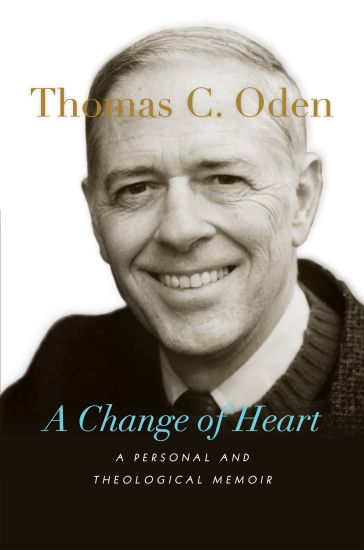
Preaching's Best Books for Preachers Best Theological Memoir from Byron Borger, Hearts and Minds Bookstore How did one of the twentieth century's most celebrated liberals have such a dramatic change of heart? After growing up in the heart of rural Methodism in Oklahoma, Thomas Oden found Marx, Nietzsche and Freud storming into his imagination. He joined the post-World War II pacifist movement and became enamored with every aspect of the 1950s' ecumenical Student Christian Movement. Ten years before America's entry into the Vietnam war he admired Ho Chi Min as an agrarian patriot. For Oden, every turn was a left turn. At Yale he earned his PhD under H. Richard Niebuhr and later met with some of the most formidable minds of the era—enjoying conversations with Gadamer, Bultmann and Pannenberg as well as a lengthy discussion with Karl Barth at a makeshift office in his hospital room. While traveling with his family through Turkey, Syria and Israel, he attended Vatican II as an observer and got his first taste of ancient Christianity. And slowly, he stopped making left turns. Oden's enthusiasms for pacifism, ecumenism and the interface between theology and psychotherapy were ambushed by varied shapes of reality. Yet it was a challenge from a Jewish scholar, his friend and mentor Will Herberg, that precipitated his most dramatic turn—back to the great minds of ancient Christianity. Later a meeting with then Cardinal Joseph Ratzinger (later Benedict XVI) planted the seeds for what became Oden's highly influential Ancient Christian Commentary on Scripture. This fascinating memoir walks us through not only his personal history but some of the most memorable chapters in twentieth-century theology.
In Search of Solitude is a collection of meditations that record moments of a spiritual pilgrimage. The purpose of these meditations is to put the soul in touch with the eternal in an ordinary time frame. Tom Oden relies on the ancient classic pattern of daily meditative 'hours' to order the life of prayer. An 'hour' here refers not to sixty minutes but to the phases of the daily cycle, related to darkness and light. Spending even a minute in prayer and meditation, seven times a day, sanctifies the entire daily cycle.
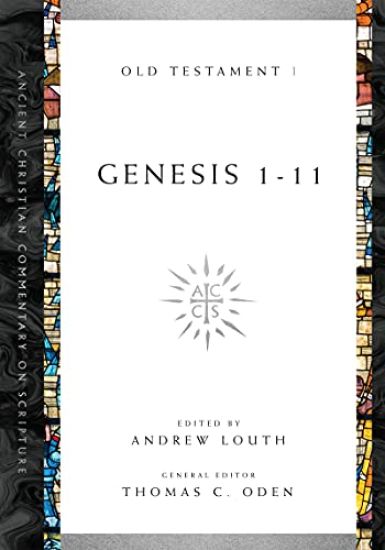
The rich tapestry of the creation narrative in the early chapters of Genesis proved irresistible to the thoughtful, reflective minds of the church fathers. Within them they found the beginning threads from which to weave a theology of creation, Fall, and redemption. Following their mentor the apostle Paul, they explored the profound significance of Adam as a type of Christ, the second Adam. The six days of creation proved especially attractive among the fathers as a subject for commentary, with Basil the Great and Ambrose producing well-known Hexaemerons. Similarly, Augustine devoted portions of five works to the first chapter of Genesis. As in previous volumes within the Ancient Christian Commentary on Scripture, the range of comment contained in this volume spans from the first century to the eighth and from East to West, from Greek and Latin speakers to Syriac. This ACCS volume on Genesis 1-11 opens up a treasure house of ancient wisdom that allows these faithful witnesses, some appearing here in English translation for the first time, to speak with eloquence and intellectual acumen to the church today. Especially helpful is the volume editor's provision of Septuagintal alternative readings to the Masoretic text, which are often necessary to understanding the fathers' flow of thought.
For to us a child is born, to us a son is given; and the government will be upon his shoulder and his name shall be called "Wonderful Counselor, Mighty God, Everlasting Father, Prince of Peace." For the early church fathers the prophecy of Isaiah was not a compendium of Jewish history or theology but an announcement of the coming Messiah fulfilled in the life and ministry of Jesus of Nazareth. As such, the prophet's words were a rich source of theological reflection concerning their Lord and a vital aid in their defense against the objections of the Jews that Jesus was the promised Messiah. The interpretation of Jesus' ministry in light of Isaiah's prophecy was not a theological innovation on their part but rather a following of the path blazed by the New Testament writers and Jesus himself. Among passage-by-passage commentaries cited here are those by Eusebius of Caesarea, Jerome, Cyril of Alexandria, and Theodoret of Cyr, as well as one attributed to Basil of Caesarea. John Chrysostom preached a series of homilies on Isaiah of which most of those extant concern the first eight chapters, though Chrysostom frequently cites Isaiah in numerous homilies on other books. Augustine of Hippo, Gregory the Great, and Bede the Venerable frequently cite passages from Isaiah 1–39, as did many other fathers in defending the Christian faith from Jewish critics. In this Ancient Christian Commentary on Scripture volume, readers will find materials ranging from East to West and from the first through the eighth centuries, some appearing here in English translation for the first time. Within this treasure house are riches to illumine the mind and fire the heart.
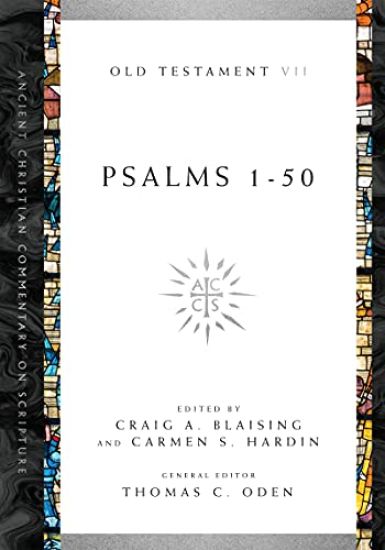
The Psalms have long served a vital role in the individual and corporate lives of Christians, expressing the full range of human emotions, including some that we are ashamed to admit. The Psalms reverberate with joy, groan in pain, whimper with sadness, grumble in disappointment, and rage with anger. The church fathers employed the Psalms widely. In liturgy they used them both as hymns and as Scripture readings. Within them they found pointers to Jesus both as Son of God and as Messiah. They also employed the Psalms widely as support for other New Testament teachings, as counsel on morals, and as forms for prayer. But the church fathers found more than pastoral insight in the Psalms. They found apologetic and doctrinal insight as well, as is attested by the more than sixty-five authors and more than 160 works excerpted in this Ancient Christian Commentary on Scripture volume. Especially noteworthy among the Greek-speaking authors cited are Hippolytus, Origen, Eusebius of Caesarea, Athanasius, Basil of Caesarea, Gregory of Nyssa, Didymus the Blind, Evagrius of Pontus, Diodore of Tarsus, John Chrysostom, Asterius the Homilist, Theodore of Mopsuestia, Theodoret of Cyr, Cyril of Alexandria, and Hesychius of Jerusalem. Among noteworthy Latin authors we find Hilary of Poitiers, Ambrose of Milan, Jerome, Augustine, Arnobius the Younger, and Cassiodorus. Readers of these selections, some of which appear here for the first time in English, will glean from a rich treasury of deep devotion and profound theological reflection.
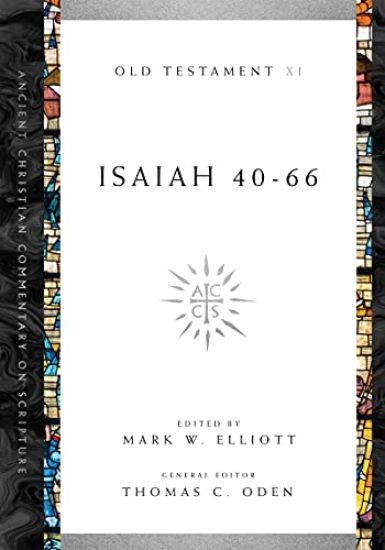
No book of the Old Testament is more frequently quoted in the New than Isaiah, and no portion of Isaiah is more frequently quoted in the New than the typologically fertile soil of Isaiah 40–66. Still, as interpreted by the fathers, Isaiah presents a message that is far more soteriological than christological, leading readers to a deeper understanding of God's judgment and salvation. Isaiah 40–66 provides us with the closest thing the Old Testament has to offer regarding a systematic theology. The excerpts included in this Ancient Christian Commentary on Scripture volume offer us a rich array of differing styles, principles, and theological emphases, from Theodoret of Cyr to Eusebius and Procopius, to Cyril of Alexandria, Jerome and Augustine. Readers will be enriched by the wide-ranging selections, some of which are translated here into English for the first time.
The Gospel of Matthew stands out as a favorite biblical text among patristic commentators. The patristic commentary tradition on Matthew begins with Origen's pioneering twenty-five-volume commentary on the First Gospel in the mid-third century. In the Latin-speaking West, where commentaries did not appear until about a century later, the first commentary on Matthew was written by Hilary of Poitiers in the mid-fourth century. From that point the First Gospel became one of the texts most frequently commented on in patristic exegesis. Outstanding examples are Jerome's four-volume commentary and the valuable but anonymous and incomplete Opus imperfectum in Matthaeum. Then there are the Greek catena fragments derived from commentaries by Theodore of Heraclea, Apollinaris of Laodicea, Theodore of Mopsuestia and Cyril of Alexandria. The ancient homilies also provide ample comment, including John Chrysostom's ninety homilies and Chromatius of Aquileia's fifty-nine homilies on the Gospel of Matthew. In addition, there are various Sunday and feast-day homilies from towering figures such as Augustine and Gregory the Great as well as other fathers. In this ACCS volume, the rich abundance of patristic comment, much of it presented here in English translation for the first time, provides a bountiful and varied feast of ancient interpretation of the First Gospel.
The Acts of the Apostles—or more in keeping with the author's intent, the Acts of the Ascended Lord—is part two of Luke's story of "all that Jesus began to do and teach." In it he recounts the expansion of the church as its witness spread from Jerusalem to all of Judea and Samaria and to the ends of the earth. While at least forty early church authors commented on Acts, the works of only three survive in their entirety—John Chrysostom's Homilies on the Acts of the Apostles, Bede the Venerable's Commentary on the Acts of the Apostles and a long Latin epic poem by Arator. In this Ancient Christian Commentary on Scripture volume, substantial selections from the first two of these appear with occasional excerpts from Arator alongside many excerpts from the fragments preserved in J. A. Cramer's Catena in Acta SS. Apostolorum. Among the latter we find selections from Basil the Great, Gregory of Nazianzus, Gregory of Nyssa, Ephrem the Syrian, Didymus the Blind, Athanasius, Jerome, John Cassian, Augustine, Ambrose, Justin Martyr, Irenaeus, Theodoret of Cyr, Origen, Cyril of Jerusalem, Cyril of Alexandria, Cassiodorus, and Hilary of Poitiers, some of which are here translated into English for the first time. As readers, we find these early authors transmit life to us because their faith brought them into living and experiential contact with the realities spoken of in the sacred text.
The Gospel of John was beloved by the early church, much as it is today, for its spiritual insight and clear declaration of Jesus' divinity. Clement of Alexandria indeed declared it the "spiritual Gospel." Early disputers with heretics such as Cerinthus and the Ebionites drew on the Gospel of John to refute their heretical notions and uphold the full deity of Christ, and this Gospel more than any other was central to the trinitarian and christological debates of the fourth and fifth centuries. At the same time, the Gospel of John was also thought to be the most chronological, and even to this day it is the source of our sense of Jesus' having a three-year ministry. And John Chrysostom's Homilies on John, perhaps more than any other commentary, emphasize Christ's humanity and condescension toward the human race. In addition to the serial homilies of John Chrysostom, readers of this Ancient Christian Commentary on Scripture volume will find selections from Origen, Theodore of Mopsuestia, Cyril of Alexandria, and Augustine. These commentaries are supplemented with homiletic material from Gregory the Great, Peter Chrysologus, Caesarius, Amphilochius, Basil the Great, and Basil of Seleucia, among others. Liturgical selections derive from Ephrem the Syrian, Ambrose and Romanos the Melodist, which are further supplemented with doctrinal material from Athanasius, the Cappodocians, Hilary, and Ambrose. This rich tradition, some of which is here translated for the first time, offers a vast treasure out of which today's scribes trained for the kingdom may bring forth that which is new and what is old.
Colossians, 1–2 Thessalonians, 1–2 Timothy, Titus, Philemon
Peter J. Gorday; Thomas C. Oden
IVP Academic
2019
nidottu
Christianity Today Book of the Year For the early church fathers, certain passages in the shorter letters of St. Paul proved particularly important in doctrinal disputes and practical church matters. Pivotal in controversies with the Arians and the Gnostics, the most commented-on christological text in these letters was Colossians 1:15-20, where Jesus is declared "the image of the invisible God, the firstborn of all creation." The fathers found ample support scattered throughout the Pastorals for the divinity of the Son and the Spirit and for the full union of humanity and divinity in the "one mediator between God and men, the man Christ Jesus" (1 Timothy 2:5). These commentators also looked to the Pastorals for important teaching on ethics and church life. Chief among the Eastern commentators and widely excerpted throughout this volume is John Chrysostom, praised for his pastoral insight. Other Greek commentators cited include Theodoret of Cyr, Theodore of Mopsuestia, Severian of Gabala, Ignatius of Antioch, Justin Martyr, Irenaeus, Clement of Alexandria, Athanasius, Basil the Great, Gregory of Nazianzus, and Gregory of Nyssa. Western commentators include Augustine, Ambrosiaster, Pelagius, Jerome, Hippolytus, Tertullian, Novatian, Cyprian of Carthage, Hilary of Poitiers, and Ambrose. Of particular interest for their ascetical and devotional insight are works from Syrian and Egyptian churches, including Aphrahat, Ephrem the Syrian, Isaac of Nineveh, and Philoxenus of Mabbug. This Ancient Christian Commentary on Scripture volume opens up a treasure house of ancient wisdom that allows these faithful witnesses, some appearing here in English translation for the first time, to speak with eloquence and intellectual acumen to the church today.
The Ancient Christian Commentary on Scripture does what few of today's students of the Bible could do for themselves. The vast array of writings from the church fathers—including much that is available only in the ancient languages—has been combed for its comment on Scripture. Scholars with a deep knowledge of the fathers and a heart for the church have hand-selected material for each volume, shaping, annotating, and introducing it to today's readers. Each portion of commentary has been chosen for its salient insight, its rhetorical power and its faithful representation of the consensual exegesis of the early church. This supplemental Commentary Index and Resources volume provides never-before-available cumulative Scripture and author indexes covering all twenty-nine volumes of the ACCS. In addition to these exhaustive indexes, you'll find: a general introduction to the ACCSa guide to using the commentarya comprehensive abbreviations lista timeline of the patristic perioddescriptive sketches of every cited author and work Readers will find this supplemental volume an indispensable companion for mining treasures in the Ancient Christian Commentary on Scripture.
The Revelation to John—with its vivid images and portraits of conflict leading up to the formation of a new heaven and a new earth—was widely read, even as it was variously interpreted in the early church. Approaches to its interpretation ranged from the millenarian approach of Victorinus of Petovium to the more symbolic interpretation of Tyconius, who read Revelation in the sense of the universal and unitary time of the church. Tyconius's Book of Rules, deeply admired by Augustine, strongly influenced not only ongoing interpretation of Revelation but the whole of medieval exegesis. From early on the book of Revelation was more widely accepted in the West than in the East. Indeed the earliest extant commentaries on Revelation in Greek date from Oecumenius's commentary in the sixth century, which was soon accompanied by that of Andrew of Caesarea. Earlier Eastern fathers did, however, make reference to Revelation in noncommentary works. This Ancient Christian Commentary on Scripture volume draws heavily on the Greek commentaries from Oecumenius and Andrew of Caesarea to represent Eastern interpretation, while focusing on six other commentaries as primary witnesses to Western interpretation—those of Victorinus of Petovium, Tyconius, Primasius, Caesarius of Arles, Apringius of Beja, and Bede the Venerable. Every effort has been made to give adequate context so that the creative use of Scripture, the theological interest, and the pastoral intent can be discerned by readers today. Amid this treasure trove of early interpretation readers will find much that appears in English translation for the first time.
Christianity Today Award of Merit winner Because the Catholic Epistles focus on orthodox faith and morals, the Fathers drew on them as a means of defense against the rising challenge of heretics. Many of the Fathers saw in these letters anticipatory attacks on Marcion and strong defenses against the Arians. They did so quite naturally because in their view truth was eternal and deviations from it had existed from the beginning. Above all, the Fathers found in the Catholic Epistles a manual for spiritual warfare, counsel for the faithful in the cosmic struggle between good and evil. In them was sound instruction in the ways of self-sacrifice, generosity, and humility, through which the cosmic forces could be defeated. Allusions to these letters go back as far as Justin Martyr, Irenaeus, and Tertullian, but the first commentary derives from Clement of Alexandria. Didymus the Blind was the next significant Greek-speaking commentator, though his commentary is fully extant only in Latin translation. Many of the comments from the early centuries have been passed on to us through Latin catenae, or chain commentaries, in which a later commentator collected comments from a variety of sources and chained them together in a fashion much like that of the Ancient Christian Commentary on Scripture in English. Among Latin commentators on these letters, pride of place must be given to Bede the Venerable. This volume opens up a treasure house of ancient wisdom that allows these faithful witnesses, some appearing here in English translation for the first time, to speak with eloquence and intellectual acumen to the church today.
Distinctive in form, content, and style, the epistle to the Hebrews offers a profound high Christology and makes an awe-inspiring contribution to our understanding of Jesus as our High Priest. The earliest extant commentary on the letter comes to us in thirty-four homilies from John Chrysostom. These homilies serve to anchor the excerpts chosen by the editors of this volume because of their unique place in the history of interpretation. In addition to being the first comprehensive commentary on the letter, they deeply influenced subsequent interpretation in both the East and the West, and their rhetorical eloquence has long been acknowledged. As in other Ancient Christian Commentary on Scripture volumes, the excerpts chosen range widely over geography and time, from Justin Martyr and Clement of Rome in the late first and early second century to Bede the Venerable, Isaac of Nineveh, Photius, and John of Damascus in the eighth and ninth centuries. The Alexandrian tradition is well represented in Clement of Alexandria, Origen, Athanasius, Didymus, and Cyril of Alexandria, while the Antiochene tradition is represented in Ephrem the Syrian, Theodore of Mopsuestia, Severian of Gabala, and Theodoret of Cyr. Italy and North Africa in the West are represented by Ambrose, Cassiodorus, and Augustine, while Constantinople, Asia Minor and Jerusalem in the East are represented by the Great Cappadocians—Basil the Great, Gregory of Nazianzus, and Gregory of Nyssa—Eusebius, Cyril of Jerusalem, and Jerome. This volume offers a rich treasure of ancient wisdom from Hebrews for the enrichment of the church today.
Paul's letters to the Galatians, Ephesians, and Philippians have struck an indelible impression on Christian tradition and piety. The doctrines of Christ, of salvation, and of the church all owe their profiles to these letters. And for patristic interpreters, who read Scripture as a single book and were charged with an insatiable curiosity regarding the mysteries of the Godhead, these letters offered profound visions seldom captured by modern eyes. Trinitarian truth was patterned in the apostle's praise of God who is "over all, through all and in all" (Ephesians 4:6). Without a doubt the greatest text in this collection of letters is the "Christ hymn" of Philippians 2:6-11. This commentary offers an unparalleled close-up view of the fathers weighing the words and phrases of this panoramic charting of the Savior's journey from preexistence, to incarnation, to crucifixion, and triumphant exaltation as universal Lord. This Ancient Christian Commentary on Scripture volume opens a treasury of resources for biblical study today. The expository voices of Jerome, Origen, Augustine, Chrysostom, Ambrosiaster, Theodoret, Marius Victorinus, and Theodore of Mopsuestia speak again with eloquence and intellectual acumen, some in English translation for the first time.
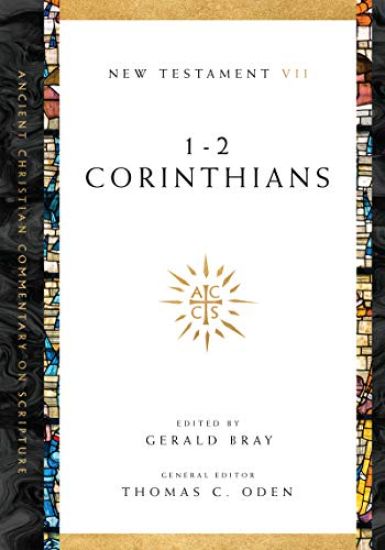
In Paul's letters to the Corinthian church, the pastoral issues of a first-century Christian community stand out in bold relief. And as the apostle responds to these challenges, the fathers lean over his shoulder, marveling and commenting on his pastoral wisdom. Best known among these patristic commentators is Chrysostom, whose seventy-seven homilies on the two Corinthian epistles are a treasury of exposition and application. The fragmentary works of Didymus the Blind and Severian of Gabala give us samples of Greek exegesis from the Alexandrian and Antiochene schools. The partial work of Theodore of Mopsuestia was long valued in the church, and the comments of Theodoret of Cyr are notable for their sensitivity to the intertextuality of Scripture. Then there are Origen and Pelagius, whose notable errors need not obscure their brilliant insights into Scripture. But pride of place in this volume goes to the unknown fourth-century commentator now dubbed Ambrosiaster. His excellent commentary on 1 and 2 Corinthians was previously unavailable in English translation. This Ancient Christian Commentary on Scripture volume opens a whole new way of reading these New Testament texts. The pastoral and theological interpretation of the fathers offers spiritual and intellectual sustenance to those who would read Paul again with open minds and hearts.