Kirjailija
Tom Cooper
Kirjat ja teokset yhdessä paikassa: 72 kirjaa, julkaisuja vuosilta 2003-2026, suosituimpien joukossa Lebanese Civil War. Vertaile teosten hintoja ja tarkista saatavuus suomalaisista kirjakaupoista.
72 kirjaa
Kirjojen julkaisuhaarukka 2003-2026.
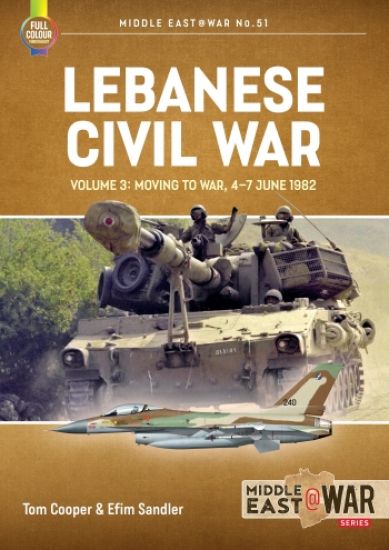
Following years of growing tensions, in June 1982 Israel launched an all-out invasion of Lebanon. During the night from 5 to 6 June 1982, four armored divisions of the Israeli Defense Force moved into starting positions near the border with Lebanon, while a full paratrooper division was embarked on amphibious assault ships. Looking forward to engaging the enemy, the Israelis then crossed the border late on the morning of 6 June, and promptly became involved in the bitter battle of Tyre, landings at Awali, and the highly-symbolic assault on Beaufort Castle. The next day saw a further intensification of combat, with the Israelis securing Tyre and then attacking Sidon, and clashing with the Syrian armed forces for the first time in years. Fighting for Jezzine and Ein Zehalta quickly conflagrated into major armored engagements, while after their landing, the sea-borne Israeli forces launched their advance on Beirut through the positions of Palestinian militants and their Lebanese allies, and then onto some of the best units of the Syrian Arab Army.Based on extensive interviews with veterans from all involved parties, focusing on minute reconstructions of combat operations, and richly illustrated with exclusive photography, Lebanese Civil War, Volume 3, offers unsurpassed coverage of one of the most spectacular and most tragic conflicts of the late twentieth century.
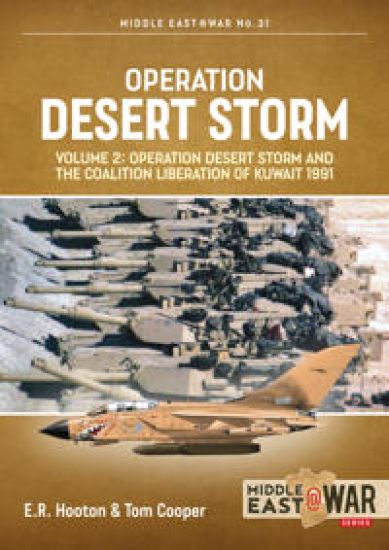
Early in the morning of 2 August 1990, aircraft of the Iraqi Air Force bombed Kuwaiti air bases, and then the Iraqi Republican Guards stormed into the country. Thus began what would be called the ‘Gulf War’ – or the ‘II Gulf War’ or ‘II Persian Gulf War’ – fought between January and March 1991. Although encountering some problems, the Iraqi forces occupied Kuwait in a matter of a few days. However, when President Saddam Hussein of Iraq unleashed his military upon Kuwait, little did he know what kind of reaction he would provoke from the Western superpowers, and what kind of devastation his country would suffer in return. Concerned about the possibility of Iraq continuing its advance into Saudi Arabia, the USA – in coordination with Great Britain, France, and several local allies – reacted by deploying large contingents of their air, land and naval forces to the Middle East.##Months of fruitless negotiations and the continuous military build-up – Operation Desert Shield – followed, as tensions continued to increase. Determined to retain Kuwait, and despite multiple warnings from his own generals, Saddam Hussein rejected all demands to withdraw. The USA and its allies, ‘the Coalition’, were equally as determined to drive out the invader and restore Kuwaiti independence. Gradually, they agreed this would have to be by force. Following an authorisation from the United Nations, the Coalition launched the Operation Desert Storm, on 17 January 1991, opening one of the most intensive air campaigns in history. The last conventional war of the 20th Century saw the large, but essentially traditional, Iraqi Army overwhelmed by forces trained and equipped to exploit the latest technologies. Desert Storm reveals the whole war fought between Iraq and an international coalition, from the start of this campaign to its very end. Largely based on data released from official archives, spiced with numerous interviews, and illustrated with over 100 photographs, 18 colour profiles and maps, it offers a refreshing insight into this unique conflict. Volume 2 of Desert Storm tells the story of the air campaign, naval operations, the 100 hours of the land war, and the aftermath of this conflict.
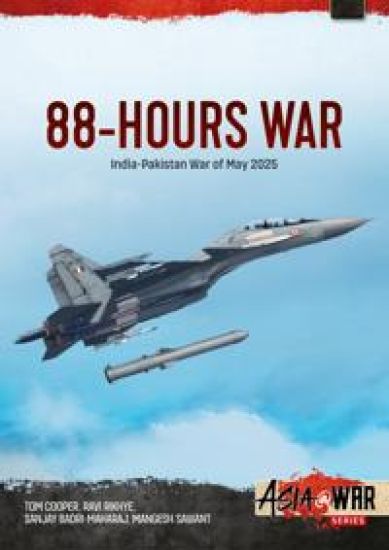
88-Hours War
Tom Cooper; Ravi Rikhye; Sanjay Badri-Maharaj; Mangesh Sawant
HELION COMPANY
2026
nidottu
“The king of poisons and the poison of kings. It’s useful for so many things” A new musical inspired by a sensational murder trial in 19th century Glasgow. Madeleine Smith, a Glasgow socialite living in Blythswood Square, was accused of a secret affair and poisoning her lover to death. The trial ended with a rare ‘Not Proven’ verdict, but now Plume, an aspiring pamphleteer, is working out which version of the story to tell. Was Madeleine innocent or guilty? Inspired by the scandalous real-life story, The Glasgow Poisoner is a new musical by Tom Cooper and Jen McGregor that explores our obsession with true crime and female killers, then and now. CAST: 3 Actors DURATION: 60 minutes
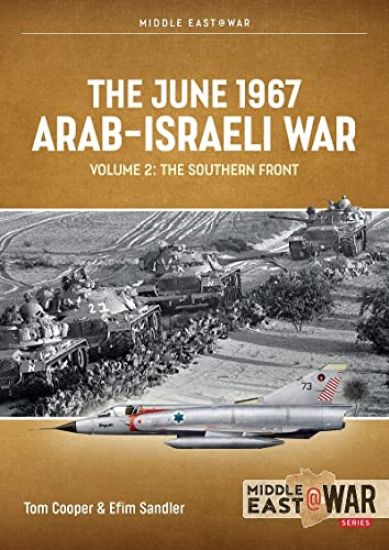
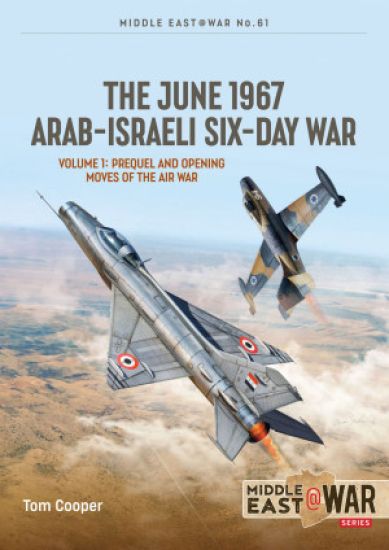
In June 1967 Israel, which seemed on the verge of being annihilated by its Arab neighbors, took six days to redraw the Middle Eastern strategic map in one of the most dramatic reversals of fortune in modern times.The success was almost a decade in the making following the Suez Crisis of 1956 with the Israeli forces being radically changed under the direction of the Magi. These changes created an army and air force upon which the country would rely when it became obvious the international community would take no action to implement guarantees made after the Suez Crisis.The Israeli forces were honed in low-level clashes during the 1960s, notably the Water Wars which the Israelis did so much to provoke. By contrast the Arab forces became complacent, usually due to supplies of arms from the Warsaw Pact, but - with proper training - this complacency could have been turned into military effectiveness. The Arab forces were, however, plagued by the fact that command too often depended upon political reliability rather than military effectiveness.In the case of the Egyptian forces their effectiveness was further undermined by their commitment to the debilitating Yemen Civil War which meant they were in no condition to confront Israel. Syria and Jordan, whose forces alone could not fight the Israelis, complained loudly about President Nasser's lack of action against Israel. In the spring of 1967 Nasser decided to regain the prestige he had lost since the heady days of the Suez Crisis with a demonstration in the Sinai Peninsula. This was interpreted by the Israelis as preparations for an invasion and Nasser did nothing to persuade them otherwise. When it was clear the international community would do nothing, the Israelis decided to strike.Initially Israel aimed to attack only Egypt, but Syria and Jordan then provoked attacks upon their territory. The Israeli campaign was heralded by a massive surprise air attack first on the Egyptians and then on the other neighboring states. Ground offensives then followed in succession as the war, like Topsy in Uncle Tom's Cabin 'just growed.' These campaigns were not always examples of military perfection, as will be scene, and the general post-war back-slapping drowned out serious questions about the future of Israel's army.
Lebanese Civil War Volume 5: Rushing to the Deadline, 11-12 June 1982
Tom Cooper; Efim Sandler
HELION COMPANY
2025
nidottu
The days of 11-13 June, 1982, proved that Arik Sharon's plan was over-ambitious and adventuristic. Dragging the IDF into the fight with Syrians appeared to be more complicated despite IDF superiority in technology and training. The armored units were moving too slowly and were stuck in numerous engagements all over the place.In the Western zone, after several failed attempts to take higher ground and open the road to Beirut, IDF finally made its gain and secured Kfar Sil after a very tough fight that lasted not less than 18 hours.In the Central zone, after getting the upper hand over the Syrian forces in Ein Zhalta and Jezzine, Israelis continued to crawl towards Beirut-Damascus Highway but the tempo had been lost and it was obvious that the Sharon expectation could not be matched.In Bekaa Valley, Eastern zone, IDF moved 399 Brigade to the north in order to reach Beirut Damascus Highway in the quickest possible way. That move turned out to be a disaster and one of the worst fights in IDF history. It took tremendous effort of two Israeli divisions to recover the troubled Brigade while suffering losses in men and machines.Besides the major battles, Israeli forces continued to clear the area while having tough opposition hotspots like Ein-Hilweh and finally, the controversial engagement between IDF anti-tank units and Syrian T-72s.
Frequently overshadowed by rival designs of the Mikoyan i Gurevich Design Bureau, the family of fighter-bombers of the aircraft design bureau headed by Pavel O. Sukhoi and developed in the 1950s, 1960s, and 1970s are far less-well-known in the West. Reestablished in the early 1950s, the Sukhoi Design Bureau initially followed the same path as its primary competitor and designed two fighters, one equipped with swept wing, and the other with delta-wing. In the West, they became known under the ASCC/NATO-codename 'Fitter'.Through the 1960s, and unlike MiG, Sukhoi continued developing its 'Fitters', resulting in an entire family of airframes, equipped with ever better avionics and more powerful engines. Its Su-7BMKs (ASCC/NATO-codename 'Fitter-A') entered service with Egypt in 1966, Syria and Iraq in 1967, followed by Algeria a year later. In 1972-1973, Su-17, and then Su-20 - the second generation of this design, and the first equipped with variable-sweep wing - entered service in Egypt, followed by Iraq and Syria. Finally, in 1978-1979, the third and final generation - including variants such as the Su-22, Su-22M, Su-22M-3, and Su-22M-4 (ASCC/NATO-codenames 'Fitter F/G/J/K', respectively) - entered service in Iraq, followed by Libya, Syria, and Yemen. Highly appreciated - and often outright beloved - by their pilots and ground crews alike, they formed the backbone of the fighter-bomber fleets of these six air forces, and saw action in about a dozen different wars.Richly illustrated with a host of exclusive photographs and custom-drawn color profiles, Fitters of the Middle East is the first title ever offering a comprehensive and inclusive operational history of 'Fitters' with six major air forces. As such it is an indispensable single-point source of reference.
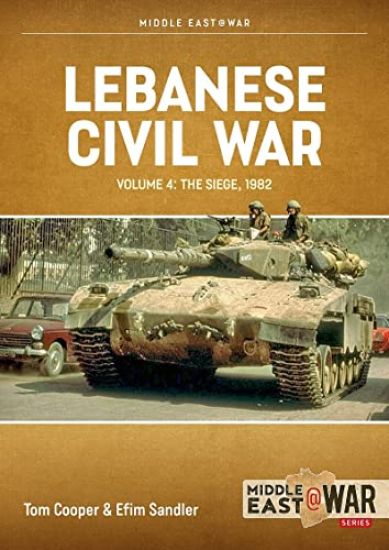
Following years of growing tensions, in June 1982 Israel launched an all-out invasion of Lebanon. Following initial advances on Palestinian-controlled Tyre and Sidon, Beaufort Castle, and the amphibious landing at Awali, on 8 June 1982 the Israeli Defense Force initiated operations against the Syrian armed forces deployed in southern-central Lebanon. What were initially minor firefights for Jezzine and Ein Zehalta developed into major armor battles in which Syrian Gazelle helicopters took a heavy toll of Israeli armor. The following battles of Ein el-Hilweh, Khalde, and Kfar Sil are remembered by participants from all parties for their ferocity and the relentless resistance of Palestinian and Syrian combatants.Finding no other solution, on 9 June 1982 the Israelis initiated Operation Mole Cricket 19, aiming to destroy the integrated air defense system of the Syrian Arab Air Force and the Syrian Arab Air Defense Force deployed in eastern-central Lebanon. On the ground, the Israeli and Syrian armies clashed in a major battle at Lake Qaroun, which soon expanded all the way to the Syrian border.On the other side of the country, the Israeli forces fought their way to Beirut Airport. In a headlong rush for the crucial road connecting Beirut and Damascus, on 10 and 11 June an Israeli armored battalion advanced on the village of Sultan Yacoub, provoking an epic battle. Finally, on 11 June 1982, the Israelis exacted revenge of a sort when their units, equipped with US-made BGM-71 TOW anti-tank guided missiles, ambushed Syrian armor at Jebel Barouch.Based on extensive interviews with veterans from all parties, focusing on minute reconstructions of combat operations, and richly illustrated with exclusive photography, Lebanese Civil War, Volume 4, offers unsurpassed coverage of one of most spectacular and most tragic conflicts of the late twentieth century.
Volume 7 of War in Ukraine provides a detailed account of the air war as it developed during 2023, a period in which Russia made extensive use of Tu-95 and Tu-22 bombers and their missiles to bring about the collapse of the power supply system in Ukraine.The second year of the War in Ukraine began with the Russian attempt to collapse the power supply and power grid of Ukraine through an offensive with ballistic- and cruise missiles. Lasting months, this operation saw the sustained deployment of Tu-95 and Tu-22 bombers and their missiles, combined with tactical precision guided munitions and Iranian-made Shahed unmanned aerial vehicles (UAVs). Highly promising, early on, the offensive failed because of last-minute deliveries of advanced air defence systems and a large number of power generators from the West: even then, it was a close call, with the government in Kyiv almost making the decision to evacuate the capital. Hard on the heels of this episode, the USA and Germany rushed PAC-2/3 Patriot air defence systems to Ukraine, which Russia attempted to knock out with its Kinzhal hypersonic missiles. Around the same time, the Russians also began deploying MPK/UMPK glide bombs to strike targets along the frontline from outside the range of Ukrainian air defences.War In Ukraine: Volume 7, Air War, January - December 2023 continues the detailed military history of this ongoing conflict, the largest in Europe since the end of the Second World War in 1945. This volume is illustrated throughout with original color photographs and includes specially commissioned color artworks.
On 24 February 2022, the armed forces of the Russian Federation initiated an invasion of Ukraine. Thus began the biggest and longest air war fought in Europe since 1945, and a conflict that saw the deployment of full spectrum of the Russian air power: strategic bombers deployed hundreds of cruise missiles combined with strikes by tactical ballistic missiles; the Russian Air-Space Force deployed its tactical and helicopter aviation into large-scale airborne and heliborne operations deep into Ukraine, while the Ukrainian Air Force fought back with its interceptors and attack helicopters.Taking place after the Russian invasion of eastern Ukraine and illegal annexation of Crimea of 2014-2015, and eight years of low-scale warfare in Donbas, as well as countless incidents on the ground and at sea, cyberwarfare, and political tensions, the onslaught was expected by many Western and Russian intelligence services to quickly topple the democratically elected government in Kyiv, and overrun and disarm the Ukrainian armed forces - with help of collaborators - in just three to 14 days.Despite the realisation of a full-scale Russian assault and invasion coming as a surprise to many, the Ukrainian Air Force (PSU) offered fierce resistance. The result was weeks of high-intensity air warfare, which ended only once the ground-based air defences of both sides were deployed in force to block the airspace for tactical aircraft of both sides.Richly illustrated and providing a detailed study of the participating air forces, and the fighting in the air during the Russian invasion, War in Ukraine, Volume 6 is the first concise and inclusive military history of this drama.
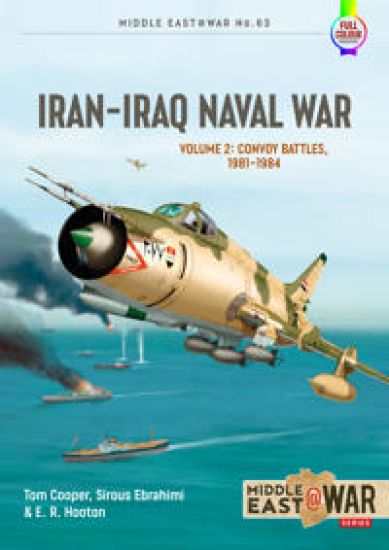
Well away from major land battlefields of the Iran-Iraq War, and curious eyes of the public, the navies of the two involved parties fought a major naval war. Ironically, the mass of their efforts remain entirely unknown until this very day. If anything was ever reported about their naval battles, then only within the frame of what the West mis-declared into the 'Tanker War'.Actually, and although best-known in the West, the portion of the Iran-Iraq War related to the Iraqi effort to prevent foreign tankers from loading the crude at Iranian oil terminals at Khark and elsewhere, was only one aspect of this naval war: indeed, 'just one brick' in an entire 'wall' that can only be described as the 'oil war' between Iran and Iraq. While the 'most spectacular', or at least attracting most of public attention, attacks by fighter-bombers of the Iraqi Air Force on tankers exporting the Iranian oil were 'barely scratching the surface': at least as often the Iraqi Navy trying exactly the same, but with help of its helicopters, fast missile craft and mines. In turn, the Islamic Republic of Iran Navy deployed its warships and helicopters - supported by interceptors and fighter-bombers of the Islamic Republic of Iran Air Force - to run a massive and convoy-protecting operation: the largest of its kind since 1945. The result were the most intensive air-sea battles of the last 75 years - all characterized by their high speed and exchanges of massive blows.The Iran-Iraq Naval War describes and illustrates the key combatants and the most intense operations of both sides. Destroyers, frigates, corvettes, and fast missile crafts are all covered in thoroughly researched text, photographs and custom-drawn color profiles, as are aircraft and helicopters supporting them. This book is thus taking the taking the reader in the middle of the action at sea and in the skies above it.
A guidebook to 6 cycle-touring routes along Ireland’s west coast. Based on the Wild Atlantic Way, the world’s longest signed coastal route, each tour can be completed in 7-10 days by any reasonably fit cyclist. Presented in 6 tours between 291 and 504km (181-313 miles) in length, with optional variants givenAverage daily stages of 55km (34 miles) that take 4-5 hours of ridingTours can be linked together to form a 44 stage, 2450km (1522 mile) trip between Derry/Londonderry and CorkKey centres include Donegal, Sligo, Achill Island, Galway, Westport, the Aran Islands, Limerick, Tralee, Bantry, KinsaleMaps and route cards provided for each stageGPX files available to downloadDetailed information on accommodation, facilities and transport along the route
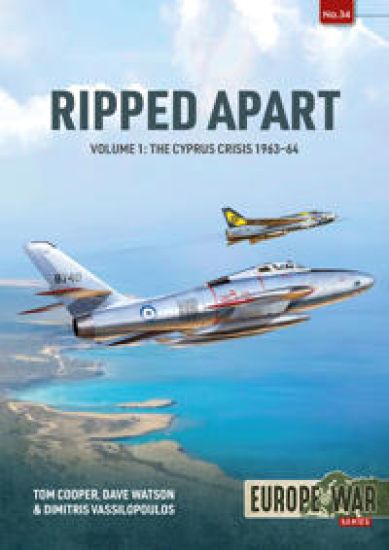
The 'Cyprus Problem' - also known as the Cyprus dispute, Cyprus issue, Cyprus question or Cyprus conflict - is an ongoing dispute between Greek Cypriots, Turkish Cypriots, Greece and Turkey. It has bedeviled not only their relations, but also those within the European Union, NATO, and the United Nations for more than 60 years.Following a long insurgency against British colonial rule - the so-called 'Cyprus Emergency' - Cyprus gained independence in 1960. Almost instantly, high tensions emerged between the Greek and Turkish Cypriots. A complex set of constitutional provisions and international treaties designed to safeguard the new state, and countless attempts to resolve the conflict through diplomacy failed. On the contrary, in 1963-1964, the repeated attempts to solve the disputes failed and fighting erupted between the communities in Nicosia, that soon spread across the rest of the island. As the power-sharing government collapsed, and additional peace-making efforts failed, in 1967 the conflict escalated into armed violence again, this time with the involvement of the Greek and Turkish armed forces. Subsequently, the situation was only made worse, culminating in the Greek coup d' tat and the Turkish invasion of 1974.Positioning this conflict within its historical context, Ripped Apart offers an inclusive, incisive, even-handed, and a richly illustrated account of the military history of Cyprus since independence. Beginning with the tensions that emerged between the Greek and Turkish Cypriots through the 1960s, leading to the events that resulted in the series of bitter armed clashes of 1967, and then the Turkish invasion of 1974, Ripped Apart helps to provide a better understanding of a highly controversial conflict.
War of Intervention in Angola Volume 5
Adrien Fontanellaz; Tom Cooper; Jose Augusto Matos
HELION COMPANY
2023
pokkari
War in Ukraine Volume 2
Tom Cooper; Adrien Fontanellaz; Edward Crowther; Milos Sipos
HELION COMPANY
2023
pokkari
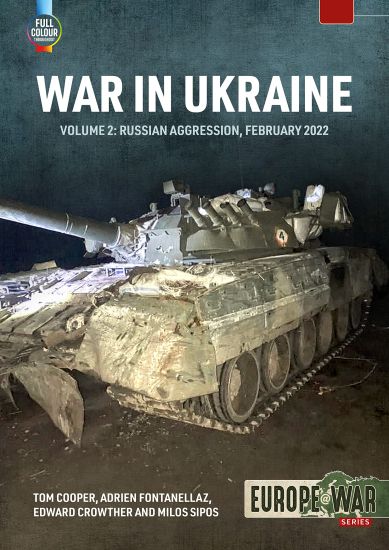
On 24 February 2022, President of the Russian Federation Vladimir Putin ordered a full-scale invasion of neighboring Ukraine. Taking place after the Russian invasion of eastern Ukraine and illegal annexation of Crimea of 2014-2015, and eight years of low-scale warfare in Donbas, as well as countless incidents on the ground and the sea, cyberwarfare, and political tensions, the onslaught was expected - both by multiple Western and multiple Russian intelligence services - to quickly topple the democratically elected government in Kyiv, and overrun and disarm the Ukrainian armed forces with help of collaborationists in a matter of between 3 and 14 days.Early on 24 February, Armed Forces of the Russian Federation (VSRF) launched a series of missile and artillery strikes on main air bases and dozens of military facilities in Ukraine. Immediately afterwards, VSRF launched ground invasion, with its forces advancing on (clockwise) Kyiv, Chernihiv, Kharkiv, Mariupol, Melitopol, and Kherson. Although following a build-up that began already in April 2021, and expected by many, the onslaught still came as a major surprise - for the Ukrainian government, for Ukrainian armed forces, for its allies in the West, but also for the mass of officers and other ranks of the VSRF. Moreover, the deeper the Russians rolled into Ukraine, the more resistance they have encountered: while some Russian units performed as expected, entire armies began falling apart while ordered to advance at maximum possible speed - and that without the necessary fire and logistic support. After suffering catastrophic losses while failing to reach the downtown Kyiv, and failing to reach and enter Chernihiv and Kharkiv, the war in northern and north-eastern Ukraine quickly settled down into a bloody stalemate. However, in the south, the Russians initially advanced at amazing rate, taking Melitopol already during the first day of their invasion, and Kherson only few days later. Indeed, it was only once President Putin attempted to accelerate the rate of advance through heliborne operations deeper into Ukraine, that the VSRF suffered a severe blow in the fighting for Voznesensk and Mykolaiv, and its advance in this part of the country came to an end.Richly illustrated, providing a detailed study of the involved armed forces, and the fighting in northern and southern Ukraine during the first two weeks of the Russian invasion in February 2022, War in Ukraine, Volume 2 is the first concise military history of this drama.
Air Power and the Arab World 1909-1955 Volume 6
David Nicolle; Gabr Ali Gabr; Tom Cooper
HELION COMPANY
2022
pokkari