Kirjailija
Upton Sinclair
Kirjat ja teokset yhdessä paikassa: 580 kirjaa, julkaisuja vuosilta 1905-2026, suosituimpien joukossa Sylvia. Vertaile teosten hintoja ja tarkista saatavuus suomalaisista kirjakaupoista.
580 kirjaa
Kirjojen julkaisuhaarukka 1905-2026.

Upton Sinclair's The Jungle is a novel portraying the corruption of the American meat industry in the early part of the twentieth century. The dismal living and working conditions and sense of hopelessness prevalent among the impoverished workers is compared to the corruption of the rich. Upton aimed to make such "wage slavery" issues center-stage in the minds of the American public. Despite already being serialized, it was rejected as a novel five times before being published in 1906, when it quickly became a bestseller.

This edition of Love's Pilgrimage by Upton Sinclair is given by Ashed Phoenix - Million Book Edition
Notice: This Book is published by Historical Books Limited (www.publicdomain.org.uk) as a Public Domain Book, if you have any inquiries, requests or need any help you can just send an email to [email protected] This book is found as a public domain and free book based on various online catalogs, if you think there are any problems regard copyright issues please contact us immediately via [email protected]



It was four o'clock when the ceremony was over and the carriages began to arrive. There had been a crowd following all the way, owing to the exuberance of Marija Berczynskas. The occasion rested heavily upon Marija's broad shoulders-it was her task to see that all things went in due form, and after the best home traditions; and, flying wildly hither and thither, bowling every one out of the way, and scolding and exhorting all day with her tremendous voice, Marija was too eager to see that others conformed to the proprieties to consider them herself. She had left the church last of all, and, desiring to arrive first at the hall, had issued orders to the coachman to drive faster. When that personage had developed a will of his own in the matter, Marija had flung up the window of the carriage, and, leaning out, proceeded to tell him her opinion of him, first in Lithuanian, which he did not understand, and then in Polish, which he did.

100%: the Story of a Patriot
Upton Sinclair
Createspace Independent Publishing Platform
2018
nidottu
100%: the Story of a Patriot By Upton Sinclair
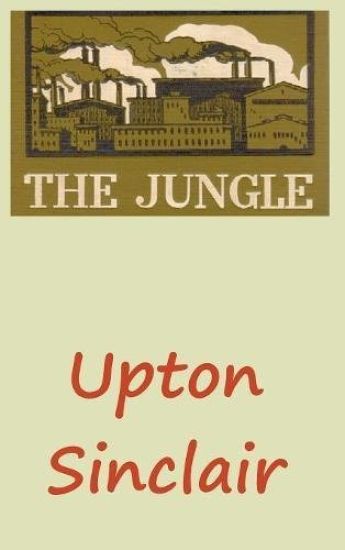
Sinclair had spent about six months investigating the Chicago meatpacking industry for Appeal to Reason, the work which inspired his novel. He intended to "set forth the breaking of human hearts by a system which exploits the labor of men and women for profit." The novel featured Jurgis Rudkus, a Lithuanian immigrant who works in a meat factory in Chicago, his teenaged wife Ona Lukoszaite, and their extended family. Sinclair portrays their mistreatment by Rudkus' employers and the wealthier elements of society. His descriptions of the unsanitary and inhumane conditions that workers suffered served to shock and galvanize readers. Jack London called Sinclair's book "the Uncle Tom's Cabin of wage slavery." Domestic and foreign purchases of American meat fell by half. Sinclair wrote in Cosmopolitan in October 1906 about The Jungle: "I aimed at the public's heart, and by accident I hit it in the stomach." The novel brought public lobbying for Congressional legislation and government regulation of the industry, including passage of the Meat Inspection Act and the Pure Food and Drug Act. At the time, President Theodore Roosevelt characterized Sinclair as a "crackpot,"writing to William Allen White, "I have an utter contempt for him. He is hysterical, unbalanced, and untruthful. Three-fourths of the things he said were absolute falsehoods. For some of the remainder there was only a basis of truth." After reading The Jungle, Roosevelt agreed with some of Sinclair's conclusions, but was opposed to legislation that he considered "socialist." He said, "Radical action must be taken to do away with the efforts of arrogant and selfish greed on the part of the capitalist.

This work has been selected by scholars as being culturally important, and is part of the knowledge base of civilization as we know it. This work was reproduced from the original artifact, and remains as true to the original work as possible. Therefore, you will see the original copyright references, library stamps (as most of these works have been housed in our most important libraries around the world), and other notations in the work.This work is in the public domain in the United States of America, and possibly other nations. Within the United States, you may freely copy and distribute this work, as no entity (individual or corporate) has a copyright on the body of the work.As a reproduction of a historical artifact, this work may contain missing or blurred pages, poor pictures, errant marks, etc. Scholars believe, and we concur, that this work is important enough to be preserved, reproduced, and made generally available to the public. We appreciate your support of the preservation process, and thank you for being an important part of keeping this knowledge alive and relevant.
The Profits of Religion: An Essay in Economic Interpretation
Upton Sinclair
Createspace Independent Publishing Platform
2017
nidottu
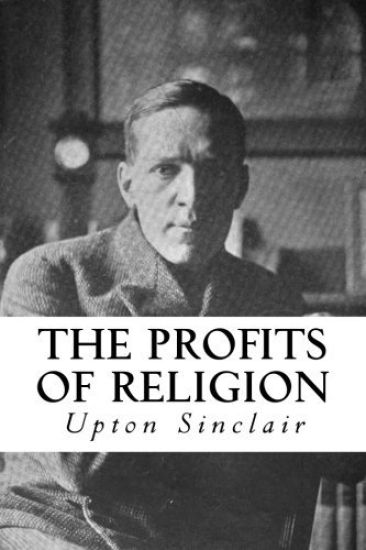
The Profits of Religion: An Essay in Economic Interpretation is a nonfiction book, first published in 1917, by the American novelist and muck-raking journalist Upton Sinclair. It is a snapshot of the religious movements in the U.S. before its entry into World War I. The book is the first of the "Dead Hand" series: six books Sinclair wrote on American institutions. The series also includes The Brass Check (journalism), The Goose-step (higher education), The Goslings (elementary and high school education), Mammonart (art) and Money Writes (literature). The term "Dead Hand" ironically refers to Adam Smith's concept that allowing an "invisible hand" of individual self-interest to shape economic relations provides the best result for society as a whole. In this book, Sinclair attacks institutionalized religion as a "source of income to parasites, and the natural ally of every form of oppression and exploitation."

This work has been selected by scholars as being culturally important, and is part of the knowledge base of civilization as we know it. This work was reproduced from the original artifact, and remains as true to the original work as possible. Therefore, you will see the original copyright references, library stamps (as most of these works have been housed in our most important libraries around the world), and other notations in the work.This work is in the public domain in the United States of America, and possibly other nations. Within the United States, you may freely copy and distribute this work, as no entity (individual or corporate) has a copyright on the body of the work.As a reproduction of a historical artifact, this work may contain missing or blurred pages, poor pictures, errant marks, etc. Scholars believe, and we concur, that this work is important enough to be preserved, reproduced, and made generally available to the public. We appreciate your support of the preservation process, and thank you for being an important part of keeping this knowledge alive and relevant.

Love's Pilgrimage is the 1911 autobiographical novel by the famous Pulitzer Prize winning author and playwright, Upton Sinclair. The story concerns a struggling writer, Thyrsis as he gains commercial success. He tries desperately to balance this newfound success with his literary aspirations and his devotion to the love of his life, a beautiful young woman, Corydon. Odin's Library Classics is dedicated to bringing the world the best of humankind's literature from throughout the ages. Carefully selected, each work is unabridged from classic works of fiction, nonfiction, poetry, or drama.
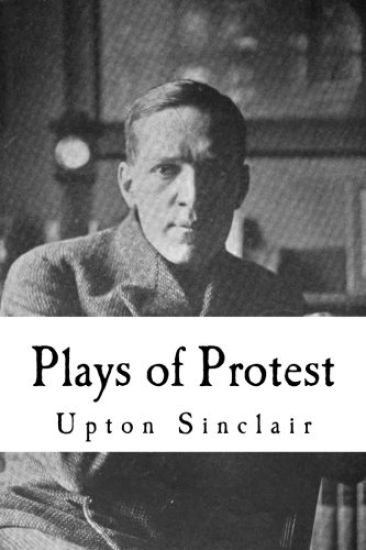
Plays of Protest is a collection of the best dramatic plays by the famous Pulitzer Prize winning author and playwright, Upton Sinclair. The collection includes: The Naturewoman The Machine The Second-Story Man Prince Hagen Odin's Library Classics is dedicated to bringing the world the best of humankind's literature from throughout the ages. Carefully selected, each work is unabridged from classic works of fiction, nonfiction, poetry, or drama.
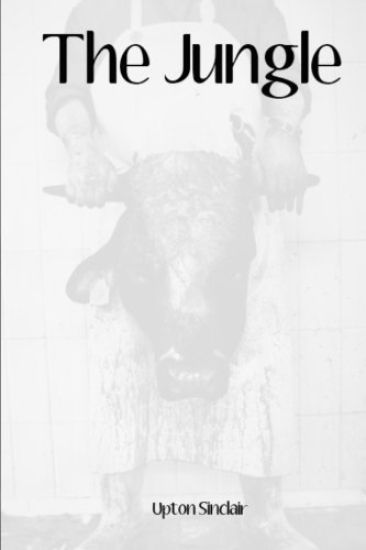
The Jungle is a 1906 novel written by the American journalist and novelist Upton Sinclair (1878-1968).Sinclair wrote the novel to portray the harsh conditions and exploited lives of immigrants in the United States in Chicago and similar industrialized cities. His primary purpose in describing the meat industry and its working conditions was to advance Socialism in the United States.However, most readers were more concerned with his exposure of health violations and unsanitary practices in the American meatpacking industry during the early 20th century, greatly contributing to a public outcry which led to reforms including the Meat Inspection Act. Sinclair famously said of the public reaction, "I aimed at the public's heart, and by accident I hit it in the stomach."

Excerpt from They Call Me Carpenter: A Tale of the Second Coming The beginning of this strange adventure was my going to see a motion picture which had been made in Ger many. It was three years after the end of the war, and you'd have thought that the people of Western City would have got over their war-phobias. But apparently they hadn't; anyway, there was a mob to keep anyone from getting into the theatre, and all the other mobs started from that. Before I tell about it, I must intro duce Dr. Karl Henner, the well-known literary critic tfrom Berlin, who was travelling in this country, and stopped off in Western City at that time. Dr. Henner was the cause of my going to see the picture, and if you will have a moment's patience, you will see how the ideas which he put into my head served to start me on my extraordinary adventure. About the Publisher Forgotten Books publishes hundreds of thousands of rare and classic books. Find more at www.forgottenbooks.com This book is a reproduction of an important historical work. Forgotten Books uses state-of-the-art technology to digitally reconstruct the work, preserving the original format whilst repairing imperfections present in the aged copy. In rare cases, an imperfection in the original, such as a blemish or missing page, may be replicated in our edition. We do, however, repair the vast majority of imperfections successfully; any imperfections that remain are intentionally left to preserve the state of such historical works.
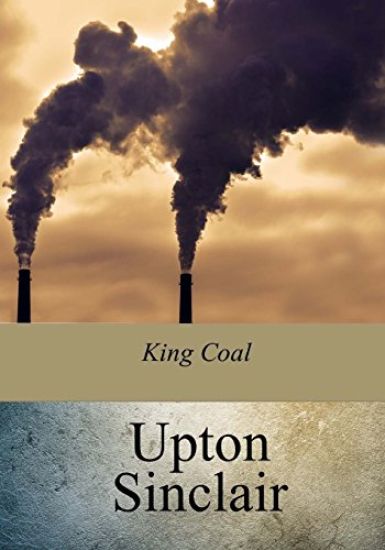
Excerpt from King Coal: A Novel This time Upton Sinclair has absorbed himself in the study of the miner's life in the lonesome pits of the Rocky Moun tains, and his sensitive and enthusiastic mind has brought to the world an American parallel to germinal, Emile Zola's technical masterpiece. The conditions described in the two books are, however, essentially different. While Zola's working-men are all natives of France, one meets in Sinclair's book a motley variety of European emigrants, speaking a Babel of languages and therefore debarred from forming some sort of association to protect themselves against being exploited by the anony mous limited Company. Notwithstanding this natural bar against united action on the part of the wage-earning slaves, the Company feels far from at ease and jealously guards its interests against any attempt of organising the men. About the Publisher Forgotten Books publishes hundreds of thousands of rare and classic books. Find more at www.forgottenbooks.com This book is a reproduction of an important historical work. Forgotten Books uses state-of-the-art technology to digitally reconstruct the work, preserving the original format whilst repairing imperfections present in the aged copy. In rare cases, an imperfection in the original, such as a blemish or missing page, may be replicated in our edition. We do, however, repair the vast majority of imperfections successfully; any imperfections that remain are intentionally left to preserve the state of such historical works.

Here Upton Sinclair offers us a novel about the Wall Street panic of 1907. He tells of a financial disaster brought on deliberately by powerful capitalists intent upon the ruin of their rivals - fundamentally evil people who live to out-maneuver one another. We are a nation, said Sinclair, fundamentally corrupt - our government, our banks, our industries all seek personal ruin for its own sake...Sinclair tells an engaging tale; if you don't know his work, you'd do well to take in and understand his paranoid vision...

The Profits of Religion By Upton Sinclair