Kirjojen hintavertailu. Mukana 12 595 353 kirjaa ja 12 kauppaa.

Kirjailija

Upton Sinclair

Kirjat ja teokset yhdessä paikassa: 580 kirjaa, julkaisuja vuosilta 1905-2026, suosituimpien joukossa Sylvia. Vertaile teosten hintoja ja tarkista saatavuus suomalaisista kirjakaupoista.

580 kirjaa

Kirjojen julkaisuhaarukka 1905-2026.

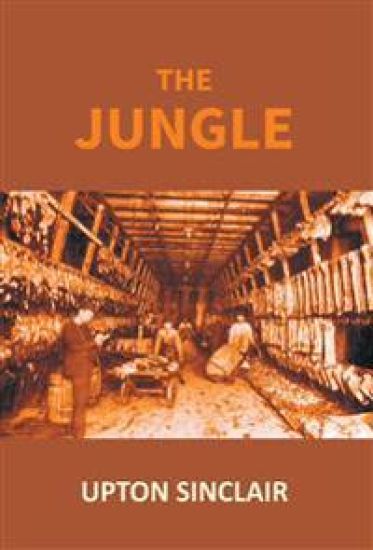
The Jungle

The Jungle

Upton Sinclair

Createspace Independent Publishing Platform
2017
nidottu
The Jungle is a 1906 novel written by author and socialist journalist Upton Sinclair. It was written about the corruption of the American meatpacking industry during the early 20th century. The novel depicts in harsh tones the poverty, absence of social programs, unpleasant living and working conditions, and hopelessness prevalent among the "have-nots", which is contrasted with the deeply rooted corruption on the part of the "haves". The sad state of turn-of-the-century labor is placed front and center for the American public to see, suggesting that something needed to be changed to get rid of American "wage slavery". The novel is also an important example of the "muckraking" tradition begun by journalists such as Jacob Riis. Sinclair wanted to persuade his readers that the mainstream American political parties offered little means for progressive change. Upton Sinclair came to Chicago with the intent of writing The Jungle; he had been given a stipend by the socialist newspaper The Appeal to Reason. Upon his arrival in the lobby of the Chicago Transit House, a hotel near the stockyards, he was quoted as saying, "Hello I'm Upton Sinclair, and I'm here to write the Uncle Tom's Cabin of the Labor Movement " (Arthur, 43). He rented living quarters and immediately immersed himself in the city by walking its streets, talking to its people, and taking pictures. One Sunday afternoon, he worked his way into a group of Asian immigrants getting together for a wedding party - "Behold, there was the opening scene of my story, a gift from the gods". He was welcomed to the festivities and stayed until two o'clock in the morning. The novel was first published in serial form in 1906 by The Appeal to Reason. "After five rejections", its first edition as a novel was published by Doubleday, Page & Company on February 28, 1906, and it became an immediate bestseller. It has been in print ever since
100%: The Story of a Patriot

100%: The Story of a Patriot

Upton Sinclair

Createspace Independent Publishing Platform
2017
nidottu
100% - The Story of a Patriot is a fictional response to Sinclair's real-life social and economic concerns. It tells the story of Peter Gudge, a poor young man who becomes embroiled in industrial spying and sabotage. Said to be based upon a real case of a bombing in San Francisco, Peter's tale is compelling reading. Originally published by the author himself, It is the story of a young man's descent into fear and corruption, and eventual happy redemption.
The Metropolis

The Metropolis

Upton Sinclair

Createspace Independent Publishing Platform
2017
nidottu
"Perhaps you have heard your father speak of me?" asked the Major, eagerly; and Montague answered, "A thousand times." He was tempted to add that the vision that rose before him was of a stout gentleman hanging in a grape-vine, while a whole battery of artillery made him their target. Perhaps it was irreverent, but that was what Montague had always thought of, ever since he had first laughed over the tale his father told. It had happened one January afternoon in the Wilderness, during the terrible battle of Chancellorsville, when Montague's father had been a rising young staff-officer, and it had fallen to his lot to carry to Major Thorne what was surely the most terrifying order that ever a cavalry officer received. It was in the crisis of the conflict, when the Army of the Potomac was reeling before the onslaught of Stonewall Jackson's columns. There was no one to stop them-and yet they must be stopped, for the whole right wing of the army was going. So that cavalry regiment had charged full tilt through the thickets, and into a solid wall of infantry and artillery.
The Moneychangers

The Moneychangers

Upton Sinclair

Createspace Independent Publishing Platform
2017
nidottu
Allan Montague looked at him and smiled. There were no visible signs of agitation about Reggie. He had come to take Alice to church, and he was exquisitely groomed and perfumed, and wore a wonderful scarlet orchid in his buttonhole. Montague, lounging back in a big leather chair and watching him, smiled to himself at the thought that Reggie regarded Lucy as a new kind of flower, with which he might parade down the Avenue and attract attention. "Is she large or small?" asked Reggie. "She is about your size," said Montague, -which was very small indeed. Alice entered at this moment in a new spring costume. Reggie sprang to his feet, and greeted her with his inevitable effusiveness. When he asked, "Do you know her, too?" "Who? Lucy?" asked Alice. "I went to school with her." "Judge Dupree's plantation was next to ours," said Montague. "We all grew up together.
The Jungle

The Jungle

Upton Sinclair

Createspace Independent Publishing Platform
2017
nidottu
The Jungle is a 1906 novel written by the American journalist and novelist Upton Sinclair (1878-1968). Sinclair wrote the novel to portray the harsh conditions and exploited lives of immigrants in the United States in Chicago and similar industrialized cities. However, most readers were more concerned with his exposure of health violations and unsanitary practices in the American meatpacking industry during the early 20th century, greatly contributing to a public outcry which led to reforms including the Meat Inspection Act. Sinclair famously said of the public reaction "I aimed at the public's heart, and by accident I hit it in the stomach."
The Jungle

The Jungle

Upton Sinclair

Createspace Independent Publishing Platform
2017
nidottu
Classics for Your Collection: goo.gl/0oisZU --------- The main character in the book is Jurgis Rudkus, a Lithuanian immigrant trying to make ends meet in Chicago. The book begins with his and Ona's wedding feast. He and his family live near the stockyards and meatpacking district, where many immigrants work who do not know much English. He takes a job at Brown's slaughterhouse. Rudkus had thought the US would offer more freedom, but he finds working conditions harsh. He and his young wife struggle to survive. They fall deeply into debt and are prey to con men. Hoping to buy a house, they exhaust their savings on the down-payment for a sub-standard slum house, which they cannot afford. The family is eventually evicted after their money is taken... One of the great social/protest novels of the 20th Century. 'The Jungle' is at once an indictment on the treatment of immigrants, poverty, American wage slavery, and the working conditions at Chicago's stockyards and meatpacking plants - and simultaneously an expos on the unsanitary conditions of the meat produced in the plants and led to Federal real food reform. Scroll Up and Get Your Copy Timeless Classics for Your BookshelfClassic Books for Your Inspiration and Entertainment Visit Us at: goo.gl/0oisZU
The Jungle

The Jungle

Upton Sinclair

Clydesdale Press
2016
pokkari
“The Uncle Tom’s Cabin of wage slavery.” —Jack London. Sinclair’s masterpiece is an honest, sometimes brutal, tour de force that opened America’s eyes to the struggles and horrors many immigrants endured.Welcome to Chicago during the early 1900s. Upton Sinclair’s The Jungle portrays the hardships of the immigrant working class in a way that changed literature and history. The story begins with Lithuanian immigrant Jurgis Rudkus, who takes a job at Brown’s slaughterhouse to try to earn enough money to stay afloat. His life becomes a constant struggle—he, his young wife, Ona, and the rest of his family eventually falling victim to a slew of unfortunate circumstances including exploitation, abuse, and for some even death.From unsanitary and unsafe working conditions to poverty wages, the novel revealed to the American public the struggles immigrants encountered in Chicago’s meatpacking industry. Sinclair, a muckraking journalist, penned the bestselling narrative in an attempt to expose the evils of capitalism, and bring to light the extreme adversity these people faced not just in Chicago, but in industrialized cities across the country. By detailing numerous health violations in these workplaces, Sinclair’s novel caused public outrage and eventually led to the passing of the Meat Inspection Act and the Pure Food and Drug Act.Packaged in handsome, affordable trade editions, Clydesdale Classics is a new series of essential literary works. It features literary phenomena with influence and themes so great that, after their publication, they changed literature forever. From the musings of literary geniuses such as Nathaniel Hawthorne in The Scarlet Letter, to the striking personal narratives from Harriet Jacobs in Incidents in the Life of a Slave Girl, this new series is a comprehensive collection of our history through the words of the exceptional few.