Kirjojen hintavertailu. Mukana 12 390 323 kirjaa ja 12 kauppaa.
Kirjailija
Wendell Berry
Kirjat ja teokset yhdessä paikassa: 95 kirjaa, julkaisuja vuosilta 1980-2026, suosituimpien joukossa Bread and Wine. Vertaile teosten hintoja ja tarkista saatavuus suomalaisista kirjakaupoista.
Easter is the high point of the year for millions of Christians around the world. And for most of them, there can be no Easter without Lent, the season that leads up to it. A time for self-denial, soul-searching, and spiritual preparation, Lent makes time for daily reading and reflection. This time-tested collection of devotions will deepen and stretch your faith, and can be returned to year after year. Culled from the wealth of twenty centuries, the selections are ecumenical in scope, representing the best classic and contemporary Christian writers. This expanded second edition adds dozens of voices, new and old, and takes the reader all the way through Eastertide to Pentecost. Includes ninety-six Lenten and Easter readings, plus seven chapter-opening poems, by Eberhard Arnold, Saint Augustine, Wendell Berry, Christoph Friedrich Blumhardt, Dietrich Bonhoeffer, G. K. Chesterton, Dorothy Day, Meister Eckhart, Khalil Gibran, Clarence Jordan, Soren Kierkegaard, Madeleine L'Engle, C. S. Lewis, George MacDonald, Thomas Merton, Malcolm Muggeridge, Kathleen Norris, Henri Nouwen, Christina Rosetti, Fleming Rutledge, Dorothy Sayers, Edith Stein, Mother Teresa, Leo Tolstoy, N. T. Wright, Alfred Kazin, Amy Carmichael, Barbara Brown Taylor, Barbara Cawthorne Crafton, Blaise Pascal, Brennan Manning, Dag Hammarskjöld, Dorothee Soelle, Dylan Thomas, E. Stanley Jones, Emil Brunner, Frederick Buechner, Fyodor Dostoevsky, Geoffrey Hill, Henry Drummond, J. Heinrich Arnold, Jean-Pierre de Caussade, Johann Christoph Arnold, John Dear, John Donne, John Masefield, John Stott, John Updike, Jürgen Moltmann, Karl Barth, Madeleine L’Engle, Martin Luther, Oscar Wilde, Oswald Chambers, Paul Tillich, Peter Kreeft, Philip Berrigan, Philip Yancey, Romano Guardini, Sadhu Sundar Singh , Saint Augustine, Simone Weil, Thomas à Kempis, Toyohiko Kagawa, Walter J. Ciszek, Walter Wangerin, Watchman Nee, William Willimon and others.
Robinson Forest in eastern Kentucky is one of our most important natural landscapes—and one of the most threatened. Covering fourteen thousand acres of some of the most diverse forest region in temperate North America, it is a haven of biological richness within an ever-expanding desert created by mountaintop removal mining. Written by two people with deep knowledge of Robinson Forest, The Embattled Wilderness engagingly portrays this singular place as it persuasively appeals for its protection.The land comprising Robinson Forest was given to the University of Kentucky in 1923 after it had been clear-cut of old-growth timber. Over decades, the forest has regrown, and its remarkable ecosystem has supported both teaching and research. But in the recent past, as tuition has risen and state support has faltered, the university has considered selling logging and mining rights to parcels of the forest, leading to a student-led protest movement and a variety of other responses.In The Embattled Wilderness Erik Reece, an environmental writer, and James J. Krupa, a naturalist and evolutionary biologist, alternate chapters on the cultural and natural history of the place. While Reece outlines the threats to the forest and leads us to new ways of thinking about its value, Krupa assembles an engaging record of the woodrats and darters, lichens and maples, centipedes and salamanders that make up the forest’s ecosystem. It is a readable yet rigorous, passionate yet reasoned summation of what can be found, or lost, in Robinson Forest and other irreplaceable places.
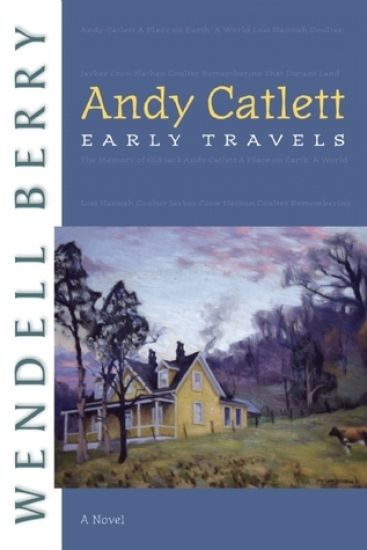
"Andy Catlett" is the latest installment in Wendell Berry s "Port William" series, a distinct set of stories that Berry has been telling now for50 years. Set during the Christmas of 1943, nine-year-old Andy Catlett sets off to visit his grandparents in Port William by bus, by himself for the first time. For Andy this is a rite of passage, his first step into manhood. His experiences on this solitary voyage become pivotal points in the entire Port William epic. The old ways are in retreat, modern life is crowding everything in its path, and as Andy looks back many years later, he hears the stories again of his neighbors and friends. A beautiful short novel, now in paperback, "Andy Catlett" is a perfect introduction to the whole world of Port William, and will be a rich new installment for those already familiar with this unfolding story."
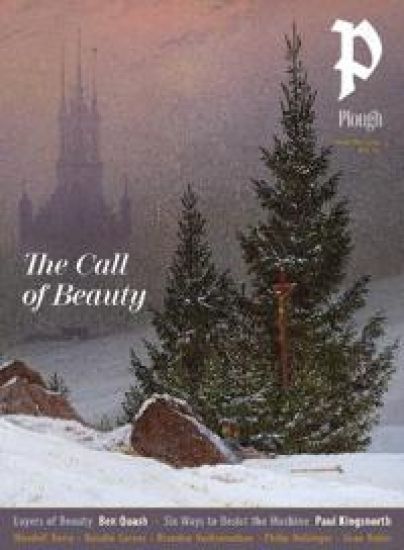
Nature is so beautiful it must mean something. Christians have seen in the beauty of creation a sign of the beauty of the Creator; the natural world teaches us to know the “author of beauty.” But anyone who starts thinking more seriously about beauty soon runs into more troubling aspects. We’re more awash with images than ever before, many of them doctored or artificial. Any idealized beauty that excludes humankind’s imperfection and vulnerability is prone to becoming inhuman. And even the wholesome beauty of nature or the fine arts is only a partial truth in a world where children starve or are trafficked to abusers. Yet stubbornly, beauty remains. Through trees, gargoyles, paintings, and fellow humans, the writers in this issue ask hard questions to deepen our understanding and appreciation of the good, the true, and the beautiful. On this theme: Natalie Carnes revisits Christianity’s love-hate relationship with sacred art: Are those icons or idols? Brandon Vaidyanathan says his mother’s mental illness changed the way he sees human beauty. Sean Rubin tells how his mother found Jesus at the Metropolitan Museum of Art. Sergio Bermudez views Paris from the perspective of Notre-Dame Cathedral’s grotesques and gargoyles. Cardinal Christoph Schönborn reflects on Michaelangelo’s Last Judgement during a conclave. Ben Quash looks at how beauty has shaped Christian imagination, from Absalom’s hair to English gardens. Philip Holsinger sees the future of El Salvador in one bright, carefree child. Caitrin Keiper searches for meaning in the loss of her unborn baby. Chris Voll profiles a sculptor who left a promising career to care for his dying father. Also in this issue: Six new poems by Wendell Berry. Paul Kingsnorth offers six ways to resist the Machine. The Bruderhof’s rule about gossip was written in 1925. Does it still work? Discover LesslieNewbigin, who reimagined the role of a missionary. Plough Quarterly features stories, ideas, and culture for people eager to apply their faith to the challenges we face. Each issue includes in-depth articles, interviews, poetry, book reviews, and art.
Nature is so beautiful it must mean something. Christians have seen in the beauty of creation a sign of the beauty of the Creator; the natural world teaches us to know the "author of beauty." But anyone who starts thinking more seriously about beauty soon runs into more troubling aspects. We're more awash with images than ever before, many of them doctored or artificial. Any idealized beauty that excludes humankind's imperfection and vulnerability is prone to becoming inhuman. And even the wholesome beauty of nature or the fine arts is only a partial truth in a world where children starve or are trafficked to abusers. Yet stubbornly, beauty remains. Through trees, gargoyles, paintings, and fellow humans, the writers in this issue ask hard questions to deepen our understanding and appreciation of the good, the true, and the beautiful. On this theme: Natalie Carnes revisits Christianity's love-hate relationship with sacred art: Are those icons or idols? Brandon Vaidyanathan says his mother's mental illness changed the way he sees human beauty. Sean Rubin tells how his mother found Jesus at the Metropolitan Museum of Art. Sergio Bermudez views Paris from the perspective of Notre-Dame Cathedral's grotesques and gargoyles. Cardinal Christoph Sch nborn reflects on Michaelangelo's Last Judgement during a conclave. Ben Quash looks at how beauty has shaped Christian imagination, from Absalom's hair to English gardens. Philip Holsinger sees the future of El Salvador in one bright, carefree child. Caitrin Keiper searches for meaning in the loss of her unborn baby. Chris Voll profiles a sculptor who left a promising career to care for his dying father. Also in this issue: Six new poems by Wendell Berry. Paul Kingsnorth offers six ways to resist the Machine. The Bruderhof's rule about gossip was written in 1925. Does it still work? Discover LesslieNewbigin, who reimagined the role of a missionary. Plough Quarterly features stories, ideas, and culture for people eager to apply their faith to the challenges we face. Each issue includes in-depth articles, interviews, poetry, book reviews, and art.
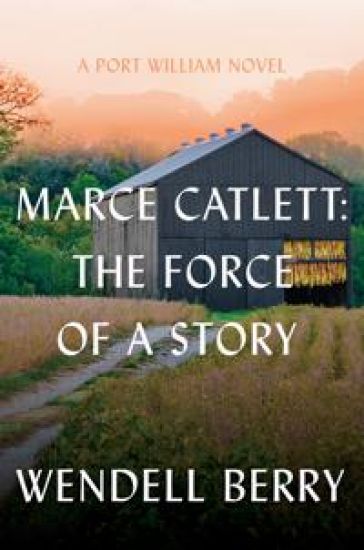
In the newest novel in the Port William series, Wendell Berry's beloved protagonist Andy Catlett tells the inspiring story of his grandfather Marce Catlett to his own children and grandchildren, and gives them a key to their place on the questionably settled land they all love Andy Catlett's story begins as his grandfather Marce Catlett rises in the dark to travel from his farm by horseback and train to Louisville for the auction of his 1906 tobacco crop. The price paid for each year's crop is depressed to virtually nothing by the power of the single buyer, James B. Duke. This year is especially grim since the price offered to each grower is less than the expense of bringing the crop to market. A year's labor is lost. Marce returns to his family defeated, defiant, and determined to grow another crop. Many of his fellow farmers at first seem to lack the resiliency and resourcefulness to continue. Only with the cooperation of other growers can a way be found that protects these farmers and keeps their rural families vital and in place. The power and depth of this story--and of the many stories within the history of the Port William Membership--resonate with love, kindness, and the held memory of family and community. In Marce Catlett: The Force of a Story, celebrated author Wendell Berry brings to life a tale that devoted readers of the series will cherish. This moving novel is a testament to the goodwill that lives within the human heart and is a stirring reminder that standing up for what we believe in is always a cause worth fighting for.
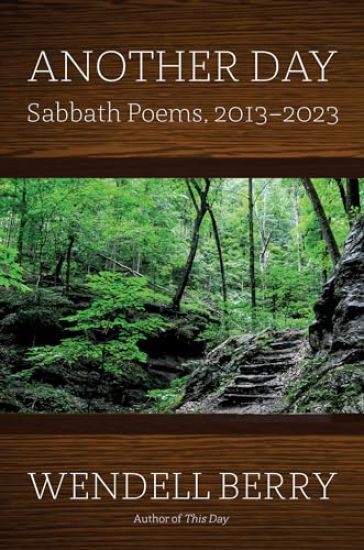
A new collection of poems and the companion volume to the popular bestseller This Day, Wendell Berry's Another Day is another stunning contribution to the poetry canon from one of America's most beloved writers A companion to his beloved volume This Day and Wendell Berry's first new poetry collection since 2016, this new selection of Sabbath Poems are filled with spiritual longing and political extremity, memorials and celebrations, elegies and lyrics, alongside the occasional rants of the Mad Farmer, pushed to the edge yet again by his compatriots and elected officials. With the publication of this new edition, it has become increasingly clear that the Sabbath Poems have become the very heart of Berry's work.
Library of America continues its definitive edition of Wendell Berry's complete fiction, including the novels The Memory of Old Jack and Remembering and 23 brilliant and beautiful stories In this second volume, Port William faces the disappearance of farms and farmers in the decades after World War II, while Andy Catlett resolves to remain in the Membership Set along the banks of the Kentucky River in America's heartland, fictional Port William, Kentucky, is an agrarian world is peopled with memorable and beloved characters collectively known as the Port William Membership. For more than 50 years, Wendell Berry has told Port William's history from the Civil War to the present day, recapturing a time when farming, faith, and family were the anchors of community and the ligaments that bound one generation to the next. Now Library of America continues its definitive edition, prepared in close consultation with the author and published for his 90th birthday, presenting the complete story of Port William for the first time in the order of narrative chronology. This second volume contains 23 stories and 2 novels that span the years 1945 to 1978, as the town faces the forces of mechanization and the looming possibility of its own disappearance. As the generation that came of age after the Civil War disappears, the younger generation increasingly chooses to leave and not return; one of the only exceptions is Andy Catlett, who resolves to remain in and to maintain the Membership. This definitive edition of Wendell Berry's complete fiction includes detailed notes, endpapers featuring a map of Port William and a Membership family tree, and a chronology of Berry's remarkable life and career.
Thirteen new stories of the Port William membership spanning the decades from World War II to the present moment For those readers of his poetry and inspired by his increasingly vital work as advocate for rational land use and the right-size life, these stories of Wendell Berry's offer entry into the fictional place of value and beauty that is Port William, Kentucky. Berry has said it's taken a lifetime for him to learn to write like an old man, and that's what we have here, stories told with grace and ease and majesty. Wendell Berry is one of our greatest living American authors, writing with the wisdom of maturity and the incandescence that comes of love. These thirteen new works explore the memory and imagination of Andy Catlett, one of the well-loved central characters of the Port William saga. From 1932 to 2021, these stories span the length of Andy's life, from before the outbreak of the Second World War to the threatened end of rural life in America.
In a culture that prizes keeping one’s options open, making commitments offers something more valuable. The consumerism and instant gratification of “liquid modernity” feed a general reluctance to make commitments, a refusal to be pinned down for the long term. Consider the decline of three forms of commitment that involve giving up options: marriage, military service, and monastic life. Yet increasing numbers of people question whether unprecedented freedom might be leading to less flourishing, not more. They are dissatisfied with an atomized way of life that offers endless choices of goods, services, and experiences but undermines ties of solidarity and mutuality. They yearn for more heroic virtues, more sacrificial commitments, more comprehensive visions of the individual and common good. It turns out that the American Founders were right: the Creator did endow us with an unalienable right of liberty. But he has endowed us with something else as well, a gift that is equally unalienable: desire for unreserved commitment of all we have and are. Our liberty is given us so that we in turn can freely dedicate ourselves to something greater. Ultimately, to take a leap of commitment, even without knowing where one will land, is the way to a happiness worth everything. On this theme: - Lydia S. Dugdale asks what happened to the Hippocratic Oath in modern medicine. - Caitrin Keiper looks at competing vows in Victor Hugo’s Les Misérables. - Kelsey Osgood, an Orthodox Jew, asks why lifestyle discipline is admired in sports but not religion. - Wendell Berry says being on the side of love does not allow one to have enemies. - Phil Christman spoofs the New York Times Vows column. - Andreas Knapp tells why he chose poverty. - Norann Voll recounts the places a vow of obedience took her. - Carino Hodder says chastity is for everyone, not just nuns. - Dori Moody revisits her grandparents’ broken but faithful marriage. - Randall Gauger, a Bruderhof pastor, finds that lifelong vows make faithfulness possible. - King-Ho Leung looks at vows, oaths, promises, and covenants in the Bible. Also in the issue: - A young Black pastor reads Clarence Jordan today. - Activists discuss the pro-life movement after Roe and Dobbs. - Children learn from King Arthur, Robin Hood, and the occasional cowboy. - Original poetry by Ned Balbo - Reviews of Montgomery and Biklé’s What Your Food Ate, Mohsin Hamid’s The Last White Man, and Bonnie Kristian’s Untrustworthy - A profile of Sadhu Sundar Singh Plough Quarterly features stories, ideas, and culture for people eager to apply their faith to the challenges we face. Each issue includes in-depth articles, interviews, poetry, book reviews, and art.
Eberhard Arnold; Dietrich Bonhoeffer; Martin Luther King; C. S. Lewis; Wendell Berry; Dorothy Day; Leo Tolstoy; N. T. Wright; Richard Rohr; Madeleine L'Engle; Thomas Merton
Fifty-two readings to spark weekly group discussion on putting Jesus’ most central teachings into practice.Jesus’ most famous teaching, the Sermon on the Mount, possesses an irresistible quality. Who hasn’t felt stirred and unsettled after reading these words, which get to the root of the human condition? This follow-up to the acclaimed collection Called to Community: The Life Jesus Wants for His People taps an even broader array of sources, bringing together prophetic voices from every era and a range of traditions to consider the repercussions of these essential words. More than a commentary or devotional, this book is designed to be read together with others, to inspire communities of faith to discuss what it might look like to put Jesus’ teachings into practice today.
"A number of people, by now, have told me that I could greatly improve things by buying a computer. My answer is that I am not going to do it. I have several reasons, and they are good ones." First published in Harper's magazine in the late 1980s, Wendell Berry's "Why I Am Not Going to Buy a Computer" challenges the idea circulating then (and now) that our advanced technological age is a good thing. The volume of reader response to his essay far exceeded any the magazine had seen before. Berry answered his critics with the longer essay "Feminism, the Body, and the Machine" which is included here in this slim volume. Each palm-size book in the Counterpoints series is meant to stay with you, whether safely in your pocket or long after you turn the last page. From short stories to essays to poems, these little books celebrate our most-beloved writers, whose work encapsulates the spirit of Counterpoint Press: cutting-edge, wide-ranging, and independent.
'A woven time-travelling book, about love, land, life ... Short stories that link together like trees in a forest' Jackie MorrisOn a clear Kentucky night in 1888, a young woman risks her life to save a stranger from a drunken mob. Almost a hundred years later, her great-grandson Andy climbs a hill at the edge of town, and is flooded with memories of all he has lived, seen and heard of the past century - of farmers wooing schoolteachers and soldiers trudging home from war; of the first motor car, the Great Depression and Vietnam; of neighbourly feuds and family secrets; of grief and betrayal - and of great friendship that endures for a lifetime.These are Wendell Berry's tales of Port William, a little farming community nestled deep in the Kentucky River valley. They unravel the story of a town over the course of four generations, lovingly chronicling the intertwined lives of the families who call it home. Affectionate, elegiac and wry, these uplifting rural fables invite us to witness the beauty and quiet heroism at the heart of each ordinary, interconnected life.
Prominent author and cultural critic Wendell Berry is well known for his contributions to agrarianism and environmentalism, but his commentary on education has received comparatively little attention. Berry has been eloquently unmasking America's cultural obsession with restless mobility for decades, arguing that it causes damage to both the land and the character of our communities. Education, he maintains, plays a central role in this obsession, inculcating in students' minds the American dream of moving up and moving on.Drawing on Berry's essays, fiction, and poetry, Jack R. Baker and Jeffrey Bilbro illuminate the influential thinker's vision for higher education in this pathbreaking study. Each chapter begins with an examination of one of Berry's fictional narratives and then goes on to consider how the passage inspires new ways of thinking about the university's mission. Throughout, Baker and Bilbro argue that instead of training students to live in their careers, universities should educate students to inhabit and serve their places. The authors also offer practical suggestions for how students, teachers, and administrators might begin implementing these ideas.Baker and Bilbro conclude that institutions guided by Berry's vision might cultivate citizens who can begin the work of healing their communities -- graduates who have been educated for responsible membership in a family, a community, or a polity.